Stormy SeasMari in Tempesta
Turner and Homer at the Edge of the OceanTurner e Homer ai Confini dell'Oceano
10 collages in this catalogcollage in questo catalogo
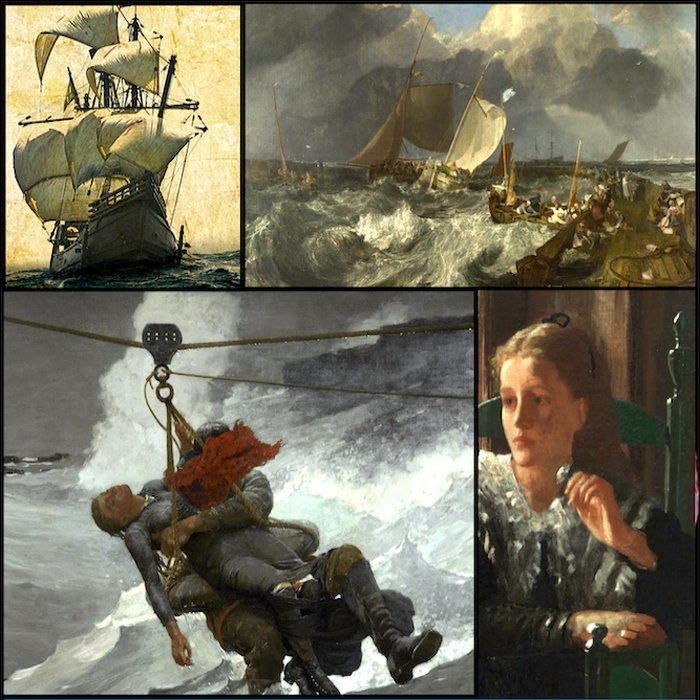
Although both artists are giants of marine painting, the English artist William Turner (1775–1851) and the American painter Winslow Homer (1836–1910) both depict the ocean as a living, powerful, and often dangerous entity. While for Turner humanity is minuscule, overwhelmed, and often a victim of nature, for Homer man is a solitary hero engaged in a stoic struggle. We present a selection of their works in chronological order, featured in our collages alongside rocks and the face of a woman painted by Homer — a device designed to highlight some of the most evocative details from their many paintings inspired by stormy seas. Each piece below is available as a high-resolution, 300dpi, royalty-free download for €39, ready for print at any size.Sebbene entrambi gli artisti siano due giganti della pittura marina, l'inglese William Turner (1775–1851) e lo statunitense Winslow Homer (1836–1910) dipingono l'oceano come un'entità viva, potente e spesso pericolosa. Mentre per Turner l'uomo è minuscolo, sopraffatto e spesso vittima della natura, per Homer l'uomo è un eroe solitario impegnato in una lotta stoica. Presentiamo una selezione delle loro opere in ordine cronologico, viste nei nostri collage a fianco di rocce e del viso di una donna dipinta da Homer, un espediente per evidenziare alcune delle parti più suggestive dei loro numerosi quadri ispirati dai mari in tempesta. Ogni opera qui sotto è disponibile come download ad alta risoluzione, 300dpi, royalty-free per €39, pronta per la stampa in qualsiasi formato.
Download Catalog PDF →Scarica il Catalogo PDF → View All Collections →Vedi Tutte le Collezioni →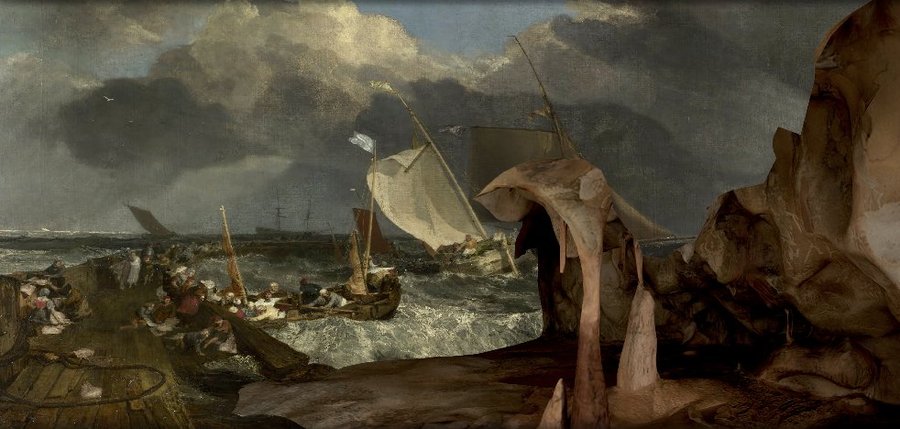
Turner, 1803
By 1803, still in his twenties, J.M.W. Turner had already established himself as one of the Royal Academy's most ambitious marine painters, exhibiting dramatic scenes of ships battling rough coastal waters. This early work captures the beginning of a lifelong fascination with the sea's raw, overwhelming power over the human vessel.
Nel 1803, ancora poco più che ventenne, J.M.W. Turner si era già affermato come uno dei pittori marini più ambiziosi della Royal Academy, esponendo scene drammatiche di navi alle prese con acque costiere agitate. Quest'opera giovanile segna l'inizio di un fascino durato tutta la vita per la forza travolgente del mare sull'imbarcazione umana.
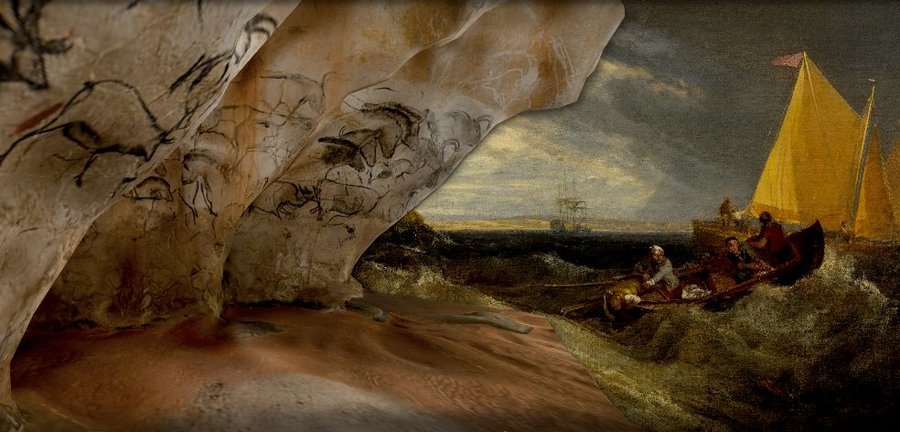
Turner, 1807
By 1807, Turner had become a full Royal Academician, and his marine subjects increasingly explored the sublime terror of storms at sea — vessels rendered as fragile silhouettes against churning water and sky, dwarfed by forces entirely beyond human control.
Nel 1807 Turner era ormai membro a pieno titolo della Royal Academy, e i suoi soggetti marini esploravano sempre più il terrore sublime delle tempeste in mare: imbarcazioni ridotte a fragili sagome contro acqua e cielo in tumulto, minuscole di fronte a forze del tutto fuori dal controllo umano.
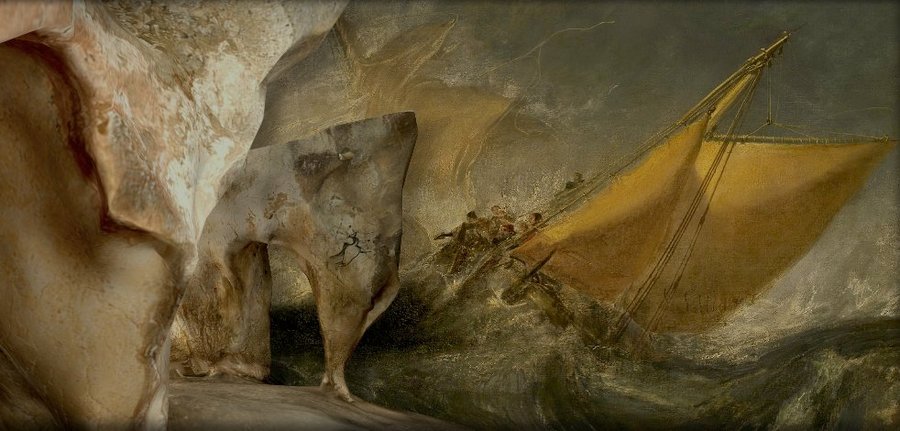
Turner, 1809
This 1809 work belongs to the period in which Turner began pushing his handling of light and water toward near-abstraction, dissolving the boundary between sea and sky into a single turbulent field of motion — a technique that would only grow bolder in the decades to come.
Quest'opera del 1809 appartiene al periodo in cui Turner iniziò a spingere la propria resa della luce e dell'acqua verso una quasi astrazione, dissolvendo il confine tra mare e cielo in un unico campo turbolento di movimento — una tecnica che sarebbe diventata ancora più audace nei decenni successivi.
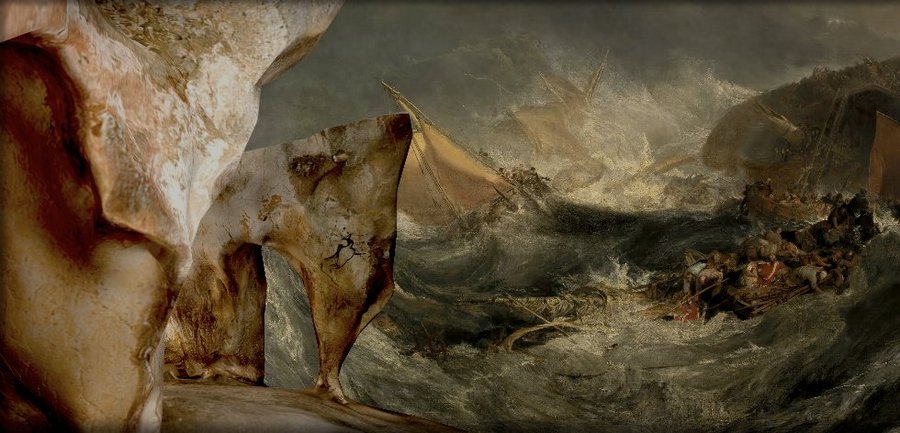
Turner, 1810
Around 1810, Turner was producing some of his most harrowing shipwreck imagery, informed by Britain's ongoing wars at sea and by his own fascination with disaster as a subject worthy of history painting's grandest scale.
Intorno al 1810, Turner realizzava alcune delle sue immagini di naufragio più strazianti, influenzate dalle guerre navali che l'Inghilterra stava allora combattendo e dal suo personale fascino per il disastro come soggetto degno della scala più grandiosa della pittura di storia.
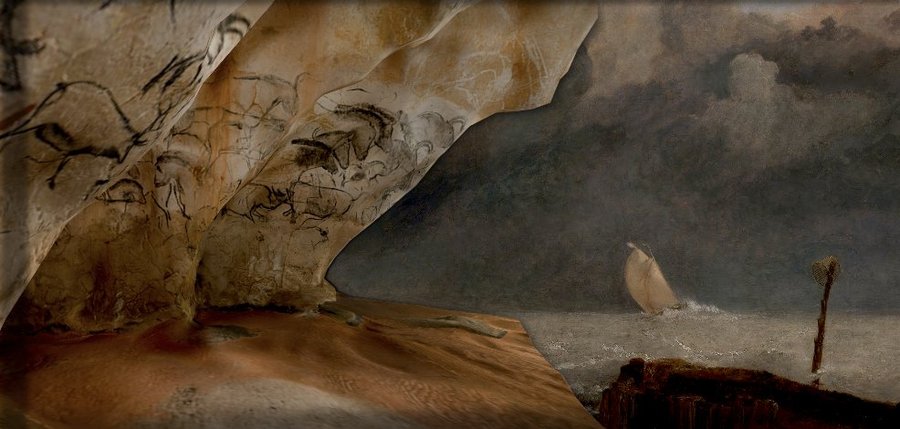
Turner, 1827
By the late 1820s, Turner's reputation as Britain's foremost painter of the sublime was well established. This 1827 work reflects his maturing style, in which storm-tossed waters become less a depiction of a specific event than a meditation on nature's total indifference to human affairs.
Alla fine degli anni 1820, la fama di Turner come massimo pittore inglese del sublime era ormai consolidata. Quest'opera del 1827 riflette il suo stile in piena maturazione, in cui le acque agitate dalla tempesta diventano meno la rappresentazione di un evento specifico e più una meditazione sull'indifferenza totale della natura verso le vicende umane.
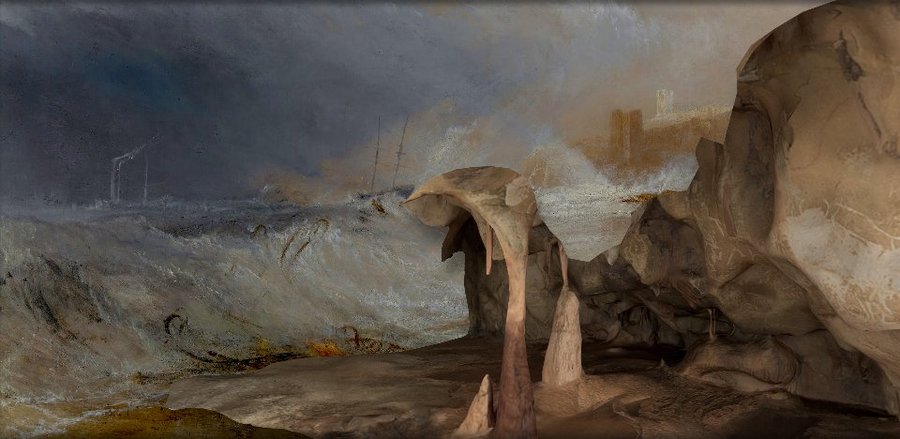
Turner, 1834
In 1834, the same year he witnessed and sketched the fire that destroyed the Houses of Parliament, Turner was at the height of his powers — his late style increasingly dissolving solid form into swirling atmosphere, nowhere more fittingly than in his images of the sea in fury.
Nel 1834, lo stesso anno in cui assisté e ritrasse l'incendio che distrusse il Palazzo di Westminster, Turner era al culmine della propria maestria: il suo stile tardo dissolveva sempre più le forme solide in atmosfere vorticose, mai così efficacemente come nelle sue immagini del mare in furia.
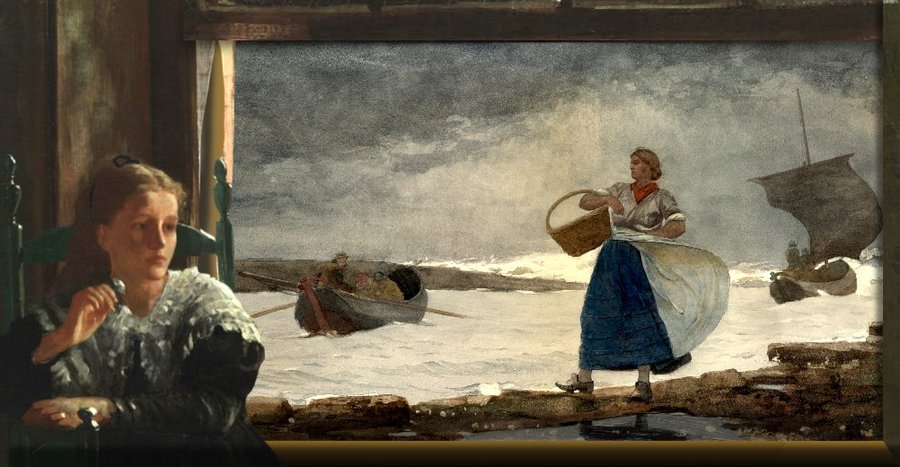
Homer, 1883
In 1883, Winslow Homer had just returned to the United States after nearly two years in the fishing village of Cullercoats, on England's storm-battered North Sea coast — an experience that transformed him from a painter of leisure and rural life into the great chronicler of humanity's struggle against the ocean. He settled that same year at Prout's Neck, Maine, where he would paint the sea for the rest of his life.
Nel 1883, Winslow Homer era appena tornato negli Stati Uniti dopo quasi due anni trascorsi nel villaggio di pescatori di Cullercoats, sulla costa inglese del Mare del Nord battuta dalle tempeste — un'esperienza che lo trasformò da pittore di svaghi e vita rurale nel grande cronista della lotta dell'uomo contro l'oceano. Quello stesso anno si stabilì a Prout's Neck, nel Maine, dove avrebbe dipinto il mare per il resto della vita.
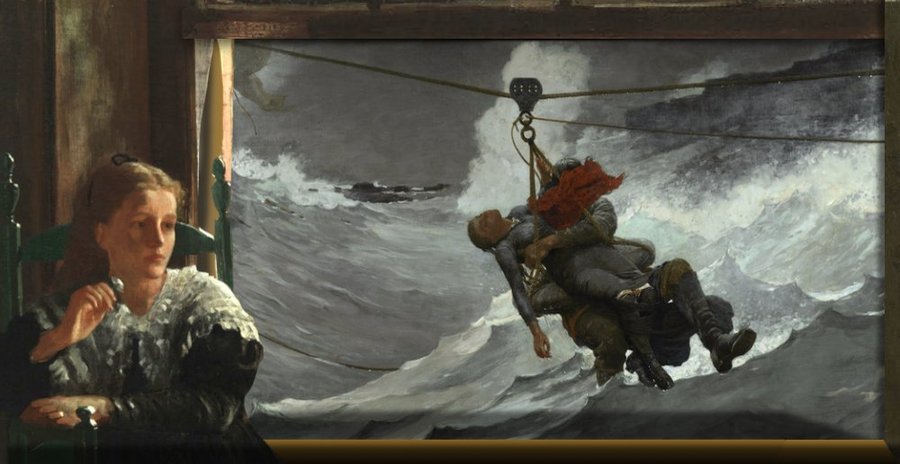
Homer, 1884
The Life Line, painted in 1884, is among Homer's most celebrated works: a woman being carried to safety along a breeches-buoy line strung between a wrecked ship and the shore, her rescuer's face hidden, hers alone visible — caught between terror and survival. It is very likely the source of the woman's face that recurs throughout this collage series.
The Life Line, dipinto nel 1884, è tra le opere più celebri di Homer: una donna viene portata in salvo lungo una fune tesa tra una nave naufragata e la riva, il volto del soccorritore nascosto, il suo unico volto visibile — sospeso tra terrore e sopravvivenza. È molto probabilmente la fonte del volto femminile che ricorre in tutta questa serie di collage.
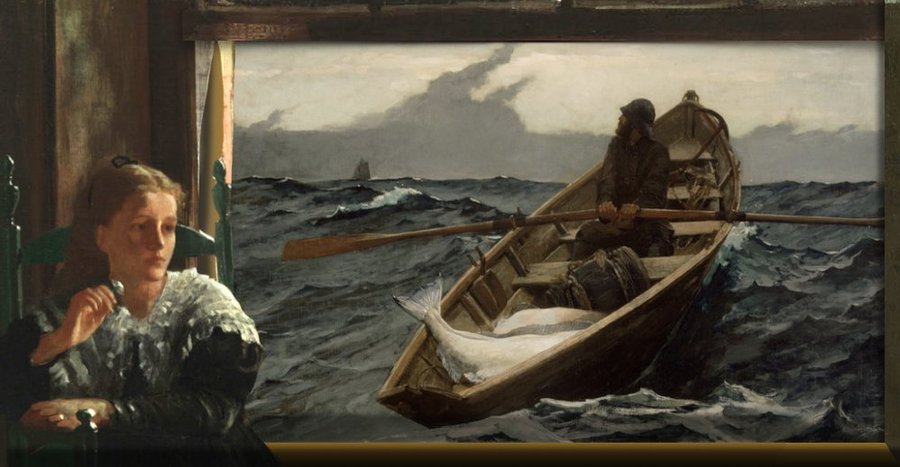
Homer, 1885
1885 was one of Homer's most productive years at Prout's Neck, producing both The Herring Net and The Fog Warning — paintings of solitary fishermen, dwarfed by the sea yet entirely composed, engaged in the unglamorous, essential labor that Homer had come to see as a form of quiet heroism.
Il 1885 fu uno degli anni più prolifici di Homer a Prout's Neck, con la realizzazione di The Herring Net e The Fog Warning — dipinti di pescatori solitari, piccolissimi di fronte al mare eppure del tutto padroni di sé, impegnati in un lavoro umile ma essenziale che Homer arrivò a considerare una forma di eroismo silenzioso.
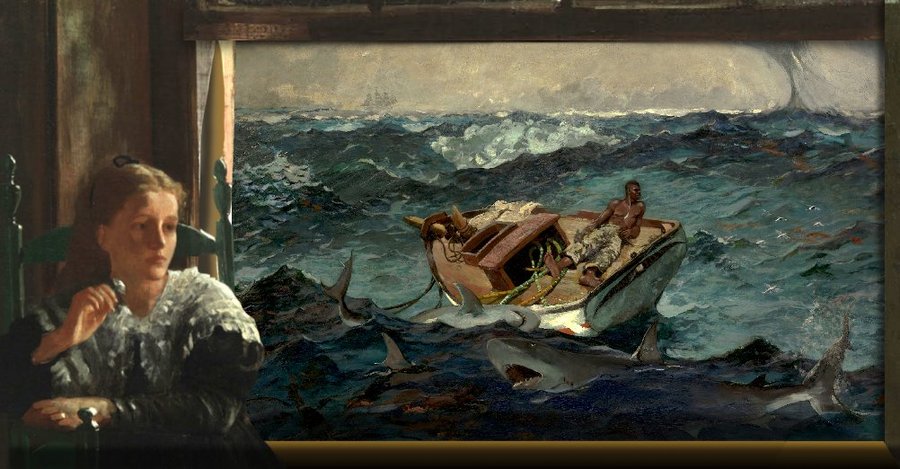
Homer, 1899
The Gulf Stream, completed in 1899, is Homer's final and most haunting statement on man against the sea: a lone Black sailor adrift on a dismasted, storm-damaged boat, sharks circling in the churning water, a distant waterspout on the horizon, and no clear promise of rescue. It remains one of the most discussed and debated paintings in American art.
The Gulf Stream, completato nel 1899, è la dichiarazione finale e più inquietante di Homer sulla lotta dell'uomo contro il mare: un marinaio nero solo alla deriva su una barca smantellata dalla tempesta, squali che girano nell'acqua agitata, una tromba d'acqua all'orizzonte, e nessuna promessa certa di salvataggio. Resta uno dei dipinti più discussi e dibattuti dell'arte americana.
Stormy Seas is part of Blu Artworks' wider body of work — 577 original SIAE-registered collages in total. Explore the Mari in Tempesta fa parte del lavoro più ampio di Blu Artworks — 577 collage originali registrati SIAE in totale. Esplora la Full GalleryGalleria Completa.