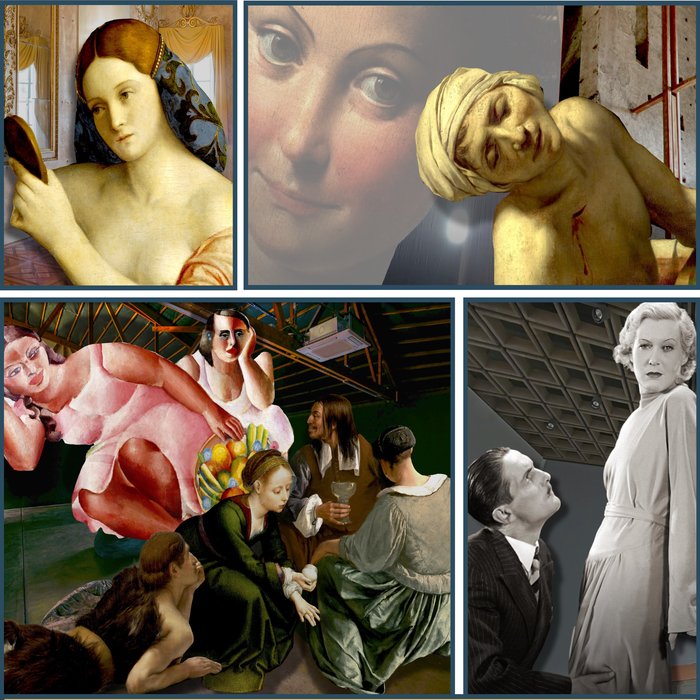
Private Glances
Twenty-Five Studies in Intimacy and the Gaze
25 collages in this catalogcollage in questo catalogo
From formal Renaissance portraits to the complex psychological analyses of modernity, the depiction of gazes in the works artists have tackled has followed — and at times anticipated — the evolution of our understanding of intimacy and respect for personal privacy. Each collage below draws on a small group of historical works united by mood or theme, exploring an intimate, everyday glance rather than a single grand narrative. Each piece is available as a high-resolution, 300dpi, royalty-free download for €39, ready for print at any size.
Download Catalog PDF →Scarica il Catalogo PDF → View All Collections →Vedi Tutte le Collezioni →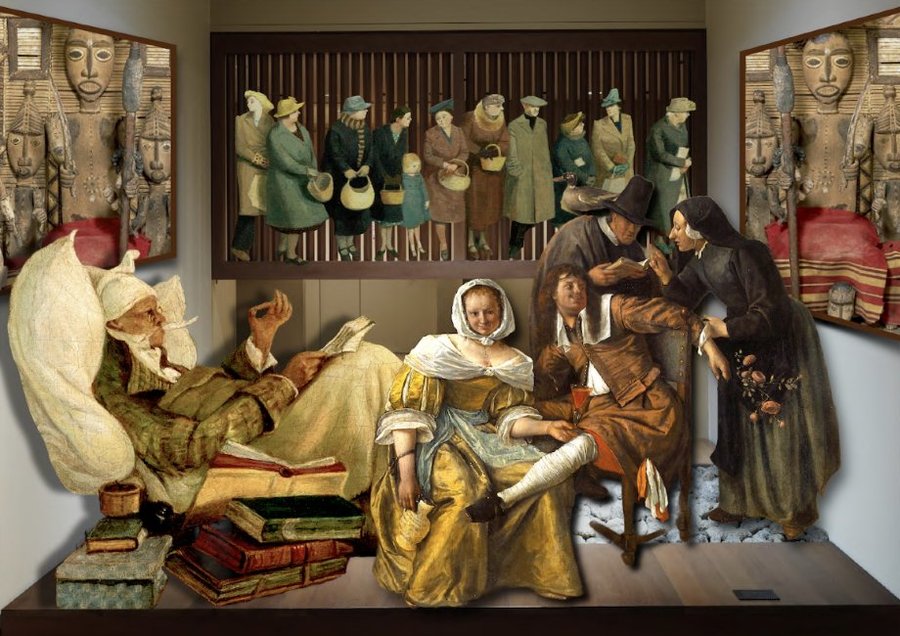
Amateur Actors
This collage brings together Evelyn Dunbar’s 1944 wartime realism, Carl Spitzweg’s gently satirical 1839 genre scenes, and Jan Steen’s 1660 tavern comedies — three very different eyes on ordinary people caught mid-performance, whether staged for war, humor, or domestic theatre.
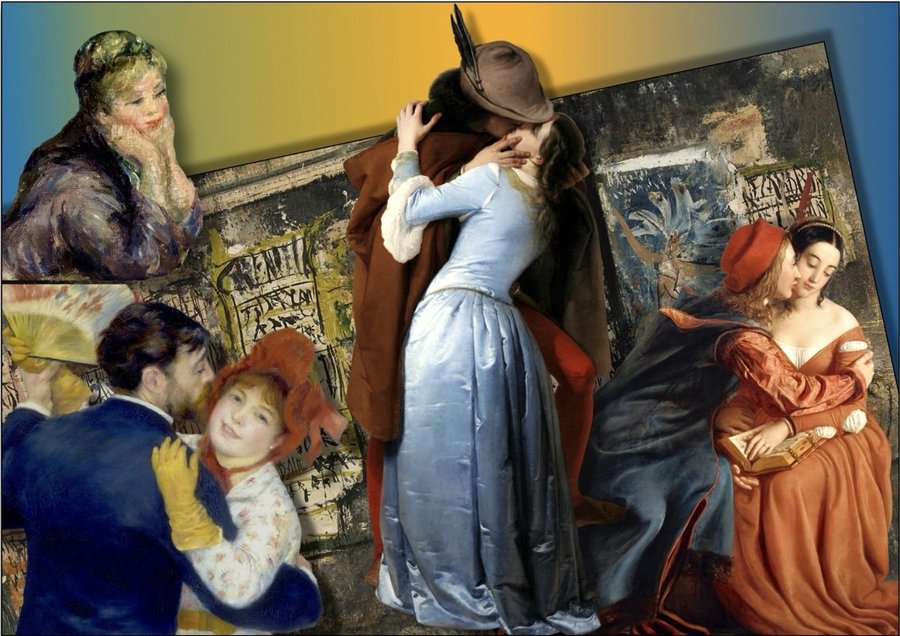
Baci Rubati
Titled after “stolen kisses,” this collage draws on two Renoir works from the early 1880s alongside Francesco Hayez’s celebrated 1859 painting Il Bacio (The Kiss) and William Dyce’s 1837 romantic imagery — a survey of how 19th-century painters across France, Italy, and Britain each staged the same fleeting, illicit gesture.
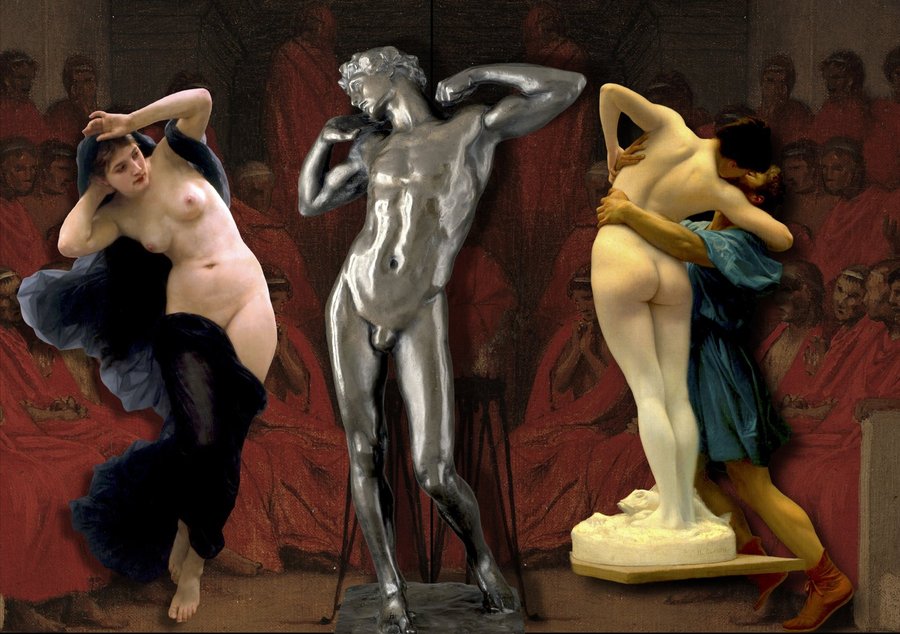
Beauty Contest
William Bouguereau, Frederic Leighton, and Jean-Léon Gérôme were three of the late 19th century’s most celebrated academic painters, each devoted to an idealized, classically-inspired vision of the female form — a shared aesthetic that made their work, exhibited within years of one another around 1883–1890, feel almost like a silent contest of beauty.
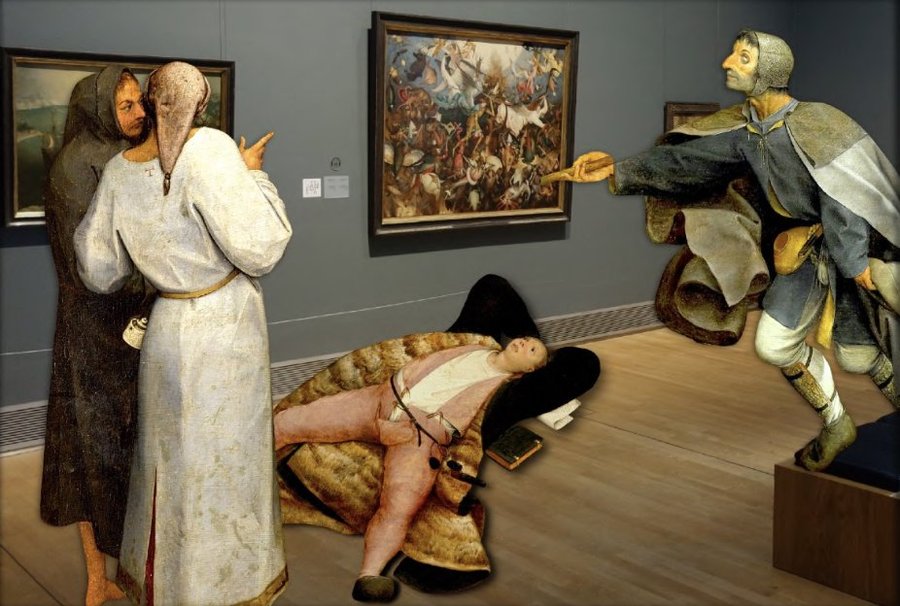
Bruegel Tribute
This piece pays direct tribute to Pieter Bruegel the Elder, the 16th-century Flemish master whose crowded, panoramic scenes of peasant life, folklore, and moral allegory remain unmatched in their sheer inventive density — a legacy this collage series returns to more than once.
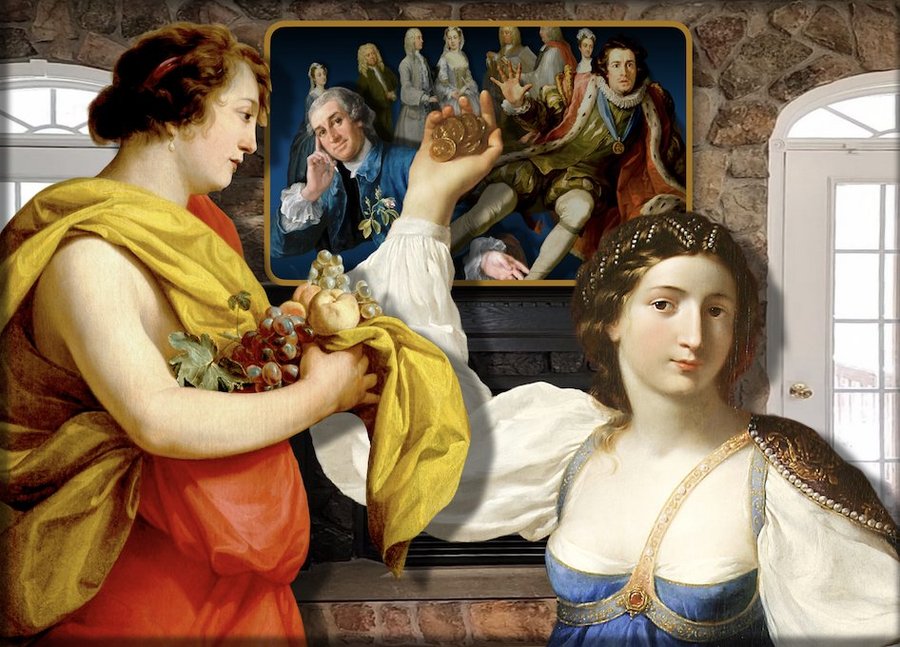
Delivery
William Hogarth’s moralizing satire (1757–1764), Theodoor Rombouts’ candlelit Caravaggesque scenes (1630), and Elisabetta Sirani’s assured Bolognese Baroque compositions (1657) span more than a century of European painting, united here by a shared interest in the drama of everyday exchange.
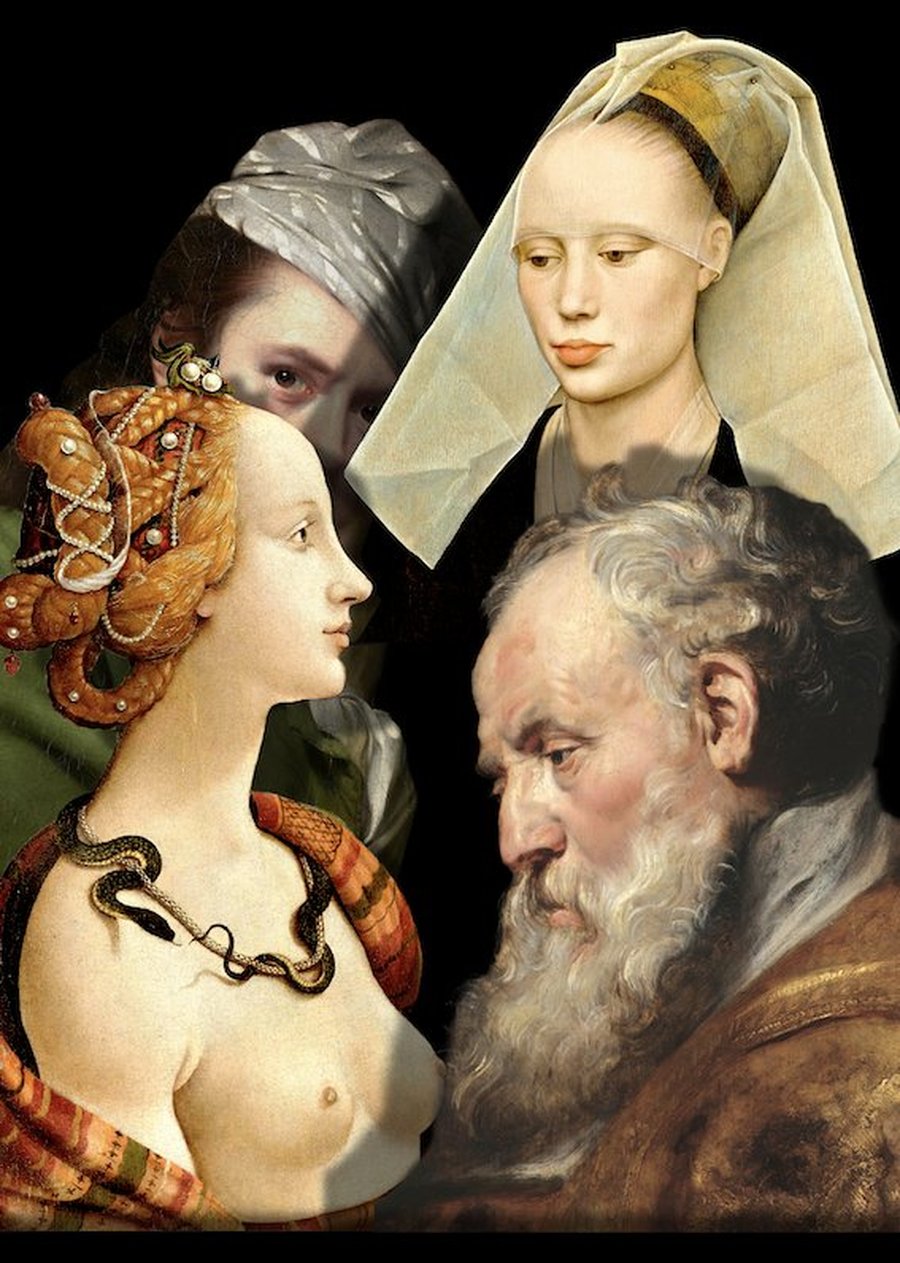
Disinibita
This collage spans nearly three centuries of painting, from Rogier van der Weyden’s austere 15th-century Flemish portraiture (1460) through Piero di Cosimo’s inventive Florentine mythologies (1480) to Peter Paul Rubens’ sensuous Baroque figures (1618) and Joseph Wright of Derby’s candlelit Enlightenment scenes (1765) — each artist, in his own era, pushing against the restraint of his time.
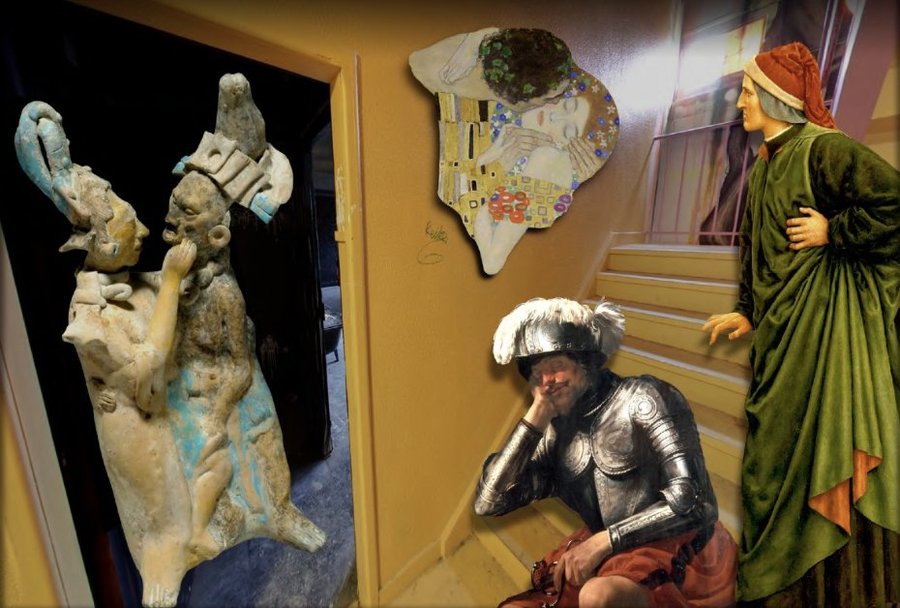
Dormitory
Gustav Klimt’s gilded Vienna Secession portraits (1907), Hendrick ter Brugghen’s Utrecht Caravaggisti candlelight (1630), and Henry Holiday’s Pre-Raphaelite-adjacent Victorian narrative painting (1883) each explore intimate, enclosed spaces — the shared thread behind this collage’s title.
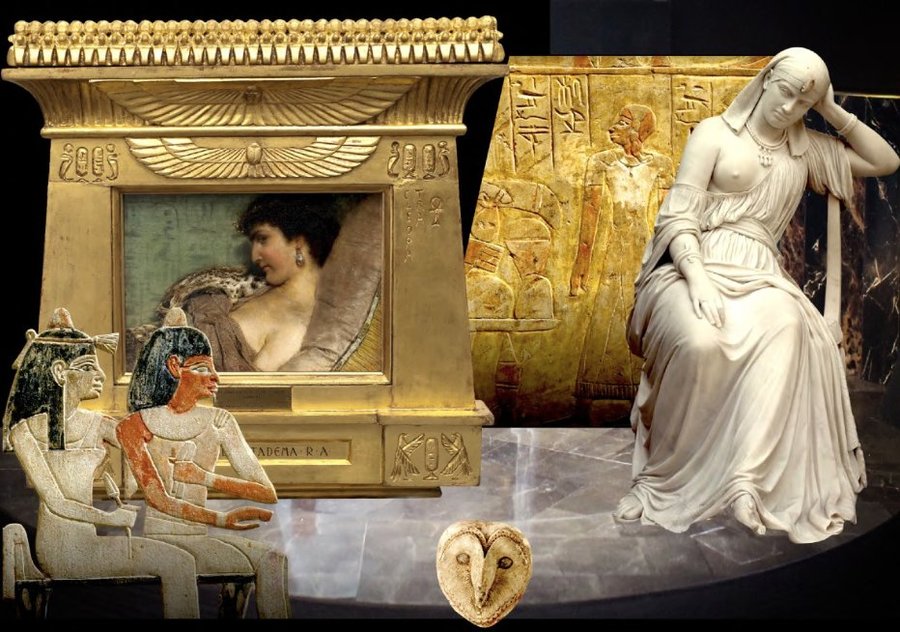
Egyptomania
Sir Lawrence Alma-Tadema’s meticulously researched scenes of antiquity (1875) and William Wetmore Story’s Neoclassical sculpture (1869) both belong to the 19th century’s sweeping fascination with ancient Egypt — a fashion, sparked by archaeological discovery, that shaped painting, sculpture, and design across Europe and America.
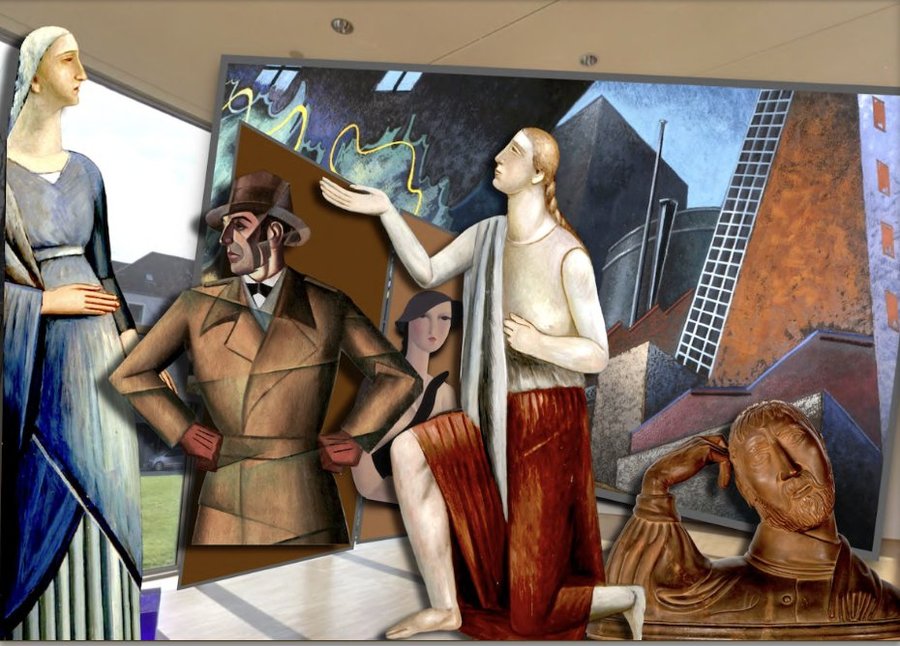
Futurist Quotes
Carlo Carrà, Pippo Rizzo, and Enrico Prampolini were all central figures of Italian Futurism, though their works cited here — spanning 1919 to 1942 — trace the movement’s long evolution, from Carrà’s early metaphysical turn to Prampolini’s late aeropittura.
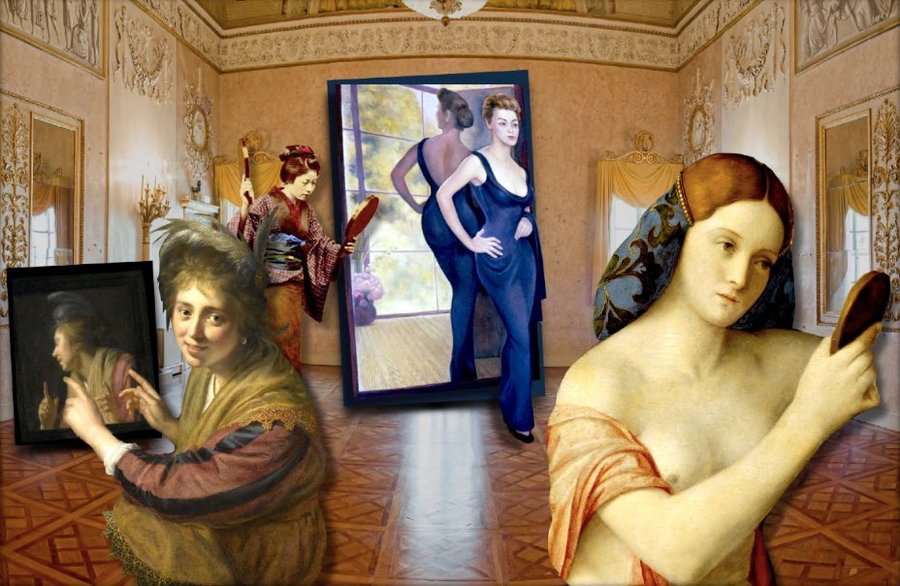
Hall of Mirrors
This collage crosses continents and centuries: Paulus Moreelse’s Dutch Golden Age portraiture (1632), a Japanese Edo-period work (c. 1860), Giovanni Bellini’s late Venetian Renaissance painting (1515), and Diego Rivera’s 20th-century Mexican Muralism (1956) — four distinct traditions of representing the self reflected back.
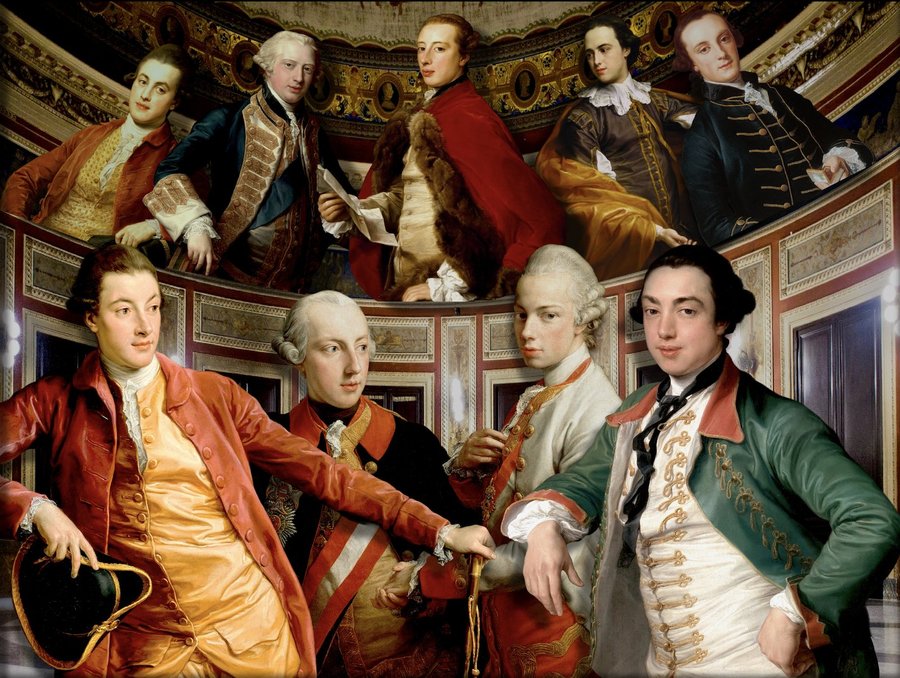
Lords of Batoni
Pompeo Batoni was the portraitist of choice for young European aristocrats completing their Grand Tour of Italy — his sitters here include Emperor Joseph II with Grand Duke Pietro Leopoldo of Tuscany alongside English noblemen William Fermor, Edward Weld, John Talbot, and James Caulfeild, a roll call of 18th-century privilege captured at the height of Batoni’s fame.
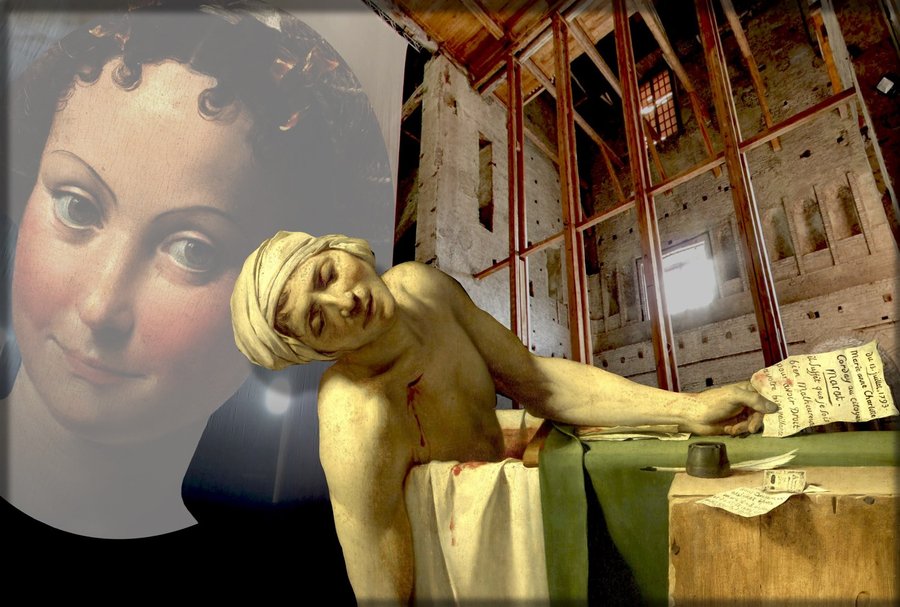
Love Suicide
Parmigianino’s elegant Mannerist figures (1532) and Jacques-Louis David’s severe Neoclassical history painting (1793, the year of Marat’s death) frame this collage’s meditation on love and mortality across two very different moments in European painting.
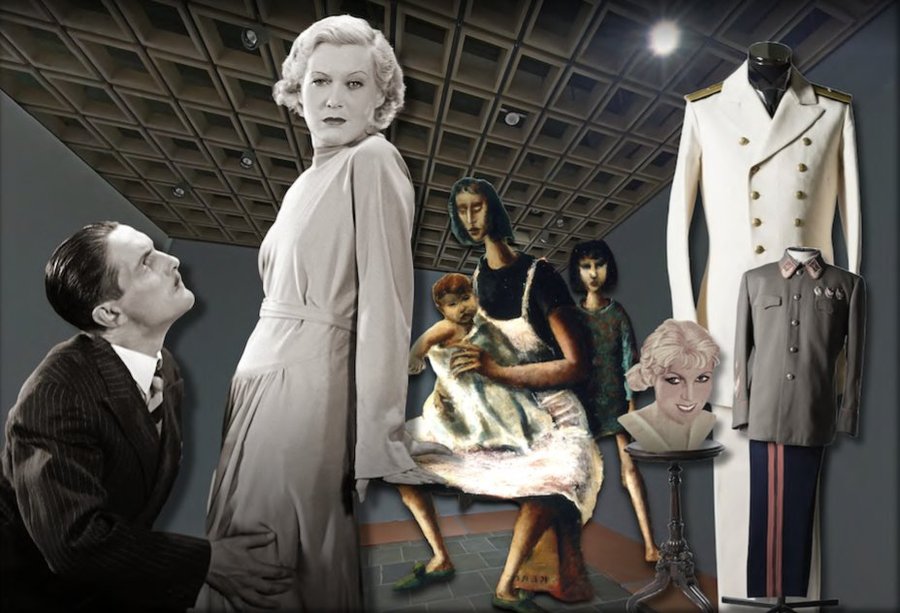
Marital Infidelity
Lyubov Orlova, the most celebrated actress of Soviet cinema, appears here via stills from two of her late-1930s films, set against Russell Drysdale’s 1941 Australian modernist painting — a pairing that crosses screen and canvas, East and West, in its portrait of domestic tension.
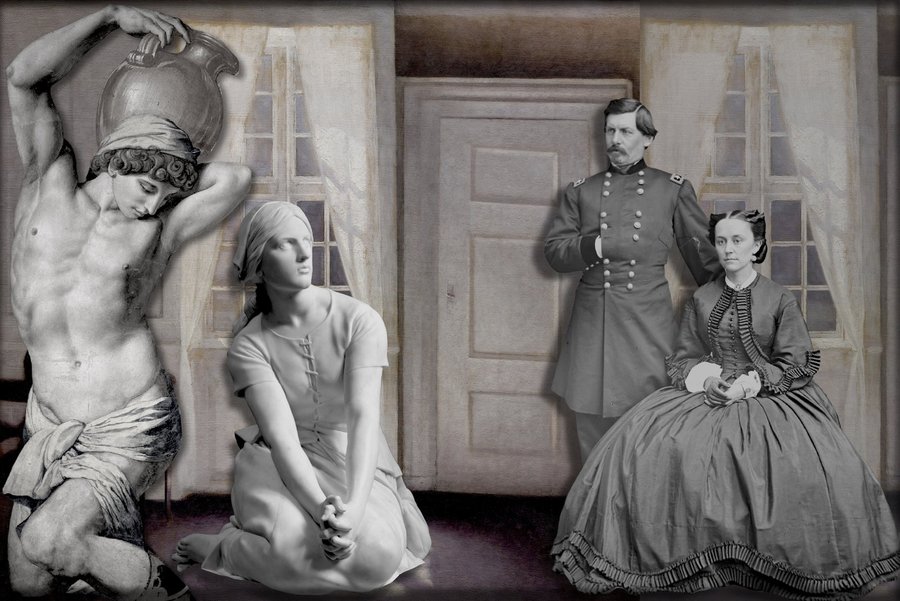
Mr. Mathew’s Temptation
Agnolo Bronzino’s icily elegant Mannerist portraiture (1540) and Russell Drysdale’s Australian modernism (1941) are set against a photograph attributed to Mathew Brady (1865), America’s foremost Civil War-era photographer — three very different lenses on temptation, four centuries apart.
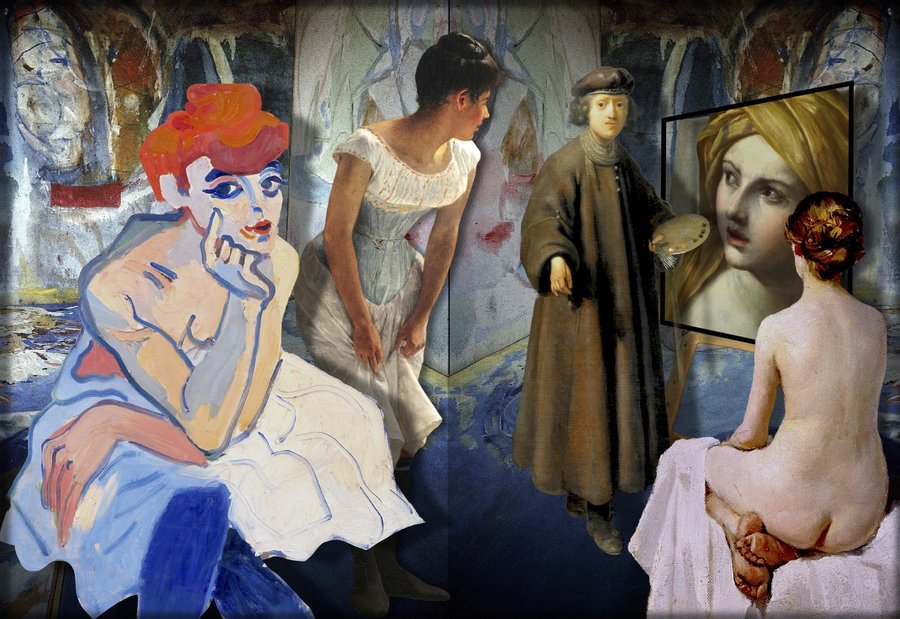
Nude Study
André Derain’s Fauvist color (1906), José Ferraz de Almeida Júnior’s Brazilian academic realism (1898), Guido Reni’s serene Bolognese Baroque classicism (1620), and Janis Rozentāls’ Latvian Romantic Symbolism (1896) approach the studio nude from four national traditions and three centuries.
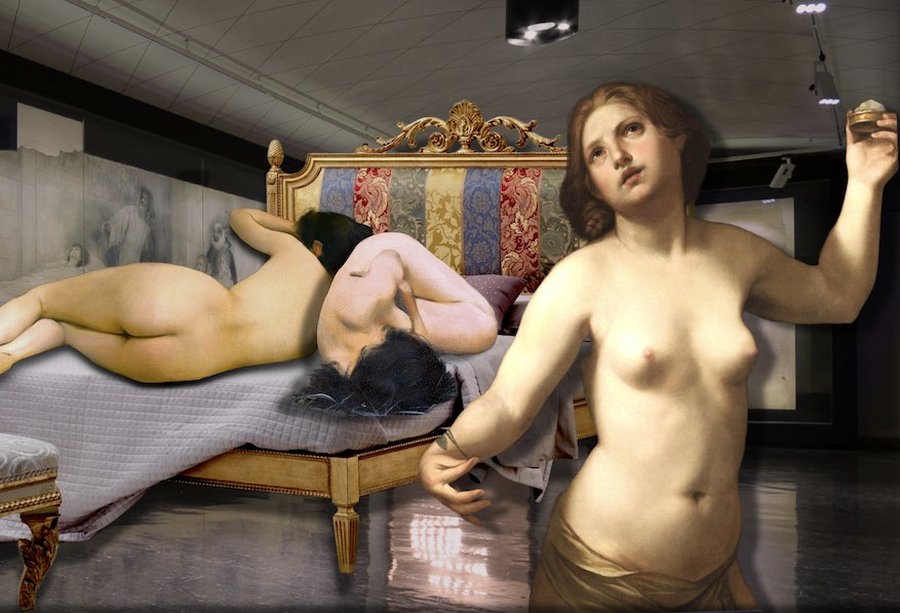
Passata l’Estasi
Ramon Casas’ Catalan modernisme (1894–95) and Guido Cagnacci’s dramatically lit Baroque canvases (1650) both linger on the moment after intensity has passed — a quiet, contemplative aftermath rendered across two very different centuries and countries.
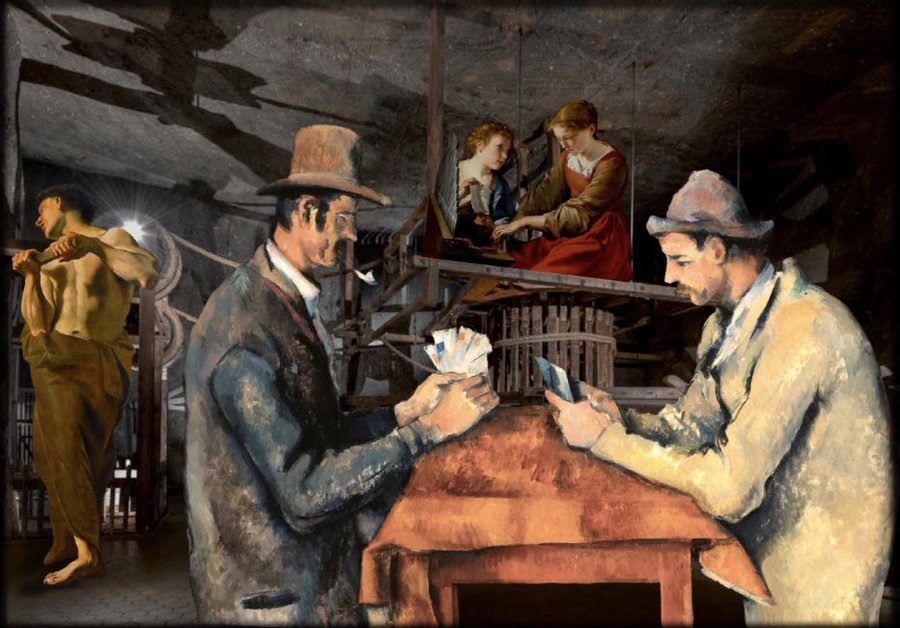
Pastime
Orazio Gentileschi’s Caravaggesque naturalism (1620) and Paul Cézanne’s proto-Cubist structural experiments (1893) stand nearly three centuries apart, yet both artists treated the leisure of everyday figures as worthy of serious, sustained study.
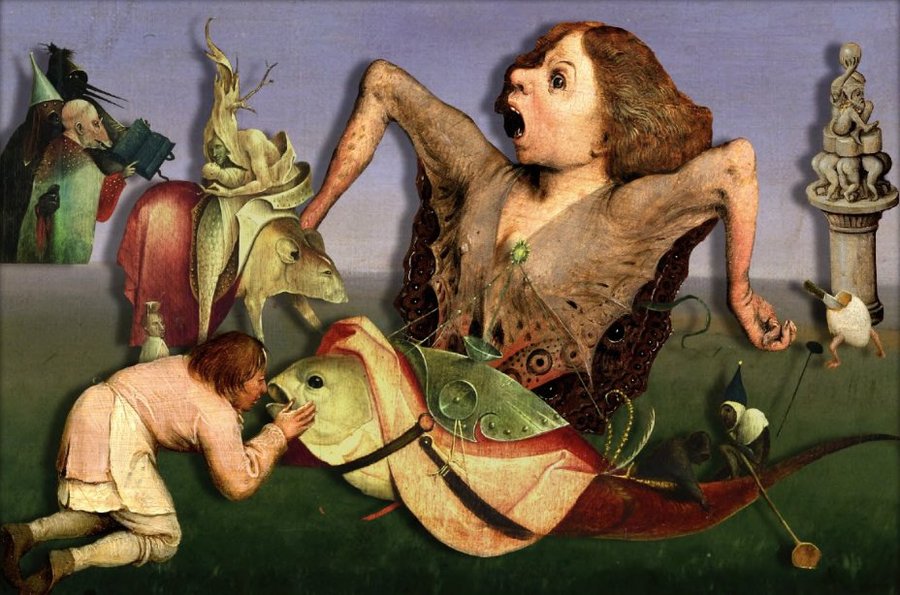
Pieter’s Fantasy
Pieter Bruegel the Elder’s 1562 work belongs to his celebrated run of fantastical, densely populated visions — paintings like The Fall of the Rebel Angels and Dulle Griet, teeming with invented creatures drawn from Netherlandish folklore and Hieronymus Bosch’s earlier example.
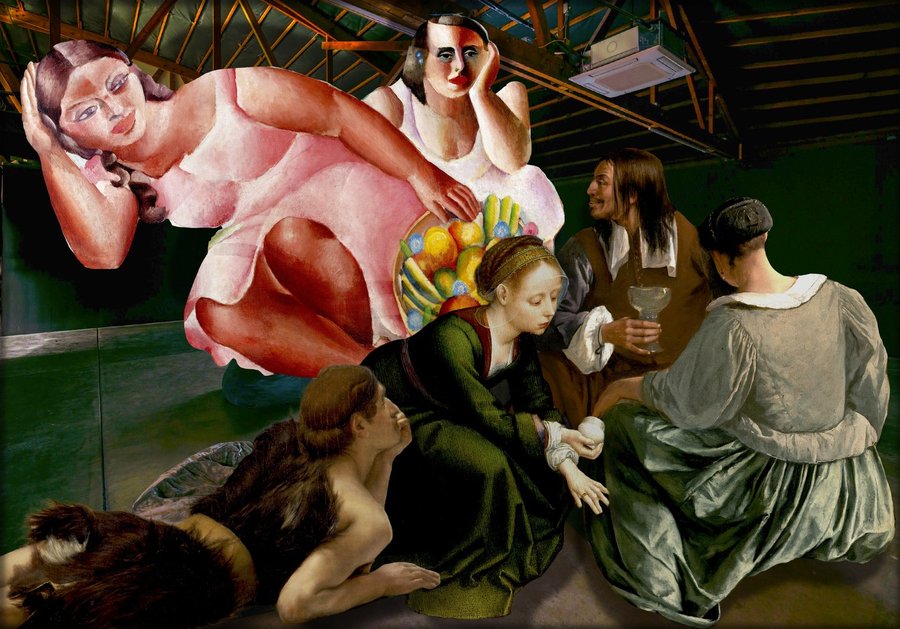
Private Screening
Brazilian modernist Emiliano Di Cavalcanti (1932), Lawrence Alma-Tadema’s antiquity revival (1885), Early Netherlandish master Gerard David (1515), and Jan Steen’s Dutch Golden Age comedy (1663) each stage a scene meant to be watched — four centuries of painters setting up their own private theatre.
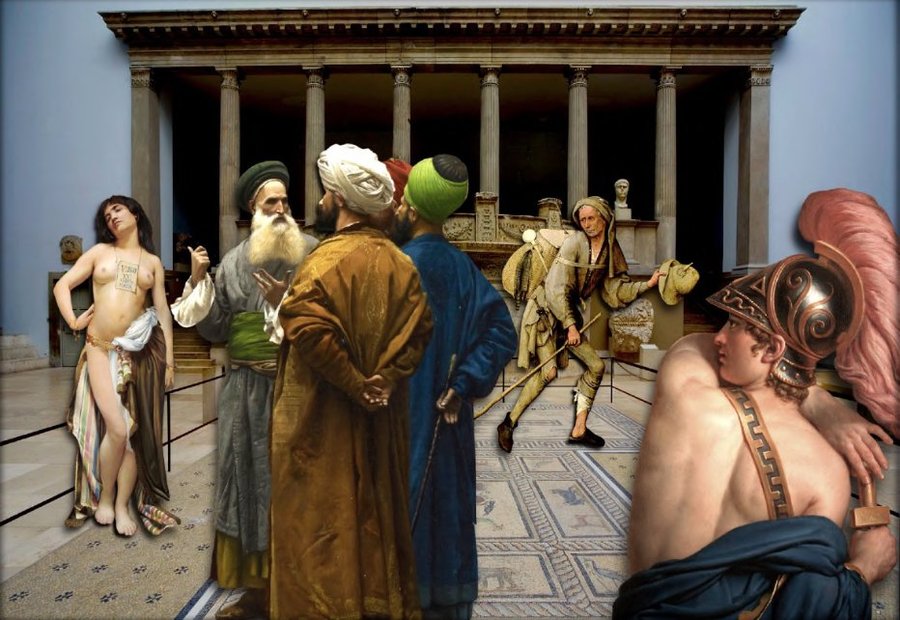
Slave of all Ages
Jean-Léon Gérôme’s Orientalist slave-market scenes (1887), Hieronymus Bosch’s moralizing fantasies (1510), and Jacques-Louis David’s late Neoclassicism (1818) span three centuries of painters confronting bondage and captivity, each through the visual language of his own era.
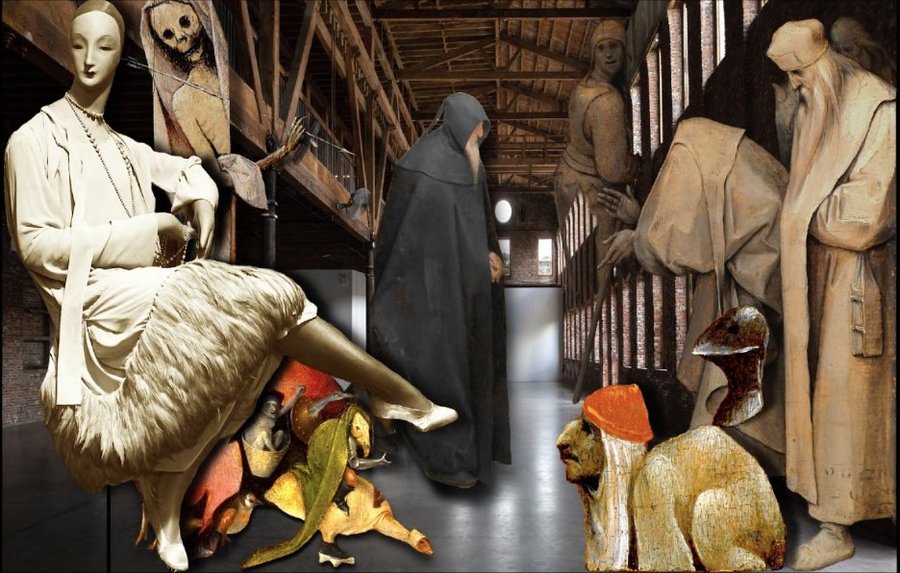
Surreal Dream
Hieronymus Bosch’s nightmarish, encyclopedic invented creatures (1485) directly inspired the generation of Netherlandish painters that followed, including Pieter Bruegel the Elder (1568) — two visionaries whose fantastical imagery still reads as startlingly surreal five centuries later.
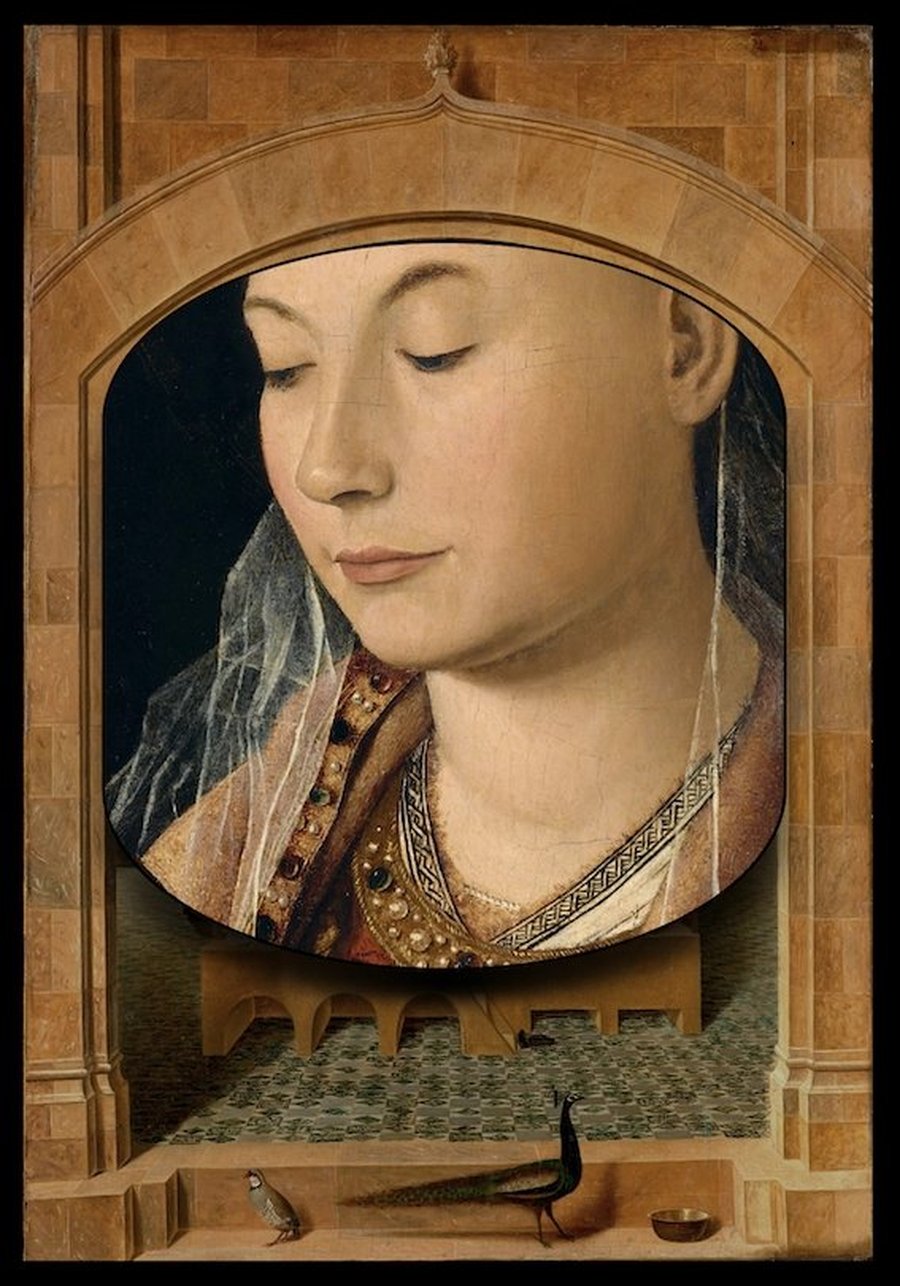
Velata Nostalgia
Antonello da Messina, the Sicilian master who introduced Netherlandish oil-painting technique to Italy, is represented here by two works from the late 1460s and 1470s — portraits whose quiet, veiled introspection helped define Early Renaissance portraiture.
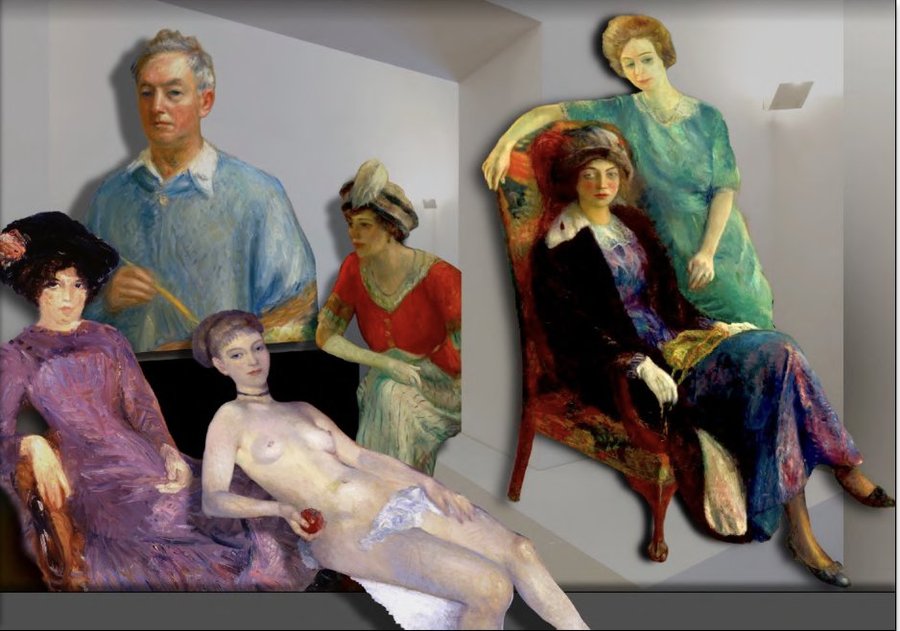
William’s Atelier
William Glackens, a founding member of the Ashcan School, painted the unglamorous energy of early 20th-century American city life with a loose, Impressionist-influenced brush — his own studio, implied by this collage’s title, was very much part of that world.
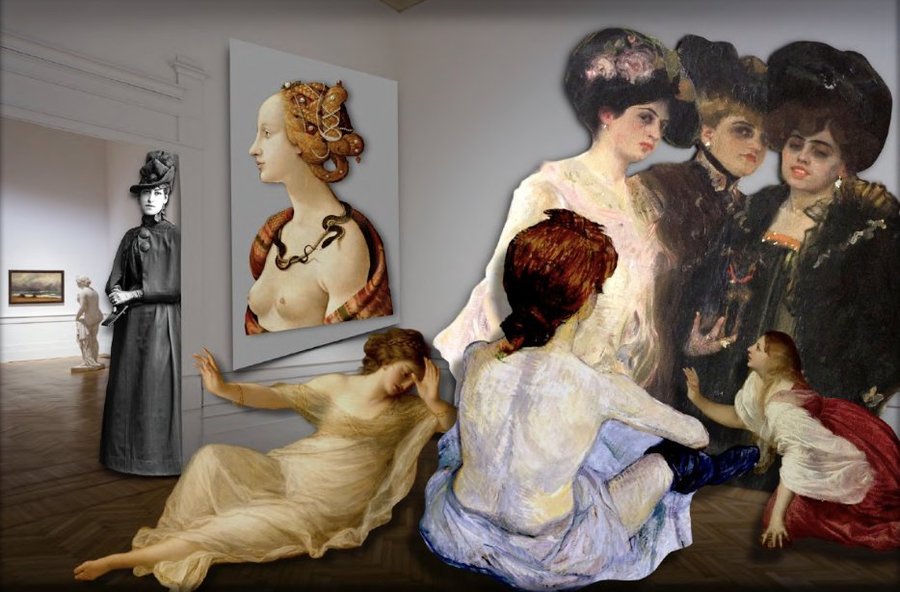
Women Up
Five artists across four centuries — Piero di Cosimo’s Florentine invention (1490), Angelica Kauffmann’s Neoclassical grace (1774), Titian’s High Renaissance mastery (1511), Toulouse-Lautrec’s Montmartre nightlife (1889), and Oleksandr Murashko’s Ukrainian Impressionism (1903) — each placed women at the center of their compositions.
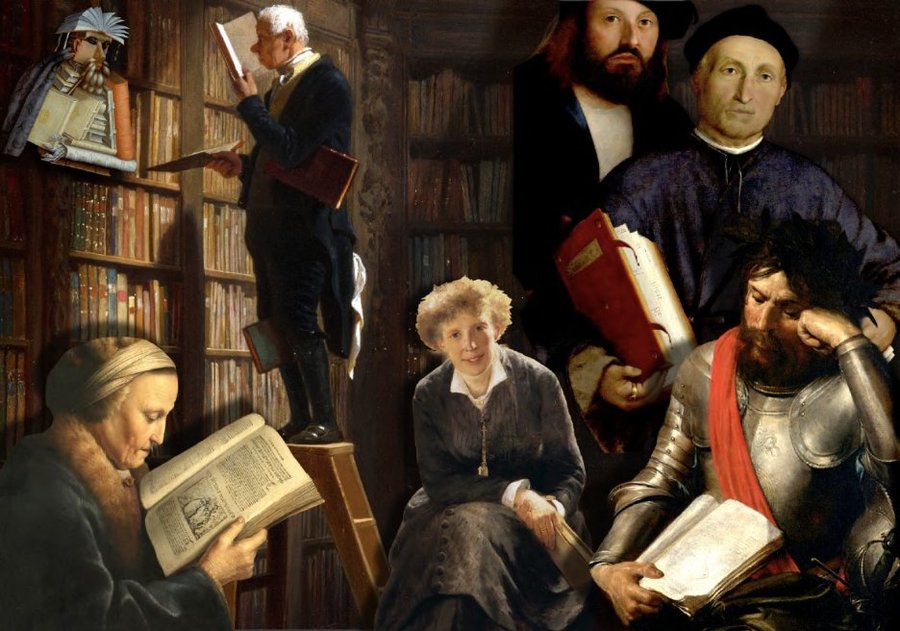
World of Books
Giuseppe Arcimboldo’s inventive composite portraiture (1570), Lorenzo Lotto’s psychologically acute Venetian portraits (1539), Gérard Dou’s meticulous Dutch fijnschilder technique (1630), Valentin de Boulogne’s Caravaggesque naturalism (1623), Carl Spitzweg’s gently comic genre scenes (1850), and Bertha Wegmann’s Nordic realism (1881) span three centuries of painters fascinated by books, readers, and scholars.
Private Glances is part of Blu Artworks’ wider body of work — 577 original SIAE-registered collages in total. Explore the Sguardi Privati fa parte del lavoro più ampio di Blu Artworks — 577 collage originali registrati SIAE in totale. Esplora la Full GalleryGalleria Completa.