Realtà Surreale
Twenty-Nine Collages Where Surrealism Meets the Old Masters
29 collages in this catalogcollage in questo catalogo
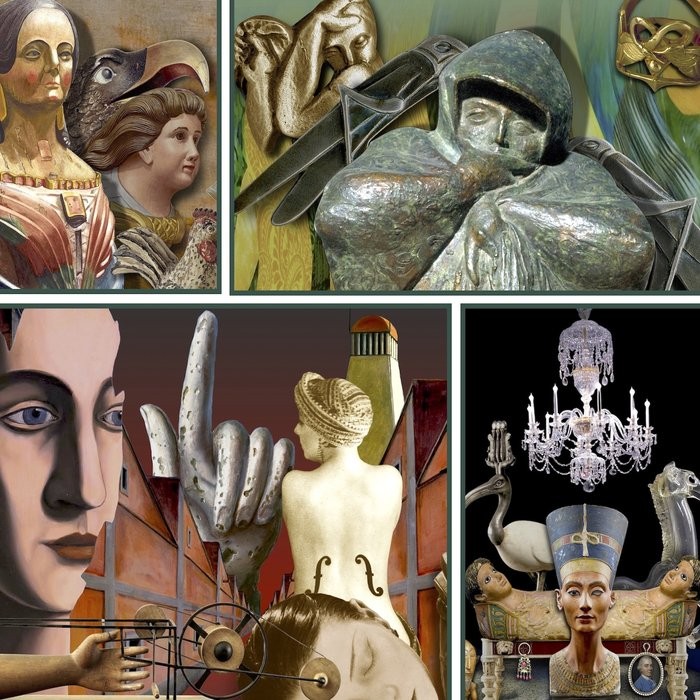
Realtà Surreale — Italian for “surreal reality” — pairs Surrealism's own most iconic images — Dalí's melting clocks, Magritte's bowler-hatted men, Picasso's Weeping Woman, Man Ray's violin-backed nude — with Renaissance profiles, Egyptian busts, and folk sculpture drawn from across art history. Each of the twenty-nine pieces is available as a high-resolution, 300dpi, royalty-free download for €39, ready for print at any size.
View Full Gallery →Vedi la Galleria Completa → View All Collections →Vedi Tutte le Collezioni →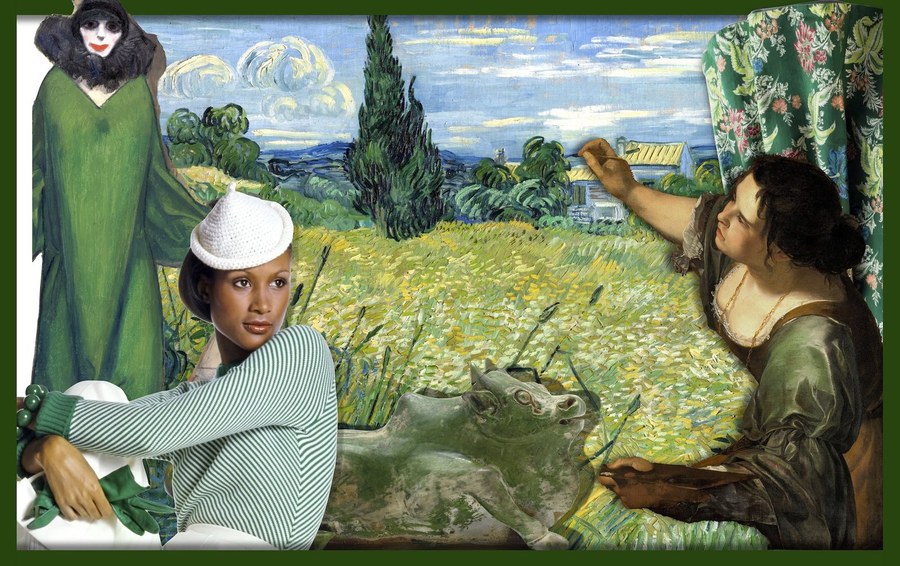
Artist Fakes
On the right of our collage, we can see the self-portrait of the famous 17th-century Italian painter Artemisia Gentileschi, the first female artist to sign her paintings. Her fame, however, has often been attributed to a dramatic event in her life, which made her a heroine for having the courage to denounce her rapist. It was one of the first documented rape trials in history. But she was not believed and had to endure the court's inquisitorial methods to prove her virginity prior to the assault.
Sulla destra del nostro collage possiamo vedere l'autoritratto della famosa pittrice italiana del XVII secolo Artemisia Gentileschi, che fu la prima donna a firmare i suoi dipinti. La sua fama, tuttavia, è stata spesso attribuita agli eventi drammatici e della sua vita, che la resero un'eroina femminista, per aver denunciato il suo stupratore. Fu uno dei primi processi per stupro documentati nella storia. Ma, come accade ancora oggi, la vittima finisce sul banco degli imputati. Così, Artemisia, l'accusatrice, viene torturata e deve sopportare i metodi inquisitoriali del tribunale per provare la sua verginità prima dello stupro. Viene così sottoposta a una tortura pensata per i pittori, che consiste nello strizzare le loro dita con delle corde fino a farle sanguinare. Una punizione atroce per chiunque, soprattutto per un artista.
Bipolar Personality
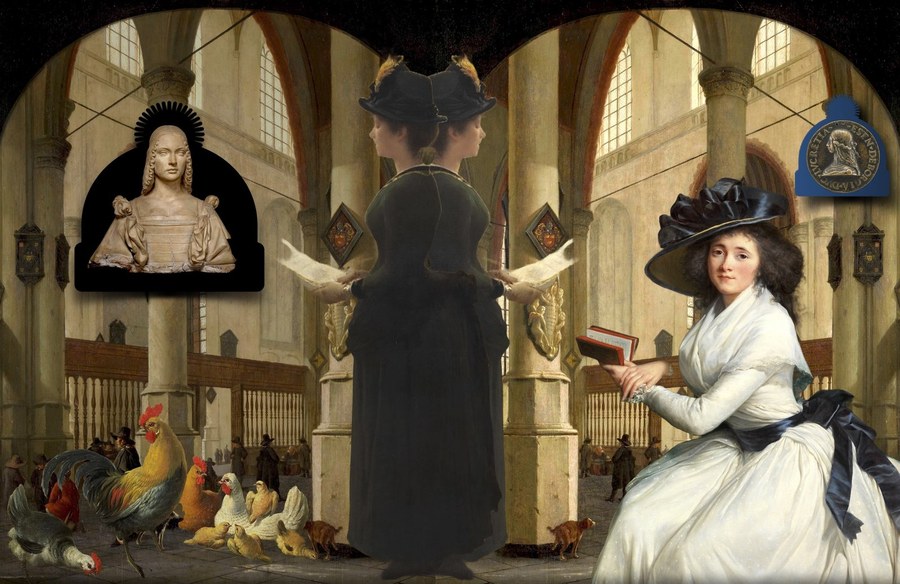
On the right, the melancholy woman dressed in white is a work by Élisabeth Vigée Le Brun, one of the most sought- after and acclaimed female painters in France—a woman capable of building her own success in a society run almost entirely by men. Her rise was such that one of her greatest admirers was Queen Marie Antoinette, with whom the painter shared both joy and sorrow. The two medallions hanging at the top of the columns depict the faces of Isabella d'Este and Lucrezia Borgia, respectively. Two true "first ladies," among the most famous and powerful women of the Italian Renaissance.
Il disturbo bipolare è caratterizzato dalla presenza di periodi di depressione profonda e prolungata alternati a periodi di umore eccessivamente elevato o irritabile. La donna malinconica ritratta a destra, vestita di bianco, è un'opera di Élisabeth Vigée Le Brun, una delle pittrici più ricercate e apprezzate in Francia; non solo, una donna capace di costruire da sola il proprio successo in una società gestita quasi interamente da uomini. La sua ascesa fu tale che una delle sue più grandi ammiratrici fu la regina Maria Antonietta, con cui la pittrice condivise gioie e dolori. I due medaglioni che si vedono appesi in cima alle colonne riproducono rispettivamente i volti di Isabella d'Este e Lucrezia Borgia. Due vere e proprie "première dame", tra le donne più famose e potenti del Rinascimento italiano.
Bodyguard Angels
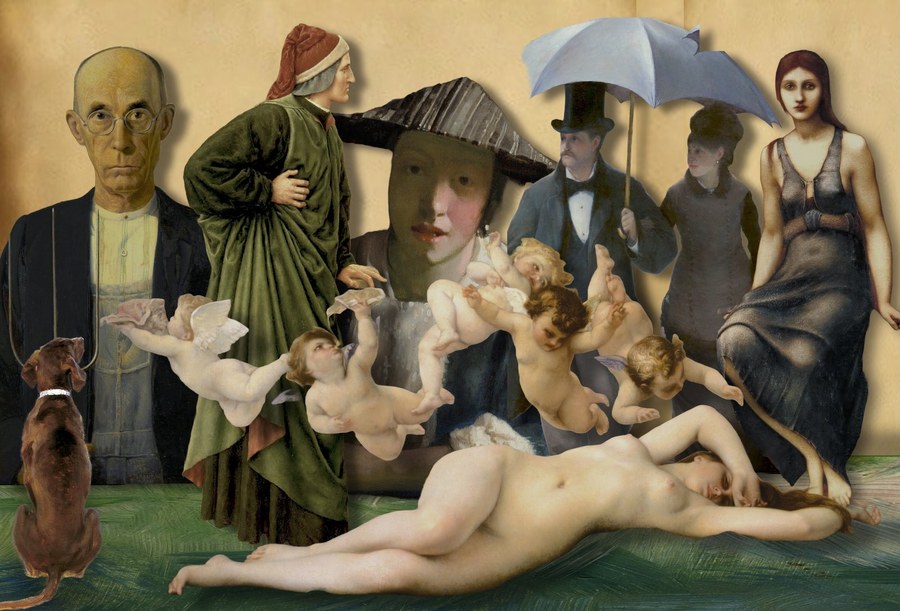
The central image of our collage is taken from the painting "The Birth of Venus" by French artist Alexandre Cabanel: Venus is lying facing forward with her head turned toward the viewer's right, her long hair cascading beneath her body. The young goddess appears to be shielding herself from the sunlight with her right hand. Cabanel presented the painting at the 1863 Paris Salon. The work achieved great success, but it also sparked a heated debate in the press. Napoleon III purchased Cabanel's painting and added it to his personal collection. The Birth of Venus is an example of a style of painting highly praised by French patrons in the late 19th century; this classical theme in particular enjoyed tremendous popularity and was interpreted by many artists.
L'immagine centrale del nostro collage si riferisce al dipinto del 1863 "La nascita di Venere" dell'artista francese Alexandre Cabanel: qui Venere è distesa frontalmente con la testa rivolta verso la destra dell'osservatore e i lunghi capelli che le scivolano sotto il corpo. La giovane dea sembra proteggersi dalla luce del sole con la mano destra. Cabanel presentò il dipinto al Salon di Parigi del 1863. L'opera ottenne un grande successo, ma suscitò anche un acceso dibattito sulla stampa. Napoleone III acquistò il dipinto di Cabanel e lo incluse nella sua collezione personale. La Nascita di Venere è un esempio di pittura molto apprezzata alla fine dell'Ottocento dalla committenza francese, sia pubblica che privata. In particolare, questo tema classico ebbe grande successo nel corso dell'Ottocento e fu interpretato da molti artisti.
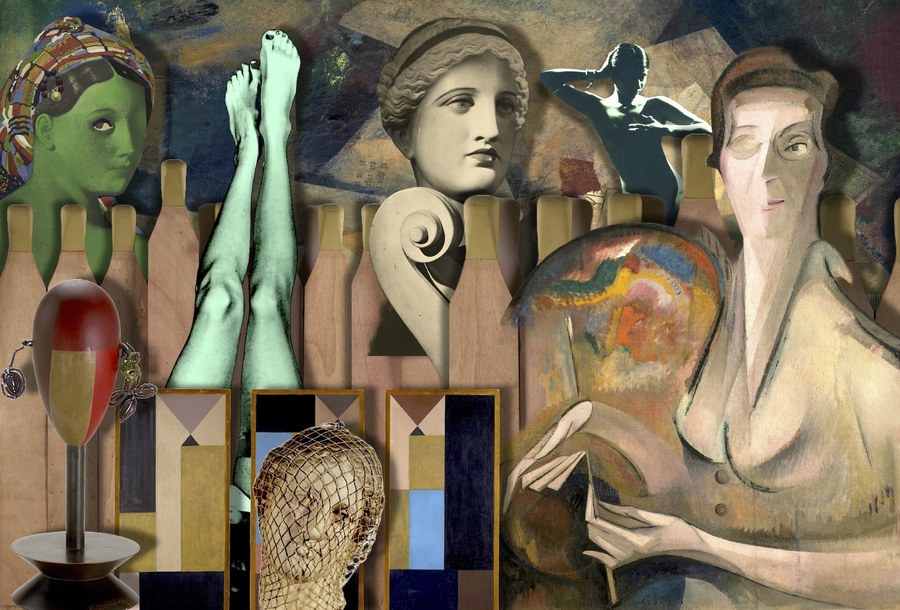
Dada Dadà
From the French word "dadaïsme", derived from "dada"— considered one of the first words spoken by children—the name was adopted by the artistic and literary movement that developed from 1916 to 1923. It was a true cultural revolt that proposed the overturning of all old orders and values to reaffirm the complete irrationality of art. The importance of Dadaism lies not so much in the individual works produced by the movement, but rather in its contribution to the cultural renewal of the last century, reevaluating freedom of expression and the dimension of the fantastical and ironic as essential components of artistic creation. The technique best suited to the Dadaists was collage, often using waste materials, as a symbol of anti-conformism and social rebellion.
Dal francese "dadaisme", derivazione di "dada", considerata una delle prime parole pronunciate dai bambini, è il movimento artistico e letterario che si sviluppò dal 1916 al 1923. Un nome casuale per una vera e propria rivolta culturale che ha come sfondo storico la Prima Guerra Mondiale e propone il rovesciamento e la demistificazione di tutti i vecchi ordini e valori, per una riaffermazione della completa irrazionalità dell’arte. L'importanza del Dadaismo non risiede tanto nelle singole opere prodotte dal movimento, quanto nel contributo che ha dato al rinnovamento culturale del secolo scorso, rivalutando la libertà di espressione e la dimensione del fantastico e dell'ironico come componenti essenziali della creazione artistica. La tecnica più congeniale ai dadaisti è il collage, anche con l'uso di materiali di scarto, come segno di anti-arte.
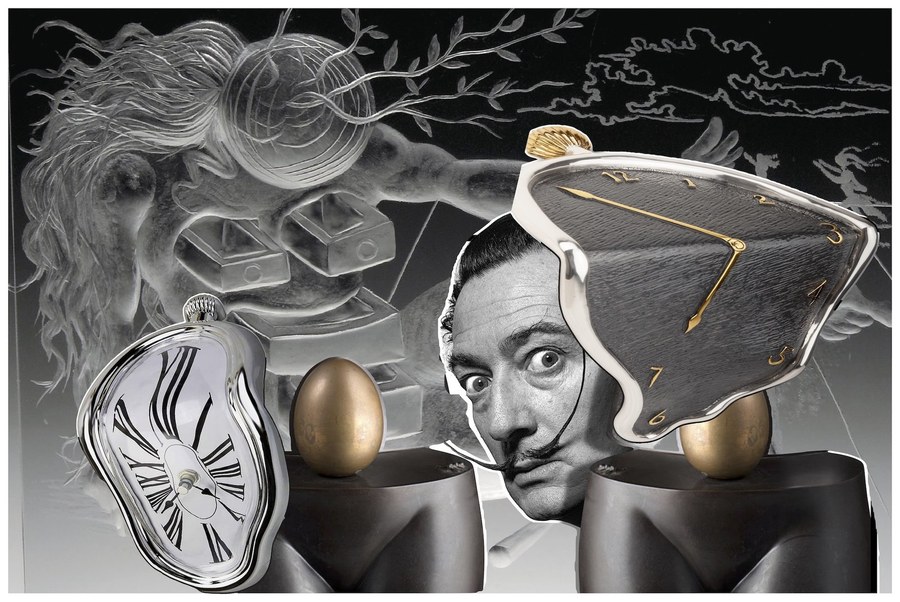
Dali's Time
Salvador Dalí (1904–1989) was a Spanish painter, sculptor, writer, photographer, filmmaker, and designer—a master and a world-famous personality known for his creations and his eccentric mustache. An icon of Surrealism, Salvador Dalí plays with the subject matter and materials of his paintings to create astonishing works. According to the eccentric artist, reality is dismantled to "systematize confusion and contribute to the total discrediting of the world of reality," while still maintaining a foundation of realism through easily recognizable objects in his work. “The blindness of human beings, constantly doing and re- doing the same things, surprises me; it astounds me that no painter before me ever thought of painting a soft watch!” (Salvador Dalí)
Salvador Dalí (1904 - 1989), è stato un pittore, scultore, scrittore, fotografo, regista, designer, sceneggiatore spagnolo, un maestro e un personaggio conosciuto in tutto il mondo, sia per le sue creazioni che per i suoi eccentrici baffi. Icona del Surrealismo, con opere sorprendenti, Salvador Dalí gioca con la materia e con i soggetti dei suoi dipinti. Secondo l’eccentrico artista, la realtà viene distrutta per "sistematizzare la confusione e contribuire a screditare completamente il mondo della realtà", pur mantenendo una sfumatura di realismo nelle sue opere grazie a oggetti facilmente riconoscibili. “La cecità degli esseri umani nel fare e rifare sempre le stesse cose mi sorprende, mi stupisce che nessun pittore prima di me abbia pensato di dipingere un orologio molle!” (Salvador Dalì)
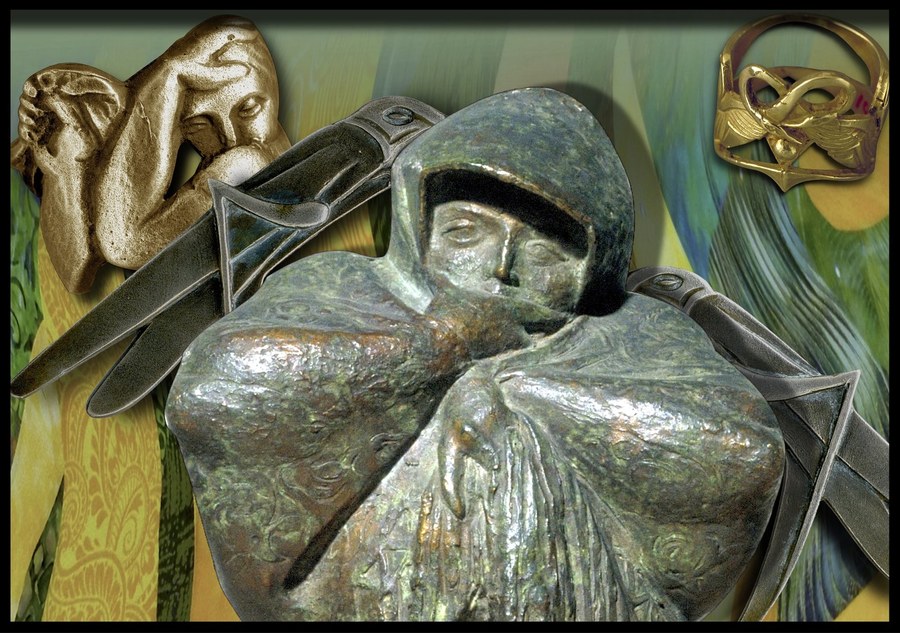
Death will come and have Your Eyes
"Death Will Come and Have Your Eyes" is a poem by Cesare Pavese, published posthumously in 1951 following the author's suicide a year earlier, triggered by the heartbreak he suffered over the American actress Constance Dowling. A famous actress in the 1940s, Dowling lived and acted in Italy between 1946 and 1950, which is when Pavese met her. He fell in love instantly and tried desperately to get close to her, but without success. However, fate brought them together a second time in Turin. After spending a few days together, their intense yet brief romantic idyll began. Shortly thereafter, Constance returned to the United States, leaving the poet heartbroken. With the end of that love story, all hope for the future vanished for Pavese—a moment when the horizon of life narrows to a dark slit through which one stares death in the eye...
"Verrà la morte e avrà i tuoi occhi" è una poesia di Cesare Pavese, pubblicata postuma nel 1951 dopo il suicidio dell'autore avvenuto un anno prima, anche per la delusione amorosa patita dal poeta per l'attrice americana Constance Dowling; famosa negli anni Quaranta. Visse e recitò in Italia tra il 1946 e il 1950 e fu proprio allora che Pavese la conobbe. Egli se innamorò immediatamente e cercò disperatamente di avvicinarsi a lei, ma senza alcun successo. Il destino li avrebbe, però, fatti incontrare una seconda volta a Torino. Lì, dopo aver trascorso alcuni giorni insieme, iniziò il loro intenso quanto breve idillio d’amore. Dopo poco tempo Constance ripartì negli Stati Uniti lasciando il poeta con il cuore infranto. Con la fine di quella storia d’amore si chiude per Pavese ogni speranza sul futuro. L’orizzonte vitale si restringe fino a diventare una fessura buia attraverso cui fissare la morte negli occhi. (ascolta la poesia)
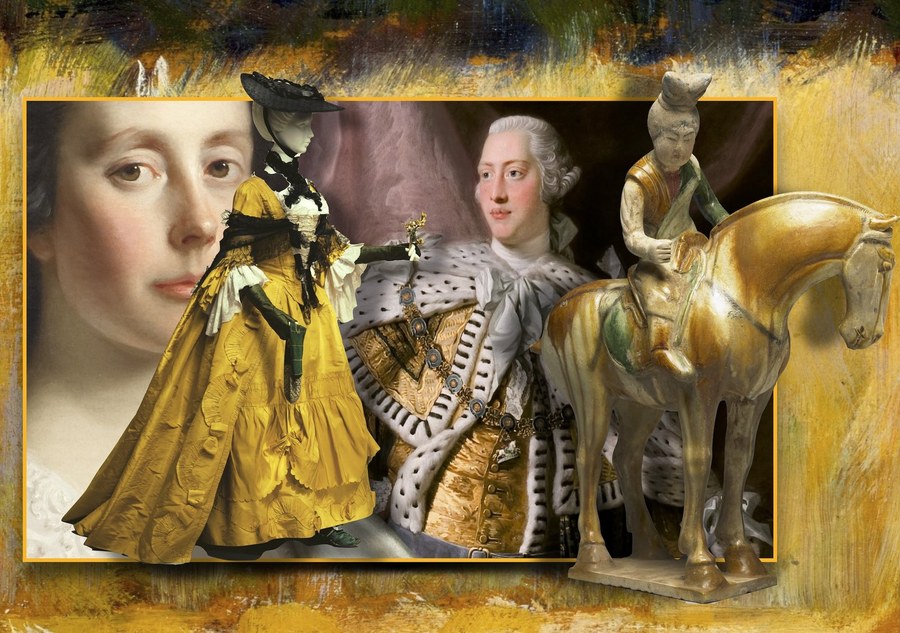
Decide your Future
Let us consider the noble-looking young man at the center of our collage. This is the English monarch George III, portrayed in 1765 by Allan Ramsay. Ascending the throne in 1760, the sovereign lived longer than any of his predecessors and became famous for two things: he was the king who lost America and, in the final stages of his reign, he went completely mad. Speaking of ruling dynasties, we conclude with the exquisite Chinese porcelain figurine (on the right of the collage) created to celebrate a princess of the Tang dynasty, which ruled China for nearly 300 years (618–907). Ancient Chinese culture has passed down centuries of wisdom, artifacts, and proverbs such as this: "The wise man does not worry about the past because it is over and cannot be changed, nor does he worry about the future because it is yet to come."
Consideriamo il giovane dall'aspetto nobile al centro del nostro collage. Si tratta del sovrano inglese Giorgio III, ritratto nel 1765 da Allan Ramsay. Il sovrano, salito al trono nel 1760, che visse più a lungo di tutti i suoi predecessori. Durante la sua vita, divenne famoso per due cose: fu il re che perse l'America e, nelle fasi finali del suo regno, divenne completamente pazzo. Parlando di dinastie regnanti, concludiamo con la preziosa statuetta in porcellana cinese (a destra del collage) realizzata per celebrare una principessa della dinastia Tang, che regnò a Vina per quasi 300 anni (626-907). L'antica cultura cinese ha tramandato nei secoli saggezza, oggetti e proverbi come questo: "Il saggio non si preoccupa del passato perché è concluso e non può essere cambiato, e non si preoccupa del futuro perché deve ancora venire".
Design Week
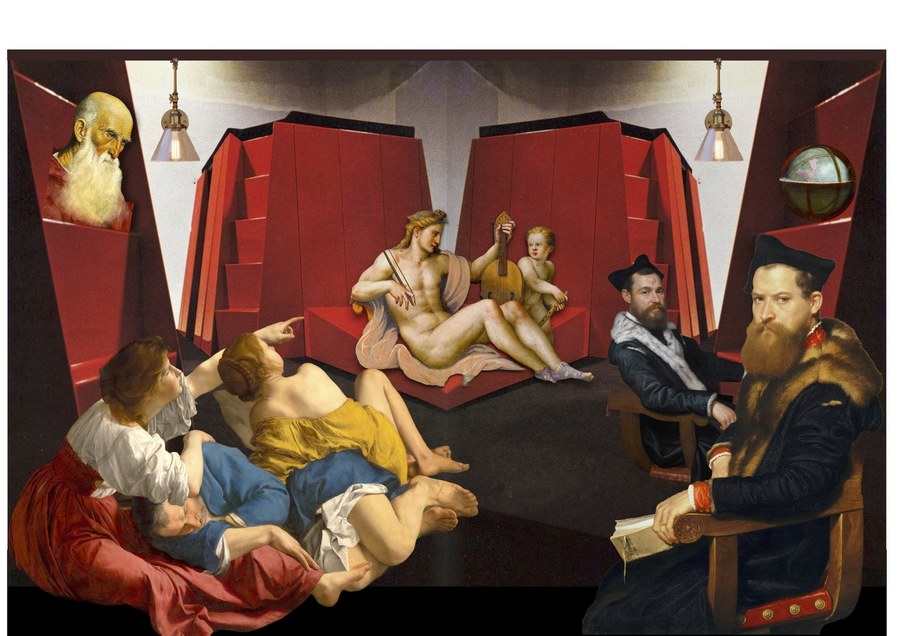
The Milan Design Week is an annual event held since 2003, featuring over 1,000 events scattered across the city. Let us now move from a high-society event to a legendary one. The bottom-left of our collage shows a detail from the painting Lot and His Daughters, painted in 1622 by the Tuscan artist Orazio Gentileschi, one of Caravaggio's most accomplished followers. The theme is a biblical event of rare drama: Lot's daughters witness God's destruction of the city of Sodom, which burns in the distance. Believing they must survive solely to perpetuate the human race, the daughters ply their father with alcohol to facilitate his incestuous seduction. Each daughter would later bear a son by Lot: Moab and Ammon, the founding fathers of tribes that were often hostile to one another.
La Milano Design Week è un evento annuale, in concomitanza con il Salone del Mobile, che si svolge dal 2003 con oltre 1000 eventi distribuiti in tutta la città. Passiamo ora da un evento mondano a uno leggendario. Il nostro collage mostra, in basso a sinistra, un dettaglio del dipinto "Lot e le sue figlie", dipinto nel 1622 dal toscano Orazio Gentileschi, uno dei più affermati seguaci di Caravaggio. Il tema è un evento biblico di rara drammaticità: le figlie di Lot assistono all'annientamento da parte di Dio della città di Sodoma, che brucia in lontananza. Credendo di poter sopravvivere solo per perpetuare la razza umana, le figlie somministrarono alcol al padre per favorirne la seduzione incestuosa. Ognuna di loro avrà poi un figlio da Lot: Moab e Ammon, capostipiti di tribù spesso avverse a Israele.
Desire for Modernity
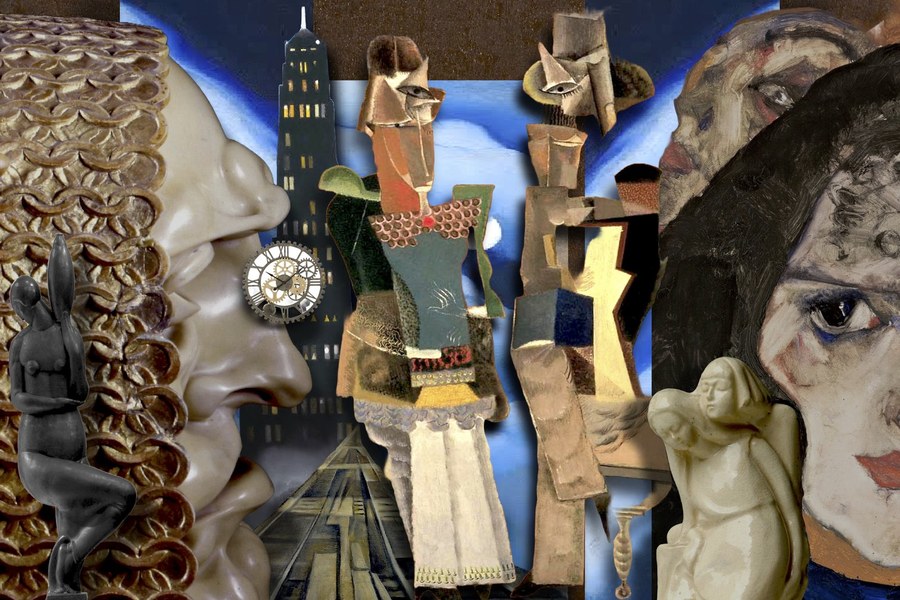
Max Weber (1881–1961) was a Jewish-American painter and poet who, in 1905, pursuing his dream of modernity, was finally able to move to Paris, where he attended Henri Matisse's academy and learned the poetic style of Modernism and Cubism. In 1908, he returned to Brooklyn, where he helped introduce Cubism to the United States—the most modern painting style of the era which, breaking with past tradition, sparked the revolution in contemporary art. We have included an example of his style in our collage inspired by modernity: it is the couple placed at the center. The title of the original 1919 painting, Conversation, strikes us as ironically ambiguous, and therefore extraordinarily modern.
Max Weber (1881 – 1961) fu un pittore e poeta americano di origine ebraica che, nel 1905, inseguendo il suo sogno di modernità, poté finalmente trasferirsi a Parigi dove frequentò la Scuola di Henri Matisse, apprendendo la poetica del modernismo e del cubismo. Tra gli artisti che più lo ispirarono ci furono anche Henri Rousseau e Pablo Picasso. Nel 1908 tornò a Brooklyn dove contribuì all'introduzione del cubismo negli Stati Uniti, lo stile pittorico più moderno dell'epoca che, rompendo con la tradizione del passato, diede inizio alla rivoluzione nell'arte contemporanea. Abbiamo incluso un esempio del suo stile nel nostro collage ispirato alla modernità: si tratta della coppia che abbiamo posto al centro; il cui titolo del dipinto originale, datato 1919, “Conversazione” ci sembra ironicamente ambiguo; perciò straordinariamente moderno.
Epochal Contaminations
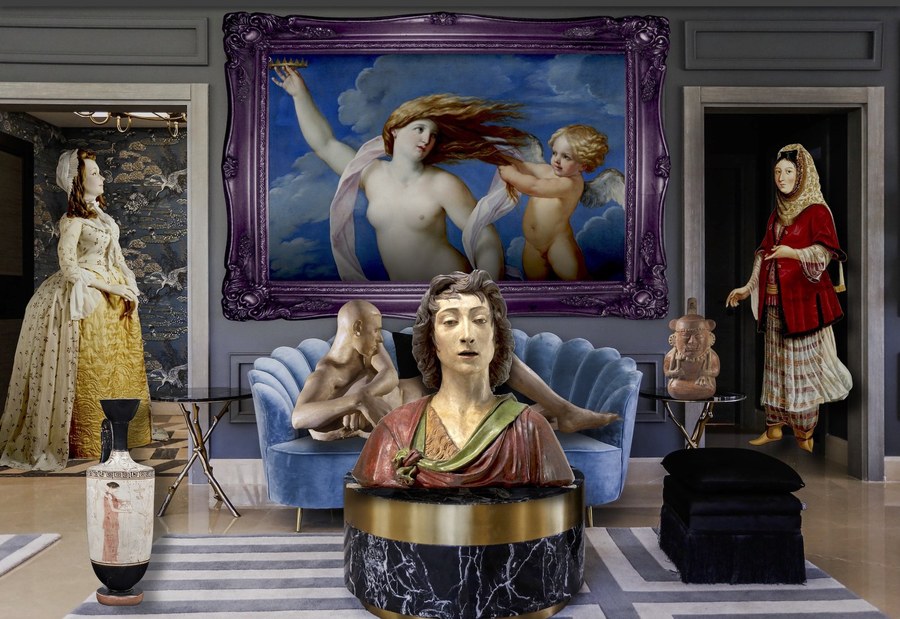
The collage features various representations of a highly popular artistic genre: the portrait. We begin with the girl at the doorway on the left, who is wearing an 18th-century "English-style gown" (robe à l'anglaise), consisting of a tight-fitting, one-piece bodice with an overskirt open at the front to reveal the underskirt. The large painting in a frame at the center, on the other hand, is a 1637 work by the Italian artist Guido Reni—an era that had no qualms about displaying nude figures even in public and religious spaces. During the Baroque period, especially in Austria and Bavaria, woodcarving was a widespread art form, as seen in the bust of the young man in the foreground; meanwhile, behind him, resting on the sofa, is a nude male figure carved in stone over 200 years ago.The composition concludes on the right doorway with a portrait of an Armenian woman in her traditional late-18th-century attire.
Il nostro collage presenta varie rappresentazioni di un genere artistico molto popolare: il ritratto: iniziamo con la ragazza sulla porta a sinistra, che indossa una "veste femminile all'inglese". La veste all'inglese del XVIII secolo consisteva in un corpetto aderente tagliato in un unico pezzo con una sopra-gonna aperta sul davanti per rivelare la sottoveste. Il grande dipinto, in cornice al centro, è opera dell'artista italiano Guido Reni del 1637; un'epoca che non aveva scrupoli a esporre figure nude anche in spazi pubblici e religiosi. Nel periodo barocco, soprattutto in Austria e Baviera, l'intaglio del legno era una forma d'arte diffusa, come il busto del giovane in primo piano; mentre dietro di lui, appoggiato sul divano, si trova una figura maschile nuda scolpita nella pietra oltre 200 anni fa. La composizione si conclude con un ritratto di una donna armena nel suo abito tradizionale di fine XVIII secolo sulla porta a destra.
Female Pride
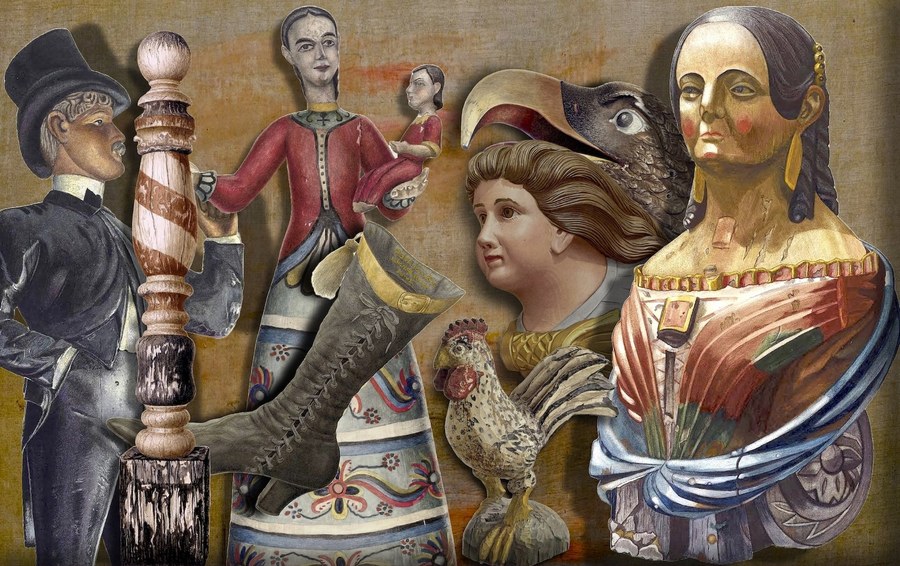
The Italian noun donna (woman) is the adapted form of the Latin word domina, which means lady or mistress. "But mistress of what? Initially—historically speaking—only of the home. Over the centuries, we have gained mastery over the hearts of our partners, poets, and writers, taking on an increasingly active role and embodying a spirit so close to the divine, generative and inspiring, both as mothers and as muses. Until we realized that, just like our male counterparts, the only thing that truly matters is to be mistresses of ourselves. Mistresses, therefore free—mistresses of our own lives, our choices, and everything we desire.” (Francesca Pizzigati)
“Il nome ‘donna’ è l'italianizzazione del termine latino ‘domina’, che significa signora o padrona. Ma padrona di cosa? Inizialmente (storicamente parlando), solo della casa. Nel corso dei secoli, abbiamo preso possesso del cuore dei nostri compagni, poeti e scrittori, divenendo sempre più attive, incarnando un ruolo così vicino al divino, generativo e ispiratore, come madri e come muse. Finché non abbiamo capito che, come i nostri colleghi maschi, l'unica cosa che conta è essere padrone di noi stesse. Padrone quindi libere, padrone della nostra vita e delle nostre scelte, e di essere tutto ciò che desideriamo.” (Francesca Pizzigati)
Fish and Klee
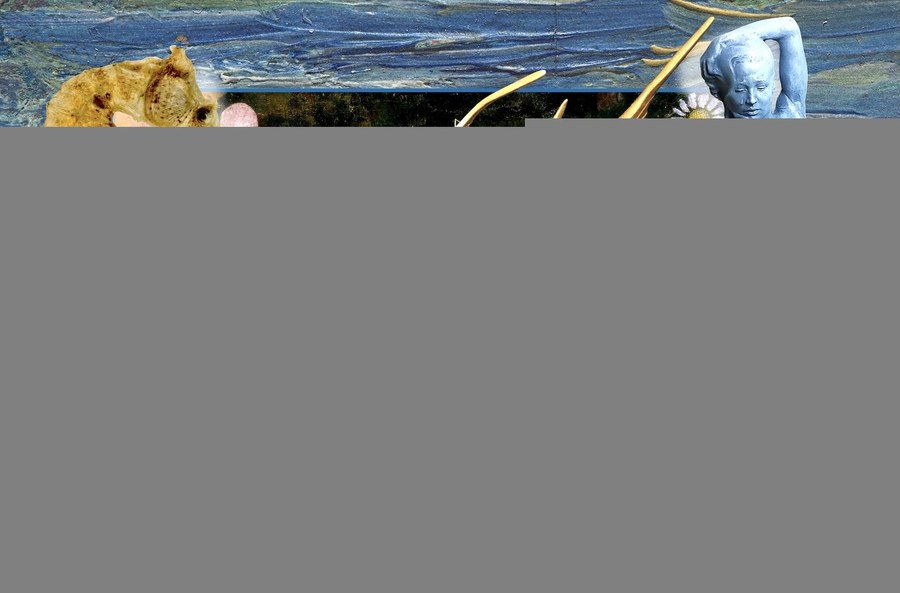
This collage draws inspiration from the famous 1925 painting Magic Fish by the Swiss artist Paul Klee, one of the greatest exponents of early 20th-century abstract art. A versatile artist, he successfully engaged in various disciplines until finding his true expression in painting. The fish is one of the artist's favorite motifs for intellectual meditation and childhood memories. As the years passed, Klee's popularity grew, solidified, and was cemented through a series of successful exhibitions across Europe—from London to France—and even overseas in the United States. However, the Nazi regime did not share the widespread acclaim Klee was receiving; they labeled his creations as "degenerate art" to be censored and removed all of his works from German museums.
Questo collage trae ispirazione dal celebre dipinto “Magic Fish" del 1925, realizzato dallo svizzero Paul Klee, uno dei massimi esponenti dell'astrattismo di inizio Novecento. Artista poliedrico, si cimentò con successo in diverse discipline, fino a trovare la sua vera espressione nella pittura, e il pesce è una delle immagini preferite dall'artista per la meditazione intellettuale. Passano gli anni e la popolarità di Klee cresce, si consolida e si consacra con una serie di mostre di successo in tutta Europa, da Londra alla Francia, e persino oltreoceano, arrivando fino agli Stati Uniti. Ma il regime nazista non era dello stesso parere riguardo al consenso che Klee stava ottenendo e incluse le sue opere tra gli artisti "degenerati" da censurare, rimuovendo tutte le sue opere dai musei tedeschi.
Gulliver's Dreams
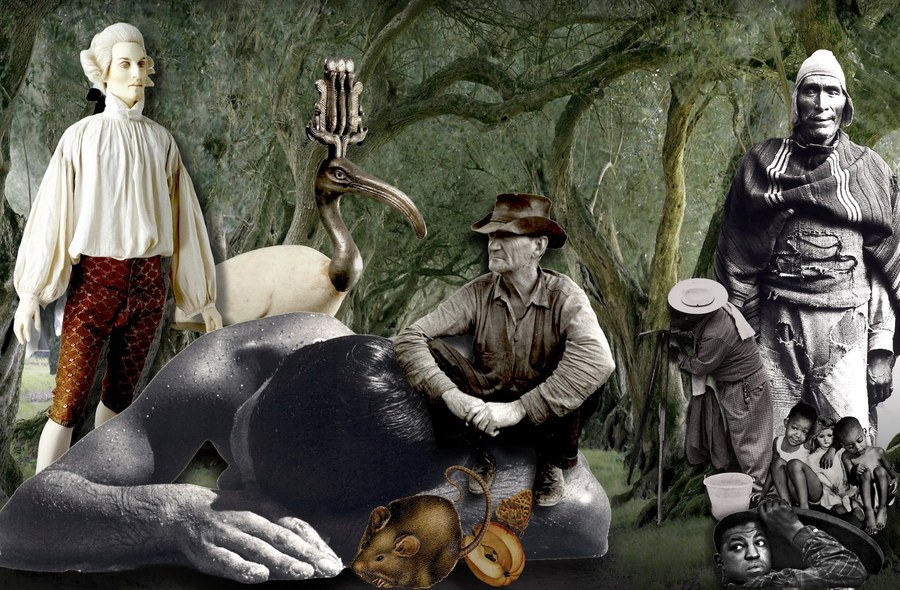
The collage illustrates the dreamlike fantasies of Gulliver, fast asleep in the forest surrounded by some of the characters met during his travels around the world. Gulliver's Travels is the masterpiece of Irish writer Jonathan Swift (1667–1745), one of the greatest satirists in the English language. The book recounts the misadventures of the ship's surgeon, Lemuel Gulliver, who encounters improbable beings and societies on imaginary islands. Behind this seemingly fantastical tale—which draws inspiration from travel narrative literature such as Daniel Defoe's Robinson Crusoe (1719)— Swift highlights the flaws and hypocrisies of all the various inhabitants Gulliver encounters. Moral: there are no paradises on Earth.
Il collage illustra le fantasie oniriche di Gulliver, addormentato nella foresta e circondato da alcuni dei personaggi incontrati durante i suoi viaggi intorno al mondo. I viaggi di Gulliver è il capolavoro dello scrittore irlandese Jonathan Swift (1667–1745), uno dei più grandi autori satirici in lingua inglese; il libro racconta le disavventure del medico di bordo, Lemuel Gulliver, che incontra esseri e popolazioni fantastiche su isole immaginarie. Dietro questo racconto apparentemente fantastico, che trae ispirazione dal genere dei racconti di viaggio, come Robinson Crusoe (1719) di Daniel Defoe, si cela il tono satirico e pessimista dell'autore. Attraverso le avventure narrate, Swift mette in luce i difetti e le ipocrisie di tutti i vari abitanti che Gulliver incontra. Morale: non esistono paradisi sulla Terra.
I am Just my Mind
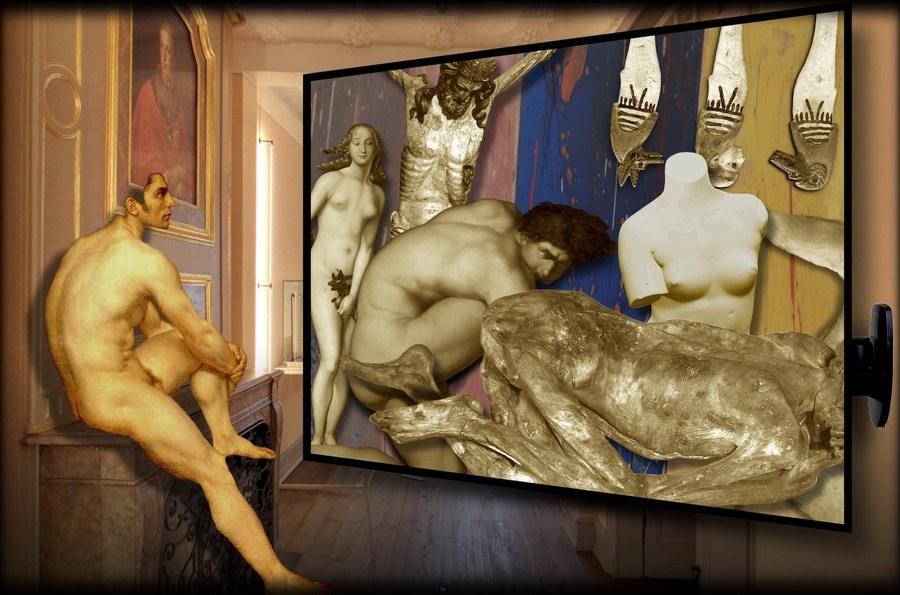
The title of the collage features a quote by the Italian scientist and 1986 Nobel Laureate in Medicine, Rita Levi- Montalcini, given during a 2009 interview on the occasion of her 100th birthday: "Let the body do what it wants. I am not the body: I am the mind.” Therefore, the collage depicts a man, visibly lacking a brain, who emotionlessly stares at other bodies across various stages of life, all sharing the same fate: the deterioration and subsequent decay of the physical form. "And when the body dies?" the interviewer asked her again. "What survives is what you have done," the scientist replied. In her case, it is the discovery of the protein molecule NGF (Nerve Growth Factor), used in the treatment of neurodegenerative diseases.
Il titolo del collage riporta una citazione della scienziata italiana, Premio Nobel per la Medicina nel 1986, Rita Levi-Montalcini, durante un'intervista del 2009 in occasione del suo centesimo compleanno: "Lasciate che il corpo faccia ciò che vuole. Io non sono il corpo: io sono la mente”. Il collage mostra un uomo, visibilmente privo di cervello, che fissa senza emozioni altri corpi in diverse fasi della vita. Dalla giovinezza alla morte, condividono tutti lo stesso destino: il deterioramento e il successivo decadimento del corpo. "E quando il corpo muore?" le chiese di nuovo l'intervistatore. "Ciò che sopravvive è ciò che hai fatto” rispose. Nel caso della scienziata, la sua eredità – per la quale le è stato conferito il Premio Nobel – è la scoperta della molecola proteica Ngf (fattore di crescita nervoso), utile nel trattamento delle malattie neurodegenerative.
Love Comes, Love Goes
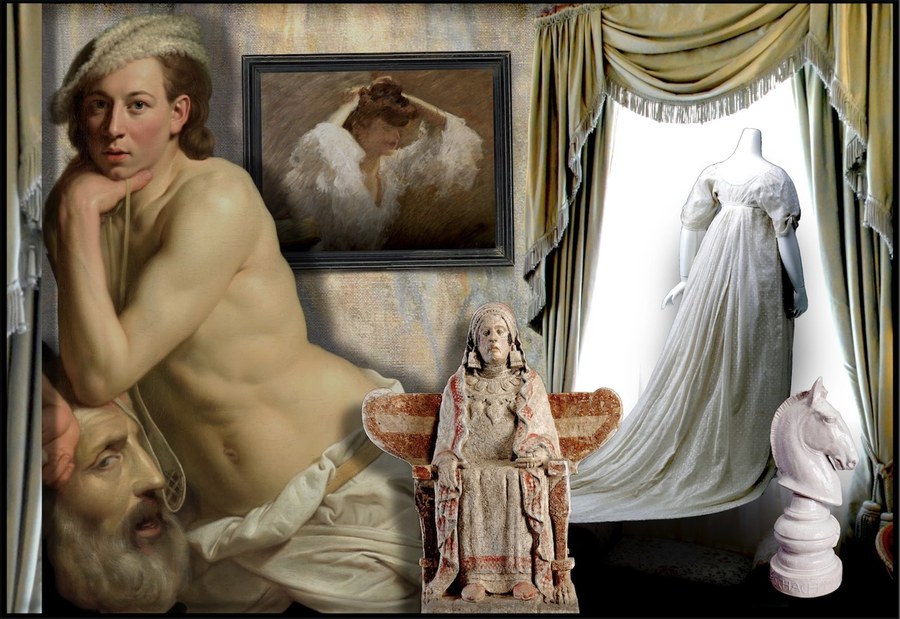
The title of the collage—which references a popular song— aims to illustrate love between two people in a universal sense. Starting with the woman in the framed painting tidying her hair: this is a 1906 portrait by the Italian painter Camillo Innocenti, one of the most followed artists of the early 20th century, celebrated for his modern and elegant style. The man, on the other hand, is the painter Johann Zoffany (a self-portrait from 1756) in the role of David, leaning on the lifeless head of the defeated giant. To complete the analysis of the collage, we see a small statue and a horse's head. The former is the Lady of Baza, a 4th-century BCE work by the Iberian people, while the horse—or knight in chess—is one of the so-called "minor pieces," whereas the woman is the queen, known as a "major piece"; an allusion to the eternal battle of the sexes.
Il nostro collage (dal titolo che rimanda alla canzone di Fabrizio De Andrè) vuole illustrare l'amore tra due persone in senso ampio e universale. A partire dalla donna nel dipinto, che si sistema i capelli; si tratta di un ritratto del 1906 del pittore italiano Camillo Innocenti, uno degli artisti italiani più rinomati del primo Novecento, celebrato per il suo stile moderno ed elegante. L'uomo è il pittore Johann Zoffany, nel suo autoritratto del 1756 come Davide che ha sconfitto Golia, ora appoggiato alla testa inerte del gigante morente. Per completare l'analisi del collage, vediamo una statuetta e una testa di cavallo. La prima è la Dama di Baza, un'opera del IV secolo a.C. del popolo iberico, mentre il cavallo, negli scacchi, è uno dei cosiddetti "pezzi leggeri", in contrapposizione, ad esempio, alla regina, nota come "pezzo pesante”. (ascolta la canzone)
Magritte never seen
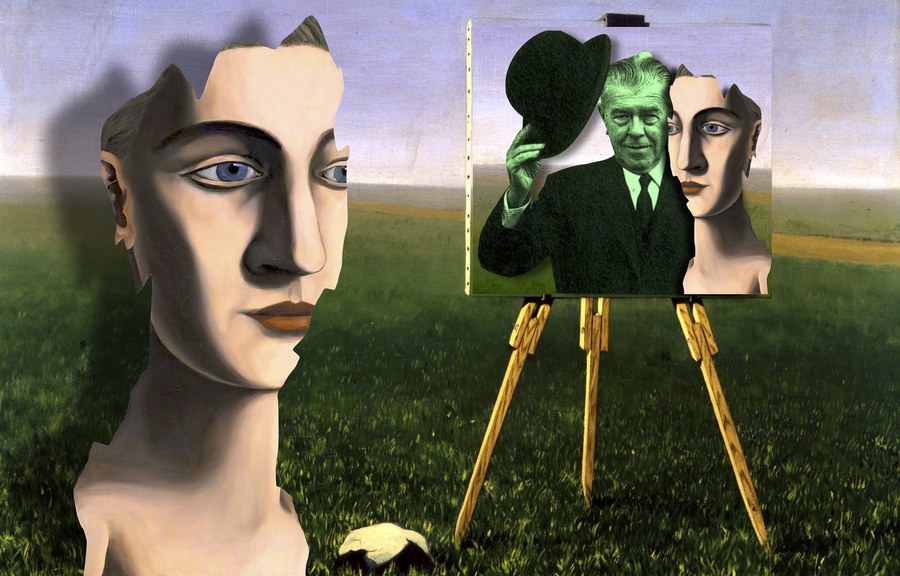
A tribute to the great Belgian painter René Magritte (1898– 1967), master of the enigma, famous for his surreal and metaphorical rebus-like paintings. Poetry, humor, reality and dream, the visible and invisible, fantasy and elegance all define this visionary artist. He refused to explain the meaning of his paintings, leaving viewers free to interpret them in their own way. His work, defined as "oneiric illusionism," has influenced artists and designers across fields from music to fashion, becoming a landmark for subsequent artistic movements up to the present day. “People who look for symbolic meanings fail to grasp the poetry and mystery of the image... the world is so wonderfully devoid of meaning that being happy is not luck, it is pure art." (René Magritte)
Un omaggio al grande pittore belga René Magritte (1898-1967), maestro dell'enigma, famoso per i suoi dipinti a rebus metaforici e surreali. Poesia, umorismo, riflessione, dialoghi tra realtà e sogno. Visibile e invisibile, fantasia e eleganza di questo artista visionario. Durante la sua carriera, Magritte ottenne popolarità e numerosi premi, pur mantenendo la sua natura riservata e timida. Si rifiutò di spiegare il significato dei suoi dipinti, lasciando che gli spettatori interpretassero le sue opere a modo loro. La sua opera, definita "illusionismo onirico", ha influenzato artisti e designer dalla musica alla moda, diventando un punto di riferimento per i movimenti artistici successivi fino ai giorni nostri. "Le persone che cercano un significato non riescono a cogliere la poesia e il mistero delle immagini... il mondo è così meravigliosamente privo di significato che essere felici non è fortuna, è pura arte." (René Magritte)
Malatesta's dreams
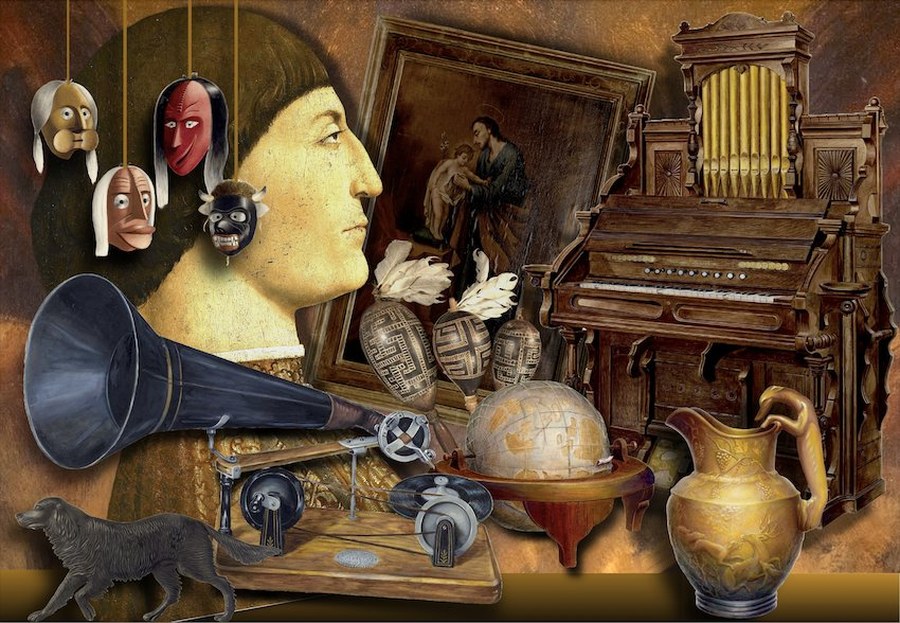
Sigismondo Malatesta (1417–1468) was the Lord of Rimini. Considered by his contemporaries to be one of the boldest Italian condottieri, he took part in numerous battles of that historical era. Always in need of funds to finance his grandiose projects, he sometimes proved ruthless in war, even ready to switch sides in favor of whoever guaranteed him the greatest privileges. He invited some of the most qualified and cutting-edge architects and artists of the era to his court, from Filippo Brunelleschi to Piero della Francesca. Piero painted a fresco portrait of Sigismondo to celebrate his knighthood, conferred by the Emperor in 1450. This is the very portrait seen in the foreground of our collage, along with several objects—futuristic for the 15th century— that symbolize the dreams of a great man: romantic and violent, dynamic and visionary, constantly reaching into the future.
Sigismondo Malatesta (1417-1468) fu Signore di Rimini; considerato dai suoi contemporanei uno dei più audaci condottieri militari, partecipò a numerose battaglie di quel periodo storico. Sempre bisognoso di fondi per finanziare i suoi grandiosi progetti, in guerra si dimostrò talvolta spregiudicato, pronto persino a cambiare schieramento a favore di chi gli garantiva i maggiori privilegi. Chiamò alla sua corte alcuni tra gli architetti e gli artisti più qualificati e all'avanguardia del panorama italiano di quegli anni, da Filippo Brunelleschi a Piero della Francesca. Piero affrescò il ritratto di Sigismondo per celebrare la nomina a Cavaliere ottenuta dall'Imperatore nel 1450. Il ritratto è lo stesso che vediamo in primo piano nel nostro collage, insieme ad alcuni oggetti, avveniristici nel Quattrocento, che simboleggiano i sogni e i fantasmi di un grande uomo, romantico e violento, dinamico e visionario, costantemente proiettato nel futuro.
Malgre Tout
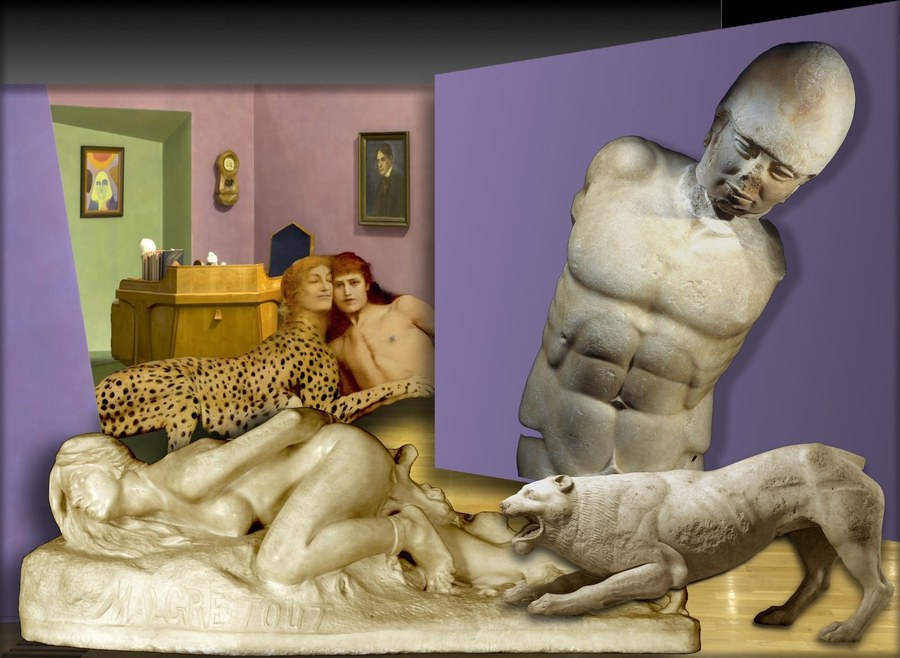
Jesús Contreras (1866–1902) was a Mexican sculptor who lost an arm to cancer. After recovering from the amputation, he sculpted a life-sized marble figure despite his disability, making the title of his work even more symbolic: "Malgré Tout"indeed means "in spite of everything.” The sculpture depicts a nude woman struggling against her chains to rise again. It was submitted by the artist to represent Mexico at the 1900 Paris Exposition Universelle. In our collage, the woman is surrounded by other human and animal figures: an ancient Greek lioness, the torso of a warrior discovered in the Valley of the Temples in Agrigento, and the cheetah-woman embracing a young man in a portrait painted by Belgian artist Fernand Khnopff in 1896.
Jesús Contreras (1866–1902) fu uno scultore messicano che perse un braccio a causa di un cancro. Dopo essersi ripreso dall'amputazione, scolpì una figura a grandezza naturale in marmo nonostante la perdita del braccio destro, rendendo il titolo della sua opera ancora più simbolico: "Malgré Tout" significa infatti "nonostante tutto". La scultura raffigura una donna nuda che lotta contro le catene per rialzarsi. Fu ceduta dall’artista per rappresentare il Messico all'Esposizione Universale di Parigi del 1900. Nel nostro collage, la donna è attorniata da altre presenze umane e animali: una leonessa dell'antica Grecia, il torso di un guerriero scoperto nella Valle dei Templi di Agrigento e la donna-ghepardo che abbraccia un giovane in un ritratto dipinto dall'artista belga Fernand Khnopff nel 1896.
Mascherata
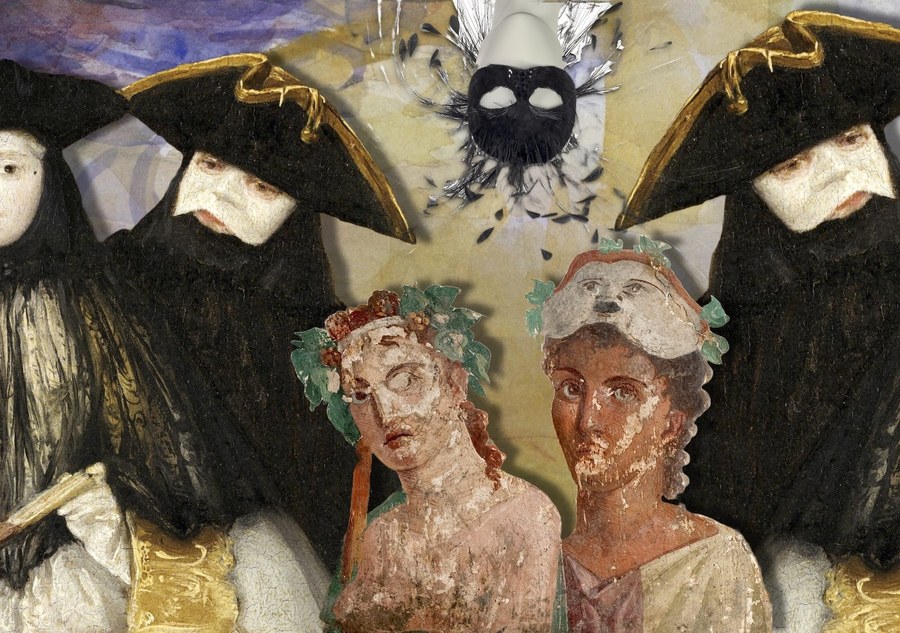
Carnival is a festival linked to the Catholic and Christian traditions, but its origins date back to far more ancient times when paganism was the dominant religion. In fact, the celebration has its roots in the Saturnalia of ancient Rome and the Dionysian festivals of classical Greece. In the collage, we have placed two masked figures at the center, taken from frescoes recovered during the excavations of Pompeii, dating back to 1st-century CE Roman civilization. The male figures wearing black hats, on the other hand, are from a 1750 portrait by Italian artist Pietro Longhi. The proverb associated with Carnival derives from the ancient Latin saying: "Semel in anno licet insanire" — Once a year it is permissible to go mad.
Il Carnevale è una festa legata al mondo cattolico e cristiano, ma le sue origini risalgono a tempi molto più antichi, quando la religione dominante era il paganesimo. Infatti, la celebrazione affonda le sue radici nei Saturnali dell'antica Roma o nelle feste dionisiache della Grecia classica. Nel collage, abbiamo posizionato al centro due figure mascherate, rinvenute negli affreschi recuperati dagli scavi archeologici di Pompei, risalenti alla civiltà romana del I secolo d.C. Le figure maschili con il cappello nero, invece, sono un ritratto dell'artista italiano Pietro Longhi, datato 1750. Il proverbio associato al Carnevale deriva dall'antico detto latino: "Semel in anno licet insanire" – "Una volta all'anno è lecito impazzire".
Mental Manipulation
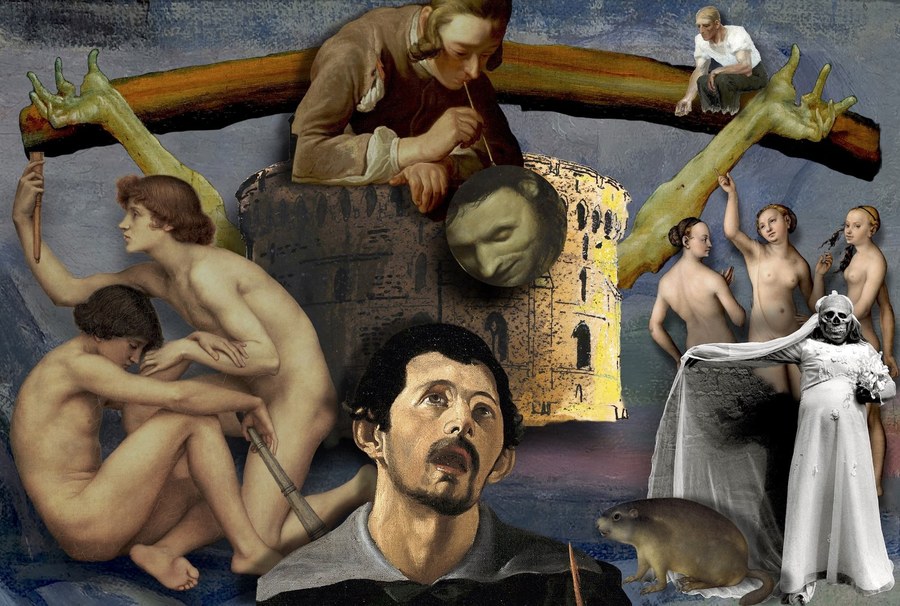
Psychological manipulation is a dynamic that can profoundly affect people's lives, often in subtle and imperceptible ways. There are numerous contexts in which this phenomenon can occur: from personal and professional relationships to interactions in the public sphere. It is a complex phenomenon involving the devious use— whether conscious or not—of tactics to influence or control an individual's behavior, emotions, or thoughts, without their full consent or awareness. This type of manipulation can manifest in multiple ways, but the final result is always the same: exercising significant control over the victim, driving them to perform actions or make decisions they would not have otherwise made.
La manipolazione mentale è una dinamica che può influenzare profondamente la vita delle persone, spesso in modi sottili e impercettibili. Sono molteplici i contesti in cui questo fenomeno può verificarsi: dalle relazioni personali a quelle professionali, fino alle interazioni nella sfera pubblica. Si tratta di un fenomeno complesso che implica l'uso subdolo, consapevole o meno, di tattiche per influenzare o controllare il comportamento, le emozioni o i pensieri di un individuo, senza il suo pieno consenso o consapevolezza. Questo tipo di manipolazione può manifestarsi in molteplici modi, ma il risultato finale è lo stesso: esercitare un controllo significativo sulla vittima, spingendola a compiere azioni o prendere decisioni che altrimenti non avrebbe preso.
Mystical Hallucination
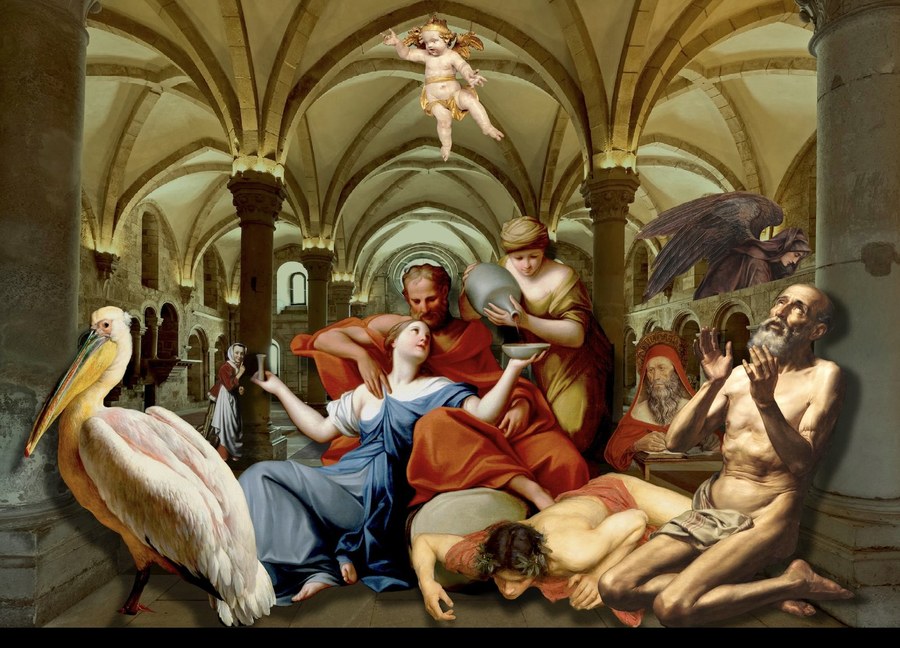
Hallucinogenic substances have been part of the human experience for millennia. Throughout the world and across every era, plants and substances capable of inducing altered states of consciousness and visions were used, sometimes accompanied by the feeling of attaining the mystical, revelation, or enlightenment. For this reason, such substances have also been called psychedelic (capable of revealing the mind) or entheogenic (revealing the divine within us). Hallucinogens interfere with the interactions between nerve cells and serotonin, a neurotransmitter present in the central nervous system involved in controlling behavior, the perceptual system, and regulating mood, hunger, body temperature, sexual behavior, muscle control, and sensory perception.
Le sostanze allucinogene fanno parte dell'esperienza umana da millenni. In tutto il mondo e in tutte le epoche, l'uso di piante e sostanze in grado di indurre stati alterati di coscienza, visioni, talvolta accompagnate dalla sensazione di raggiungere il mistico, la rivelazione, l'illuminazione, l'ineffabile, è diffuso. Per questo motivo, tali sostanze sono state anche chiamate psichedeliche (capaci di rivelare la mente) o talvolta enteogene (che rivelano la divinità in noi). Gli allucinogeni interferiscono nelle interazioni tra le cellule nervose e la serotonina, un neuro-trasmettitore presente nel sistema nervoso centrale e coinvolto nel controllo del comportamento, del sistema percettivo e nella regolazione dell'umore, della fame, della temperatura corporea, del comportamento sessuale, del controllo muscolare e della percezione sensoriale.
Nostalgia for Childhood
Deep within every person lies a child who connects with the world through imagination and sensitivity. The inner voice of the child brings poetry to life in adults; it enlivens, makes us daydream, uncovers the attractive and mysterious side of everything, and lets the imagination soar into thrilling universes. It represents that pure, naive, candid, and innocent nature that can be preserved within an individual's personality even into adulthood. “Today, the childlike capacity for emotion, wonder, and intuition finds little room to breathe. The yoke of power and the thirst for futile conquests have produced a dishonorable equation, to say the least: the loss of childlike genuineness creates ever-increasing indifference toward the most basic human needs. However, the problem with today’s daily social life is that it overflows with human suffering and painful situations that violate personal dignity, making the absence of genuineness and sincerity increasingly unacceptable.” — M.F. Carnea
Nel profondo di ogni persona si cela un bambino che entra in contatto con il mondo attraverso l'immaginazione e la sensibilità. "La voce interiore del bambino dà vita alla poesia negli adulti, ravviva, fa sognare ad occhi aperti, scopre il lato attraente e misterioso di ogni cosa, fa volare l'immaginazione in universi emozionanti. Rappresenta quella natura pura, ingenua, candida e innocente che, nella personalità di un individuo, può essere preservata anche nell'età adulta. “La capacità infantile di emozionarsi, di stupirsi e di intuire trova oggi poco spazio, il giogo del potere, la sete di conquiste futili hanno prodotto un'equazione a dir poco disonorevole: la perduta genuinità infantile crea sempre più indifferenza di fronte ai bisogni più elementari, Il problema di oggi, della vita sociale quotidiana, però, è traboccante di sofferenze umane, di situazioni dolorose che ledono la dignità della persona, e l'assenza di genuinità e sincerità diventa sempre più inaccettabile”. (Maria Francesca Carnea)
Purple Time
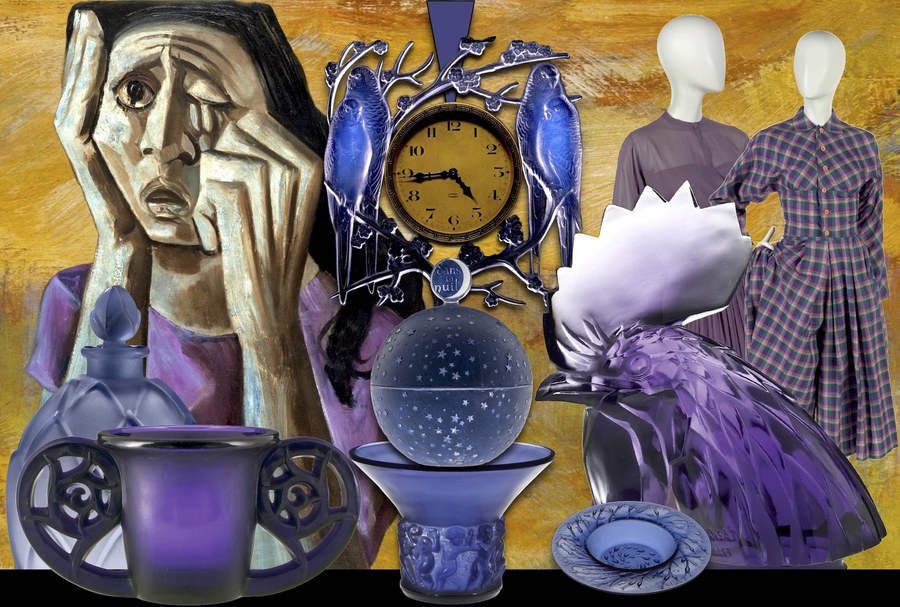
In the West, purple is associated with royalty, rarity, piety, magic, and mystery. Purple is the color of royalty, creativity, and numerous social movements. Purple became a color linked to social change when the women's suffrage movement adopted purple and white as its official colors. The counterculture's adoption of purple is recent, but its impact has been lasting. From Jimi Hendrix's "Purple Haze" to Prince's "Purple Rain," the color purple carries powerful symbolism. “Purple is a cool red in both a physical and psychological sense. It thus has something sickly, extinguished, and sad about it. It is no coincidence that it is considered suitable for older women's clothing, as well as by the Chinese, who use it for mourning attire.” — Wassily Kandinsky
In Occidente, il viola è associato alla regalità, alla rarità, alla pietà, alla magia e al mistero. Il viola è il colore della regalità, della creatività e dei molteplici movimenti sociali. Il viola è diventato un colore legato al cambiamento sociale quando il movimento per il suffragio femminile ha adottato il viola e il bianco come colori ufficiali. L'adozione del viola da parte della controcultura è recente, ma il suo impatto è stato duraturo. Da "Purple Haze" di Jimi Hendrix a "Purple Rain" di Prince, il colore viola ha un potente simbolismo. "Il viola è un rosso freddo in senso fisico e psichico. Ha quindi qualcosa di malaticcio, spento, qualcosa di triste. Non a caso è considerato adatto agli abiti delle donne anziane. I cinesi lo usano direttamente come colore per gli abiti da lutto. È simile al suono del corno inglese, della cornamusa e, quando è più profondo, ai toni gravi del fagotto". (Wassily Kandinsky)
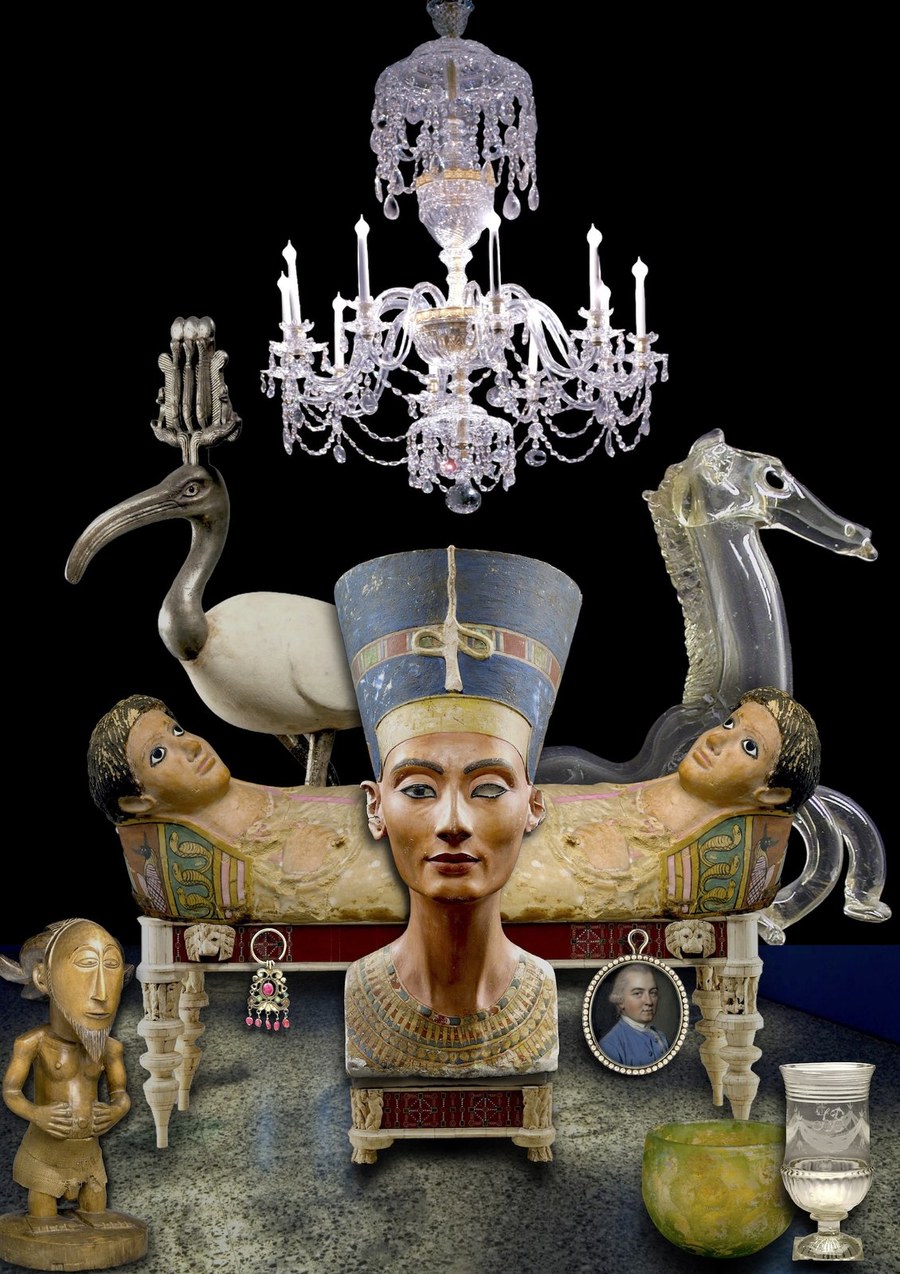
Room of Memories
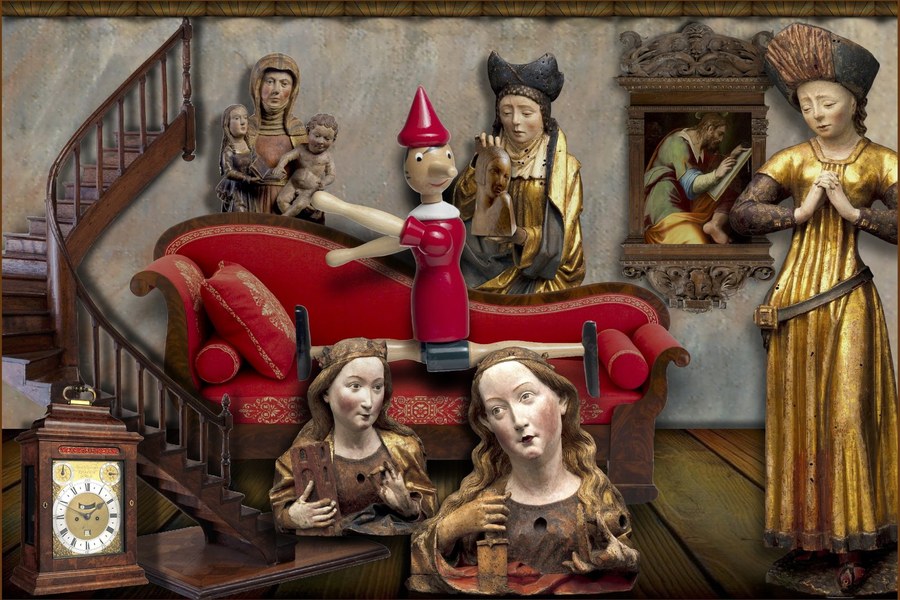
In our lives, certain o b j e c t s h a v e a fundamental importance in bringing back to mind memories of moments, places, or people, in that process that we conventionally call "memory." Depending on the intimacy of the memory that the object evokes in us, it will be k e p t , h i d d e n , o r displayed in our home. This is a topic related to psychology, so it is best to leave the floor to psychologists: "The home as the quintessential place of memory therefore— of that type of compassionate memory capable of feeding on the reverberations of emotions that emanate from cherished places of the past—thus becomes the instrument to ensure that the past reappears, repeats itself, revealing in this sense its active and unfinished character. Because it is true that the tape cannot be rewound, nor can what happened be undone, but the meaning of what happened is not fixed just once. For everyone, it continually requires being rethought, understood, that is, taken into consideration by an interpretation that seeks to bring out its meaning, perhaps by rereading it in the light of new experiences.” — Sergio Garufi
Nella nostra vita, alcuni oggetti hanno un'importanza fondamentale nel riportare alla mente ricordi di momenti, luoghi o persone, in quel processo che convenzionalmente chiamiamo "memoria". A seconda dell'intimità del ricordo che l'oggetto evoca in noi, verrà conservato, nascosto o esposto nella nostra casa. Questo è un argomento legato alla psicologia, quindi è meglio lasciare la parola agli psicologi: “La casa come luogo per eccellenza della memoria dunque, di quel tipo di memoria compassionevole capace di nutrirsi dei riverberi di emozioni che si sprigionano dai luoghi cari del passato, diventa così lo strumento per far sì che il passato si ripresenti, si ripeta, rivelando in questo senso il suo carattere attivo e incompiuto. Perché è vero che il nastro non si può riavvolgere, né far sì che ciò che è accaduto non accada, ma il senso di ciò che è accaduto non si fissa una volta sola. Per tutti, esso richiede continuamente di essere ripensato, compreso, cioè preso in considerazione da un'interpretazione che cerchi di farne emergere il senso, magari rileggendolo alla luce di nuove esperienze”. (Sergio Garufi)
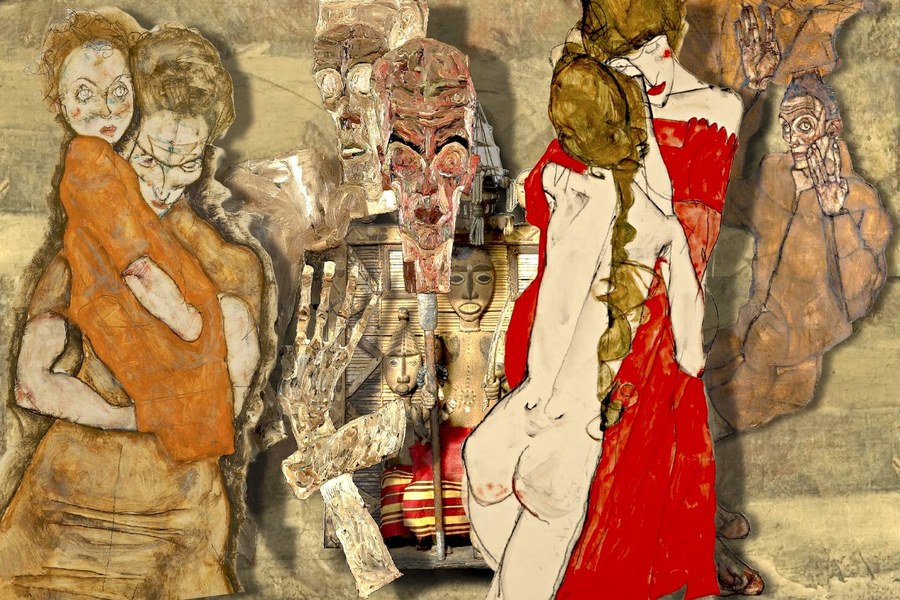
Schiele's Nightmares
Prematurely marked by his father's death and entangled in an ambiguous relationship with his younger sister Gertrud— his first model and companion in erotic explorations—the Austrian Egon Schiele (1890–1918) developed a morbid and neurotic personality that manifested in a raw and expressive artistic style. Building upon Klimt’s work, Schiele developed a unique, jarring, and twisted style suited to representing the complexity of his tormented emotions. Lines are deformed, and decoration is replaced by a dramatically distorted composition. The dream turns into a nightmare, both in Schiele's art and in society, as the euphoria of the 19th-century Belle Époque sinks into the malaise of 20th-century modernity.
Segnato prematuramente dalla morte del padre e invischiato in una relazione ambigua con la sorella minore Gertrud – sua prima modella e compagna di esplorazioni erotiche – l’austriaco Egon Schiele (1890 - 1918) sviluppò una personalità morbosa e nevrotica che si manifestò in uno stile artistico crudo ed espressivo. Partendo dall'opera di Klimt, Schiele elaborò uno stile unico, stridente e contorto, adatto a rappresentare la complessità delle sue emozioni tormentate. Le linee si deformano e si contorcono, e la decorazione viene sostituita da una composizione drammaticamente distorta. Il sogno si trasforma in incubo, sia nell'arte di Schiele che nella società, dove la Belle Époque ottocentesca sprofonda nel malessere della modernità di inizio Novecento.
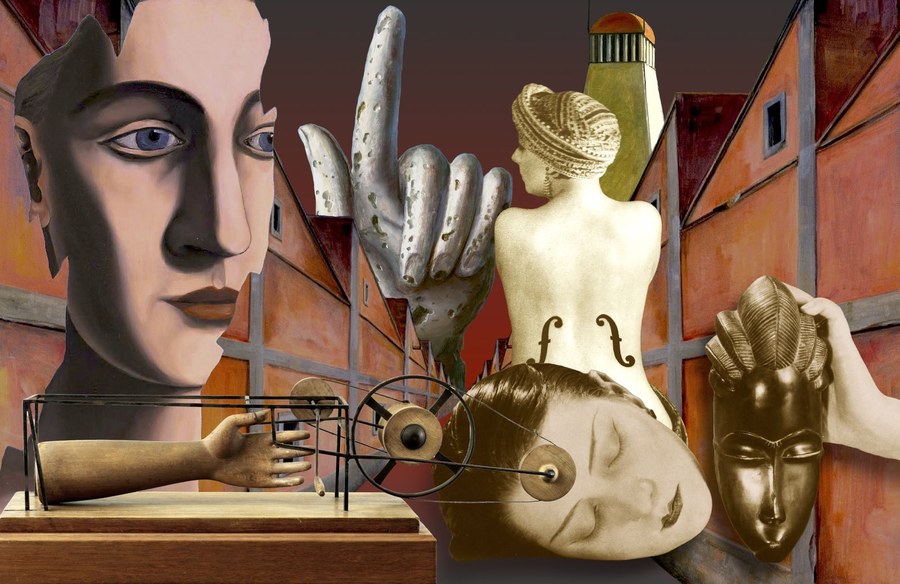
Surrealist Style
Surrealism is an artistic movement created by avant-garde painters as an evolution of the Dadaist movement; in 1924, their theories were published in the Surrealist Manifesto. The writing reveals the artists' desire to uncover the most diverse aspects of the psyche, describing a parallel reality permeated by the irrationality of dreams. Surrealist art is distinguished by the bold use of bizarre, irrational, and often unsettling images that provoke and challenge the viewer to reflect on the complex relationships between image and meaning through the reinterpretation of reality. Thus came to life one of the most intriguing movements in the history of the arts, which today, given the historical situation we are living through, is perhaps possible to understand even better.
Il Surrealismo è un movimento artistico creato da alcuni pittori d'avanguardia, come evoluzione del movimento dadaista; nel 1924 alcuni di loro svilupparono il manifesto del Surrealismo: l'obiettivo che perseguono è quello di rivelare gli aspetti più diversi della psiche, riuscendo così a descrivere una realtà superiore permeata dall'irrazionalità dei sogni. L'arte surrealista si distingue per l'uso audace di immagini bizzarre, irrazionali e spesso inquietanti che sfidano la logica convenzionale e la realtà, mescolando elementi fantastici in composizioni oniriche, creando opere che provocano e sfidano lo spettatore a riflettere sulle complesse relazioni tra immagine e significato attraverso la reinterpretazione della realtà. Prese vita così uno dei movimenti più intriganti e peculiari della storia, che oggi, proprio per la situazione storica che stiamo vivendo, è forse possibile comprendere ancora meglio.
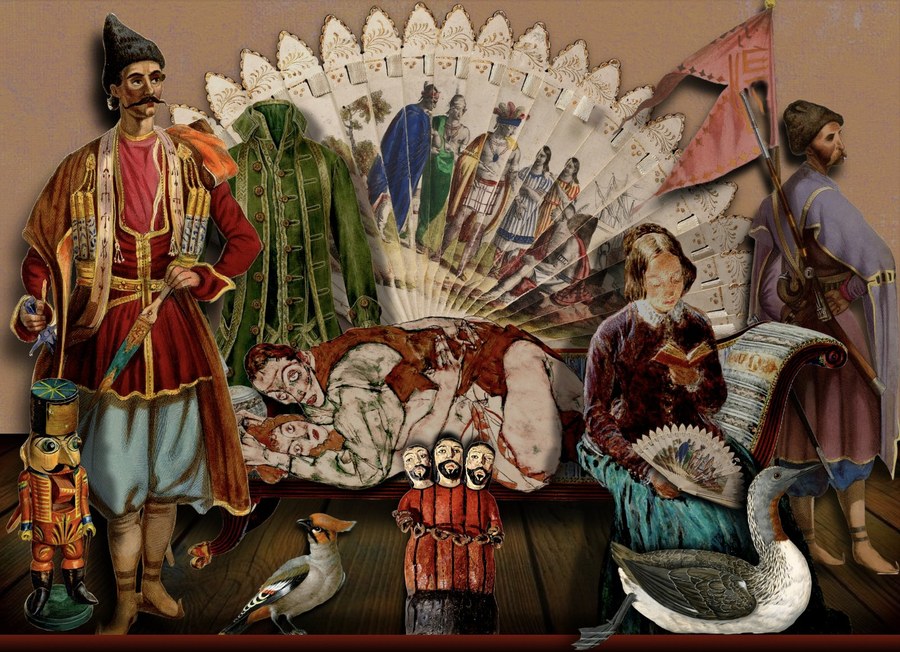
The Guardians of Morality
Our collage, through symbolic images, addresses the theme of morality with different types of characters: the Puppeteer (on the left with a mustache), the Invisible Man (dressed in green), the fiery lovers (lying on the long fortune), the pious woman (intent on reading codes of good conduct), the Guardian of Morality (with the flags). The Guardians of Morality, strictly chosen men, guard an imaginary city where all inhabitants must obligatorily follow the imposed moral rules, and where transgressors become prosecutable and punishable primarily by the Guardians themselves.
Il nostro collage, attraverso immagini simboliche, affronta il tema della moralità con diverse tipologie di persone: il Burattinaio (a sinistra con i baffi), l'Uomo Invisibile (vestito di verde), gli amanti focosi (sdraiati sulla lunga fortuna), la donna pia (intensa a leggere i codici di condotta), il Guardiano della moralità (con le bandiere). I Guardiani della moralità, uomini rigorosamente scelti, sono stati insediati in due città immaginarie, dove tutti gli abitanti devono seguire obbligatoriamente le regole della moralità, e i trasgressori diventano perseguibili e punibili dagli stessi Guardiani. Infine, “i Guardiani della Moralità possono arrestare le persone che trasgrediscono le regole morali in pubblico, secondo le disposizioni della Polizia Morale, secondo le direttive del Governo Morale, nel rispetto della Costituzione Morale dei Vizi e delle Virtù”. (autore anonimo)
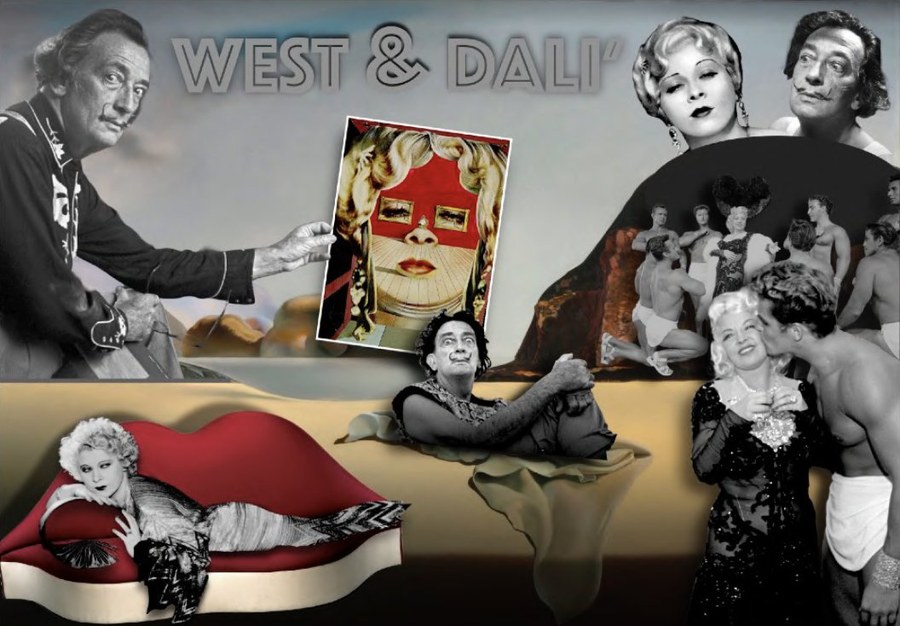
West & Dalì
The Spanish artist Salvador Dalí (1904–1989), a brilliant and eccentric Surrealist, had already realized in the 1930s that to succeed in contemporary art, artists themselves had to become their own promoters. Their name, once a modest signature at the bottom of paintings, would transform into a fashion brand. Here is one of his famous declarations of intent: "My ambition continues to grow, and now my ambition is to become Salvador Dalí, nothing else.” As for the sensual American actress Mae West, of whom Dalí was an ardent admirer, in her films and theatrical shows Mae celebrated female sexuality, the male body, and the thrill of "sin" with doses of humor and exaggerated glamour, as in this line extracted from one of her performances: "Ten men waiting for me outside? Oh, God... send just one up to my room. I'm tired tonight!"
L'artista spagnolo Salvador Dalí (1904–1989), fu ammiratore della sensuale attrice Mae West e surrealista brillante ed eccentrico, aveva già capito negli anni '30 che per avere successo nell'arte contemporanea, gli artisti stessi dovevano diventare i propri promotori. Il loro nome, un tempo una modesta firma in calce ai dipinti, si sarebbe trasformato in un marchio di moda. Ecco una delle sue celebri dichiarazioni d'intenti: "La mia ambizione continua a crescere, e ora la mia ambizione è diventare Salvador Dalí, nient’altro”. Quanto all’attrice americana, nei suoi film e spettacoli teatrali celebrava la sessualità femminile, il corpo maschile e il brivido del "peccato" con dosi di umorismo e glamour esagerato: "Dieci uomini mi aspettano fuori dalla stanza? Oddio... mandatene uno a casa; stasera sono stanca". (Mae West)
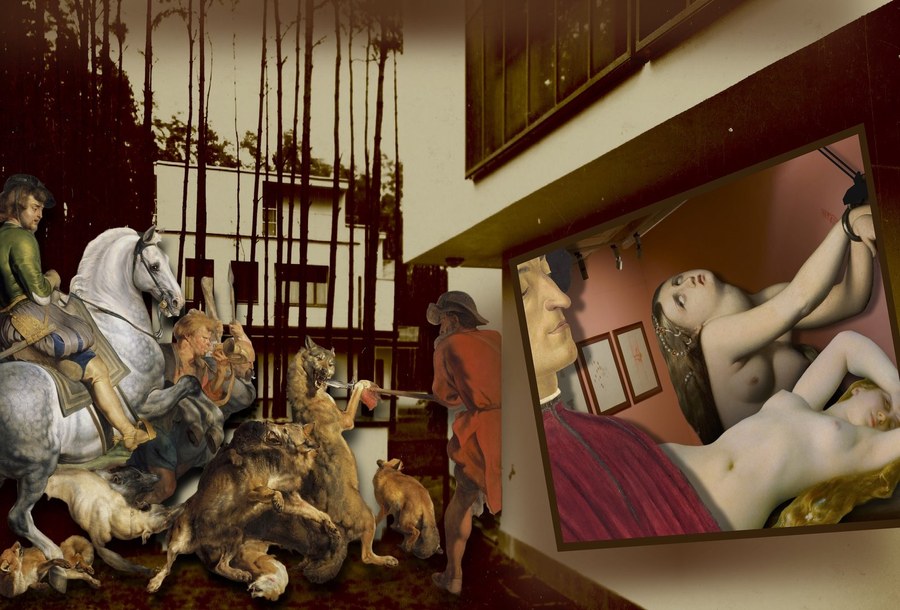
Wolves Inside and Out
The wolf has earned a bad reputation because of its terrifying appearance. Conversely, the human "wolf" can present himself with an elegant and reassuring attitude, just like Giuliano de' Medici, Lord of Florence, in Botticelli's 1480 portrait (on the right-hand screen of the collage). Giuliano, with an indifferent expression, observes his victims: the reclining Venus portrayed by the French painter Alexandre Cabanel in 1875, and "Angelica in Chains," a 1859 work by Jean-Auguste-Dominique Ingres. Outside the home, wolves and foxes are busy defending themselves against armed knights hunting them down, as depicted by the Flemish painter Pieter Paul Rubens in 1616.
Il lupo, come animale, si è guadagnato una cattiva reputazione solo a causa del suo aspetto terrificante. Al contrario, il "lupo" umano può presentarsi con un atteggiamento elegante e rassicurante, proprio come Giuliano de' Medici, Signore di Firenze, appare nel ritratto di Botticelli del 1480 nel nostro schermo (a destra nel collage). Vediamo Giuliano con un'espressione indifferente, mentre osserva le sue vittime: la Venere distesa del ritratto del pittore francese Alexandre Cabanel, datato 1875, e "Angelica in catene", un'opera di Jean-Auguste-Dominique Ingres del 1859. Fuori casa, lupi e volpi sono impegnati a difendersi dai cavalieri armati che li braccano, come raffigurato dal pittore fiammingo Pieter Paul Rubens nel 1616.
Realtà Surreale is part of Blu Artworks' wider body of work — 577 original SIAE-registered collages in total. Explore the Realtà Surreale fa parte del lavoro più ampio di Blu Artworks — 577 collage originali registrati SIAE in totale. Esplora la Full GalleryGalleria Completa.