Variety
Twenty-Eight Collages Across the Full Range of Blu Artworks' Style
28 collages in this catalogcollage in questo catalogo
From Caravaggio's Medusa to Klimt's gold, from Cubist violins to a genuine Van Gogh self-portrait, Variety gathers twenty-eight collages that don't share a single theme so much as a shared range — the full breadth of art-historical reference Blu Artworks draws on, in one catalog. Each piece is available as a high-resolution, 300dpi, royalty-free download for €39, ready for print at any size.
View Full Gallery →Vedi la Galleria Completa → View All Collections →Vedi Tutte le Collezioni →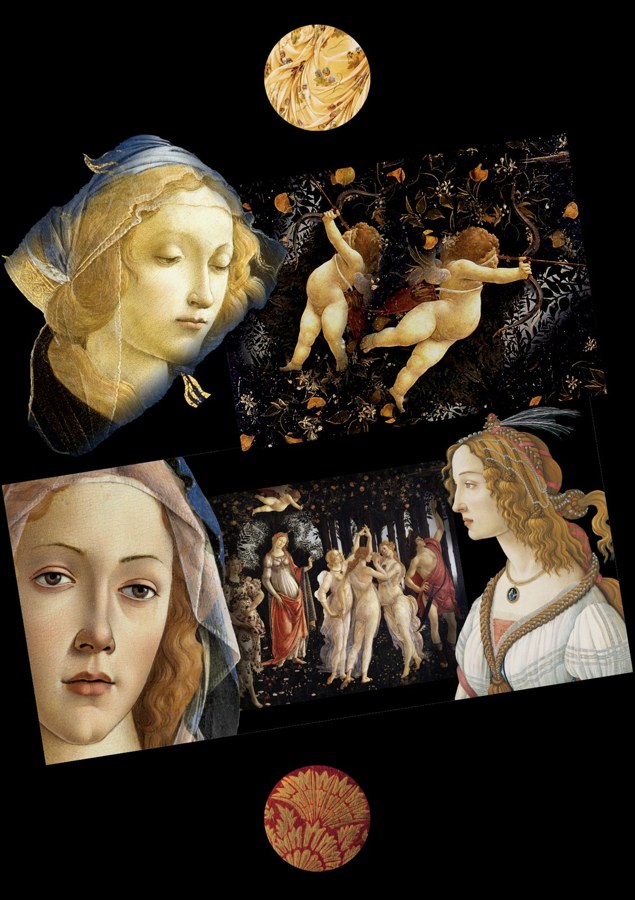
Botticelli Tribute
One of the most sought-after and celebrated painters in Florence—the iconic city of the Italian Renaissance—Sandro Botticelli painted works characterized by an ethereal grace and a profound spirituality.
Pittore tra i più ricercati e celebrati di Firenze, città simbolo del Rinascimento italiano, Botticelli dipinse opere caratterizzate da una grazia eterea e da una profonda spiritualità.
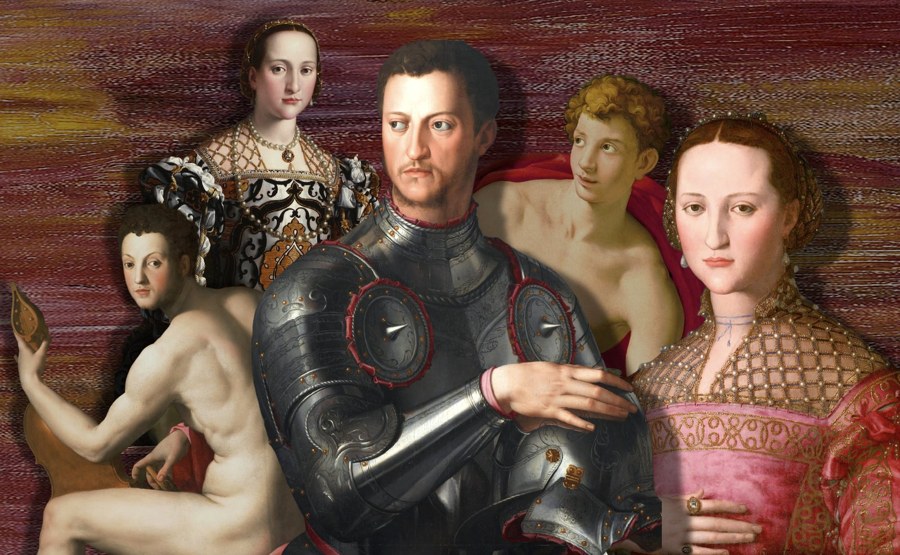
Bronzino never seen
His painting style is characterized by official portraits and freer mythological compositions featuring voluptuous, erotic nudes, which brought fame and success to an extraordinary painter who was also a fine poet.
La sua produzione pittorica è caratterizzata da glaciali ritratti uf<iciali e da composizioni mitologiche più libere, caratterizzate da nudi formosi ed erotici, che diedero fama e successo a uno straordinario pittore, che fu anche <ine poeta.
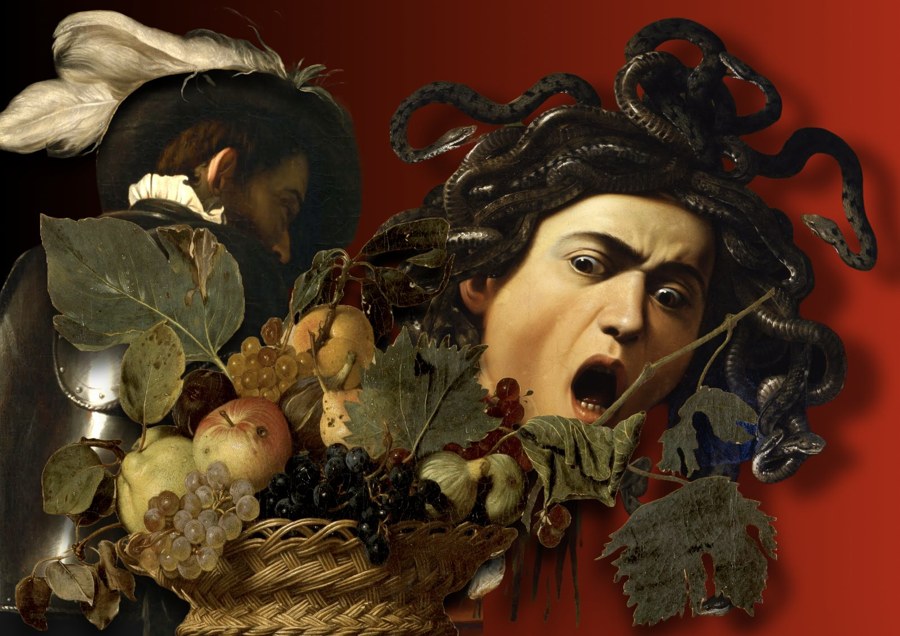
Caravaggio's drama
At the Uffizi Gallery in Florence, one of the masterpieces by Michelangelo Merisi, known as Caravaggio, can be admired: the head of Medusa surrounded by snakes. The painting was commissioned by Cardinal Francesco Maria del Monte, the ambassador to Rome for the Grand Duchy of Tuscany, who in 1598 presented it as a gift to Grand Duke Ferdinando I de' Medici to enrich his art collection.
Alla Galleria degli Uf<izi di Firenze si può ammirare uno dei capolavori più imponenti di Michelangelo Merisi detto il Caravaggio: la testa di Medusa avvolta tra i serpenti. Il dipinto fu commissionato dal cardinale Francesco Maria del Monte, ambasciatore a Roma del Granducato di Toscana, che lo donò nel 1598 al Granduca Ferdinando I de' Medici per arricchire la sua collezione di Palazzo Vecchio.
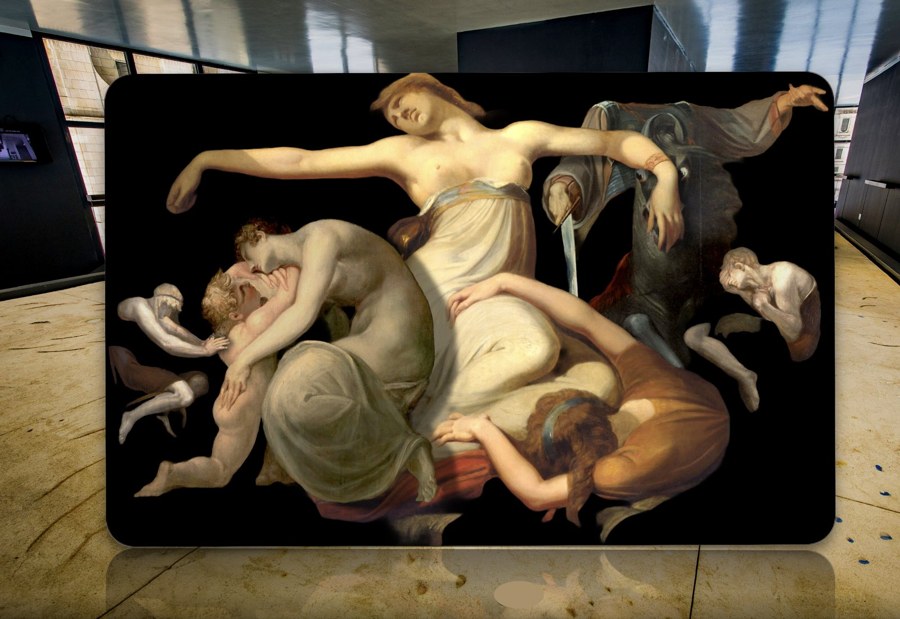
Füssli never seen
"In this artist, poetry and painting are always in conflict and never allow the viewer to reach a peaceful enjoyment: he is esteemed as a poet, but as a painter he continually arouses the viewer's impatience." (J.W. Goethe)
"In Füssli poesia e pittura sono sempre in con<litto e non permettono mai all'osservatore di raggiungere un godimento paci<ico: egli è stimato come poeta, ma come pittore suscita continuamente l'impazienza dell'osservatore." (J.W. Goethe)
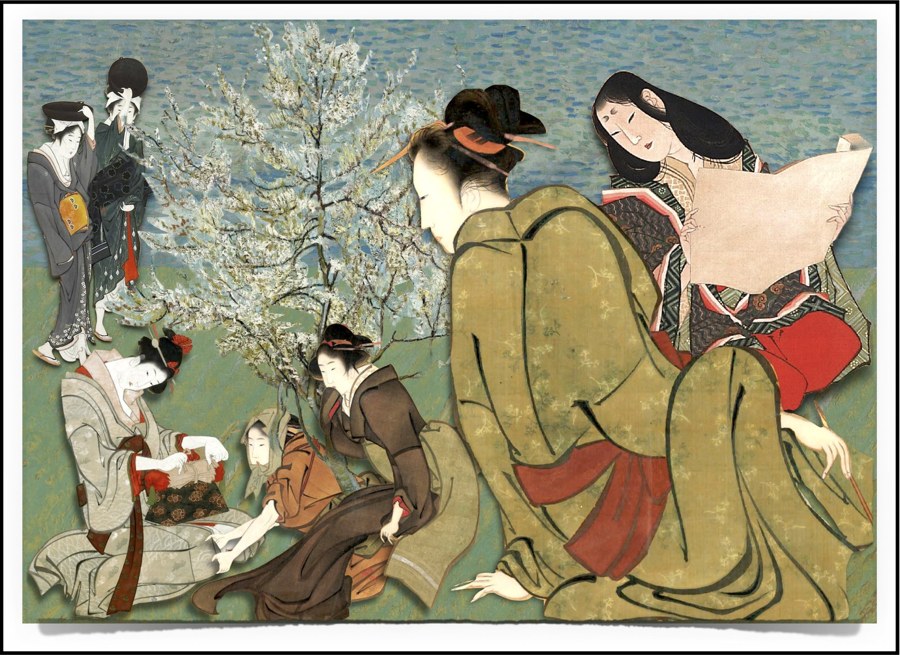
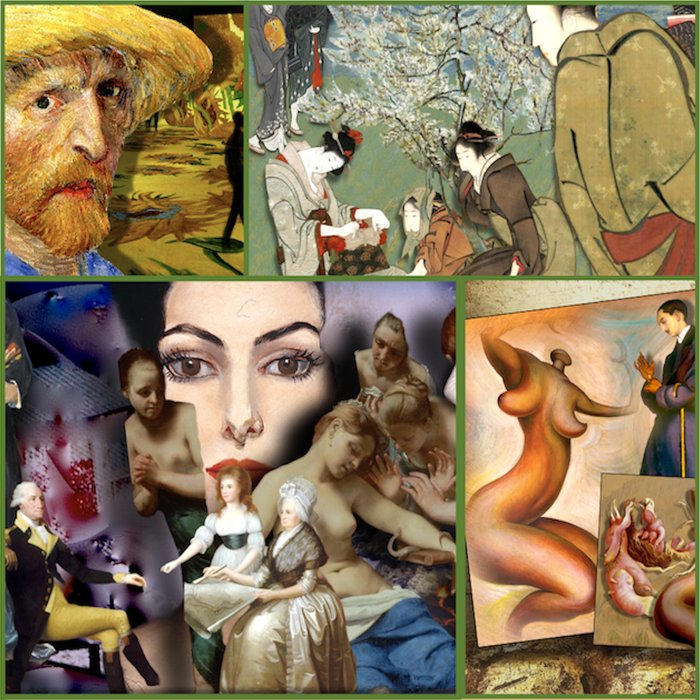
Hokusai Tribute
Katsushika Hokusai was one of Japan's most famous artists. His works combine traditional aesthetics with a dynamic visual language. In his vast artistic output—roughly a thousand works—Hokusai explored a wide variety of themes and subjects.
Katsushika Hokusai (1760-1849), uno dei più famosi artisti del Giappone. Le sue opere uniscono estetica tradizionale a un linguaggio visivo dinamico. Nella sua sterminata produzione artistica, all’incirca un migliaio di opere, Hokusai ebbe modo di confrontarsi con una vasta varietà di temi e di soggetti.
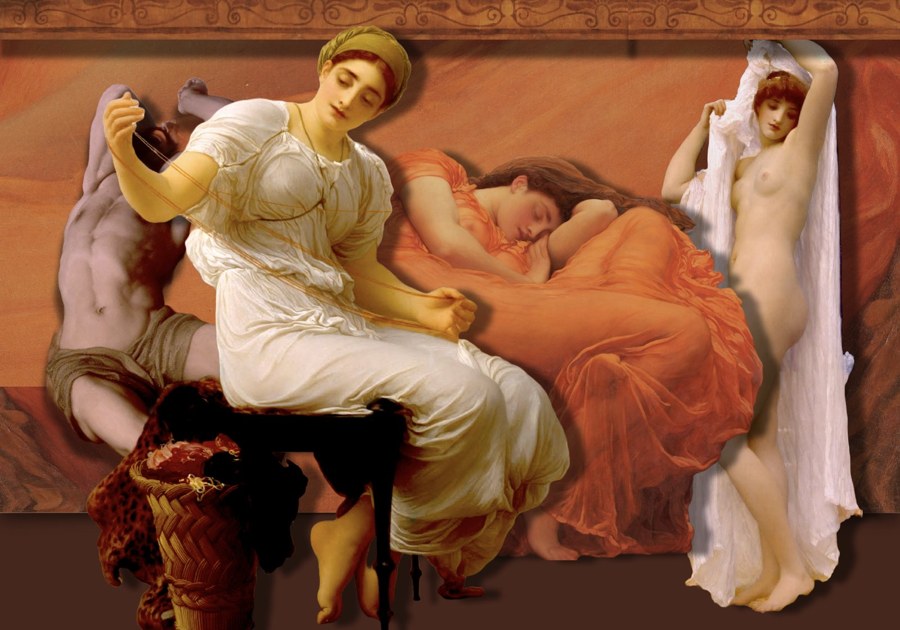
Leighton Tribute
Sir Frederic Leighton was a British painter and sculptor, a leading figure of Victorian classical academic art. He primarily created canvas paintings inspired by antiquity, evoking a sense of serene nobility, often tinged with a shade of melancholy.
Sir Frederic Leighton (1830 - 1896) è stato un pittore e scultore britannico, <igura di spicco dell'arte accademica classica vittoriana. Realizzò principalmente dipinti su tela ispirati all’antichità, evocando un senso di serena nobiltà, spesso venato di malinconia.
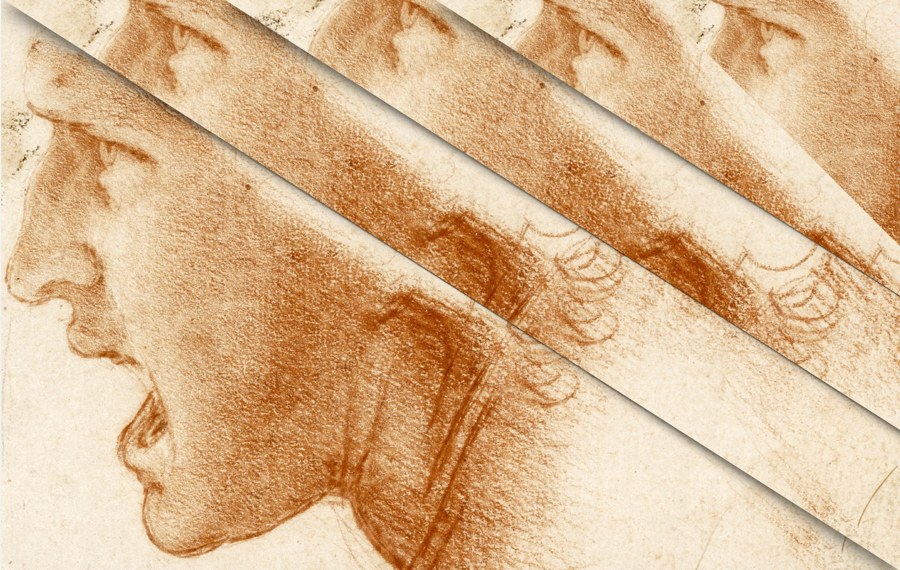
Leonardo's eye
The magnificent profile study of a soldier was drawn in red chalk by Leonardo da Vinci in 1504 in preparation for what would have been the grand mural painting of the Battle of Anghiari, celebrating Florence's victory over the troops of the Duchy of Milan in 1440.
Il magni<ico studio del pro<ilo di un soldato, fu disegnato a matita rossa da Leonardo nel 1504, per la preparazione di quello che sarebbe stato il grandioso dipinto murale della Battaglia di Anghiari, che celebrava la vittoriosa battaglia di Firenze contro le truppe del Ducato di Milano nel 1440.
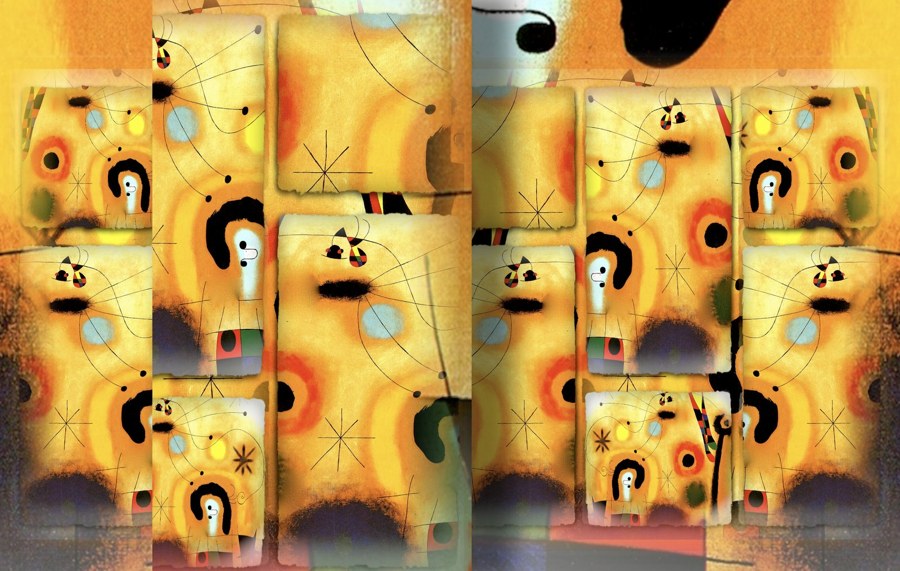
Mirando Mirò
Joan Miró opposed traditional painting techniques, striving to create a language of his own composed of symbols and abstraction, steeped in an evocative spiritualism. In his works, every mark carries a hidden meaning; as a result, sign and word are inextricably bound, following the ancient adage that "painting is silent poetry."
Mirò si è opposto alle tecniche pittoriche tradizionali, cercando di creare un linguaggio proprio, fatto di simboli e astrazione, intriso di spiritualismo ma comprensibile ed emozionante. Nelle sue opere, dietro ogni segno si cela un signi<icato nascosto, ne consegue che segno e parola sono indissolubilmente legati, rispecchiando cosı̀ l'antico detto: "la pittura è poesia silenziosa".
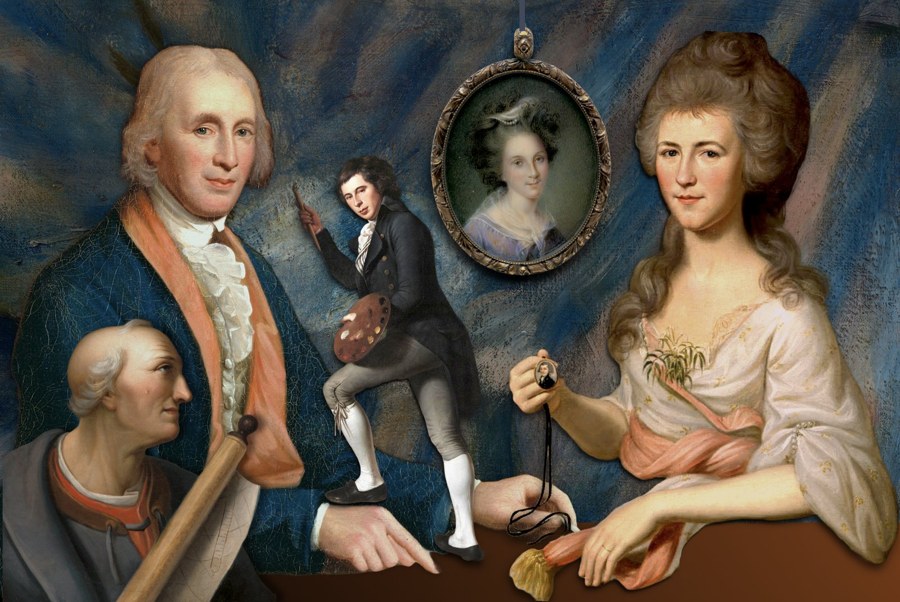
Peale never seen
The American painter Charles Willson Peale served in the American Revolutionary War, fighting in numerous battles, and was later appointed a member of the Philadelphia Convention. Once his political interlude ended, he devoted himself exclusively to painting and the study of natural history.
Charles Willson Peale (1741-1827) è stato un pittore americano. Prima di scoprire la pittura svolse un'in<inità di attività. Partecipò alla Guerra d'Indipendenza Americana, combattendo in numerose battaglie, e poi divenne membro della Convenzione di Filadel<ia. Una volta terminato il suo interludio politico, si dedicò esclusivamente alla pittura e agli studi di Storia Naturale.
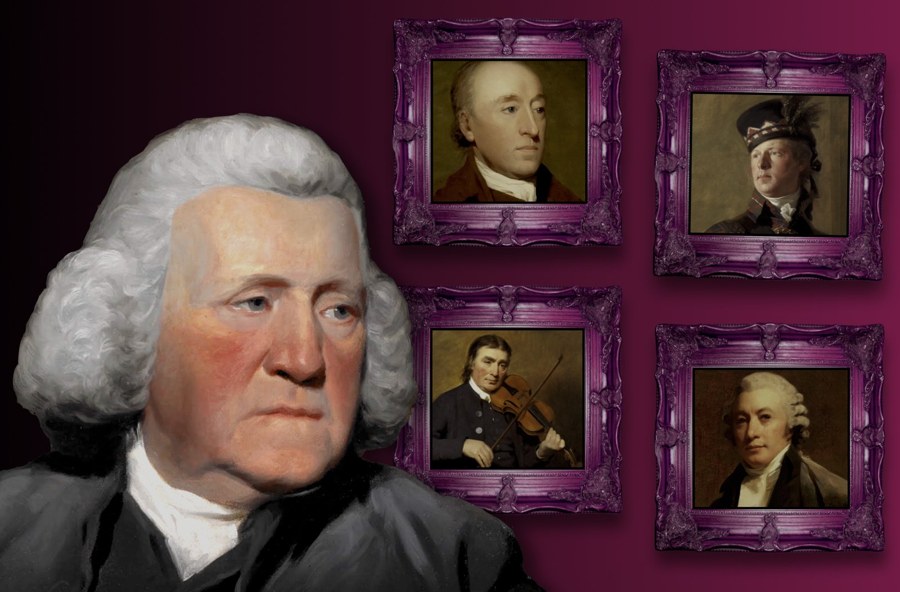
Raeburn and Scots
Between the second half of the 18th century and the beginning of the 19th century, Scotland was at the center of a dynamic intellectual movement that can be summarized by the term Scottish Enlightenment, with undeniably philosophical roots and major artistic, literary, and even athletic developments.
Tra la seconda metà del XVIII e l'inizio del XIX secolo, la Scozia fu al centro di un dinamico fermento intellettuale che possiamo riassumere con l'espressione Illuminismo scozzese, con radici certamente <iloso<iche, ma con importanti diramazioni artistiche, letterarie e persino sportive.
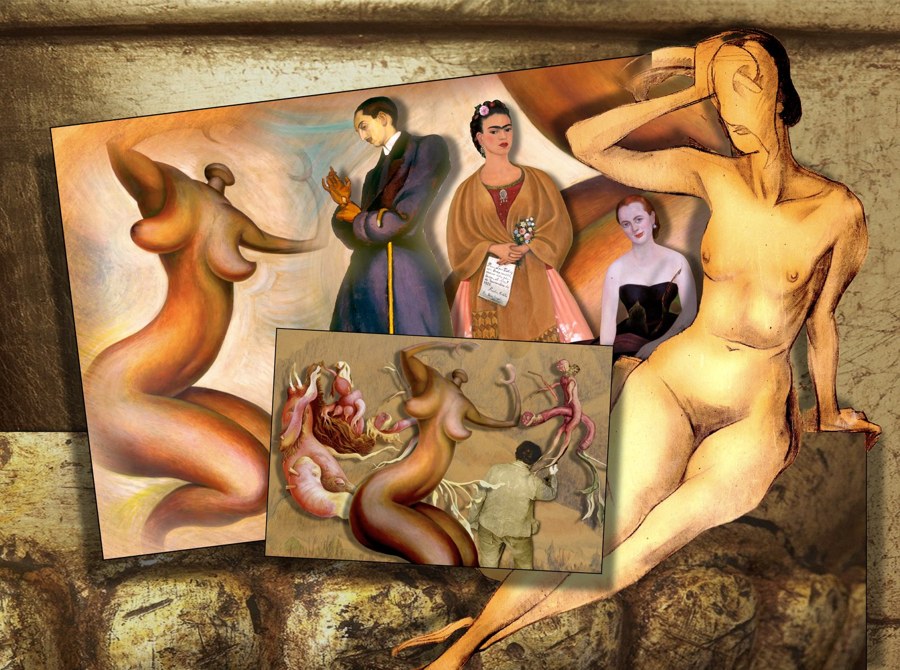
Rivera never seen
Diego Rivera, the foremost figure of muralism, is considered the founder of modern Mexican painting. “Every good composition is first of all a work of abstraction. All good painters know this. But the painter cannot help portraying real flesh-and-blood people." (Diego Rivera)
Diego Rivera (1886-1957), massimo esponente del muralismo messicano, fu protagonista di eventi e fantasie. "Ogni buona composizione è prima di tutto un'opera di astrazione. Tutti i buoni pittori lo sanno. Ma il pittore non può non ritrarre persone in carne ed ossa." (Diego Rivera).
Suffering from Jealousy
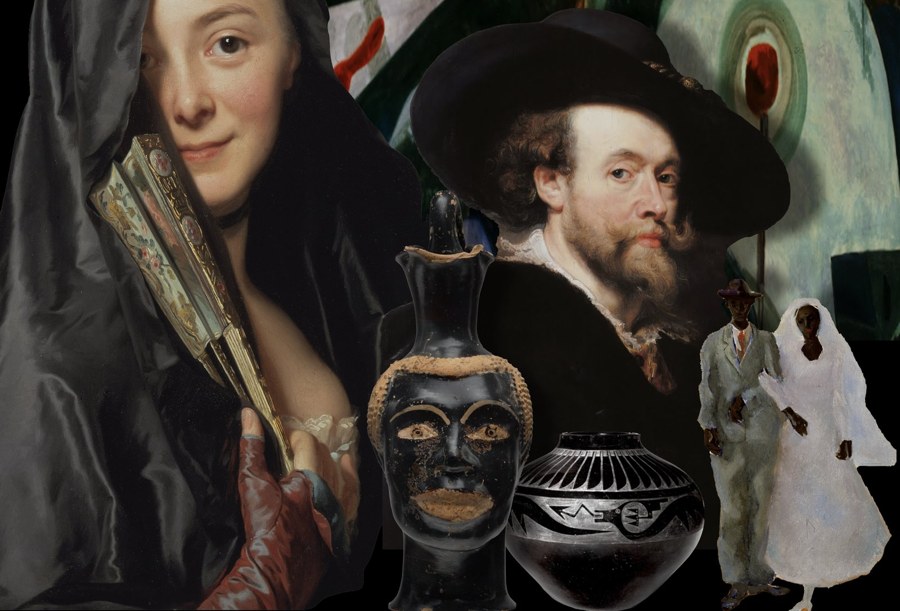
To illustrate the theme of jealousy, we have included in the collage "The Lady with the Veil," one of the paintings most beloved by visitors to the Nationalmuseum in Stockholm, created in 1768 by the French artist Alexander Roslin. The model who posed for the portrait was herself a painter: his wife, Suzanne Giroust.
Per esempli<icare il tema della gelosia, abbiamo incluso nel nostro collage "La Dama col Velo", uno dei dipinti più amati dai visitatori del Nationalmuseum di Stoccolma, un'opera del 1768 dell'artista francese Alexander Roslin; la Dama era la moglie di Roslin: la ritrattista Suzanne Giroust.
Talismans of Luck
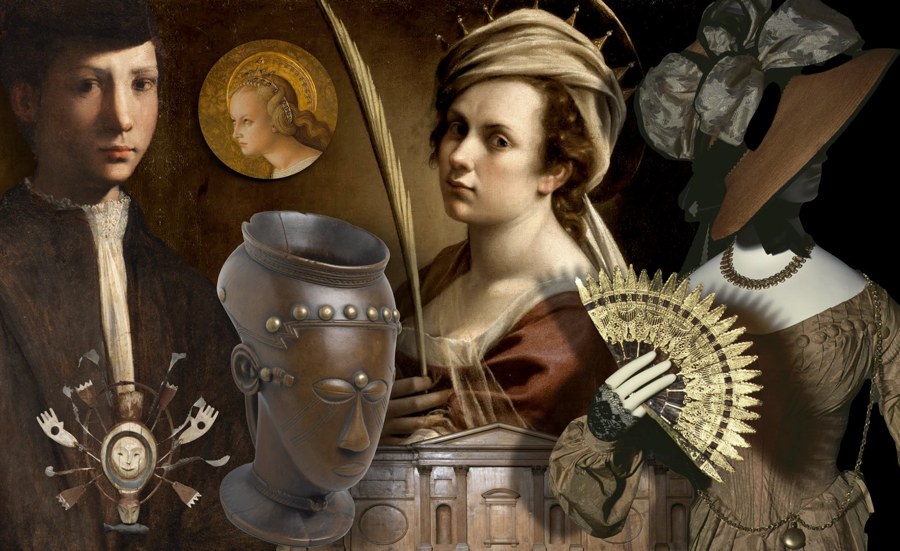
The attraction to good-luck charms is an integral part of human nature. In a way, this form of spiritual superstition answers humanity's deep-seated need to enlist the help of higher powers to ward off bad luck and adversity.
L'attrazione per i talismani portafortuna è parte integrante della natura umana. Questa forma di spiritualità fondamentale risponde in un certo senso al profondo bisogno dell'essere umano di avvalersi dell'aiuto di forze a lui superiori.
The Ages of the Game
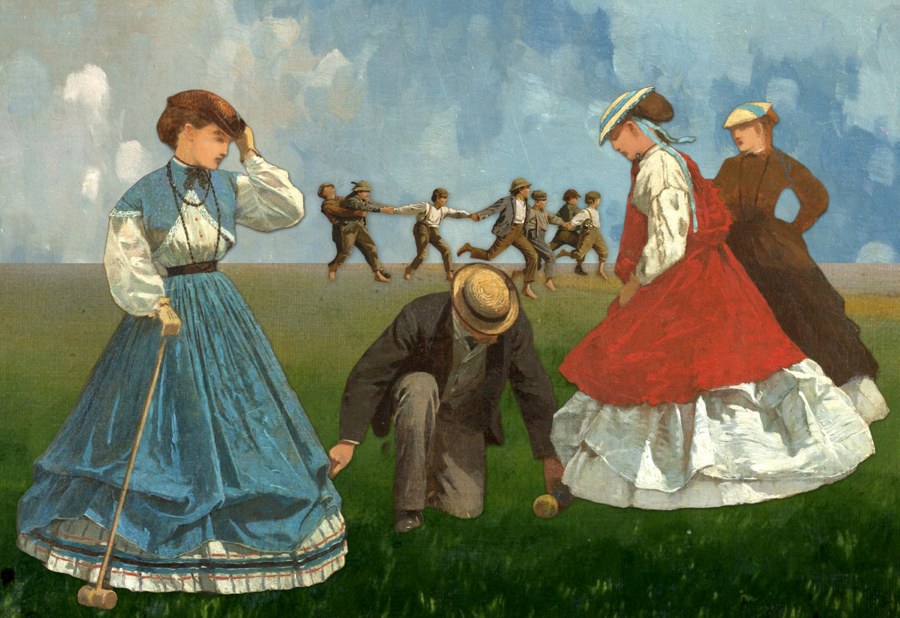
In the 1860s and 1870s, the American Winslow Homer established himself as a painter while continuing to work as an illustrator to support himself. He lived in New York, but frequently traveled to paint "en plein air"—that is, outdoors— a technique that, during those years, was primarily practiced by the French Impressionists.
Negli anni Sessanta e Settanta dell’Ottocento, l’artista statunitense Winslow Homer (1836-1910) si affermò come pittore, mentre continuava a lavorare come illustratore per mantenersi. Viveva a New York, ma si spostava spesso per dipingere en plain air (cioè dal vivo, una tecnica che in quegli anni era praticata soprattutto dagli impressionisti francesi).
The Children Look at us
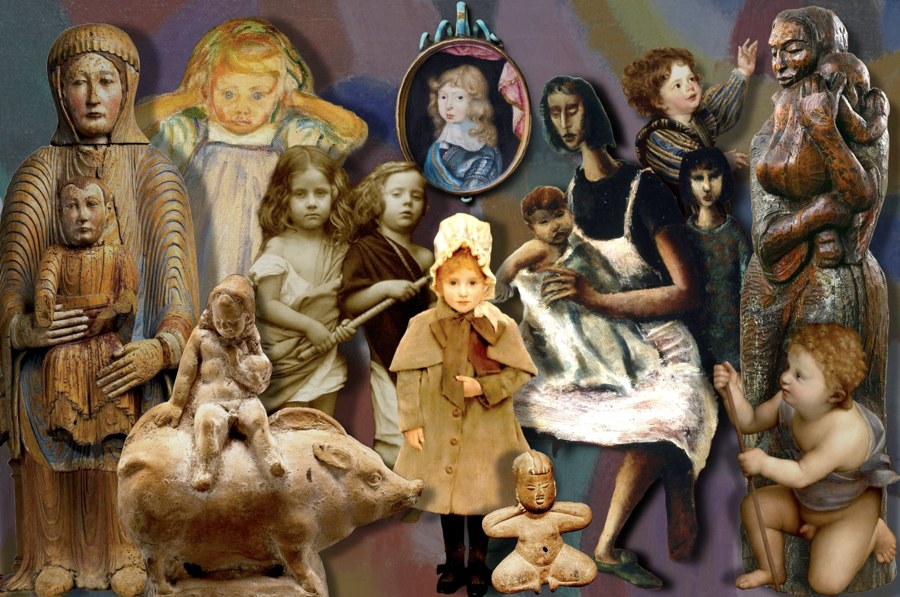
Pope Francis confessed his love for Italian cinema by quoting Vittorio De Sica's film The Children Are Watching Us: “You cannot imagine how much they suffer when parents argue. If they separate, they pay the price. Children suffer. Take care of their joy and their hope."
Papa Francesco ha confessato il suo amore per il cinema italiano citando, il <ilm "I bambini ci guardano" di Vittorio De Sica: "Non potete immaginare quanto soffrono quando i genitori litigano. Se si separano, pagano il conto. I bambini soffrono. Abbiate cura della loro gioia e della loro speranza".
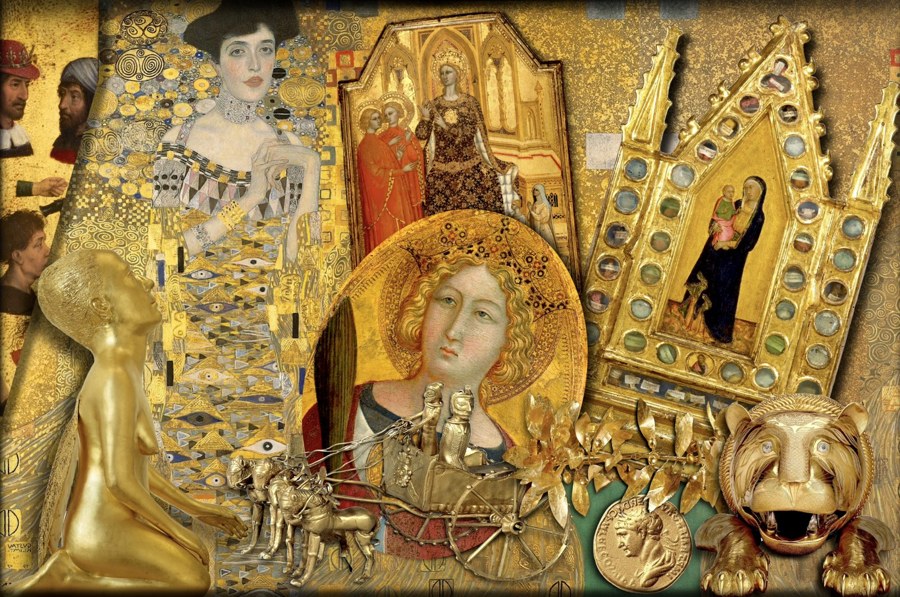
The Golden Age
The elegant lady appearing on the left side of the collage is Adele Bloch-Bauer, who posed for this portrait painted by the Austrian artist Gustav Klimt in 1907. Belonging to wealthy Viennese society, Adele was passionate about art, although, like most women of her time, she was denied a higher education.
L'elegante signora che appare a sinistra nel nostro collage è Adele Bauer, che posò per questo ritratto dipinto dall'artista austriaco Gustav Klimt nel 1907. Adele, appartenente alla ricca società viennese, era appassionata di arte, sebbene, come la maggior parte delle donne del suo tempo, le fosse negata l'istruzione universitaria.
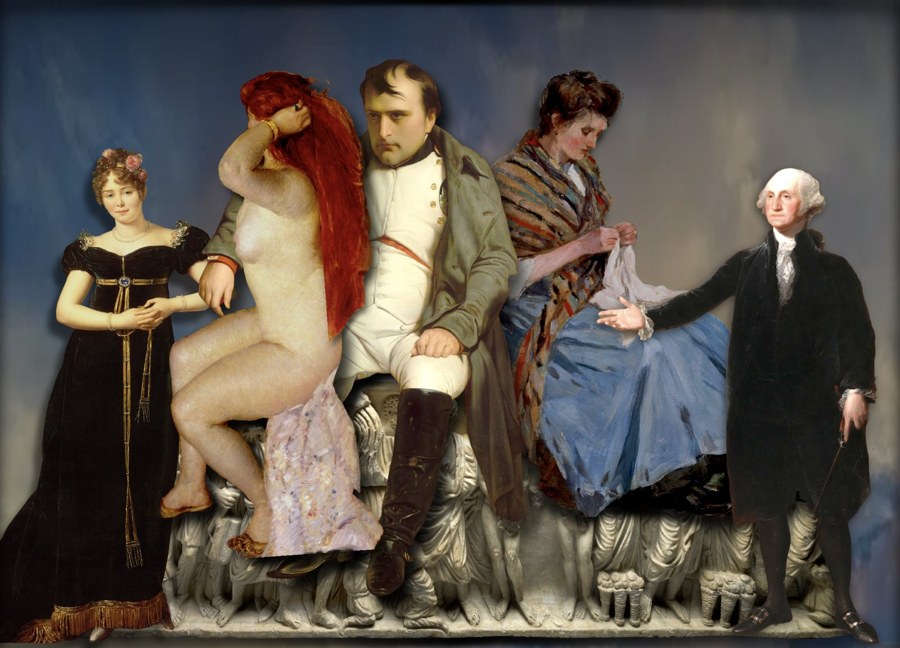
The Patriarchy
Our patriarch takes the form of Napoleon Bonaparte, painted in 1840—at the start of the emperor's decline—by Hippolyte Delaroche; the matriarch on the right is the work of Japanese artist Asai Chū, who painted her in 1902 during a trip to France. Rounding out the ensemble is the other elderly patriarch: American President George Washington, portrayed in 1796 by Gilbert Stuart. With his gesture, the aging President George seems to point us toward the meaning behind our collage's composition: in the mindset of an authoritarian patriarch, played by Napoleon, women are valued only insofar as they fulfill various roles of service for the benefit of the master: devoted wife, passionate mistress, obedient servant.
Il nostro patriarca ha le sembianze di Napoleone Bonaparte, dipinto nel 1840, all’inizio della decadenza dell’imperatore, da Hippolyte Delaroche; la donna di casa a destra è opera dell’artista giapponese Asai Chū, che la dipinse nel 1902 in un suo viaggio in Francia. Chiude la rassegna l’altro patriarca anziano: il presidente americano George Washington, ritratto nel 1796 da Gilbert Stuart. L’anziano presidente George, col suo gesto, sembra indicarci il signi<icato della composizione del nostro collage: nella mentalità di un patriarca autoritario, interpretato da Napoleone, le donne vengono considerate solo se svolgono le varie funzioni di servizio a bene<icio del’ uomo-padrone: moglie devota, amante passionale, serva ubbidiente.
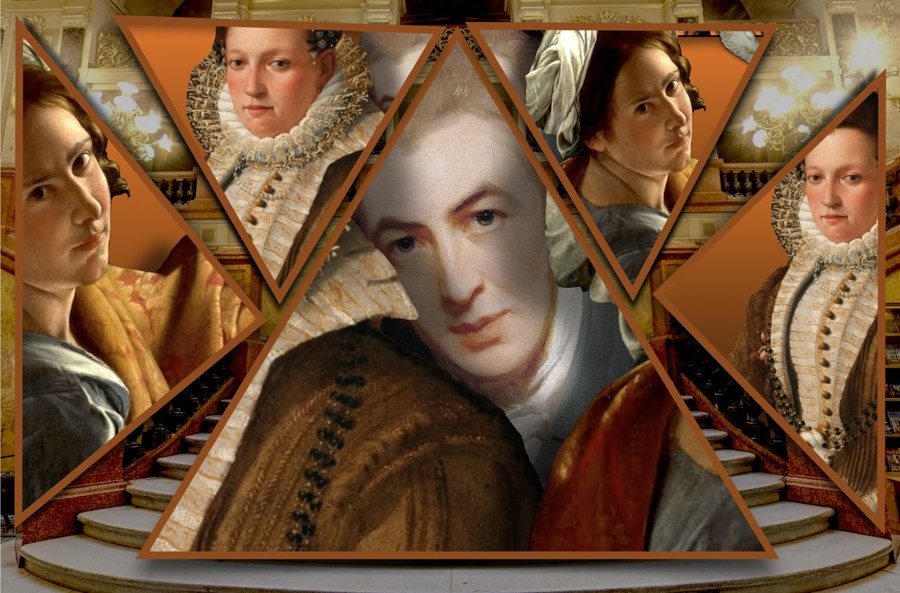
The Triangle
The two women in our love triangle were painted by Lavinia Fontana (the woman with the Elizabethan ruff) at the end of the 16th century, and by Orazio Gentileschi (the woman with the bare neck) in 1625.
Le due donne del nostro triangolo amoroso furono dipinte da Lavinia Fontana (la donna con la gorgiera elisabettiana) alla <ine del XVI secolo, e da Orazio Gentileschi (la donna con il collo scoperto) nel 1625.
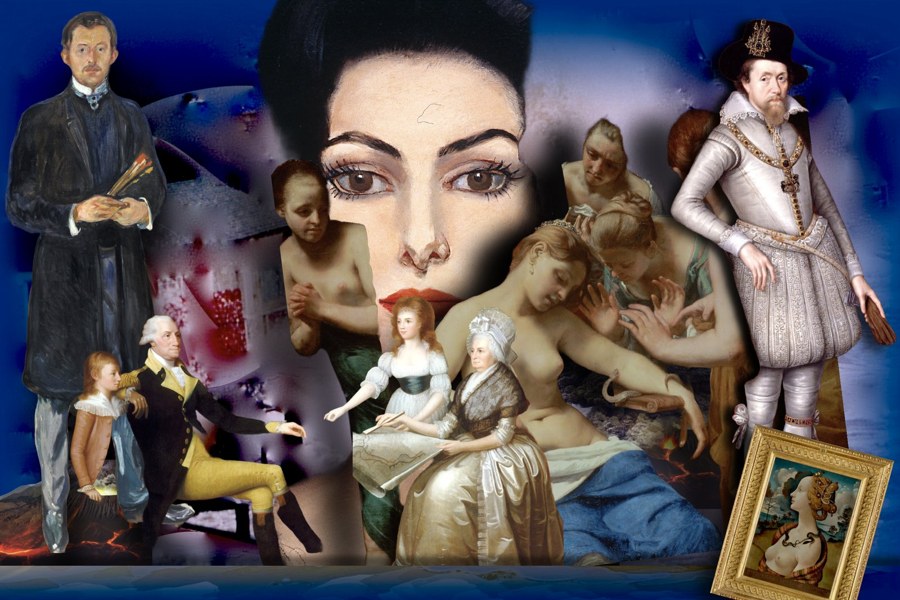
Tsunami in Art World
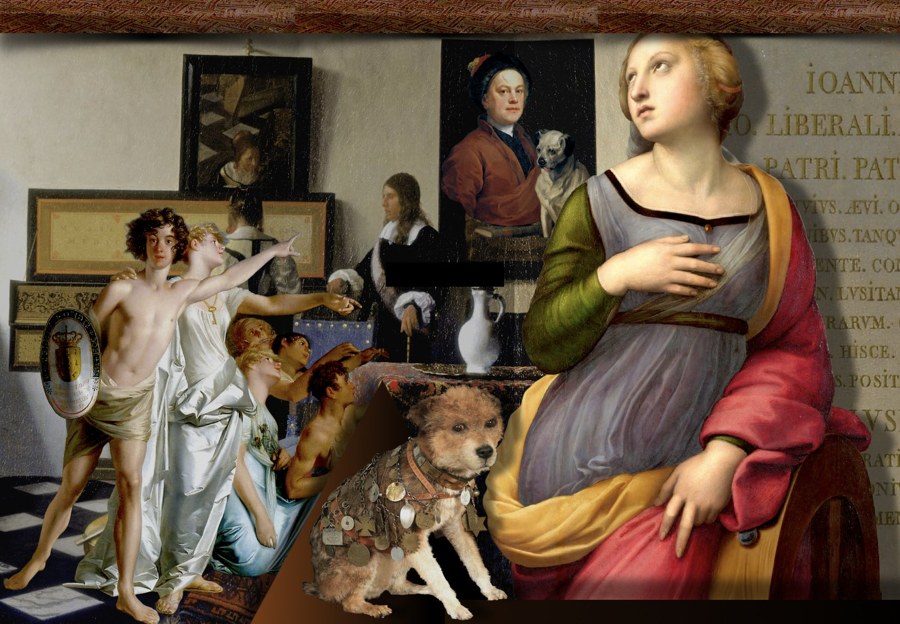
Digital art is distinguished by its flexibility, scalability, and accessibility. Unlike physical artworks, digital works can be modified, replicated, or distributed worldwide with ease. This versatility allows artists to experiment with different painting techniques without the constraints of physical materials.
L'arte digitale si distingue per la sua <lessibilità, scalabilità e accessibilità. A differenza delle opere <isiche, le opere digitali possono essere modi<icate, replicate o distribuite in tutto il mondo con facilità. Questa versatilità consente di sperimentare diverse tecniche senza i vincoli dei materiali <isici.
Universal Love
An anonymous thinker defined love as "the most powerful and least utilized energy in the world." In a letter to his daughter, Einstein speaks of it as follows: "There is an extremely powerful force for which science has not yet found a formal explanation. It is a force that encompasses and governs all others!" Was he perhaps that anonymous author?
Un <ilosofo anonimo aveva de<inito l'amore come “l'energia più potente e meno utilizzata al mondo" ed Einstein nella lettera alla <iglia cosı̀ ne parla: "Esiste una forza estremamente potente per la quale la scienza non ha ancora trovato una spiegazione formale. En una forza che include e gestisce tutte le altre.”
Van Gogh's self-portrait
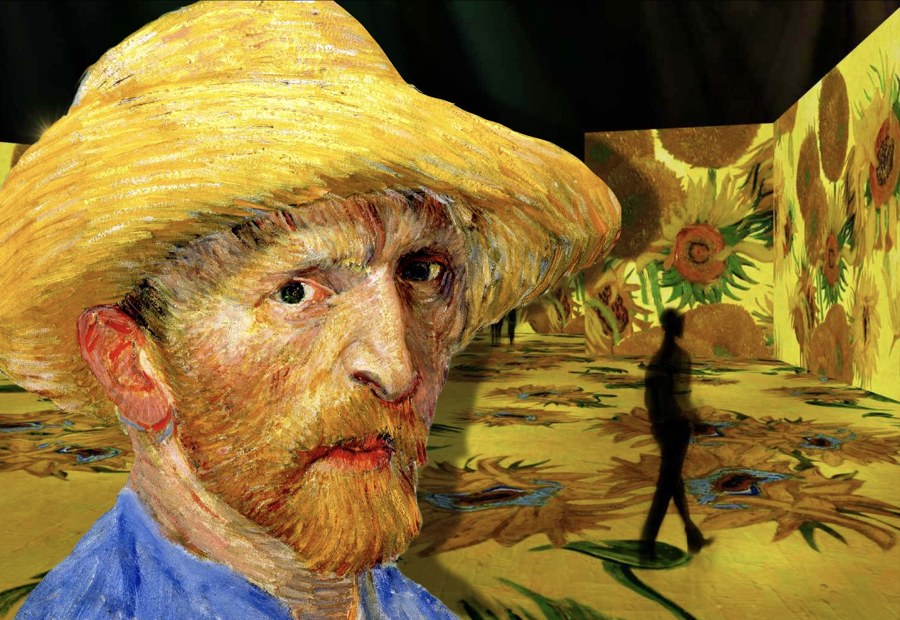
Van Gogh's urge to accept his tormented identity and shifting psychological state manifested in a relentless series of self- portraits—a true, feverish "visual diary" of his existence.
L'urgenza di Van Gogh di cogliere la propria identità tormentata e la sua mutevole condizione psicologica si manifestò in una serie incessante di autoritratti, un “diario visivo” e febbrile della sua esistenza interiore.
Violin Key
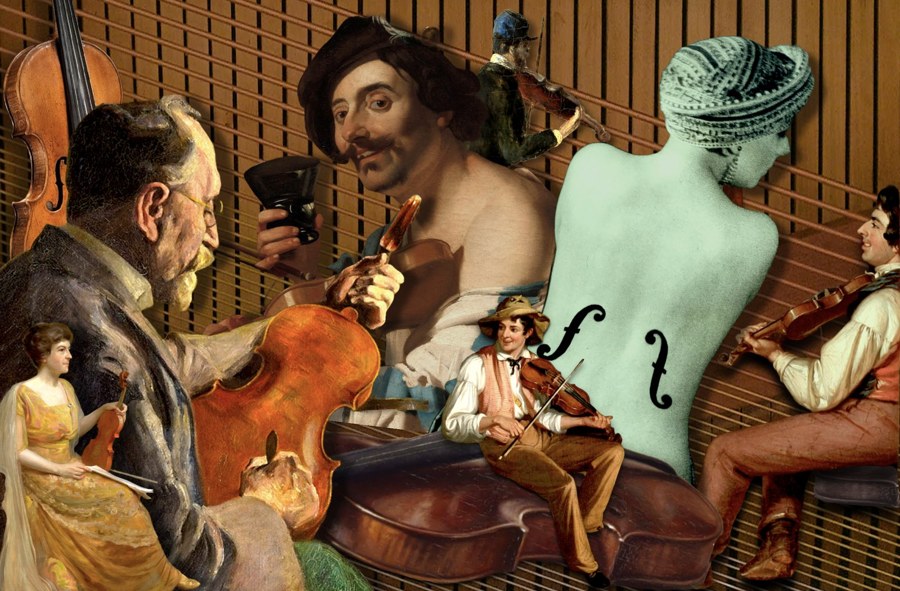
The American artist Man Ray chose to paint two f-holes onto the photograph of his muse, Kiki de Montparnasse, who is portrayed with a bare back and reproduced in our collage. It was the effervescent 1920s, and the Dada avant-garde artistic movement, led by Man Ray and Marcel Duchamp, engaged in similar provocations aimed at surrealizing the meaning of images.
L'artista americano Man Ray volle dipingere due chiavi di violino sulla fotogra<ia della sua musa Kiki di Montparnasse, ritratta a schiena nuda e riprodotta nel nostro collage. Erano gli effervescenti anni Venti del Novecento e il movimento artistico d'avanguardia Dada, di Man Ray e Marcel Duchamp, si dedicava a provocazioni simili, che consistevano nel modi<icare il signi<icato delle immagini in modo surreale.
War of Religion
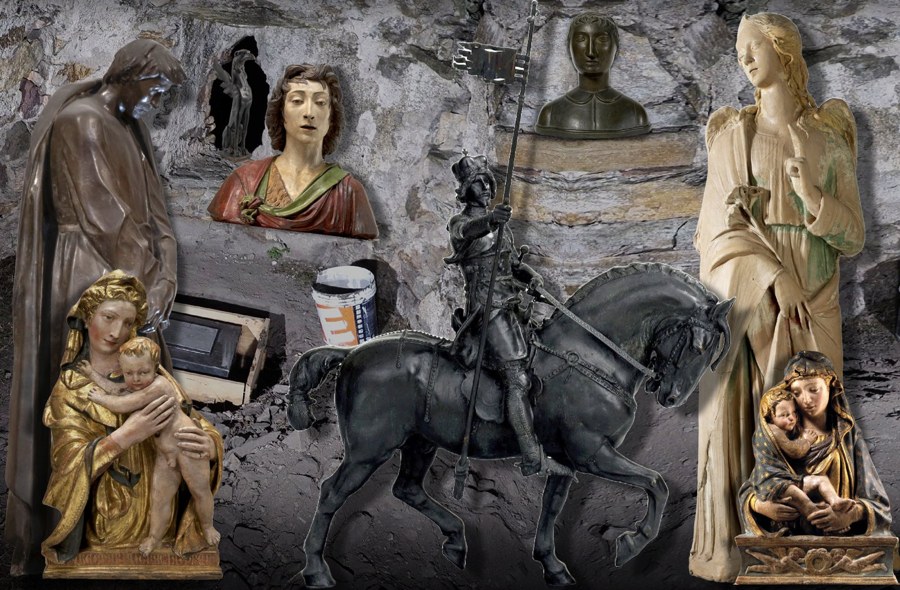
Over the centuries, many conflicts have arisen or intensified due to religious reasons. While respecting the faithful of different beliefs, our secular perspective leads us to conclude these tragedies with the words of Richard Jeni, an American comedian of Italian descent: “You're basically killing each other to see who's got the better imaginary friend."
Nel corso dei secoli molti con<litti si sono veri<icati o si sono aggravati per motivi religiosi. Pur rispettando i credenti delle diverse fedi religiose, il nostro laicismo ci porta a chiudere questo argomento, con una frase di Richard Jeni, comico e attore statunitense di origine italiana: "In pratica vi state uccidendo per decidere chi ha il miglior amico immaginario".
Well Deserved Rest
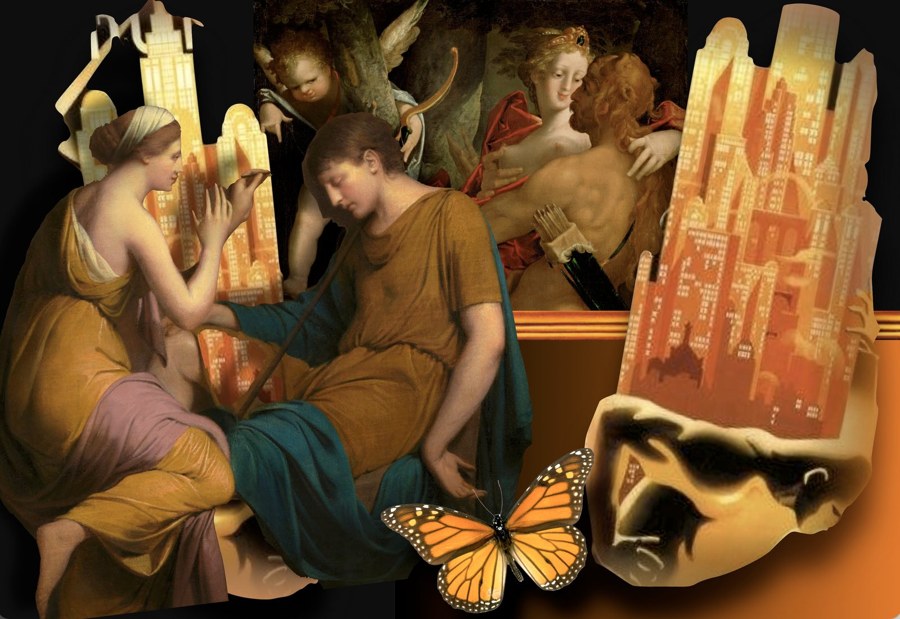
The skyscrapers resting on the shoulders of the man to the right of the collage are taken from the original poster for Metropolis, the science fiction film directed by Fritz Lang in 1926 with the power of Expressionist-style imagery, compensating for the lack of sound that arrived a few years later. As the title of the collage suggests, after toil comes well- deserved rest, and even the legendary Hercules allows himself to be embraced by Deianira in the portrait painted by Flemish artist Bartholomäus Spranger at the end of the 16th century. In the foreground on the left, we see a young woman intent on sketching the features of her beloved boyfriend as he rests before leaving for battle. The painter who portrayed the two young lovers in the work titled The Corinthian Maid is Joseph Wright of Derby, an 18th-century English landscape and portrait painter.
I grattacieli sulle spalle dell'uomo, a destra del nostro collage, sono tratti dal manifesto originale del <ilm "Metropolis". Il <ilm di fantascienza che il regista Fritz Lang girò nel 1926 con la potenza delle immagini nello stile dell'espressionismo tedesco di quegli anni, che compensava la mancanza del sonoro che sarebbe stato inventato dopo pochi anni. Come indica il titolo del collage, dopo la fatica arriva il meritato riposo e persino il leggendario Ercole si lascia abbracciare da Deianira dopo le sue storiche 12 fatiche, nel ritratto che il pittore <iammingo Bartholomäus Spranger dipinse alla <ine del Cinquecento.In primo piano a sinistra vediamo una ragazza intenta a disegnare i tratti del suo amato ragazzo che si riposa prima di partire per la battaglia. Il pittore, che ha ritratto i due giovani amanti nell'opera intitolata "La fanciulla di Corinto", è Joseph Wright di Derby, paesaggista e ritrattista inglese del XVIII secolo.
White Woman
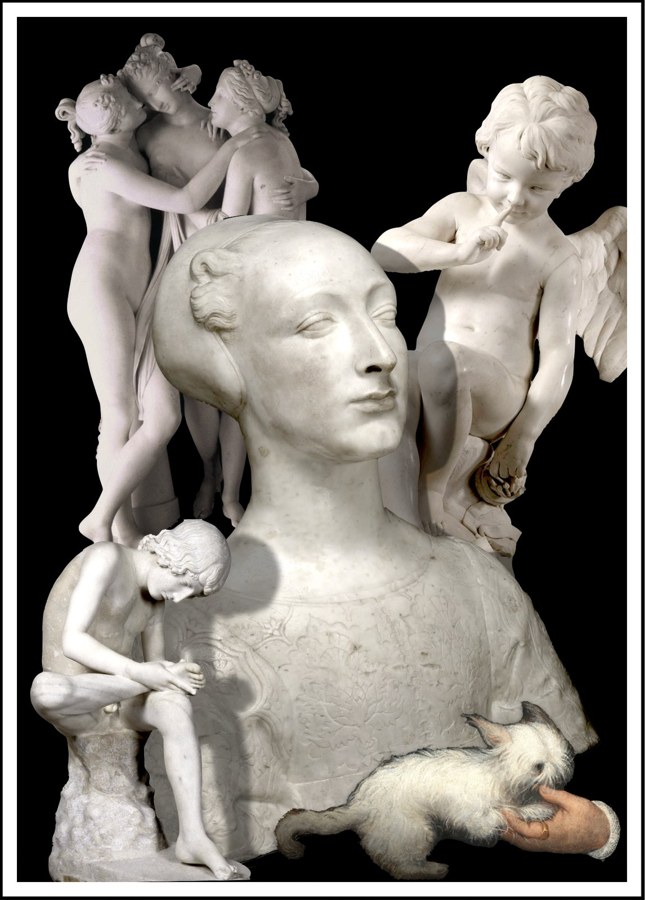
"White is a color. It is not a mere absence of color; it is something bright and affirmative, as fierce as red, as definite as black." (Gilbert Keith Chesterton)
"Il bianco è un colore. Non è una mera assenza di colore; è qualcosa di luminoso e positivo, intenso come il rosso, de<initivo come il nero." (Gilbert Keith Chesterton)
Women Lived Dangerously
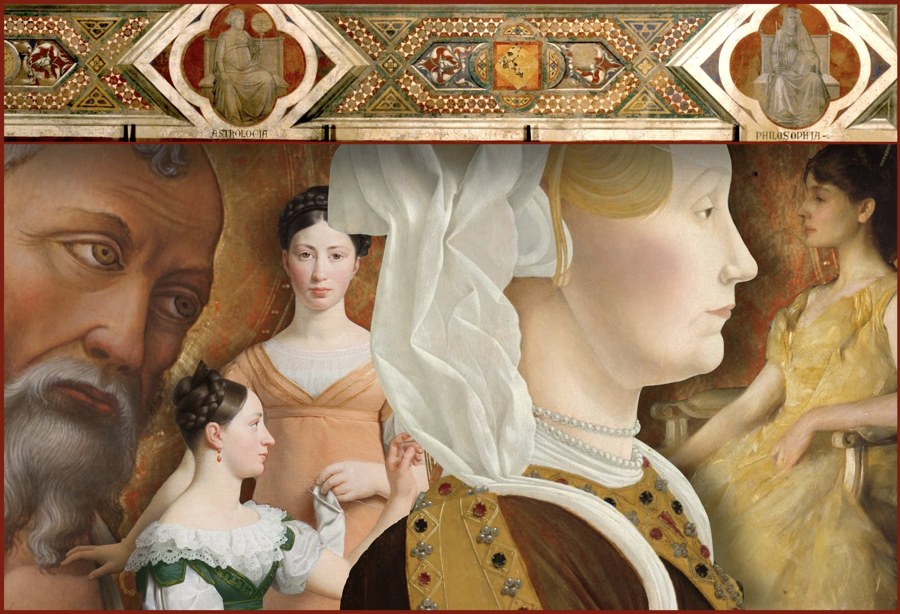
The center of the collage is dedicated to and occupied by the striking profile of Ginevra Sforza—illicit daughter of Alessandro Sforza, Lord of Pesaro—painted in 1475 by Ercole de' Roberti. The portrait was commissioned by Ginevra's second husband, Giovanni II Bentivoglio, the powerful ruler of Bologna, to commemorate the tenth anniversary of their marriage.
Il centro del nostro collage è dedicato e occupato dal grande pro<ilo di Ginevra Sforza, <iglia illegittima di Alessandro Sforza, signore di Pesaro, dipinto nel 1475 dal ferrarese Ercole de' Roberti. Il ritratto fu commissionato dal secondo marito di Ginevra, Giovanni II Bentivoglio, potente signore di Bologna, per il decimo anniversario del loro matrimonio. riuscito grazie alla complicità tra i due coniugi e ai 16 <igli nati da questa unione.
Women at the Museum
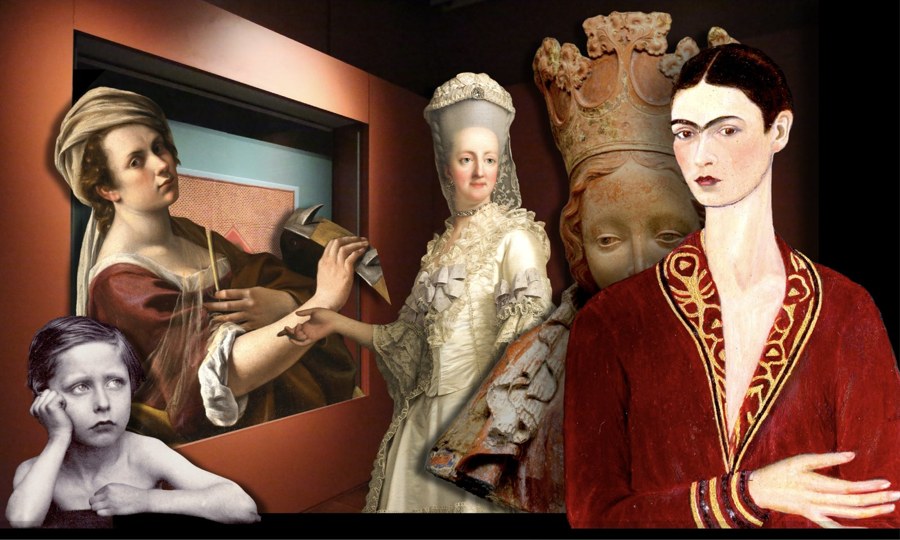
Women have always had to fight to carve out a place for themselves in the world. An insightful thought comes from the painter Grace Hartigan: “Doors have always been open to women artists with extraordinary talent; the true revolution is claiming the right to mediocrity, just as men do."
Le donne, in ogni campo, hanno sempre dovuto lottare per ritagliarsi un posto nel mondo. Un pensiero interessante è quello della pittrice Grace Hartigan: “Le porte sono sempre state aperte alle artiste con un talento fuori dal comune; la vera rivoluzione è rivendicare il diritto alla mediocrità, come accade agli uomini.”
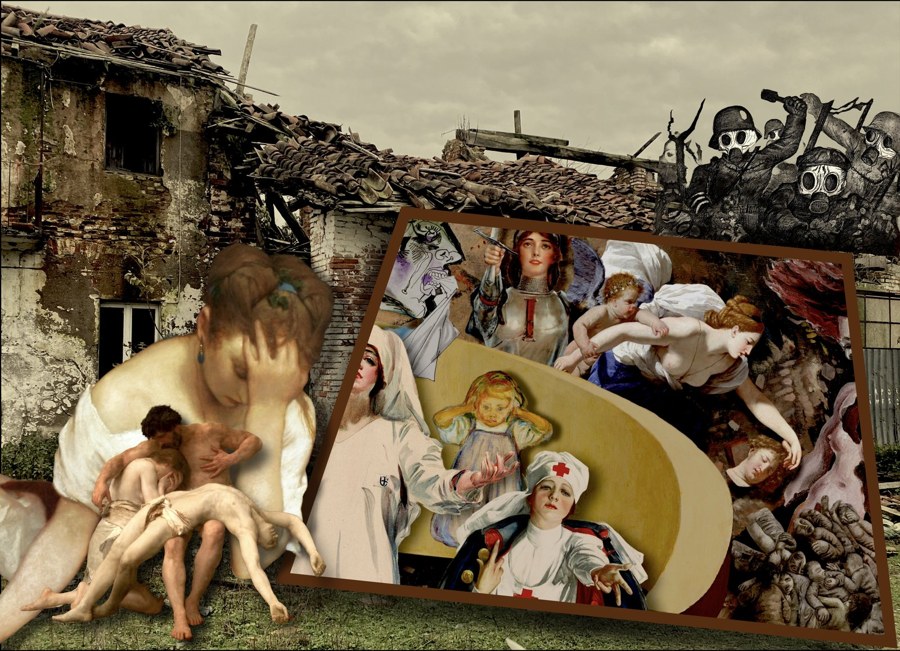
Women's War
Here is an excerpt from "Women and War" by British writer Lucy Swanwick, a pamphlet published in 1915 during the First World War: "I felt that men had left the responsibilities of life to women, while they played that mad, bloody game of slaughtering women's sons."
Ecco un estratto da "Donne e guerra", della scrittrice britannica Lucy Swanwick, un opuscolo pubblicato nel 1915, durante la Prima Guerra Mondiale: "Sentivo che gli uomini avevano abbandonato i loro scopi e avevano lasciato le responsabilità della vita sulle spalle delle donne, mentre giocavano a quel folle e sanguinoso gioco di massacrare i <igli delle donne.”
Variety is part of Blu Artworks' wider body of work — 577 original SIAE-registered collages in total. Explore the Variety fa parte del lavoro più ampio di Blu Artworks — 577 collage originali registrati SIAE in totale. Esplora la Full GalleryGalleria Completa.