Sacred and Profane
Seventeen Collages Built From the History of Devotional Art
17 collages in this catalogcollage in questo catalogo
From the Ghent Altarpiece's nude Adam and Eve to Titian's Noli me Tangere and Piero della Francesca's pregnant Madonna, this catalog gathers seventeen collages built from the great devotional cycles of Western art — Annunciation, Crucifixion, Last Supper, Deposition — each one a reminder that sacred art has never shied from the human body or human doubt. Each piece is available as a high-resolution, 300dpi, royalty-free download for €39, ready for print at any size.
View Full Gallery →Vedi la Galleria Completa → View All Collections →Vedi Tutte le Collezioni →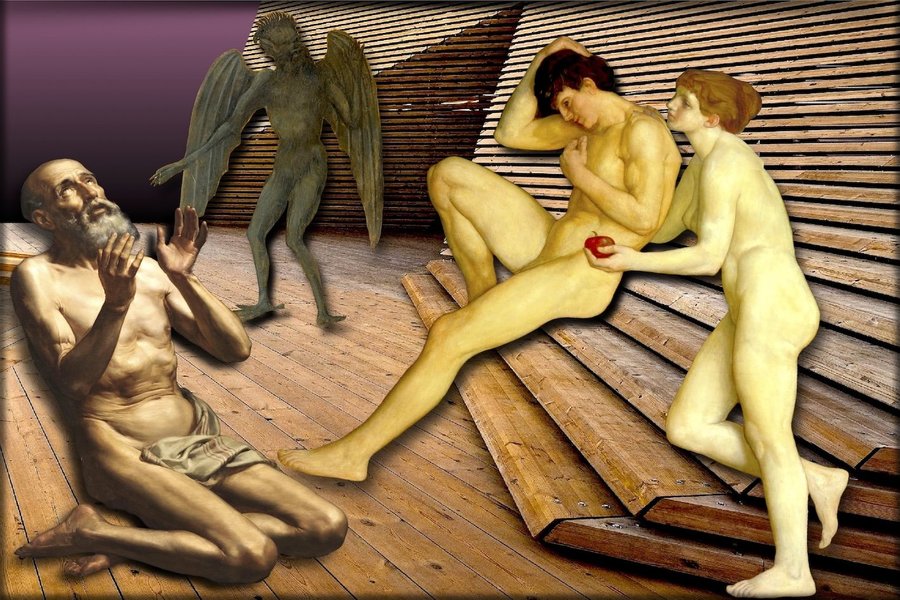
Adam and Eve
After the apple was picked and tasted, the first and only thing Adam and Eve became aware of was their own nudity. Shame was the first negative emotion felt by the first man and woman, just a moment after their fall. In our collage, we have represented them using the portrait created by Scottish artist William Strang in 1899. We included the tempting serpent in its usual demonic form with the help of a portrait dating back to 1310 by Tuscan artist Duccio di Buoninsegna. The penitent invoking God's forgiveness in the 1881 painting is attributed to the Mexican Jesuit painter Gonzalo Carrasco.
Dopo che la mela fu colta e assaggiata, la prima e unica cosa di cui Adamo ed Eva diventarono consapevoli fu la propria nudità. La vergogna è il primo sentimento negativo provato dal primo uomo e dalla prima donna, un istante dopo la loro caduta. Nel nostro collage li abbiamo rappresentati con il ritratto che ne fece l’artista scozzese William Strang nel 1899. Il serpente tentatore, l’abbiamo inserito nel suo consueto aspetto di diavolo, con l’aiuto del ritratto, risalente al 1310, ad opera dell’artista toscano Duccio di Buoninsegna. Al pittore gesuita messicano Gonzalo Carrasco è riconducibile il penitente, che invoca il perdono di dio, nel dipinto del 1881.
Annunciation
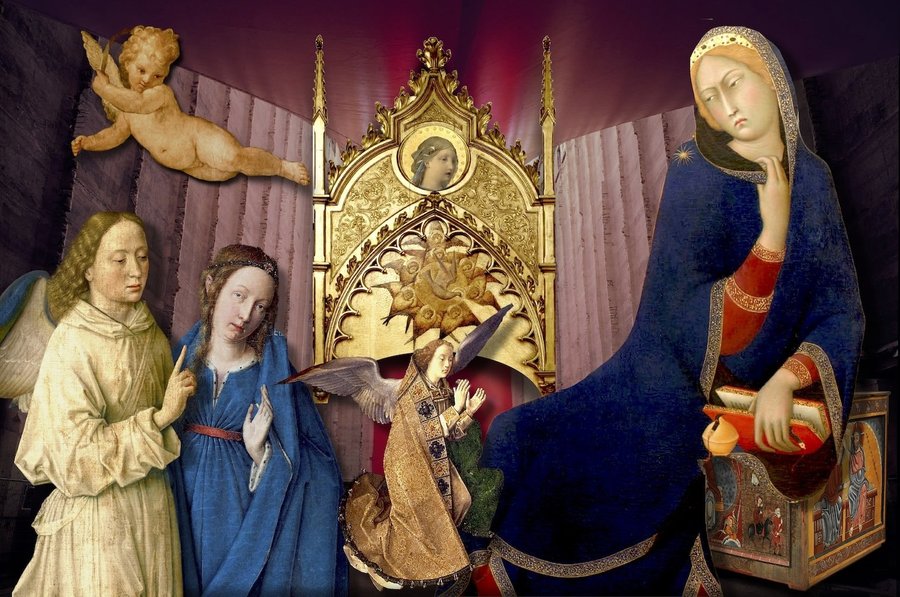
The Annunciation episode is a foundational moment of the Christian religion; we chose to represent Mary's reaction through two images: on the left, devout and submissive to the supreme will of the Lord, in the 1434 painting by the Flemish artist Jan van Eyck. The angel delivering the announcement to her, almost with authority, is the work of the Dutchman Dieric Bouts, dating from 1455. The Madonna on the right, decidedly more suspicious, is a splendid 1333 portrait by Simone Martini, master of the Sienese school and one of the greatest and most influential artists of the Italian 14th century. The small angel in the center, tasked with the announcement, was painted by the Flemish artist Hugo Van der Goes in 1477.
La solennità dell’Annunciazione è un momento fondante della religione cristiana; la reazione di Maria abbiamo voluto rappresentarla, nel nostro collage, con due figure di Madonna: quella a sinistra, devota e remissiva al volere supremo del Signore, nel dipinto dell’artista fiammingo Jan van Eyck del 1434. L’angelo che le dà l’annuncio, quasi con autorità, è opera dell’olandese Dieric Bouts, datato 1455. La Madonna di destra, decisamente più sospettosa è uno splendido ritratto del 1333 di Simone Martini, maestro della scuola senese e tra i maggiori e più influenti artisti del Trecento italiano. E il piccolo angelo al centro, incaricato dello sconvolgente annuncio, è stato dipinto dal fiammingo Hugo Van der Goes nel 1477.
Crucifixion
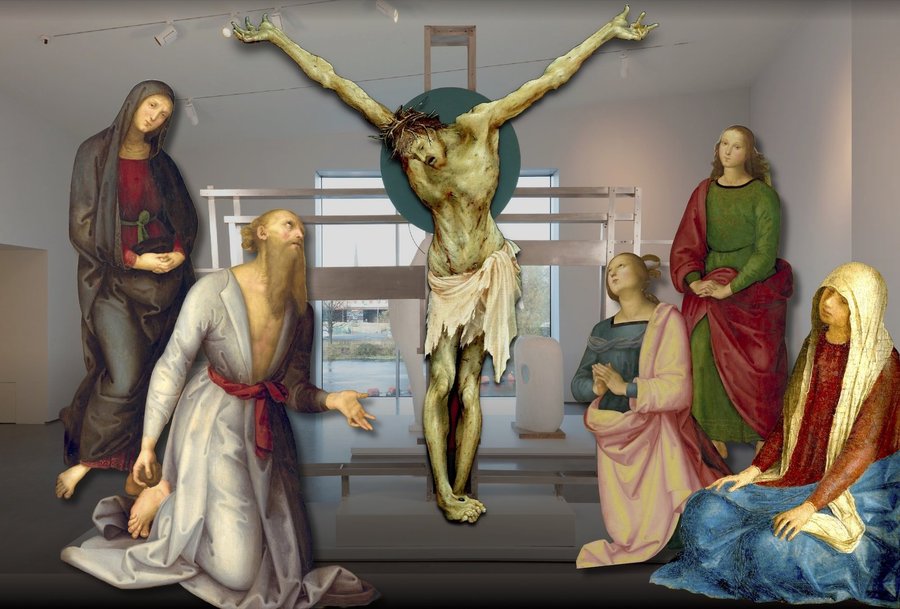
Crucifixion—a cruel form of capital punishment practiced by the Romans that went on to become the symbol of Christianity—was inflicted for several centuries. The cross was reserved for rebels; the unrest caused by Jesus had alarmed the Romans ruling in Jerusalem, and so Jesus ended up on the cross as the leader of a subversive sect. In our collage, we used a stylized cross created by the English sculptor Barbara Hepworth in 1967. We then added the foreground figures: Jesus in the center, painted by the German artist Matthias Grünewald in 1517; the two couples kneeling and standing on either side of the crucifix, portrayed by the great Raphael; and the woman seated on the bottom right, painted by Antonello da Messina in 1475.
Crocifissione, la pena crudele applicata dai Romani, divenuta il simbolo del cristianesimo, venne inflitta per diversi secoli. Cicerone la definì “il supplizio più crudele”. Nell'uso romano la croce era destinata ai ribelli; i disordini che Gesù provocò nel Tempio, la celebre cacciata dei mercanti, avevano allarmato i Romani. Gesù finì in croce quindi come capo di una setta sovversiva. Nel collage, abbiamo usato per sfondo una croce stilizzata, della scultrice inglese Barbara Hepworth, creata nel 1967. A questo sfondo abbiamo aggiunto le figure in primo piano: Gesù al centro, dipinto dal tedesco Matthias Grünewald nel 1517; le due coppie, in ginocchio e in piedi ai lati del crocifisso sono ritratti del grande Raffaello Sanzio dei primi anni del Cinquecento; la donna, seduta in basso a destra, è stata dipinta da un altro famoso artista: Antonello da Messina nel 1475.
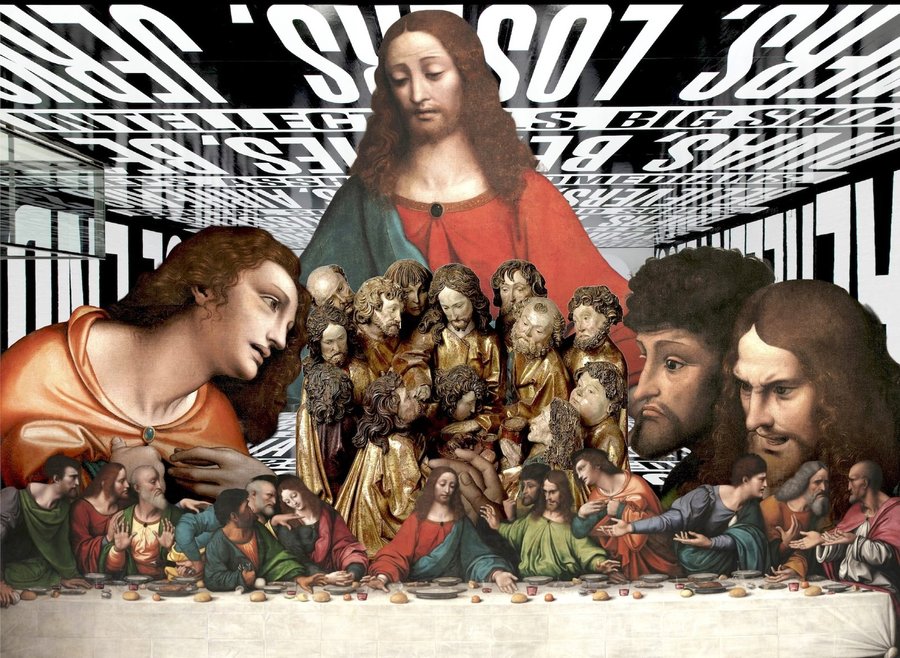
Last Supper
The most famous contemporary copy of Leonardo da Vinci's The Last Supper, measuring 8 meters wide, has been preserved in the Chapel of Magdalen College, Oxford, since 1821. The work was created in the early 1500s. It is an oil painting on canvas, whereas Leonardo painted the original using tempera and oil on dry plaster—a technique that led to a severe degradation of the colors over time. The artist behind this copy is thought to have been Giampietrino or perhaps Giovanni Antonio Boltraffio, both pupils of Leonardo. The painting is considered one of the most accurate representations of Leonardo's original and was used to assist in the restoration of the original masterpiece displayed in Milan a few years ago.
La più celebre copia d’autore del “Cenacolo” di Leonardo Da Vinci, largo 8 metri, è conservata nella Cappella del Magdalen College di Oxford dal 1821. L’opera fu realizzata all'incirca nei primi anni del 1500. Si tratta di una pittura a olio su tela, mentre Leonardo dipinse con tempera e olio su muro a secco, che comportò col passare del tempo un grave deterioramento dei colori. L’artista, artefice di questo dipinto, si pensa possa essere stato Giampietrino o forse da Giovanni Antonio Boltraffio, entrambi allievi di Leonardo. L'opera è considerata una delle rappresentazioni più accurate dell'originale leonardesco ed è stata utilizzata per aiutarne il restauro di pochi anni fa.
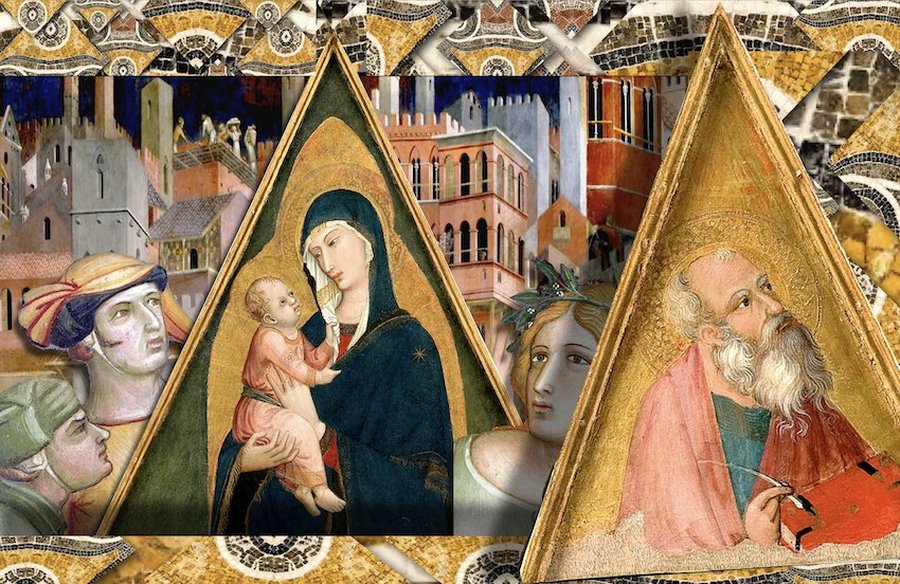
Lorenzetti never seen
The Sienese school of painting flourished in Italy between the 13th and 15th centuries and managed to rival the Florentine school, despite being more conservative and focusing more on decorative beauty and the elegance of the Gothic period. One of the greatest exponents of this school was Ambrogio Lorenzetti (1290–1348). The style of Lorenzetti's works is often said to have anticipated the Italian Renaissance, as seen in the "Madonna and Child" (painted in 1319) placed at the center of our collage, where the medieval towers of Siena can be seen in the background.
La scuola pittorica senese fiorì in Italia tra il XIII e il XV secolo e riuscì a competere con quella fiorentina, pur essendo più conservatrice e concentrandosi maggiormente sulla bellezza decorativa e l'eleganza del periodo gotico. Uno dei massimi esponenti di quella scuola è Ambrogio Lorenzetti (1290/1348). Si dice spesso che lo stile delle opere di Lorenzetti abbia anticipato il Rinascimento italiano, ma pochissime opere dell’artista sono giunte fino a noi. Come la "Madonna col Bambino", eseguita nel 1319, che appare al centro del nostro collage, dove sullo sfondo si vedono le torri medievali di Siena; molte di più di quelle che si possono ammirare oggi, ad esempio a San Gimignano.
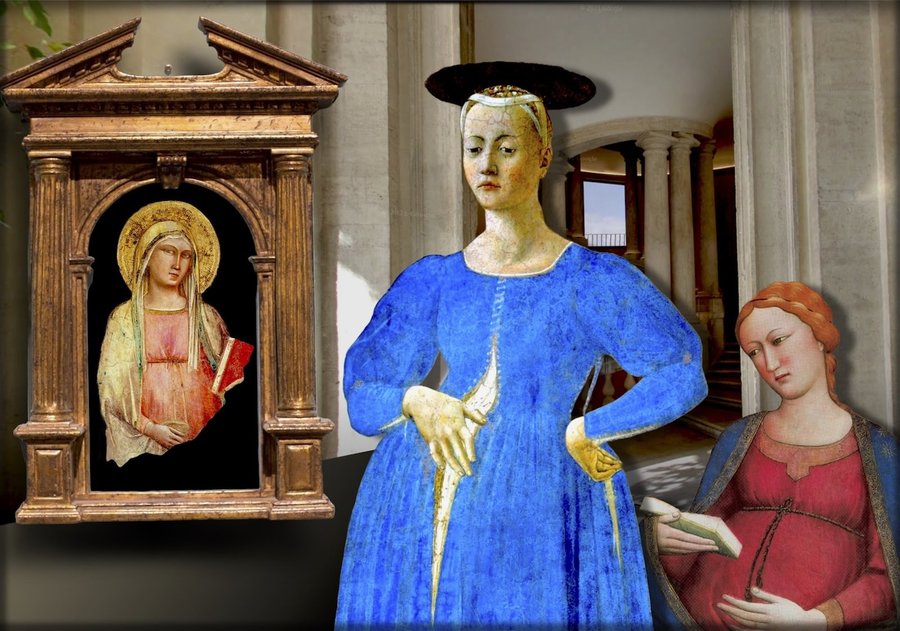
Madonna del Parto
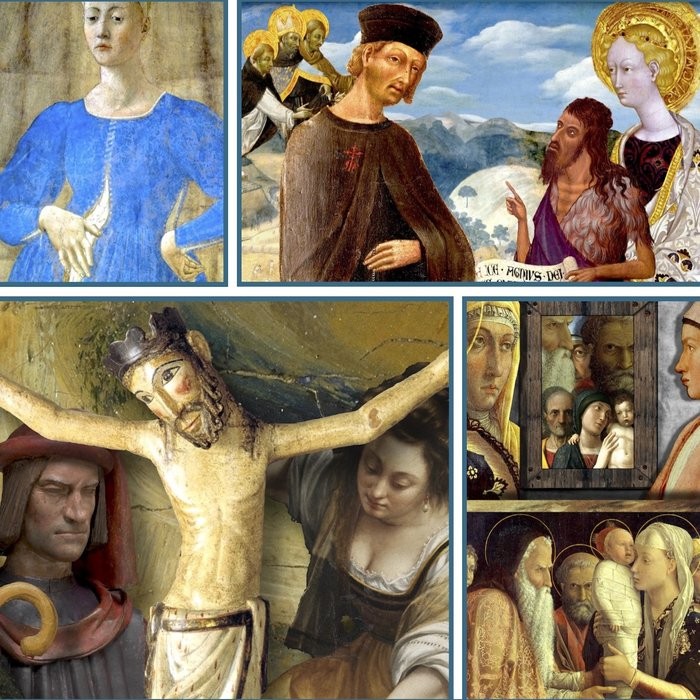
A vast artistic production of statues and paintings has illustrated the moment of waiting, depicting Mary in the fullness of her pregnancy, often holding a book—a symbol of the Holy Scriptures—or with her hand resting on her belly, in a posture common to all pregnant women. Some of these "Madonnas of Childbirth" (Madonne del parto) make up our collage: the most famous is the Madonna in a blue dress painted by Piero della Francesca in a 1460 fresco; in the right-hand corner is the one painted by Antonio Veneziano at the beginning of the 15th century; while in the wooden tabernacle on the left, we have included the remains of the fresco created by Taddeo Gaddi, a pupil of Giotto, in the mid-14th century.
Una vasta produzione artistica di statue e dipinti ha illustrato il momento dell’attesa, rappresentando Maria nella pienezza della sua gravidanza, spesso con in mano un libro, simbolo delle Sacre Scritture, o con la mano posata sul ventre, in una postura comune a tutte le donne incinte. Alcune di queste “Madonne del parto” compongono il nostro collage: la più famosa è la Madonna dipinta Da Piero della Francesca, con l’abito azzurro, in un affresco del 1460; nell’angolo a destra appare quella dipinta da Antonio da Veneziano, all’inizio del Quattrocento; mentre nel tabernacolo di legno a sinistra, abbiamo inserito quello che rimane dell’affresco realizzato da Taddeo Gaddi, allievo di Giotto, a metà del XIV secolo.
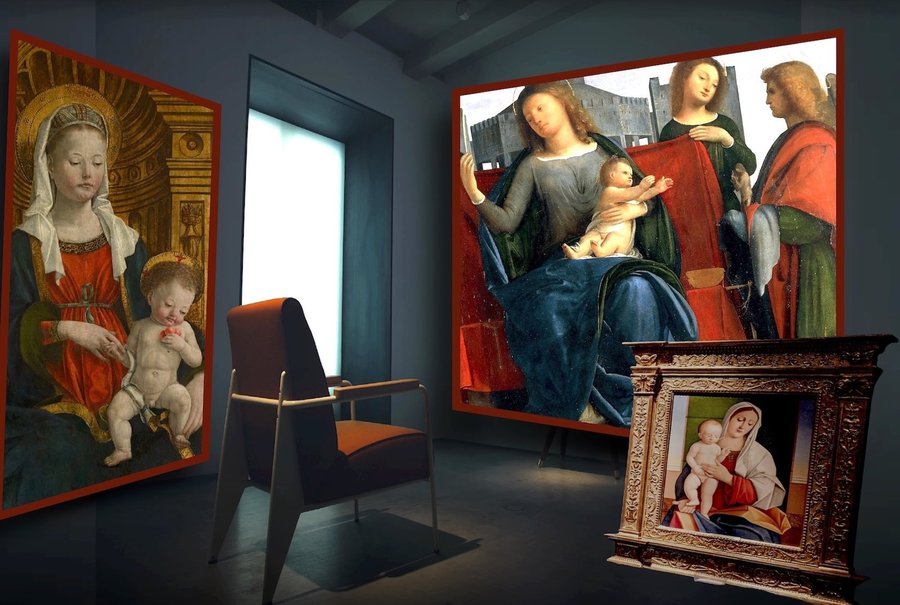
Madonna on the Throne
The image of the Madonna seated with the Child on her lap began to spread from the year 431, after the Council of Ephesus, which had reaffirmed the figure of Mary as the Mother of God. Three iconographic examples of this subject, interpreted by three 16th-century artists: • On the left, a painting by Martino Spanzotti—a tempera on panel dated 1480, known as the "Tucher Madonna," located in Munich. • In the center, a large monumental panel painting by Bramantino, likely executed toward the end of the second decade of the 15th century. • In the bottom right, already framed, is the Madonna Enthroned by the Venetian artist Marco Bello, dating from 1505.
L'immagine della Madonna seduta col Bambino sulle gambe, cominciò a diffondersi soprattutto dall’anno 431, dopo che il concilio di Efeso, che aveva ribadito la posizione di Maria come madre di Dio, e non solo di Gesù. Tre esempi di questo argomento, visti da tre artisti del Cinquecento: a sinistra un dipinto di Martino Spanzotti, una tempera su tavola lignea datata 1480, la “Madonna Tucher”, che si trova a Monaco di Baviera. Al centro una grande tavola monumentale opera del Bramantino, eseguita probabilmente verso la fine del secondo decennio del Cinquecento. Infine in basso a destra, già in cornice, troviamo la Madonna in Trono dell’artista veneziano Marco Bello del 1505.
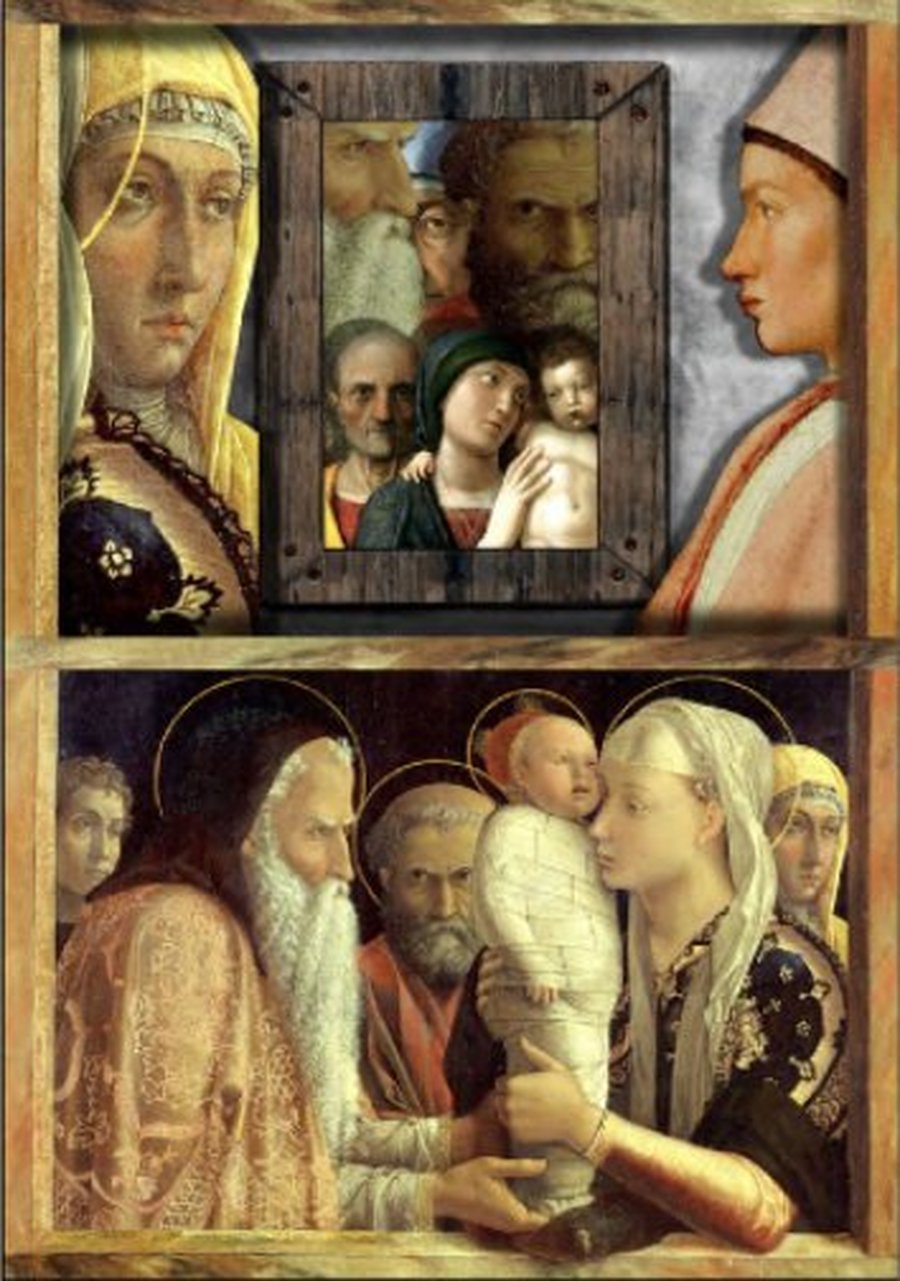
Mantegna never seen
Andrea Mantegna (1431–1506) was a highly influential Renaissance artist known for his experiments with perspective and spatial illusion. His work influenced major painters of the era, including the German artist Albrecht Dürer and the Italians Giovanni Bellini and Leonardo da Vinci. Let us now analyze the lower portion of our collage: this is the painting Presentation at the Temple, which Mantegna created in 1465. On the right, the young Madonna presents the Child to the elderly, stern priest Simeon, while in the center background, Saint Joseph looks on distrustfully. On the left, emerging from the dark background, is the pale, puzzled face of a young man with curly hair, and on the far right, behind the Madonna, a woman with a lost gaze exits the scene. There are six figures present; the atmosphere is stern and anxious, devoid of smiles, featuring a suffering Infant Jesus. Critics believe that the young man entering from the left is Andrea Mantegna himself in one of his earliest self-portraits, while the woman exiting on the right is believed to be Nicolosia Bellini, the young woman Andrea had recently married.
Andrea Mantegna (1431/1506) fu un artista rinascimentale di grande influenza, noto per i suoi esperimenti di prospettiva e illusione spaziale. È noto che la sua opera abbia influenzato i grandi pittori dell'epoca, tra cui il tedesco Albrecht Dürer e gli italiani Giovanni Bellini e Leonardo da Vinci. Analizziamo ora la parte inferiore del nostro collage: si tratta del dipinto "Presentazione al Tempio", che Mantegna realizzò nel 1465; a destra la giovane Madonna offre il Bambino all'anziano e severo sacerdote Simeone, mentre al centro, sullo sfondo, San Giuseppe osserva con diffidenza; a sinistra, dallo sfondo nero, fa capolino il volto pallido e perplesso di un giovane con i capelli ricci e all'estrema destra, dietro la Madonna, esce di scena una donna con lo sguardo smarrito. Sono presenti sei personaggi, l'atmosfera è severa e preoccupata, senza un sorriso e con un Gesù bambino sofferente. I critici ritengono che il giovane che entra da sinistra sia Andrea Mantegna stesso in uno dei suoi primi autoritratti (simile ad altri a sinistra), mentre la donna che esce a destra si ritiene sia Niccolòsia Bellini, la giovane che Andrea aveva da poco sposato.
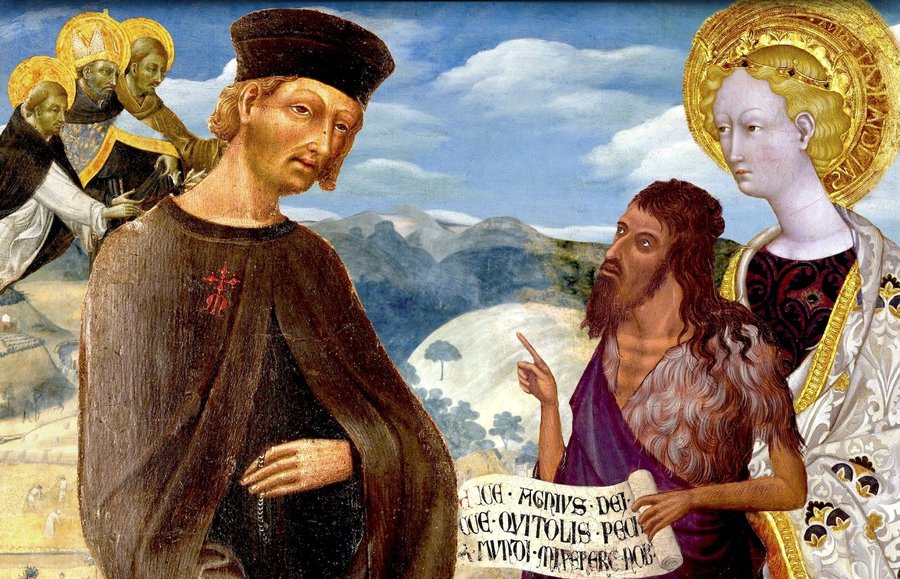
New Gothic
The development of Gothic painting is closely tied to the rise of the new merchant bourgeoisie, who commissioned a vast number of paintings—especially altarpieces, which rapidly became the preferred art form across Europe. 14th-century Italy played a leading role in this evolution, as demonstrated by the works of Cimabue, Giotto, Simone Martini, and other lesser-known masters, such as the artist chosen for our collage: Giovanni di Paolo. From this Sienese artist, we have included the 1462 portrait of Andrea Gallerani on the left and Saint Catherine from 1440 on the right. In the center is Saint John the Baptist, dated 1338, painted instead by Ambrogio Lorenzetti, another master from Siena.
Lo sviluppo della pittura gotica è legato all’affermazione della nuova borghesia mercantile, che commissiona di una grande quantità di dipinti: affreschi, ma soprattutto pale d’altare che ben presto diventano, insieme alle miniature, la forma d’arte preferita in tutta Europa. L’Italia del XIV secolo ebbe un ruolo di primo piano; lo dimostrano gli affreschi di Cimabue, Giotto, Simone Martini, dei Lorenzetti e altri maestri meno noti, come quello che abbiamo scelto per il nostro collage: Giovanni di Paolo. Dell’artista senese abbiamo inserito, a sinistra, il ritratto del 1462 di Andrea Gallerani; a destra, Santa Caterina del 1440 e al centro San Giovanni Battista, datato 1338 e dipinto però da Ambrogio Lorenzetti, altro artista nato a Siena.
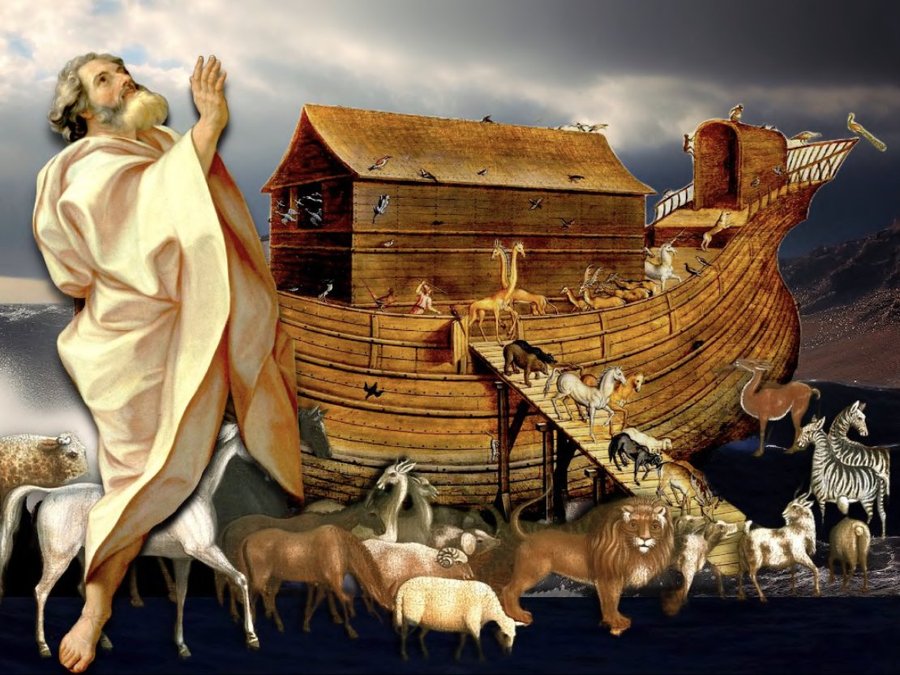
Noah's Ark
In art history, there are not many works depicting this story from the Old Testament, because the spread of Christianity through church frescoes focused on the events told in the Gospels. For our collage, we used the portrait of Moses painted by the Italian Giovan Battista Gaulli, known as Il Baciccio, in 1700. As for the ark, it is a work by the French artist Simon de Mailhy, dated 1570; while the row of animals at the bottom, at the prophet's feet, was painted by the American folk artist Edward Hicks in 1846.
Nella storia dell’arte non ci sono molte rappresentazioni di questo racconto del Vecchio Testamento, antecedente alla nascita di Gesù; perché la diffusione del cristianesimo attraverso gli affreschi nelle chiese si concentrò sulle vita del Cristo e dei suoi discepoli, secondo i testi evangelici. Per il nostro collage abbiamo utilizzato il ritratto di Mosè dipinto dall’italiano Giovan Battista Gaulli, detto il Baciccia, nel 1700. Quanto all’arca, si tratta di un’opera dell’artista francese Simon de Mailhy, datato 1570; mentre la fila di animali in basso ai piedi del profeta sono stati dipinti dal pittore folk americano Edward Hicks nel 1846.
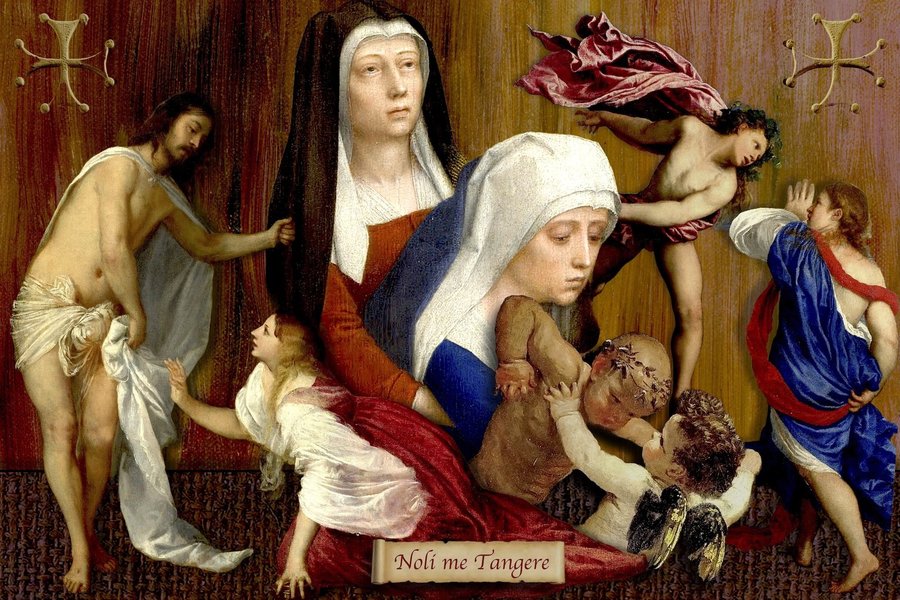
Noli me Tangere
“Noli me tangere”: a Latin phrase derived from the Gospel of John, with which the risen Jesus addresses Mary Magdalene. In everyday language, it is used playfully to tell someone to stay away, or to highlight a hostile attitude full of haughtiness. Returning to the Gospel episode, Mary Magdalene tries to embrace the risen Christ, but he stops her with his hand, thus defining the deeper meaning of desire: blessed are those who know how to inhabit distance, because this is the key to understanding love—the act of stopping to contemplate the other, never fully reachable, which makes us capable of loving.
“Noli me tangere”: espressione latina che deriva dalle parole del Vangelo di Giovanni, con cui Gesù risorto si rivolge a Maria Maddalena. Nel linguaggio comune viene usata scherzosamente per invitare qualcuno a stare lontano, oppure per sottolineare un atteggiamento ostile, pieno di alterigia. Volendo tornare all’episodio evangelico, Maria Maddalena cerca di abbracciare Cristo risorto ma lui la ferma con la mano, definendo così il significato più profondo del desiderio: beati coloro che sanno abitare la distanza, perché questa è la chiave per comprendere l’amore; l’atteggiamento di fermarsi a contemplare l’altro, mai pienamente raggiungibile, che ci rende capaci di amare. Un esempio per tutti: l’amore di Dante Alighieri per Beatrice.
Screenshot 2024-05-06 alle 11.17.22
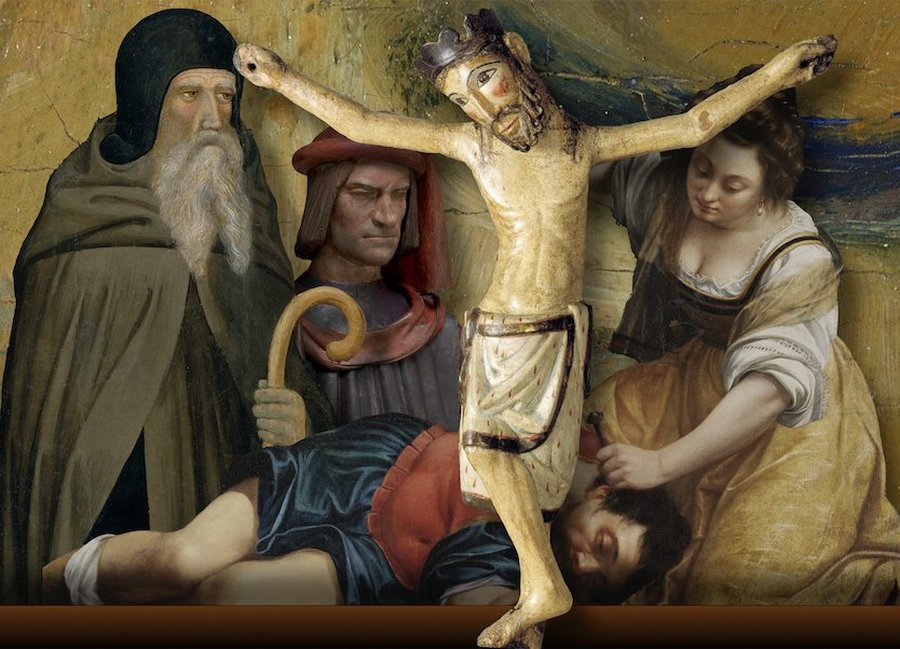
This collage evokes stories of persecution and cruel violence, both religious and political: On the left, we have the portrait of Saint Anthony, the 3rd- century hermit saint who was tormented by demons taking the shape of wild beasts. On the right is Jael killing Sisera by driving a tent peg through his head. Artemisia Gentileschi painted this gruesome scene with masterful skill when she was only 27, forging an unforgettable image of female resolve and vengeance—all the more powerful given that Artemisia herself had been the victim of brutal violence at the hands of one of her father's colleagues. From the violent Old Testament account of Jael—where Sisera sought refuge in the tent of Heber, whom he believed to be an ally, only to find Heber's wife Jael, who offered him hospitality but drove a tent peg into his temple once he fell asleep—we move to the central protagonist of the scene: Jesus crucified, depicted in a moving medieval wooden statue (preserved in the Spanish museum of Solsona) during the final act of his sentence. Behind them all, gazing sternly, stands Lorenzo de' Medici, ruler of Florence, who survived a conspiracy intended to assassinate him.
Questo collage rimanda a storie di persecuzione e di crudele violenza, sia di natura religiosa che politica: A sinistra abbiamo il ritratto di Sant'Antonio, il santo eremita vissuto nel III secolo, perseguitato da demoni sotto forma di animali feroci. A destra c'è Giaele che uccide Sisara, piantandogli un palo nella testa. Artemisia Gentileschi è l'autrice di questa terribile scena, dipinta con grande maestria a soli 27 anni, creando un'immagine di determinazione e di rivalsa femminile incredibilmente memorabile. Anche perché Artemisia era stata vittima di brutale violenza da parte di un amico di famiglia. Dal violento episodio di Giaele dell’Antico Testamento, dove si narra che Sisara si rifugiò nella tenda di Eber che credeva suo alleato. Qui trova Giaele, moglie di Eber, che gli offre ospitalità e gli offre da bere e mangiare, ma dopo che Sisara si fu addormentato gli conficcò un picchetto nella tempia con un mazzuolo, arriviamo dunque al protagonista del Vangelo al centro della scena: Gesù crocifisso, in una commovente statua lignea medievale (conservata nel museo spagnolo di Solsona), nell’atto finale della persecuzione subita. Alle spalle di tutti, con sguardo severo, troviamo Lorenzo de' Medici, il signore di Firenze che, sfuggito ad una congiura che voleva ucciderlo, scriverà il celebre sonetto: «Quant’è bella giovinezza, che si fugge tuttavia! Chi vuol esser lieto sia, di doman non c'è certezza». E forse, aggiungiamo noi, nemmeno di salvezza...
Screenshot 2025-12-06 alle 10.11.07
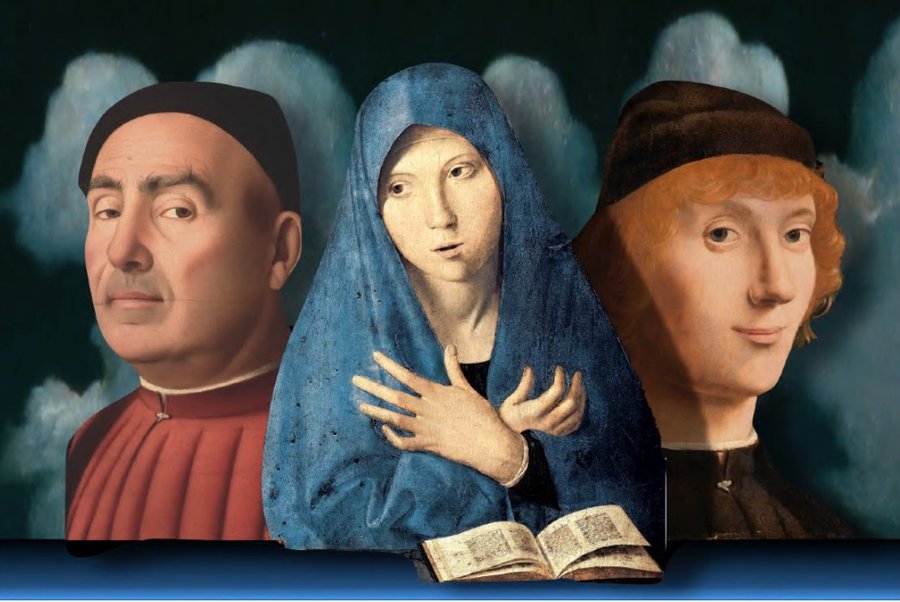
Long before Leonardo da Vinci, Antonello introduced the subtle smile as an indication of the subject's inner life, enveloping their features in a soft light and captivating the viewer with the direct gaze of his sitters. In doing so, the Sicilian master revolutionized the prevailing belief that painting was merely a representation of a person's outer appearance, rather than a reflection of their character.
Formatosi a Napoli nella tecnica della pittura a olio olandese, Antonello stabilì il nuovo standard della ritrattistica quando arrivò dalla Sicilia a Venezia nel 1475. Molto prima di Leonardo da Vinci, introdusse il sorriso accennato come indicazione della vita interiore del soggetto, avvolgendone i lineamenti in una luce soffusa e catturando l'osservatore con il suo sguardo diretto. In questo modo il dipinto contraddisse l’allora visione negativa dominante, secondo cui la pittura potesse essere solo una mera rappresentazione dell'aspetto esteriore di una persona, non certo del suo carattere. (Fonte: The Metropolitan Museum of Art) Trained in Naples in the technique of oil painting, Antonello set the new standard for portraiture when he arrived in Venice from Sicily in 1475.
Screenshot 2025-12-06 alle 10.34.04
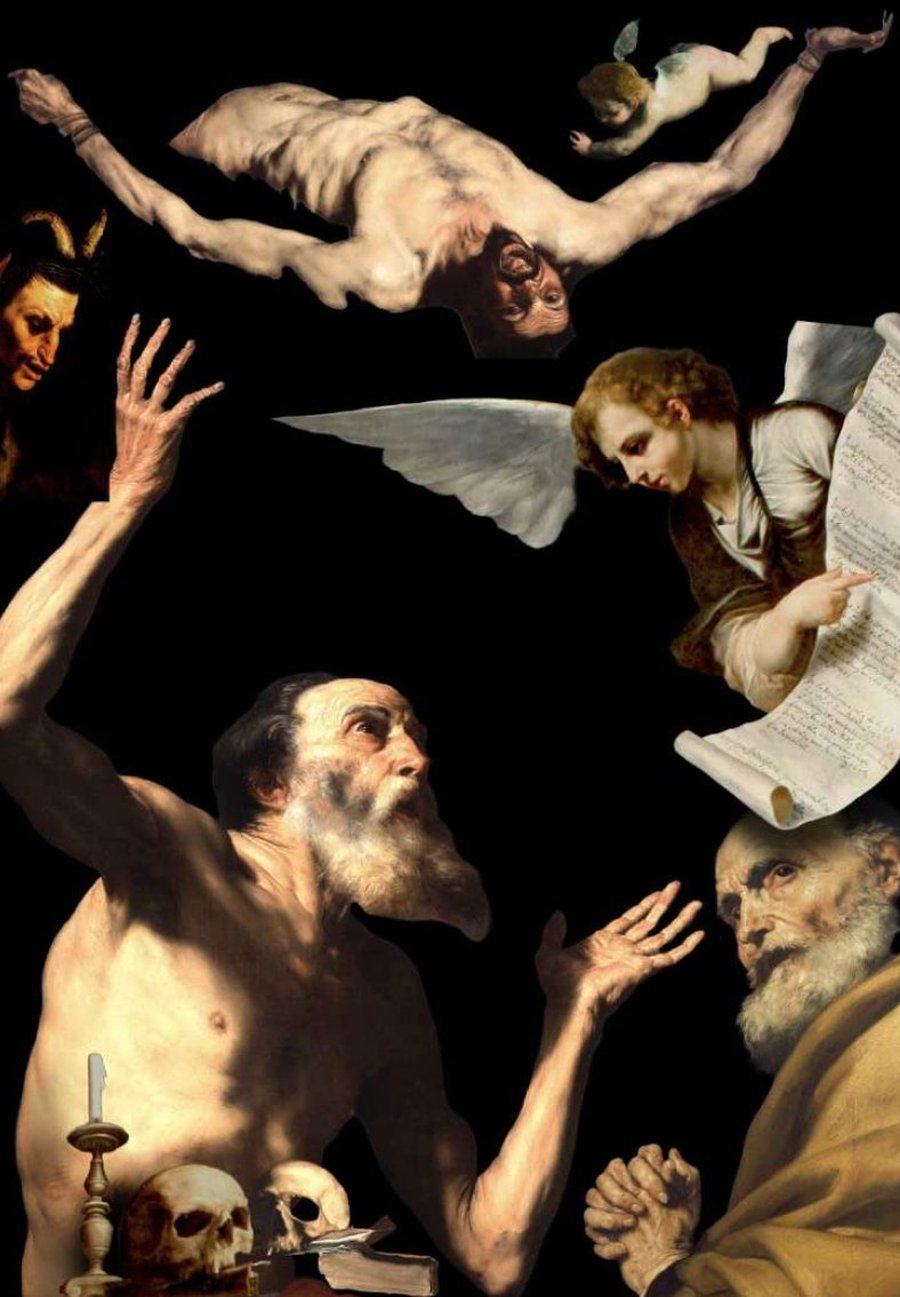
T h e S p a n i s h painter Jusepe de Ribera (1591– 1652) went as a teenager to nearby Valencia to study at the university. However, after seeing the works o f F r a n c i s c o Ribalta, a master o f Va l e n c i a n painting at the time, he was so captivated that he abandoned his studies to enter t h e m a s t e r ' s workshop. A few years later, Ribera arrived in Italy, where he would remain for the rest of his life. He was first in Rome, where he was given the nickname "Lo Spagnoletto"; then in Parma, fascinated by the grace of Correggio; and finally in Naples, around 1616, where he spent the entirety of his glorious maturity.
Il pittore spagnolo Jusepe de Ribera (1591/1652), ancora adolescente, si recò nella vicina V a l e n c i a p e r s t u d i a r e all'università; ma, dopo aver visto le opere di Francisco Ribalta, maestro d e l l a p i t t u r a v a l e n c i a n a dell'epoca, ne fu così attratto che abbandonò gli studi per entrare nella bottega del maestro. Qualche anno dopo, attratto dalla fama dei grandi artisti italiani, Ribera giunse in Italia, dove sarebbe rimasto per tutta la vita. Fu prima a Roma, dove gli fu dato il soprannome di "Spagnoletto"; poi a Parma, affascinato dalla grazia del Correggio; quindi di nuovo a Roma; infine a Napoli, intorno al 1616, dove trascorse tutta la sua gloriosa maturità.
The Deposition
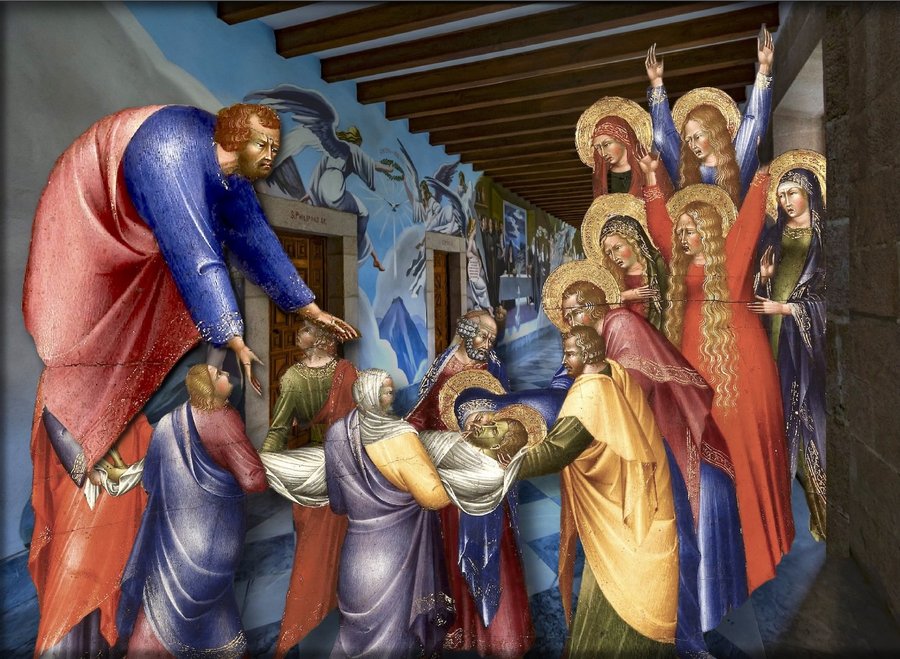
We enlarged his figure and placed him on the left, above the entire group, because in the Gospel of John, it is specified that as a prominent man, Joseph followed Jesus discreetly out of fear of judgment. However, he was far from discreet when he used all his influence to request Christ’s body from Pilate, offering his own tomb and buying a linen cloth to wrap the body.
La deposizione e la sepoltura di Gesù, grazie all’intervento di Giuseppe d’Arimatea, presente nel collage, dipinto da Giovanni di Paolo del 1460; l’abbiamo ingrandito e posto a sinistra sopra tutto il gruppo perché, “nel suo Vangelo Giovanni precisa che essendo un uomo in vista, Giuseppe seguiva Gesù con discrezione, per il timore di essere giudicato. Ma non sarà discreto quando chiederà il corpo di Cristo a Pilato usando tutta la sua influenza, offre la sua tomba e compra un telo di lino per avvolgere il corpo. Dopo la Pasqua, Giuseppe d’Arimatea non verrà più citato nei Vangeli canonici, ma secondo alcune leggende di origine orientale, sarebbe partito per evangelizzare l’intera Europa fino in Britannia, dove addirittura viene citato nella leggenda di Re Artù come custode del Santo Graal”. (vaticannews.va) The deposition and burial of Jesus took place thanks to the intervention of Joseph of Arimathea, who appears in our collage in the 1460 painting by Giovanni di Paolo.
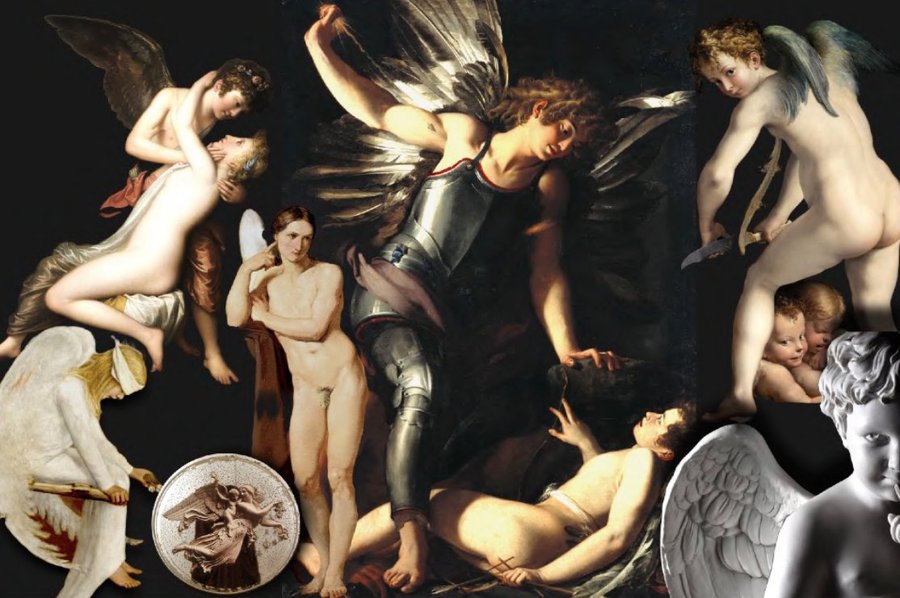
The Sex of Angels
"Discussing the sex of angels" has become an idiom meaning to argue over useless matters, wasting time. When Cardinal Martini said that the Church "is 200 years behind," he wasn't citing a random figure: it was in reaction to 1789 (the French Revolution) that Catholicism froze its sexual morality. "It is the last domain where, having lost political power, it can still exert a decisive influence on society. And so, while it has evolved on various other fronts, when it comes to sexuality, the Holy Roman Church remains frozen in inaction. But the epochal crisis of sexual abuse has created a profound rift.” (Iacopo Scaramuzzi)
Secondo il dettame religioso, gli angeli sono esseri spirituali, e quindi attribuire loro un genere è superfluo. Discutere del sesso degli angeli è un modo di dire, equivale a discutere di cose inutili, sprecando il tempo. Quando il cardinale Martini disse che la Chiesa "è indietro di 200 anni", non citava un dato a caso: è in reazione al 1789, infatti, che il cattolicesimo ha congelato la sua morale sessuale. “L'ultimo campo in cui, perduto il potere politico, può ancora esercitare un'influenza decisiva sulla società. E così, mentre si è evoluta sui fronti più vari, quando si parla di sesso Santa Romana Chiesa è tentata dall'inazione. Ma la crisi epocale degli abusi sessuali ha creato una frattura profonda”. (Iacopo Scaramuzzi) According to religious doctrine, angels are spiritual beings, making it superfluous to assign them a male or female gender.
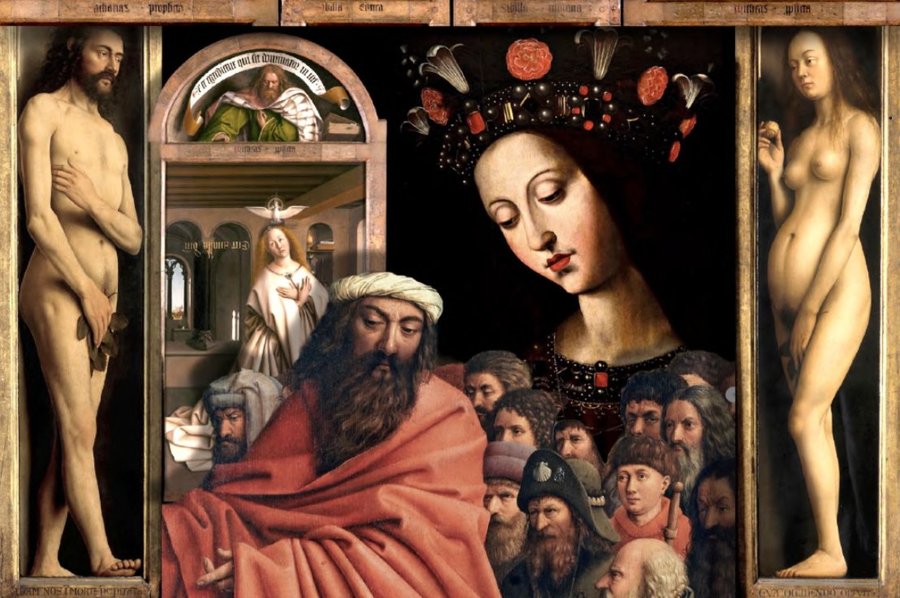
Van Eyck never seen
Although often associated with Italy, during the late Middle Ages the Renaissance extended into Northern Europe—in the territories of Flanders—leaving a profound mark on the history of art. "Paintings of the era depicted moments common to all members of society, from the recreational activities of the upper classes to the labor of peasants, from the grandeur of cities to the peaceful atmosphere of villages and homes." (Abel G. Matos) One of the most representative artists of Flemish art is Jan van Eyck (1390–1441). His realistic style gained a vast following, as he perfected the technique of oil painting, which gradually replaced the use of tempera.
Sebbene spesso associato all'Italia, il Rinascimento si estese anche all'Europa settentrionale, nei territori delle Fiandre durante il tardo Medioevo, lasciando un segno profondo sulla storia dell’arte. "I dipinti dell'epoca raffiguravano i momenti comuni a tutti i membri della società, dalle attività ricreative delle classi superiori al lavoro dei contadini, dalla grandiosità delle città alla pacifica atmosfera di villaggi e case”. (Abel G.Matos) Uno degli artisti più rappresentativi dell'arte fiamminga è Jan Van Eyck (1390/1441), un artista di fama internazionale e il suo stile realistico, ebbe un larghissimo seguito. Perfezionò la tecnica della pittura ad olio, che gradualmente sostituì l'uso del colore a tempera.
Sacred and Profane is part of Blu Artworks' wider body of work — 577 original SIAE-registered collages in total. Explore the Sacro e Profano fa parte del lavoro più ampio di Blu Artworks — 577 collage originali registrati SIAE in totale. Esplora la Full GalleryGalleria Completa.