Animal Presences
Twenty-Five Collages Where Dogs, Horses, Birds and Myth Share the Frame
25 collages in this catalogcollage in questo catalogo
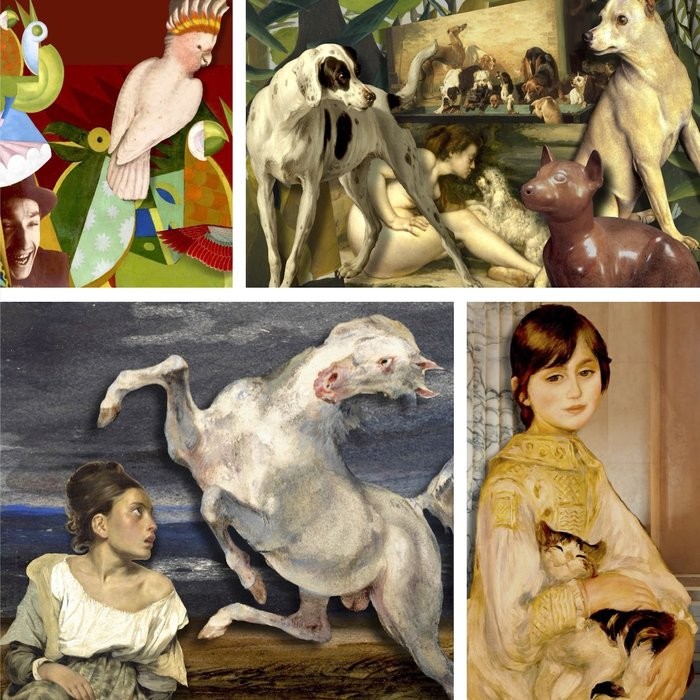
From Titian's dozing lapdogs to Henri Rousseau's jungle tiger and Frida Kahlo's pet spider monkey, this catalog gathers twenty-five collages built around the animals that have shared the frame with humans throughout the history of art — loyal, wild, sacred, or simply watching. Each piece is available as a high-resolution, 300dpi, royalty-free download for €39, ready for print at any size.
View Full Gallery →Vedi la Galleria Completa → View All Collections →Vedi Tutte le Collezioni →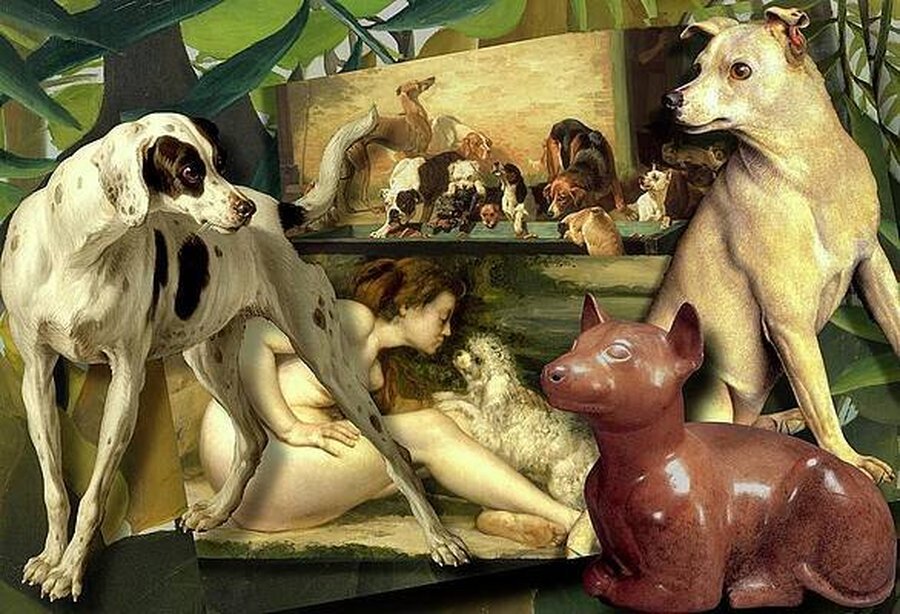
A Dog Forever
Before the 19th century, dogs and cats appeared in paintings, but rarely as the main subjects. Painters like Landseer and Dollman succeeded in shifting the perception of animals from simple beasts to beings with thoughts and emotions. The nude model in our collage is Léontine Renaude, the mistress of the French painter Gustave Courbet. The erotic tone is created by the direct connection between the woman and her dog. The affection shown for the animal is a metaphor for the sensual love felt for her lover—the painter himself, an accomplice to the scene. The artwork from which the two figures are taken is dated 1868. A little-known painter, an extinct dog breed, a painting of great charm: this is the beautiful dog on the right of the collage, the work of the English artist James Webbe. It is a White English Terrier, a breed that was popular as a show dog in the nineteenth century. Known for its alertness, the breed quickly became extinct after 1895, when ear cropping was banned and interest in the breed declined. “The dog possesses beauty without vanity, strength without insolence, courage without ferocity, and all the virtues of man without his vices." (Lord Byron )
Prima del XIX secolo, cani e gatti erano presenti nei dipinti, ma raramente come soggetti principali. Pittori come Landseer e Dollman sono riusciti a spostare la percezione che avevano degli animali da semplici bestie a esseri con pensieri ed emozioni. La modella nuda del nostro collage è Léontine Renaude, l'amante del pittore francese Gustave Courbet. Il tono erotico è creato dal legame diretto tra la donna e il suo cane. L'affetto mostrato per l'animale è una metafora dell'amore sensuale per l'amante, l’autore del ritratto, complice della scena. L’opera, da cui sono tratte le due figure è datata, 1868. Un pittore poco noto, una razza canina estinta, un dipinto di grande fascino: è il bellissimo cane sulla destra del collage, opera dell'artista inglese James Webbe, un White English Terrier, razza ufficiale all'inizio degli anni '60 del diciannovesimo secolo che era diventata popolare come cane da esposizione. Nota per la sua vigilanza, la razza si estinse rapidamente dopo il 1895, quando il taglio delle orecchie fu proibito e l'interesse per la razza diminuì. "Il cane possiede bellezza senza vanità. Forza senza insolenza. Coraggio senza ferocia. E tutte le virtù dell'uomo senza i suoi vizi." (Lord Byron)
Ambassador's Hall
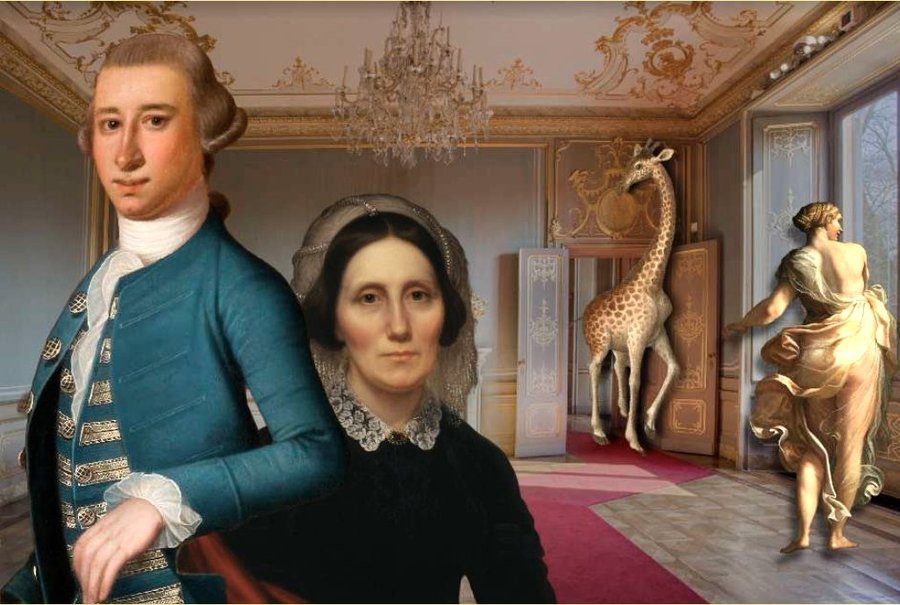
“Ambassadors are spies trained to eavesdrop in the antechambers of those powers to whom they had declared themselves friends.” (Alessandro Manzoni) The portrait of John Habersham, which we selected for our collage—now on display at the National Gallery of Art—is a 1772 work by Jeremiah Theus, a Swiss-born American painter known primarily for his skill in painting portraits. He was active mainly around Charleston, South Carolina, a city where he remained almost without competition for most of his career. On the right side of the collage, a sensual young woman can be seen dancing, covered in transparent veils that reveal her generous curves. She is the representation of Vice, as painted by Annibale Carracci in 1595. Ambassador Habersham seems to look at us, torn between allowing himself to be seduced by vice or clinging to virtue, represented by the elderly woman beside him... Will man's vice prevail, or the virtue of his role as an ambassador? Perhaps the answer lies in the cumbersome presence of the giraffe which, being the only mammal with its heart so far from its brain, suggests a plausible answer: a capable ambassador must decide rationally, always keeping a distance from their emotions.
“Gli ambasciatori sono spie piazzate per origliare nelle anticamere di quei potenti che si dicono amici.” (Alessandro Manzoni) Il ritratto di John Habersham, che abbiamo scelto per il nostro collage, ora esposto alla National Gallery of Art, è un’opera datata 1772 di Jeremiah Theus, un pittore americano di origine svizzera, noto principalmente per la sua abilità nel dipingere ritratti. Fu attivo principalmente nei dintorni di Charleston, nella Carolina del Sud, una città in cui rimase quasi senza concorrenza per gran parte della sua carriera. A destra del collage si vede una sensuale ragazza danzare, coperta da veli trasparenti che lasciano intravedere le sue forme generose. E’ la rappresentazione del vizio come la dipinse Annibale Carracci nel 1595. Quindi John sembra guardarci indeciso tra lasciarsi sedurre dal vizio o aggrapparsi alla virtù, rappresentata dall'anziana donna accanto a lui... Prevarrà il vizio dell’uomo o la virtù dell’ambasciatore? Forse la risposta sta nell’ingombrante presenza della giraffa, che è l’unico mammifero ad avere il cuore lontano dal cervello; così un valido ambasciatore deve decidere razionalmente, rimanendo sempre distante dalle emozioni.
Bipolar Personality
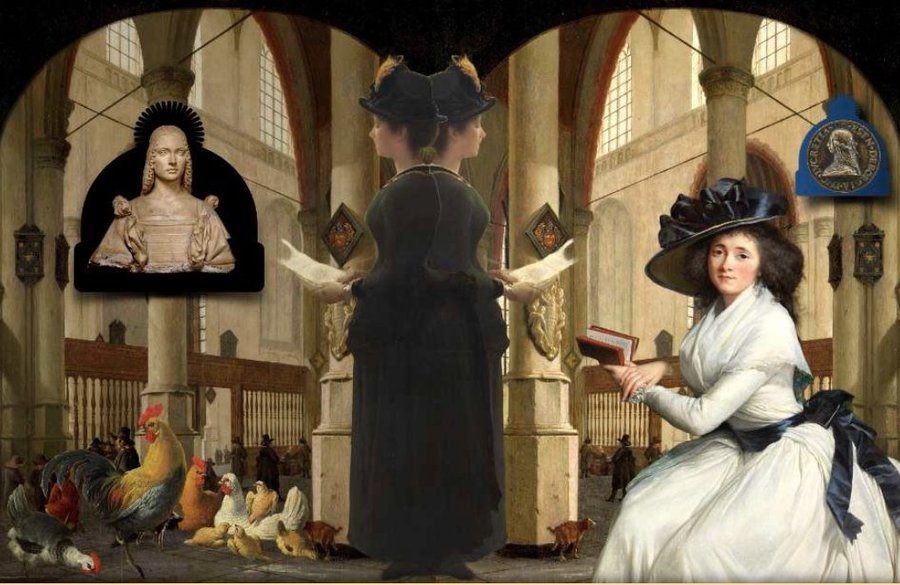
Bipolar disorder is a complex, highly heritable psychiatric disorder with a chronic course. It is characterized by periods of deep, prolonged depression alternating with periods of excessively euphoric or irritable mood. The depressive phases tend to last longer, whereas the excessive, manic phases last for shorter periods (ranging from a week to a little over a month). The transition between these two phases can be relatively long, allowing the patient a period of well-being, or it can be sudden and abrupt. Coming to the collage, the melancholic lady depicted on the right, dressed in white, is a work by Élisabeth Vigée Le Brun, one of the most sought-after and appreciated female painters in France; moreover, a woman capable of building her own success in a society run almost entirely by men. The two medallions hanging at the top of the columns reproduce the portraits of Isabella d'Este and Lucrezia Borgia, respectively. Two more true "first ladies"—famous and powerful —of the Italian Renaissance. The presence of the hens is no coincidence. Indeed, when confined in cramped and overcrowded spaces, hens enter a state of stress that weakens their immune system, exposing them to the risk of contracting potentially fatal diseases. The parallel with the human existential and psychological condition prompts us to draw our own conclusions.
Il disturbo bipolare è un disturbo psichiatrico complesso, ad alta ereditarietà, con decorso cronico. E’ caratterizzato dalla presenza di periodi di depressione profonda e prolungata alternati a periodi di umore eccessivamente euforico o irritabile. Le fasi depressive tendono a durare più a lungo, mentre le fasi eccessive e maniacali durano meno (da una settimana a poco più di un mese). La transizione tra queste due fasi può essere relativamente lunga, consentendo al paziente un periodo di benessere, oppure può essere improvvisa e repentina. Venendo al collage, la malinconica dama ritratta sulla destra, vestita di bianco, è un'opera di Élisabeth Vigée Le Brun, una delle pittrici più ricercate e apprezzate in Francia; non solo, una donna capace di costruire da sola il proprio successo in una società gestita quasi interamente da uomini. I due medaglioni che si vedono appesi in cima alle colonne riproducono rispettivamente i volti di Isabella d'Este e Lucrezia Borgia. Altre due vere "première dames", famose e potenti, del Rinascimento italiano. La presenza delle galline non è casuale. Le galline infatti, se costrette in spazi angusti e promiscui, entrano in una condizione di stress che ne indebolisce il sistema immunitario, esponendole al rischio di contrarre malattie potenzialmente letali. La similitudine con la condizione esistenziale e psicologica umana ci induce a trarne le conseguenze.
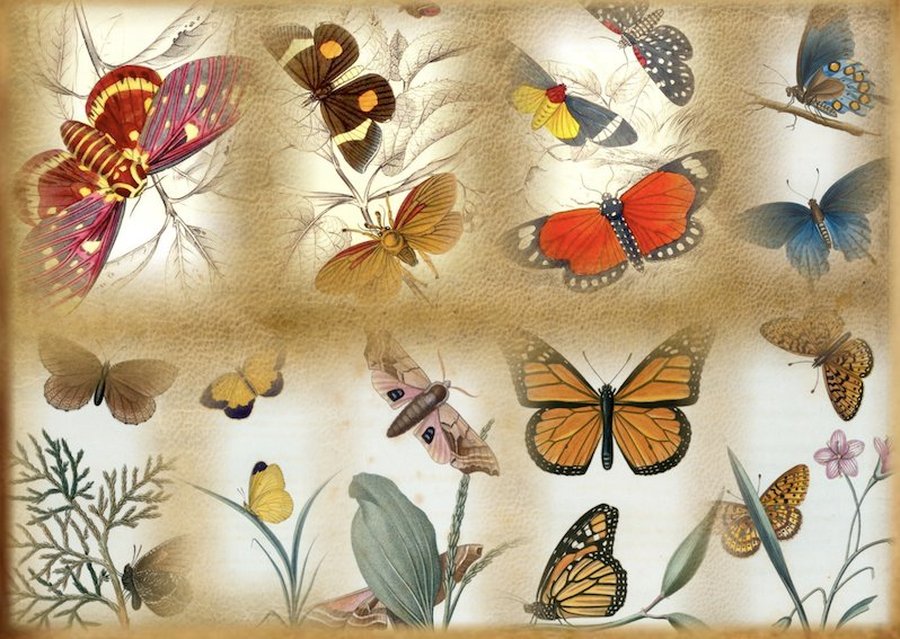
Butterflies
“The butterfly collector is a living paradox equipped with a net: a man who adores beauty to such an extent that he wants to literally freeze it in time, usually with a steel pin and an unusual dose of aesthetic ruthlessness. For him, happiness is not a flutter of wings, but perfect symmetry; it is not the fragrance of flowers, but the pungent smell of camphor. While the rest of humanity looks at a butterfly and thinks of freedom, the collector looks at it and thinks of taxonomy, calculating with millimeter precision the wingspan angle so that the whole world can admire how splendid nature is... once it has been lined up and deprived of its breath!” (T.Rossi)
Il collezionista di farfalle è un paradosso vivente munito di retino: un uomo che adora la bellezza a tal punto da volerla letteralmente fermare nel tempo, solitamente con uno spillo d’acciaio e un’insolita dose di spietatezza estetica. Per lui, la felicità non è un battito d’ali, ma una simmetria perfetta; non è il profumo dei fiori, ma l’odore pungente della canfora. Mentre il resto dell’umanità guarda una farfalla e pensa alla libertà, il collezionista la guarda e pensa alla tassonomia, calcolando con precisione millimetrica l’angolo di apertura delle ali affinché il mondo intero possa ammirare quanto sia splendida la natura... una volta che è stata messa in riga e privata del respiro!
Childless Cat Ladies
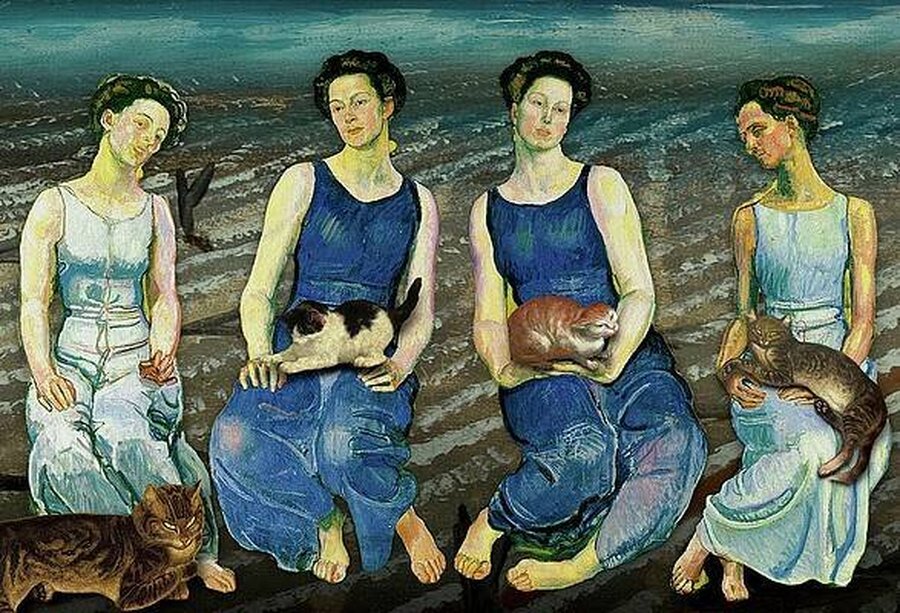
Affectionate, playful, lazy, lively: cats know how to surprise us with the many nuances of their personality, which also stem from their experiences and their relationship with those who have welcomed them into their home—much like a parent, whose character may be more or less authoritarian or protective. A study on human behavior conducted by the University of Exeter in the United Kingdom examined the personality of cat owners and identified three main categories of cat owners: ranging from the concerned, to the conscientious, to the tolerant observers of any feline behavior. Our collage depicts four women taken from a 1907 painting by the Swiss artist Ferdinand Hodler. The four cats were painted by three other artists. Let's examine them in order of appearance: on the bottom left is the yellow-eyed cat portrayed in 1909 by another Swiss painter, Alexandre Steinlen. The black-and-white cat is attributed to the artist Henriëtte Ronner in 1870. The twin, who is also dressed in blue, holds a beautiful ginger cat in her arms, painted by the Italian Annibale Carracci in 1588. Finally, the last feline was also portrayed by Steinlen in 1909. "You never truly own a cat. If anything, you are admitted to its life, which is undoubtedly a privilege." (Beryl Reid)
Affettuosi, giocherelloni, pigri, vivaci, i gatti sanno sorprenderci per le tante sfumature del loro carattere, frutto anche delle esperienze e del rapporto con il padrone. E anche il padrone, un po' come un genitore, può essere più o meno autoritario e protettivo. Uno studio sul comportamento umano, condotto dall'Università di Exeter nel Regno Unito, ha studiato il carattere di chi possiede un gatto e ha individuato che esistono tre grandi categorie di proprietari di gatti: dai preoccupati ai coscienziosi, ai tolleranti osservatori di qualsiasi comportamento. Il nostro collage raffigura 4 donne, tratte da un dipinto dell'artista svizzero Ferdinand Hodler del 1907, che posano per il pittore con i loro quattro graziosi felini. In ordine di apparizione da sinistra c'è il gatto dagli occhi gialli ritratto nel 1909 da un altro svizzero, Alexandre Steinlen. Sotto abbiamo un esemplare bianco e nero dell'artista Henriëtte Ronner del 1870. La gemella al suo fianco, vestita anche lei di blu, tiene tra le braccia un bellissimo gatto dal pelo rosso, dipinto dall'italiano Annibale Carracci nel 1588. Infine l’ultimo micio, sempre ritratto da Steinlen nel 1909. "Non si possiede mai un gatto. Semmai si è ammessi alla sua vita, il che è senz’altro un privilegio. (Beryl Reid)
Delacroix Tribute
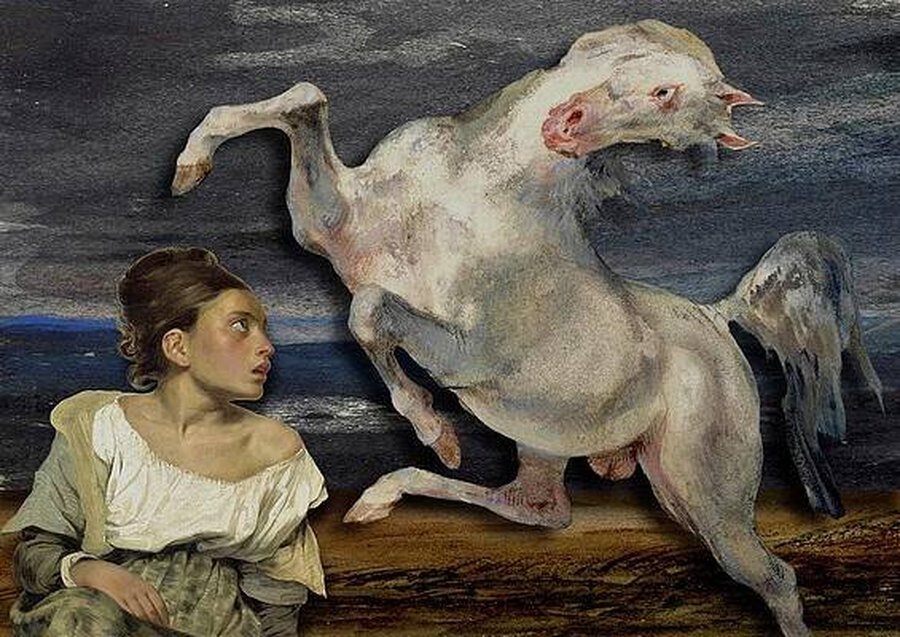
Eugène Delacroix (1798–1863) is one of the leading figures of French Romantic painting. "The first quality of a painting is to be a feast for the eyes." These were the words the artist often repeated. Our collage highlights the splendid white horse painted by Delacroix in 1829 in the famous artwork titled "Horse Frightened by Lightning." The painting embodies everything the horse represented in the eyes of the Romantics: strength, nobility, freedom, and wild passion. This animal has been depicted by humanity throughout all evolutionary stages of mankind, from cave paintings to the 20th-century avant-garde movements. After millennia, we are witnessing its decline in the art world. Following the avant-garde movements, with Picasso, after the numerous deeply Expressionist works by Franz Marc, after Kandinsky, after Boccioni, contemporary art oscillates between classical and mythological inspiration and the transfiguration of the figure of the horse, up to denying it completely. "Perhaps it is the sign that an entire era has come to an end, and proof of the detachment of contemporary culture—now monopolized by technology—from the beauty of the natural world." (Doina Ene) "Most people are crazy about cars, and when they buy one, they're already thinking about replacing it with an even newer one. I don't even like cars. I'd rather have a horse; at least a horse is human." (J.D. Salinger)
Eugène Delacroix (1798 - 1863) è uno dei massimi esponenti della pittura romantica francese. “La prima qualità di un dipinto è di essere una gioia per gli occhi”. Queste le parole che l’artista ripeteva spesso. Il nostro collage mette in risalto lo splendido cavallo bianco ritratto nel 1829 da Delacroix nel celebre dipinto intitolato: "Cavallo spaventato dal fulmine". Il dipinto incarna tutto ciò che il cavallo rappresentava agli occhi dei romantici: forza, nobiltà, libertà e passione selvaggia. Ma questo animale, che è stato rappresentato dall'uomo attraverso tutte le fasi evolutive, dalle figure rupestri alle avanguardie del ‘900, sembra oggi non interessarci più. Dopo millenni assistiamo al suo declino anche nel mondo dell'arte. Dopo le avanguardie, con Picasso, dopo le numerose opere profondamente espressioniste di Franz Marc, dopo Kandiski, dopo Boccioni, l'arte contemporanea oscillerà alternativamente tra l'ispirazione classica e mitologica e la trasfigurazione della figura del cavallo, fino a negarla completamente. “Forse è il segno che un'intera epoca è finita ed è la dimostrazione del distacco della cultura contemporanea, ormai monopolizzata dalla tecnologia, dalla bellezza del mondo naturale." (Doina Ene) “La maggior parte della gente, impazzisce per le auto... e quando ne comprano una, pensano già di "darla dentro" per una ancor più nuova. A me non piacciono neanche le auto. Preferisco un cavallo, perlomeno è umano”. (J.D. Salinger)
Depero Tribute
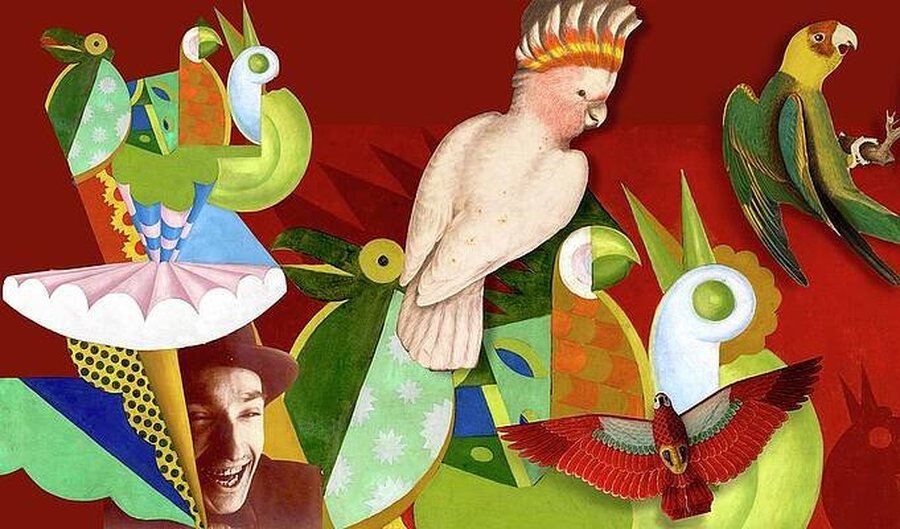
The Italian artist Fortunato Depero (1892–1960), a pupil of Giacomo Balla, co-authored with him a famous manifesto: "Futurist Reconstruction of the Universe," published on 1915. These pages praised a world full of joy and brightness, featuring brightly colored materials, mechanical and musical devices, and luminous liquids. The two artists anticipated, by a few decades, experiences typical of Pop Art and Arte Povera. Much attention was also given to Futurist toys (thanks to which adults, too, could stay young and cheerful), as well as to fashion, architecture, advertising, and music. (R. Roberti)
L'artista italiano Fortunato Depero (1892 - 1960), allievo di Giacomo Balla, scrisse con lui un celebre manifesto, "Ricostruzione futurista dell'universo", pubblicato l'11 marzo 1915, nelle cui pagine elogia un mondo pieno di gioia, molto colorato e molto luminoso, con materiali dai colori vivaci, congegni meccanici e musicali e liquidi luminosi. I due artisti anticiparono di qualche decennio esperienze tipiche della Pop-Art e dell'Arte Povera. Molta attenzione è data anche ai giocattoli futuristici (grazie ai quali anche gli adulti potranno mantenersi giovani e allegri); così come alla moda, all'architettura, alla pubblicità e alla musica”. (Roberto Roberti)
Dogs Reunion
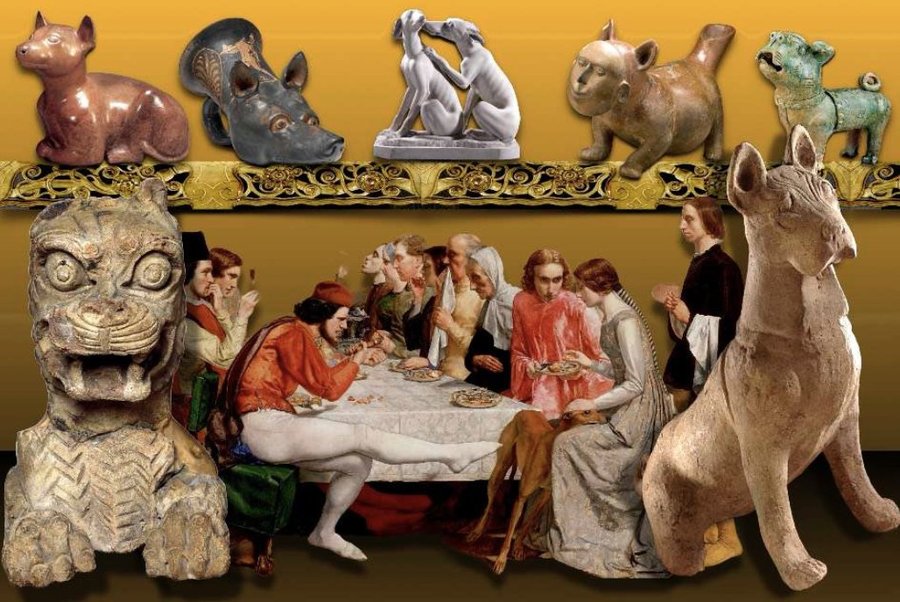
The collage, framed by a large number of dogs of all breeds, centers around the 1848 painting “Isabella” by Sir John Everett Millais. Executed in the Pre-Raphaelite style—a movement that developed and ended in the United Kingdom— “Isabella” was first exhibited at the Royal Academy in 1849 and is now part of the collection at the Walker Art Gallery in Liverpool. The painting illustrates an episode from Giovanni Boccaccio's novel, the Decameron: a lunch among a group of people that depicts the relationship between Isabella, the sister of wealthy medieval merchants, and Lorenzo, a poor employee of Isabella's brothers. You can see the moment when Isabella's brothers realize that a romance exists between the two young people and plot to kill Lorenzo so that they can marry Isabella off to a wealthy nobleman. Isabella, dressed in gray on the right, receives a blood orange on a plate from the doomed Lorenzo. In Boccaccio's tale, the sliced blood orange symbolizes the neck of someone who has just been beheaded—which is precisely what Isabella will do, severing Lorenzo's head to take with her after finding him dead and buried. Returning to the painting, we see one of her cruel brothers kicking a greyhound, which is lovingly protected by Isabella. In art history, the image of the dog has taken on contrasting meanings, although it generally represents fidelity. As early as Pliny the Elder, it was written that, along with the horse, this animal is the most faithful companion a man can have.
Il collage, a cui fa da cornice un folto numero di cani di tutte le fogge, pone al centro il dipinto “Isabella”, un’opera di Sir John Everett Millais del 1848, in stile preraffaellita, della pittura vittoriana, che nacque, si sviluppò e si esaurì nel Regno Unito. "Isabella" fu esposta per la prima volta alla Royal Academy nel 1849, ed è ora nella collezione della Walker Art Gallery a Liverpool. Il dipinto illustra liberamente un episodio del romanzo Decameron di Giovanni Boccaccio: un pranzo tra un gruppo di persone che descrive la relazione tra Isabella, la sorella di ricchi mercanti medievali, e Lorenzo, un povero dipendente dei fratelli di Isabella. Si può vedere il momento in cui i fratelli di Isabella si rendono conto che c'è una storia d'amore tra i due giovani e complottano per uccidere Lorenzo in modo da poter far sposare Isabella a un ricco nobile. Isabella, vestita di grigio sulla destra, riceve un'arancia rossa su un piatto dal condannato Lorenzo. Nel racconto boccaccesco, l’arancia rossa tagliata simboleggia il collo di qualcuno che è stato appena decapitato; quello che farà Isabella che taglierà la testa di Lorenzo per portarla con sé dopo averlo trovato morto e sepolto. Tornando al dipinto vediamo uno dei suoi crudeli fratelli prendere a calci un levriero spaventato protetto amorevolmente da Isabella. Nella storia dell'arte l’immagine del cane ha assunto significati contrastanti, anche se in genere rappresenta la fedeltà. Già Plinio il Vecchio scriveva che, insieme al cavallo, questo animale è il compagno più fedele che un uomo possa avere.
Dominant Grey
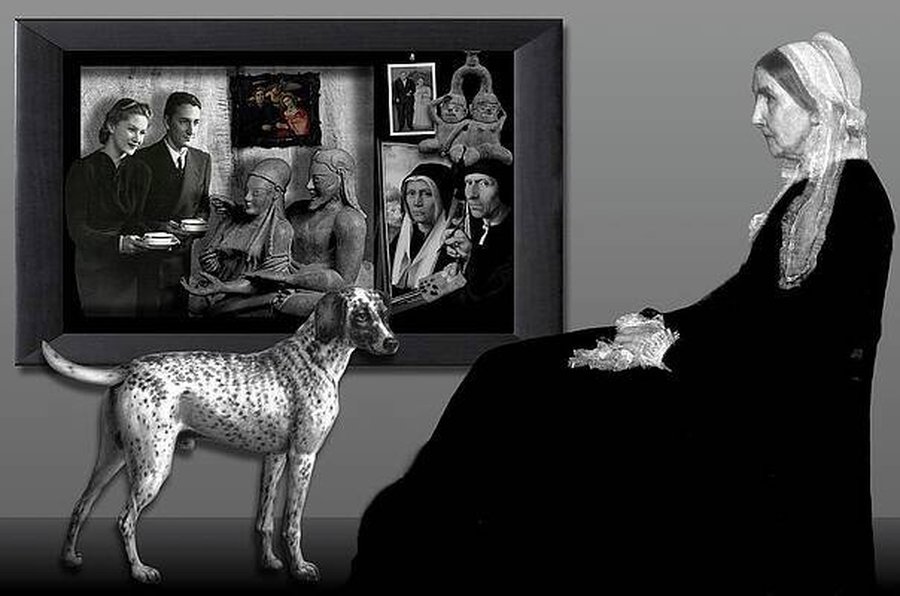
Gray, a color that psychology considers incapable of stimulating the mind, thus symbolizing stillness. Aesthetically, gray represents a subtle, nostalgic elegance, as seen in the vintage photograph of the young couple on the left. The lady (on the right) admiring our collage is the "Portrait of the Artist's Mother" by the American James Whistler, dated 1871, which was originally titled "Arrangement in Grey and Black”. The painting, acquired by the French state in 1891, is today one of the most famous works by an American artist outside the United States. This popularity was confirmed a few years ago by English comedian Rowan Atkinson (Mr. Bean) in one of his movies, where the painting plays a central role.
Il grigio, un colore che la psicologia del colore giudica non avere capacità di stimolare la mente, in quanto simboleggia l'immobilità; esteticamente il grigio rappresenta un'eleganza discreta e nostalgica, come nella foto d'epoca della giovane coppia a sinistra. La signora (sulla destra) che ammira il nostro collage: è il "Ritratto della madre dell'artista" dell’americano James Whistler, datato 1871, che inizialmente si intitolava "Composizione in grigio e nero". Il dipinto, acquistato dallo Stato francese nel 1891, è oggi una delle opere più note di un artista americano al di fuori degli Stati Uniti.
Female Pride
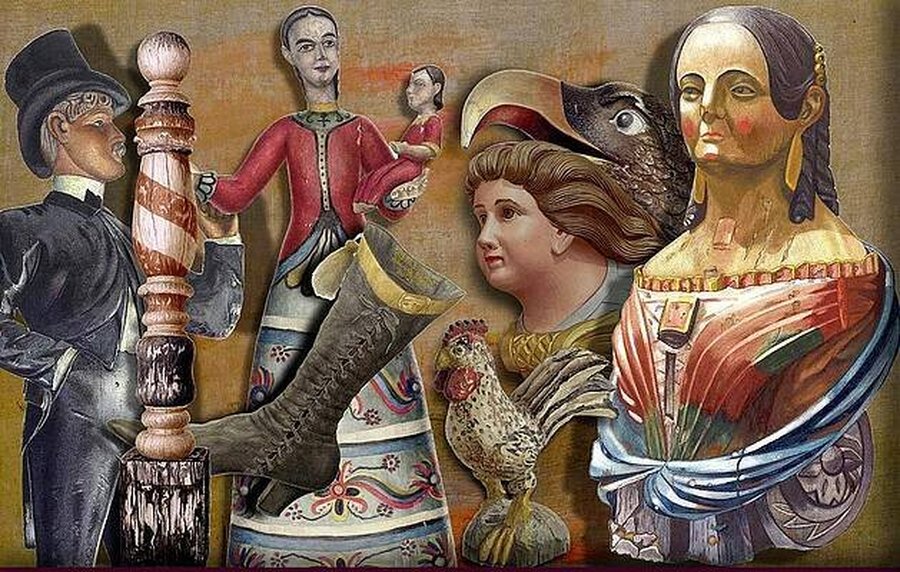
The Italian word "donna" is the Italianization of "domina", which means mistress or lady of the house. In Spanish, it is "mujer", which literally means wife. "Chica", which sounds friendlier, represents little girls, young women, or dolls. The French "femme" is a sensual term, yet literally just a biological one—the opposite of male. The imagery that views the female as weak is a cultural legacy that is now anachronistic for humans and unrealistic for many species in the animal kingdom. Let's examine examples of certain animal species in which females lead their groups with strength and wisdom: Among lions, it is the females who hunt, raise the cubs, and decide whether a male can stay or must leave the group. Among elephants, leadership is also female, belonging in particular to the oldest females by virtue of their life experience. Female hyenas are larger and stronger than males. The latter are tasked with hunting for the pack, but the females eat first. Orcas are majestic marine mammals that manage their social lives through complete matriarchy. At the top of the hierarchy is usually an adult female and mother, but leadership can sometimes be shared by a group of females.
“La parola italiana "donna" è una parola che sfugge a ogni definizione. Scivola abilmente tra etichette e pregiudizi; "donna" è l'italianizzazione di "domina", che significa signora o padrona. In spagnolo, è "mujer", che letteralmente significa moglie. "Chica", che suona più amichevole, ci rappresenta come bambine, ragazze, bambole o domestiche. In francese, possiamo apprezzare il nostro lato carnale con "femme", un termine che si scioglie sulle labbra, così sensuale, eppure ci riconosce letteralmente solo come un fatto biologico”. (Tina Esse) L’immaginario che vede l’essere femminile debole, da proteggere e che necessita di una figura forte e autoritaria accanto a sé è un retaggio culturale ormai anacronistico per gli esseri umani, e irrealistico per molte specie del mondo animale. Esaminiamo gli esempi di alcune speci animali in cui le femmine comandano con forza e saggezza i loro gruppi: tra i leoni sono le femmine a cacciare, a crescere i cuccioli e a decidere se un maschio può restare o deve andarsene dal gruppo. Anche tra gli elefanti il comando è femminile, in particolare alle femmine più anziane in virtù della loro esperienza di vita. Le iene femmine sono più grandi e forti dei maschi. Questi ultimi hanno il compito di cacciare per il branco, ma sono le femmine a mangiare per prime. Le orche sono maestosi mammiferi marini che gestiscono la loro vita sociale con un totale matriarcato. A capo della gerarchia si trova di solito una femmina adulta e madre, ma a volte la leadership può essere condivisa da un gruppo di femmine.
Fish and Klee
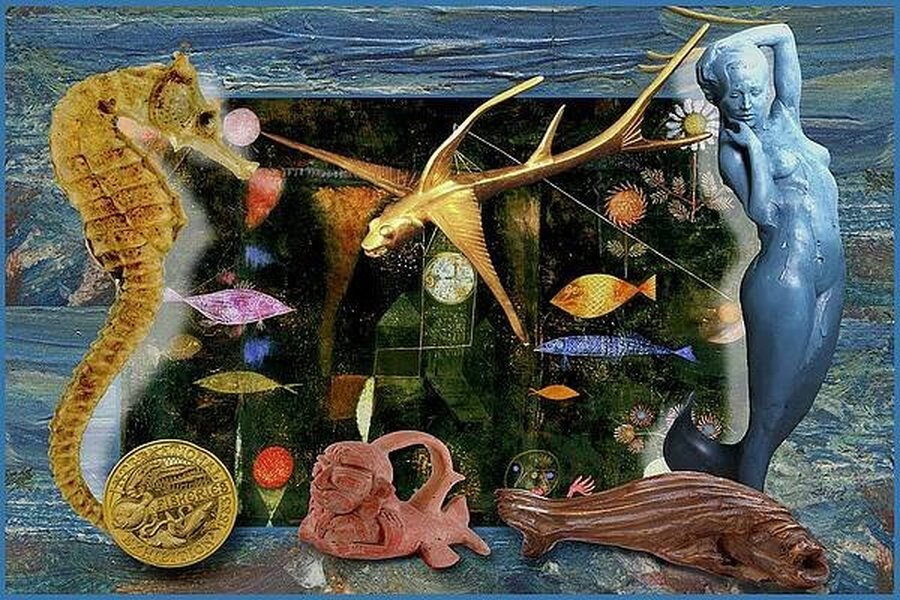
This collage is inspired by the famous 1925 painting "Magic Fish", created by the Swiss artist Paul Klee, one of the leading figures of the abstract art movement in the early 20th century. A versatile artist, he tried his hand successfully at various disciplines before finding his true expression in painting. Paul Klee grew up in an environment where music was omnipresent: it is no coincidence that he viewed his paintings as musical compositions, and the fish is one of the artist's favorite images for bringing his childhood fantasies to life.
Questo collage è ispirato al celebre dipinto "Magic Fish" del 1925, creato dallo svizzero Paul Klee, che fu uno dei massimi esponenti del movimento artistico astratto nei primi anni del XX secolo. Artista poliedrico, si è cimentato con successo in diverse discipline, fino a trovare la sua vera espressione nella pittura. Klee è cresciuto in un ambiente in cui la musica era onnipresente: non è un caso che considerasse i suoi dipinti come una composizione musicale, e il pesce è una delle immagini preferite dall'artista per la meditazione intellettuale.
Frida's Nature
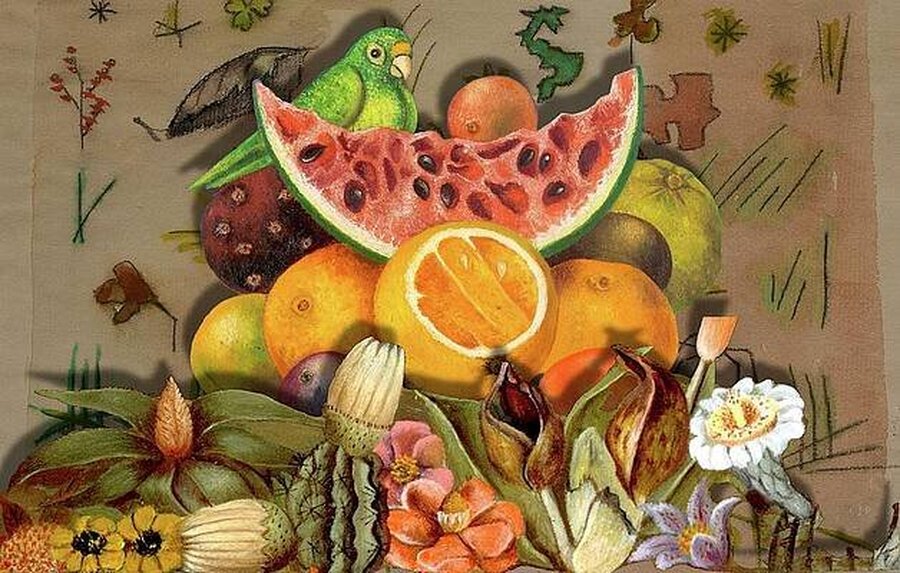
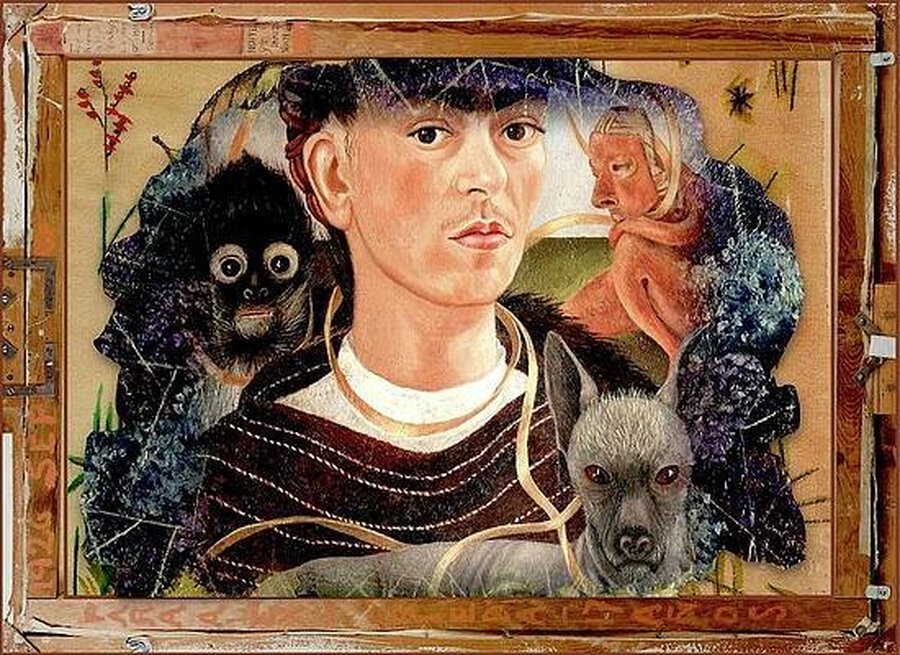
Frida Kahlo was born on July 6, 1907, in Coyoacán, a suburb of Mexico City. She lived a childhood marked by health problems and a severe accident at the age of 18, which left her with grave injuries and chronic pain for the rest of her short life, which ended in 1954. The artist often painted images of nature, such as flowers, fruits, and animals, to express concepts of life, death, rebirth, and metamorphosis. "Tragedy is the most ridiculous manifestation of man; I am sure that animals, even if they suffer, do not exhibit their pain. And their pain is truer than any image any man could represent or feel as painful." (F.K.)
Frida Kahlo nacque il 6 luglio 1907 a Coyoacán, un sobborgo di Città del Messico. Visse un'infanzia segnata da problemi di salute e da un grave incidente all'età di 18 anni, che le causò gravi ferite e un dolore cronico per il resto della sua breve vita, terminata nel 1954. L'artista usava spesso dipingere immagini della natura, come fiori, frutti e animali, per esprimere concetti di vita, morte, rinascita e metamorfosi. Frida era profondamente radicata nella cultura messicana e nella sua tradizione artistica, incorporando motivi e simboli messicani nelle sue opere naïf dai colori vivaci.
German Expressionist
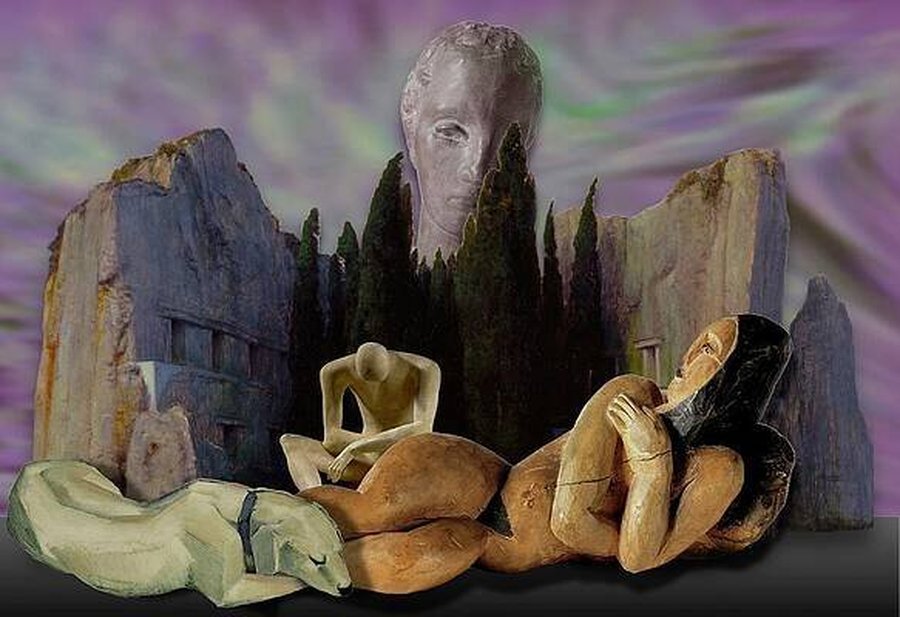
Driven by the desire to rebel against the conventions of the period and inspired by themes related to philosophy, primal emotions, and sexuality, the artists who defined German Expressionism were the first to use color in a instinctive way. These artists worked after the end of the First World War and became the voice of the era's disillusionment and humanity's deep-seated modern anxieties. The "pessimistic" streak of this movement also influenced cinema, theater, and literature, helping to redefine a new artistic and cultural sensibility.
Spinti dal desiderio di ribellarsi alle convenzioni del periodo e ispirati da temi legati alla filosofia, alla vita interiore, alle emozioni primordiali e alla sessualità, gli artisti che definirono l'espressionismo tedesco furono i primi a usare il colore in modo spontaneo e istintivo. Questi artisti lavorarono dopo la fine della prima guerra mondiale e divennero la voce della disillusione dell'epoca e delle profonde ansie dell'umanità moderna. Il tratto “pessimistico” di questo movimento influenzò anche il cinema, il teatro e la letteratura, contribuendo a ridefinire una nuova sensibilità artistica e culturale.
Horse Museum
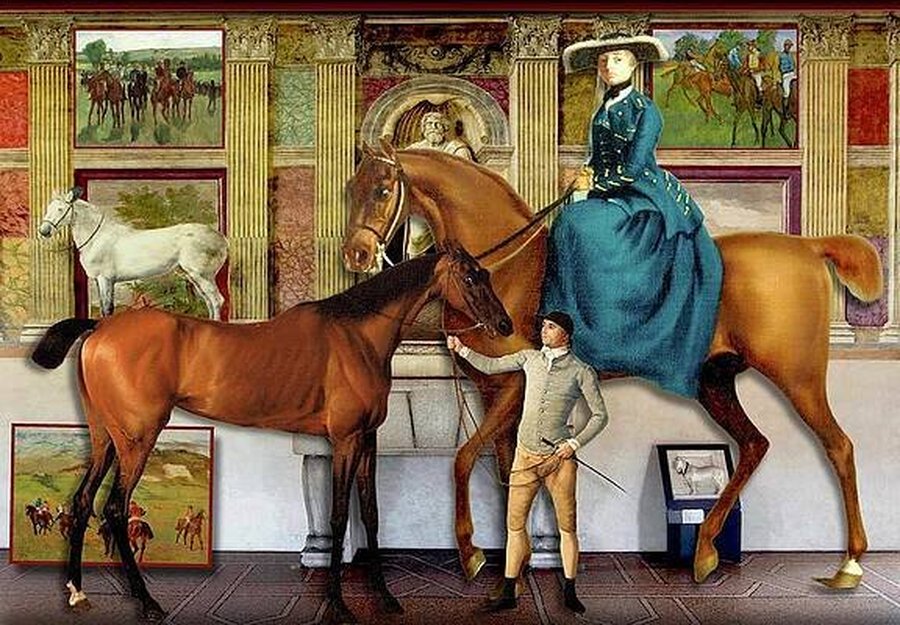
In the digital collage, we can see in the foreground a rider holding the reins of a beautiful mare. It is "Molly Longlegs", a racing champion. The 1761 portrait is the work of George Stubbs, the English artist who became famous for his paintings of horses. He also painted the second portrait, on the right, showing the Countess of Coningsby riding her steed. Behind them, hanging on the back wall and on the floor waiting to be hung, are three paintings with horse racing scenes, painted by the Frenchman Edgar Degas in the late 1880s.
Nel nostro museo virtuale, possiamo vedere in primo piano un cavaliere che tiene le redini di una bellissima cavalla. È "Molly Longlegs", una campionessa da corsa. Il ritratto del 1761 è opera di George Stubbs, l'artista che divenne famoso per i suoi quadri di cavalli. Dipinse anche il secondo ritratto, sulla destra, della contessa di Coningsby in sella al suo destriero. Dietro di loro, due appesi alla parete di fondo e uno sul pavimento in attesa di essere appeso, ci sono tre quadri con scene d’ippica, dipinti dal francese Edgar Degas alla fine del 1880.
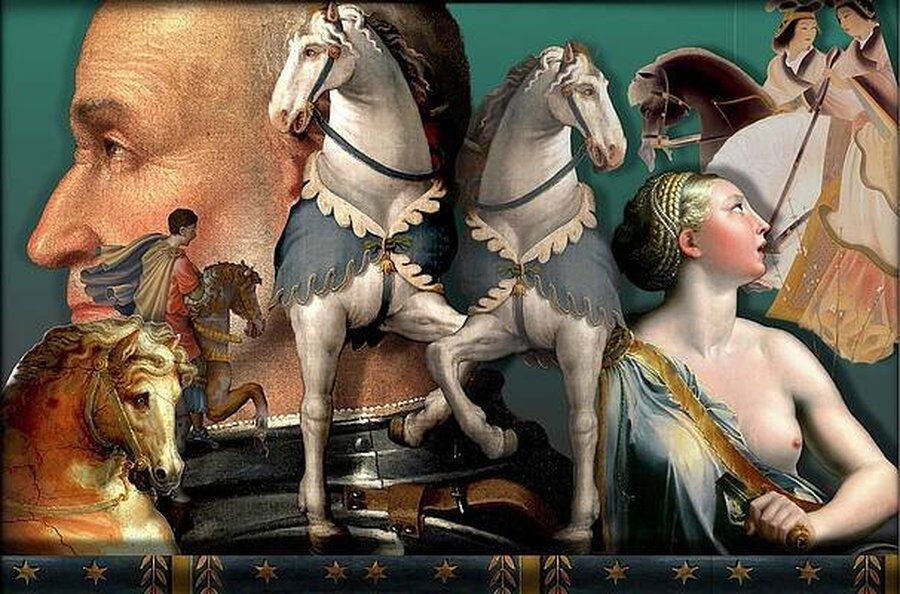
Knights and Amazons
The ancient Greeks believed that the Amazons were mythical warrior women who lived in a matriarchal society after killing their men, by whom they had been mistreated for too long. In the collage appears the queen of the Amazons painted by Parmigianino in 1539, dedicated to Lucretia. She was the Roman woman raped by the son of the seventh king of Rome, Tarquin the Proud. After revealing what had happened to her father and her husband, Lucretia took her own life out of shame, triggering with her gesture the rebellion against the monarchy, which gave rise to the Roman Republic in 509 BC.
Gli antichi Greci credevano che le Amazzoni fossero mitiche donne guerriere che, nella regione attorno al Mar Nero, vivevano in una società matriarcale dopo aver ucciso o allontanato i loro uomini, dai quali erano state per troppo tempo maltrattate. Furono però sconfitte da Ercole che, nell’affrontare la nona tra le sue famose 12 fatiche, doveva impossessarsi della cintura di Ippolita, simbolo della regina amazzone. Ercole affrontò la sfida radunando un esercito dei migliori cavalieri della Grecia, tra cui l'eroe Teseo. Le Amazzoni non riuscirono a resistere a una forza così formidabile; così Ercole riuscì a prendere la cintura.
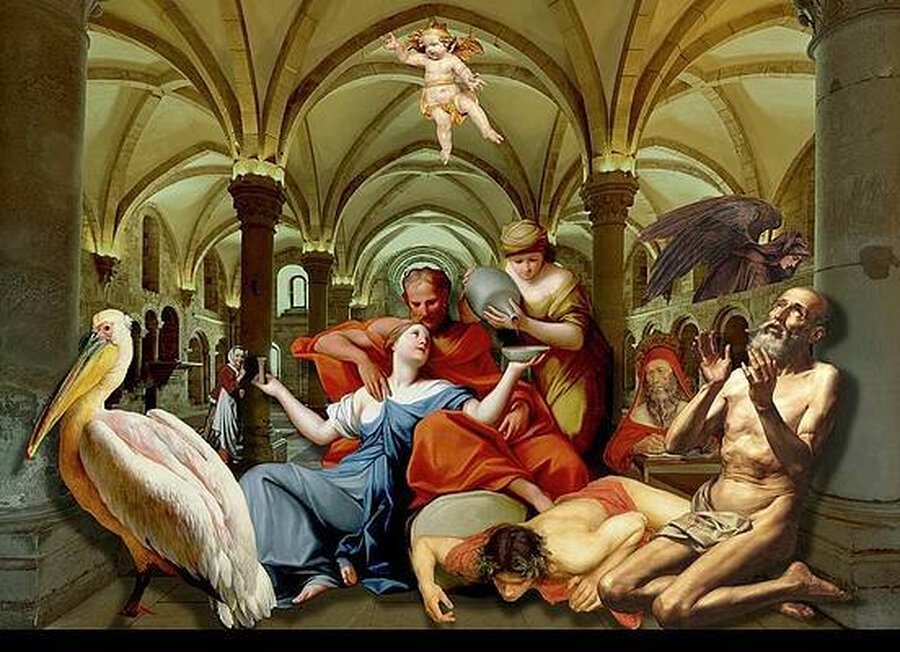
Mystical Hallucination
Hallucinogenic compounds found in certain plants and fungi (or their extracts) have been used in religious rituals for centuries. Hallucinogenic substances are capable of inducing altered states of consciousness and visions, sometimes accompanied by a sense of reaching the mystical, revelation, illumination, or ecstasy. These psychoactive drugs have also been called psychedelic (capable of revealing the mind) or sometimes entheogenic (facilitating mystical experiences).
I composti allucinogeni presenti in alcune piante e funghi (o nei loro estratti) sono stati usati nei rituali religiosi per secoli. Le sostanze allucinogene sono capaci di indurre stati alterati di coscienza, visioni, talvolta accompagnate dalla sensazione di arrivare al mistico, alla rivelazione, all'illuminazione, all’estasi. Queste droghe psicoattive sono state anche definite psichedeliche (capaci di rivelare la mente) o talvolta enteogene (che favoriscono esperienze mistiche).
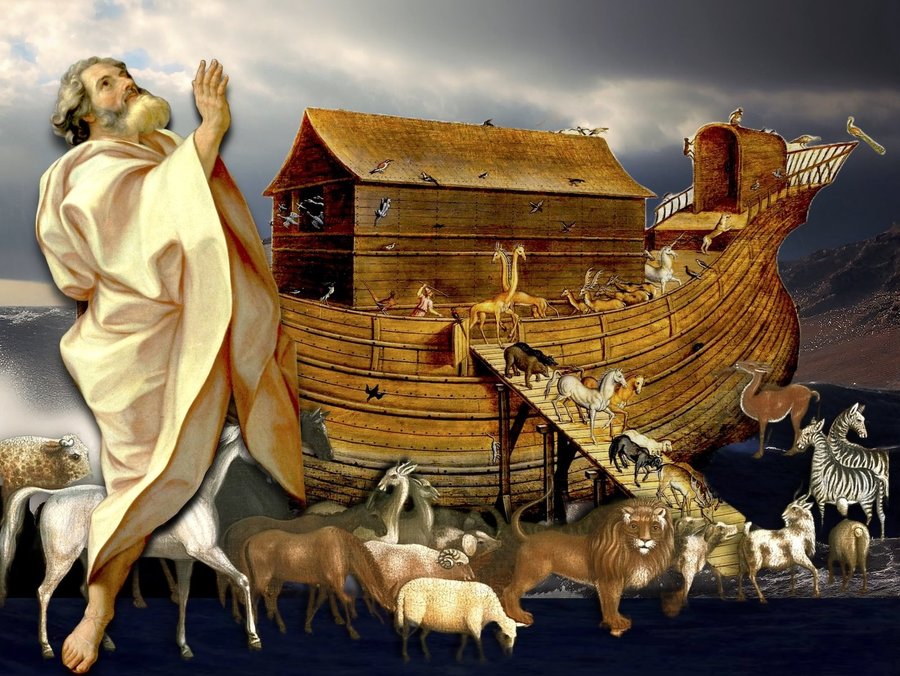
Noah's Ark
In art history, there are not many works depicting this story from the Old Testament, because the spread of Christianity through church frescoes focused on the events told in the Gospels. For our collage, we used the portrait of Moses painted by the Italian Giovan Battista Gaulli, known as Il Baciccio, in 1700. As for the ark, it is a work by the French artist Simon de Mailhy, dated 1570; while the row of animals at the bottom, at the prophet's feet, was painted by the American folk artist Edward Hicks in 1846.
Nella storia dell’arte non ci sono molte opere di questo racconto del Vecchio Testamento, antecedente alla nascita di Gesù; perché la diffusione del cristianesimo attraverso gli affreschi nelle chiese si concentrò sulle vita del Cristo e dei suoi discepoli, secondo i Vangeli. Per il nostro collage abbiamo utilizzato il ritratto di Mosè dipinto dall’italiano Giovan Battista Gaulli, detto il Baciccia, nel 1700. Quanto all’arca, si tratta di un’opera dell’artista francese Simon de Mailhy, datato 1570; mentre la fila di animali in basso ai piedi del profeta sono stati dipinti dal pittore folk americano Edward Hicks nel 1846.
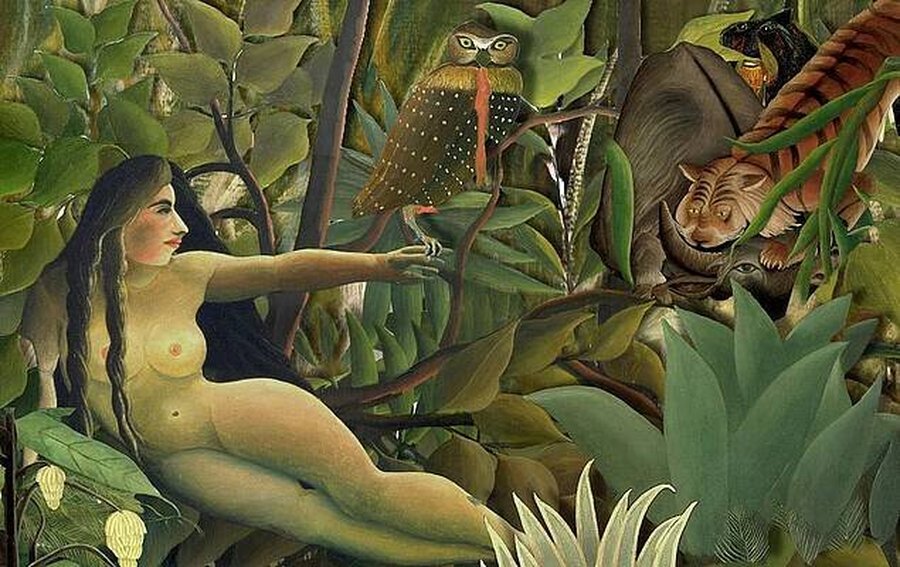
Rousseau Tribute
The French artist Henri Rousseau (1844–1910), one of the most original painters of the early 19th and 20th centuries, is considered a forerunner of so-called Naïve art. He was undoubtedly a gifted self-taught painter with, at the same time, an extraordinary imagination. Henri Rousseau's simplicity—at times bordering on naïvety—in painting forest fauna and flora is the theme of 25 of his works, which remain very popular today. Famous is Picasso's quote about the self-taught painter: "Henri worked hard all his life to learn how to paint like a child."
Il francese Henri Rousseau (1844 - 1910), uno dei pittori più originali dei primi anni del XIX e XX secolo, è considerato un precursore della cosiddetta pittura naif. Fu senza dubbio un autodidatta dotato e, allo stesso tempo, aveva una straordinaria immaginazione. La semplicità di Henri Rousseau, a volte al limite dell'ingenuità nel dipingere la fauna e la flora della foresta, è stata il tema di 25 dipinti da lui realizzati, che sono ancora oggi molto popolari. Famosa è la frase di Picasso sul pittore autodidatta: "Henri ha lavorato duramente per tutta la vita per imparare a dipingere come un bambino".
The Cat Shelter
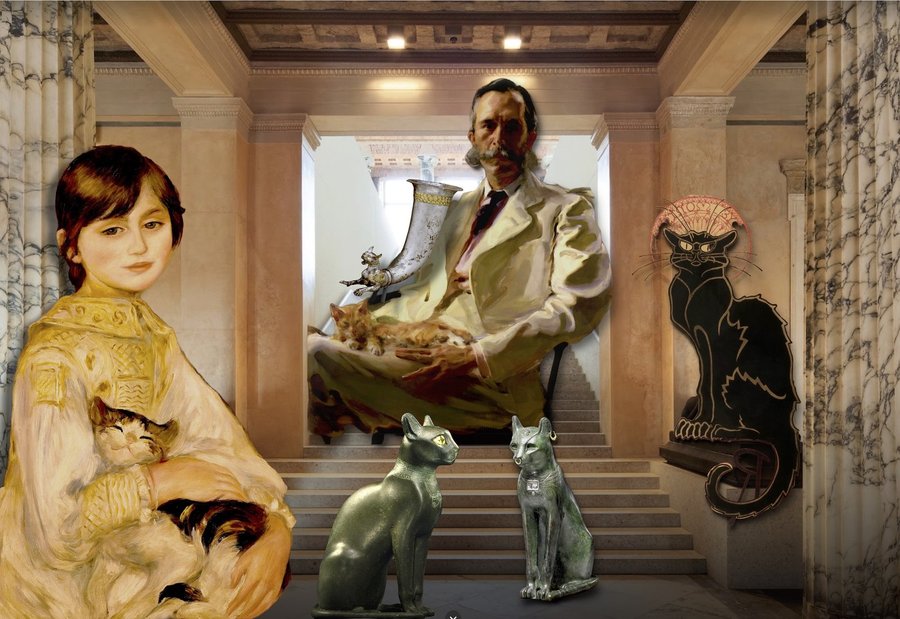
The early 20th-century painter Carl Kahler defined cats as "his wife's lovers.” The Egyptians worshipped them as deities, embalmed them upon their death, and, above all, depicted them through beautiful sculptures. Two of these sit at the center of our collage. For the Greeks and Romans, on the other hand, the cat held no sacred meaning and was therefore depicted in a less solemn, more natural way. In the centuries that followed, the cat was never the main subject of a painting. It was only in the 19th century that the cat definitively became a standalone artistic subject—not as a sacred or symbolic animal, but for its elegance mixed with tenderness, such as the one painted by the Frenchman Pierre-Auguste Renoir, sleeping happily in the arms of its lover (on the left of the collage). At the center of the collage is Mr. Henry Sturgis Drinker—an engineer, lawyer, writer, and fifth president of Lehigh University—lovingly stroking his cat. The 1898 portrait is the work of Cecilia Beaux, the American painter who was a leading figure of American Impressionism. Closing the image on the right is the famous "Le Chat Noir" (The Black Cat) by Swiss artist Théophile Alexandre Steinlen, created to advertise the legendary cabaret of the same name opened in Montmartre in 1881.
Il pittore di inizio Novecento Carl Kahler definì i gatti "gli amanti della moglie”. Gli Egizi li adoravano come divinità, li imbalsamavano alla loro morte e soprattutto li rappresentavano con bellissime sculture. Due di queste sono al centro del nostro collage. Per i Greci e i Romani, invece, il gatto non aveva un significato sacro e veniva quindi raffigurato in modo meno solenne e più naturale. Nei secoli successivi il gatto non sarà mai protagonista di un dipinto. Solo nel XIX secolo il gatto divenne definitivamente l'unico soggetto del dipinto. Non come animale sacro o simbolico, ma per la sua eleganza mista a tenerezza, come quello dipinto da Pierre-Auguste Renoir che dorme felice tra le braccia della sua amante (a sinistra del collage). Al centro del collage, c'è il signor Henry Sturgis Drinker, ingegnere, avvocato, scrittore e quinto presidente della Lehigh University, che accarezza amorevolmente il suo gatto. Il ritratto fu dipinto nel 1898 da Cecilia Beaux, la pittrice americana che fu un'autorevole esponente dell'impressionismo americano. A chiudere l'immagine sulla destra c'è il celebre "Le Chat Noir" (Il gatto nero) dell'artista svizzero Alexandre Steinlen, creato per pubblicizzare l'omonimo leggendario cabaret inaugurato a Montmartre nel 1881.
To Tame is To Rape
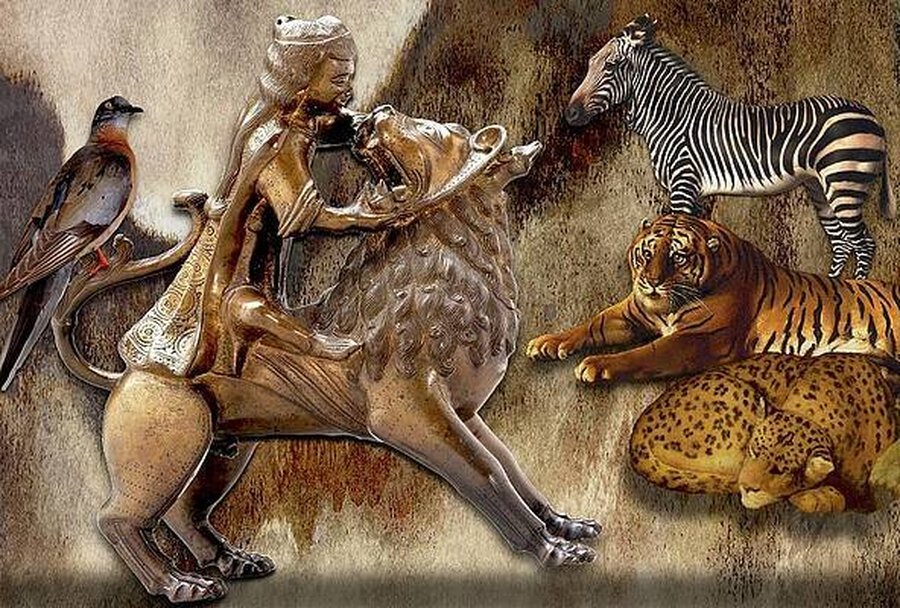
Ethological training is a new approach to animals based on communication. For example, the horse "speaks" to us through its movements, its actions, and the positions it adopts. After all, this is the language it naturally uses with other horses and with all other animals, including humans. Furthermore, it is worth remembering that horses are not solitary animals by nature and are therefore capable of communicating with those around them; as a result, every movement, action, and position carries meaning. The dynamics of ethological training develop on the basis of interpreting this non-verbal language.
L'addestramento etologico è un nuovo metodo di approccio agli animali basato sulla comunicazione. Ad esempio, il cavallo "ci parla", con i suoi movimenti, con le sue azioni, con le posizioni che assume. È, d'altro canto, il linguaggio che usa naturalmente con i suoi simili e con tutti gli altri animali, uomo compreso. Inoltre, ricordiamo che per natura il cavallo non è un animale solitario e quindi deve necessariamente comunicare con chi gli sta intorno; quindi ogni suo movimento, ogni azione e ogni posizione hanno un loro significato. Le dinamiche dell'addestramento etologico si sviluppano sulla base dell'interpretazione di questo linguaggio non verbale.
Trofei Tropicali
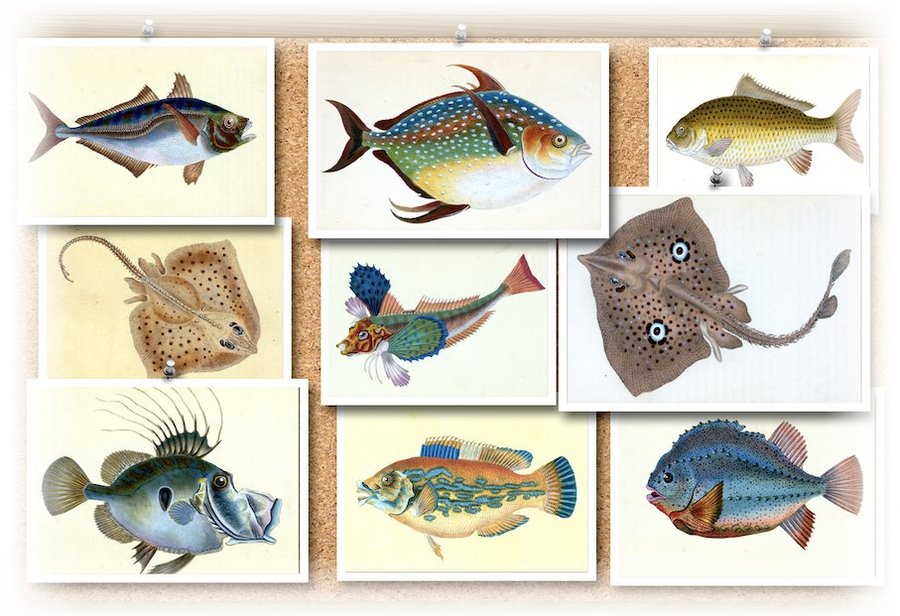
Tropical fish are among the most fascinating creatures in the aquatic world, not only for their breathtaking aesthetics, but for the incredible biological adaptations developed over millions of years of evolution in the planet's warm waters. Unlike temperate water fish, which are often greyish to camouflage themselves, tropical fish display vibrant, colorful patterns. One of their most unique characteristics is the tendency to form close relationships with other species, where the fish receives protection in exchange for food and cleaning.Tropical fish are not merely "decorative", but represent the complex health of our oceans.
I pesci tropicali sono tra le creature più affascinanti del mondo acquatico, non solo per l'estetica mozzafiato, ma per gli incredibili adattamenti biologici sviluppati in milioni di anni di evoluzione nelle acque calde del pianeta. A differenza dei pesci delle acque temperate, spesso grigiastri per mimetizzarsi, i pesci tropicali esibiscono livree dai colori vibranti. Una delle caratteristiche più peculiari è la tendenza a creare relazioni strette con altre specie, dove il pesce riceve protezione in cambio di cibo e pulizia. I pesci tropicali non sono solo "decorativi", ma rappresentano la complessa salute dei nostri oceani.
Volatili
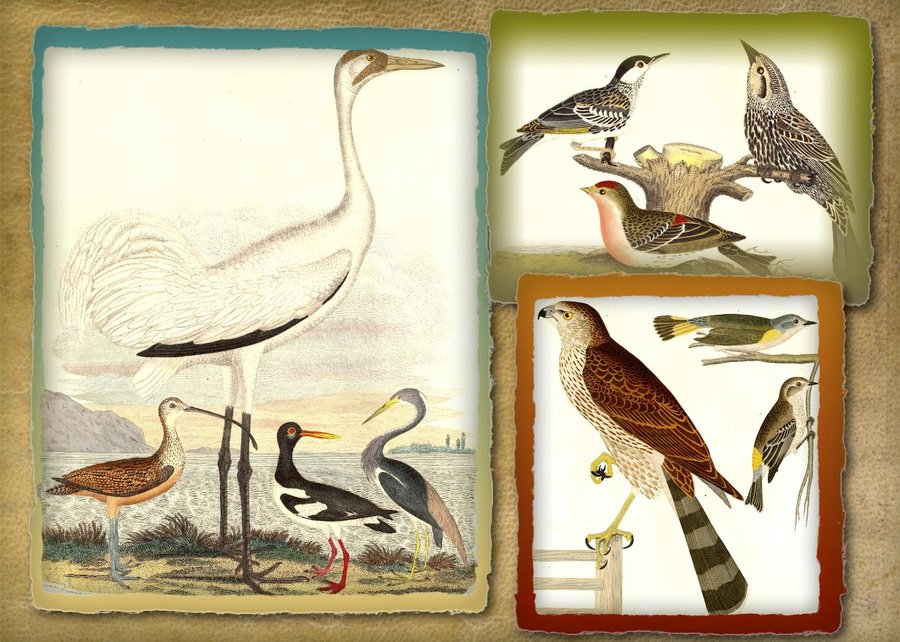
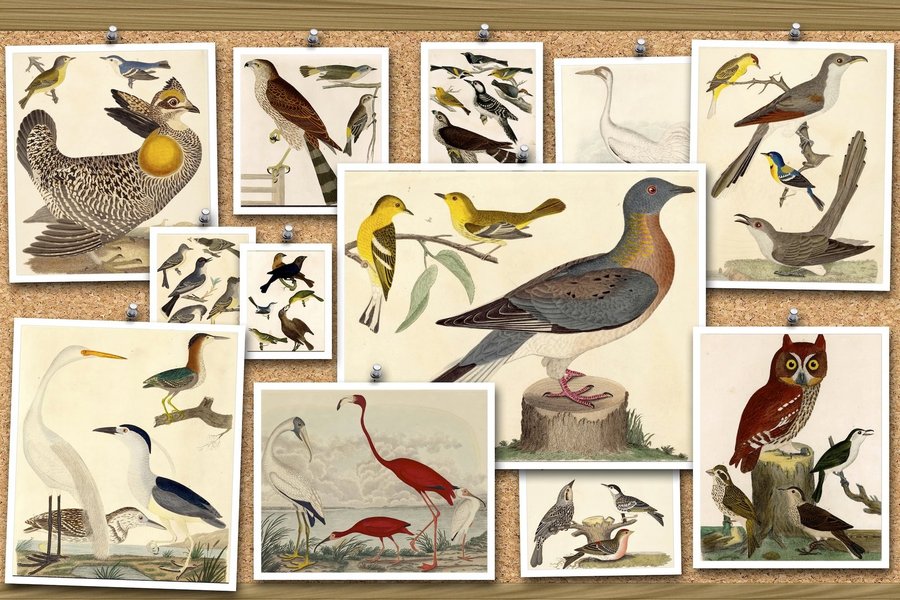
Ornithology is the branch of zoology that deals with the study of birds. The researchers who specialize in it (ornithologists) analyze: • Biology and physiology: how their bodies are structured and how they function. • Behavior: singing, mating rituals, and hunting strategies. • Ecology and migrations: how they interact with the environment and their incredible seasonal journeys. It is a fundamental science not only for understanding wildlife, but also for monitoring the health of ecosystems, as birds are often excellent biological indicators of environmental changes.
L'ornitologia è la branca della zoologia che si occupa dello studio degli uccelli. I ricercatori che se ne occupano (gli ornitologi) analizzano: Biologia e fisiologia: come sono fatti e come funzionano i loro corpi. Comportamento: il canto, i rituali di accoppiamento e le strategie di caccia. Ecologia e migrazioni: come interagiscono con l'ambiente e i loro incredibili viaggi stagionali attraverso il globo. È una scienza fondamentale non solo per la conoscenza della fauna, ma anche per monitorare la salute degli ecosistemi, poiché gli uccelli sono spesso ottimi indicatori biologici dei cambiamenti ambientali.
Voliera
An aviary requires a special commitment: it is expensive and bulky, cleaning is arduous, and monitoring the health of individual birds becomes more complex than in a traditional cage. Furthermore, if a bird falls ill or turns aggressive, catching it in such a large space can be difficult. But it is always good to remember that: "No bird soars too high if he soars with his own wings." (William Blake). It is a thought that emphasizes how true freedom lies not just in the available space, but in the opportunity to express one's own nature.
Una voliera richiede un impegno particolare: è più costosa e ingombrante, la pulizia è più faticosa e monitorare la salute dei singoli esemplari diventa più complesso rispetto a una gabbia tradizionale. Inoltre, se un uccello si ammala o diventa aggressivo, catturarlo in uno spazio così grande può essere difficile. Ma è bene ricordare sempre che: "Nessun uccello vola troppo in alto se vola con le sue ali.” (William Blake). È un pensiero che sottolinea come la vera libertà non stia solo nello spazio a disposizione, ma nella capacità di esprimere la propria natura.
Zeus and Ganymede
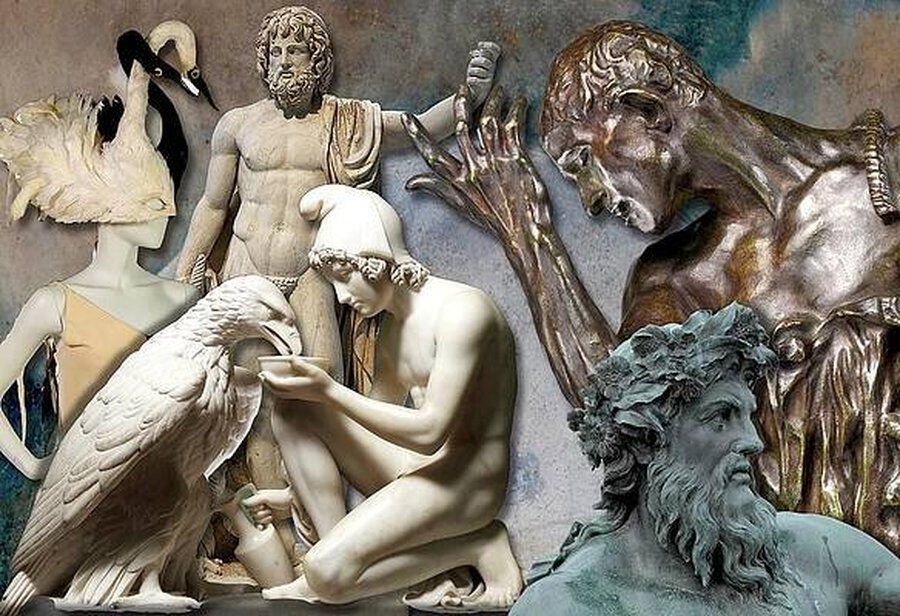
Ganymede was a young man whom the poet Homer describes as the most beautiful of all, the son of King Tros, who gave his name to the city of Troy. The boy, unfortunately, was so beautiful that even Zeus fell in love with him and wanted him for himself; one day, while Ganymede was tending his flock on Mount Ida, Zeus sent his divine eagle to kidnap him or, in other versions of the myth, assumed the form of an eagle himself to carry him off to Olympus. Later, to compensate Tros for the loss of his son, Zeus sent Hermes, who gave him two magnificent divine horses or a golden vine branch—the work of Hephaestus—reassuring him that Ganymede had become immortal. The myth of Ganymede, narrated by Homer, Pindar, and Ovid, soon became very popular in Greece and later in Rome, because a romantic relationship between an adult man and a boy did not cause scandal. In our collage, Ganymede offers a drink to the eagle in the beautiful 1817 sculpture by Danish artist Bertel Thorvaldsen. On the right, the man raising his hand to warn Ganymede of the impending danger is a late 19th-century work by another great sculptor: the Frenchman Auguste Rodin, considered the progenitor of modern sculpture.
Ganimede, era un giovane che il poeta Omero descrive come il più bello di tutti, era figlio del re Troo, che diede il suo nome alla città di Troia. Il ragazzo, sfortunatamente, era così bello che persino Zeus si innamorò di lui e lo volle per sé; un giorno, mentre Ganimede stava pascolando con il suo gregge sul monte Ida, Zeus mandò la sua aquila divina a rapirlo o, in altre versioni del mito, assunse lui stesso le sembianze di un'aquila, per portarlo con sé sull’Olimpo. In seguito, per compensare Troo per la perdita del figlio, Zeus mandò Hermes che gli diede due splendidi cavalli divini o un ramo di vite dorato, opera di Efesto, assicurandogli che Ganimede era diventato immortale. Il mito di Ganimede, cantato, tra i tanti, da Omero, Pindaro e Ovidio, divenne ben presto molto popolare in Grecia e poi a Roma, perché la relazione amorosa tra un uomo adulto e un ragazzo non suscitava scandalo. Nel nostro collage, Ganimede offre da bere all'aquila nella bella scultura dell'artista danese Bertel Thorvaldsen del 1817. A destra, l'uomo che alza la mano per avvertire Ganimede dell'imminente pericolo, è un'opera di fine Ottocento di un altro grande scultore: il francese August Rodin, considerato il progenitore della scultura moderna.
Animal Presences is part of Blu Artworks' wider body of work — 577 original SIAE-registered collages in total. Explore the Presenze Animali fa parte del lavoro più ampio di Blu Artworks — 577 collage originali registrati SIAE in totale. Esplora la Full GalleryGalleria Completa.