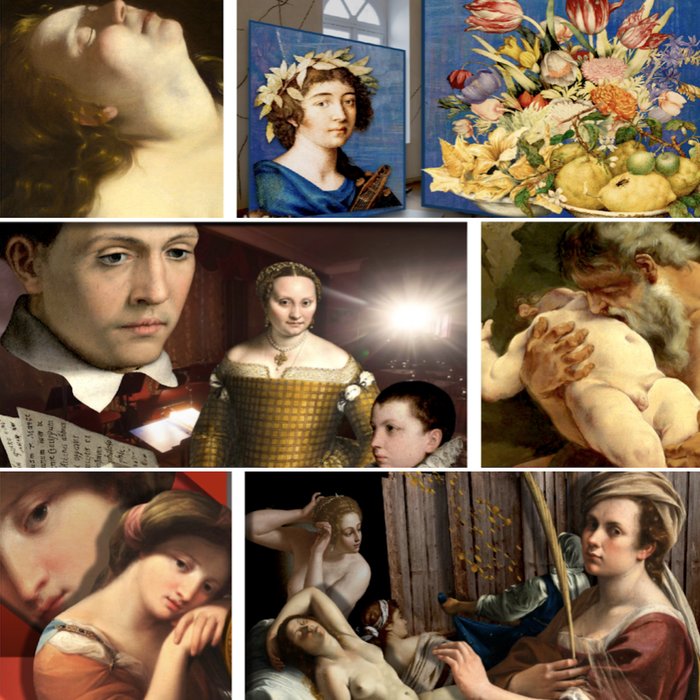
Out of the Shadows
Ten Forgotten Women Painters, Rediscovered
10 collages in this catalogcollage in questo catalogo
For centuries, the male gaze defined what was considered ‘beautiful’ and ‘important’ in art history. Rediscovering forgotten women painters unveils new languages, new sensibilities, and new perspectives long dismissed as ‘minor’ out of sheer prejudice. This tribute begins with ten Italian women artists, remembered through ten collages built from details of their own works. Each piece below is available as a high-resolution, 300dpi, royalty-free download for €39, ready for print at any size.
Download Catalog PDF →Scarica il Catalogo PDF → View All Collections →Vedi Tutte le Collezioni →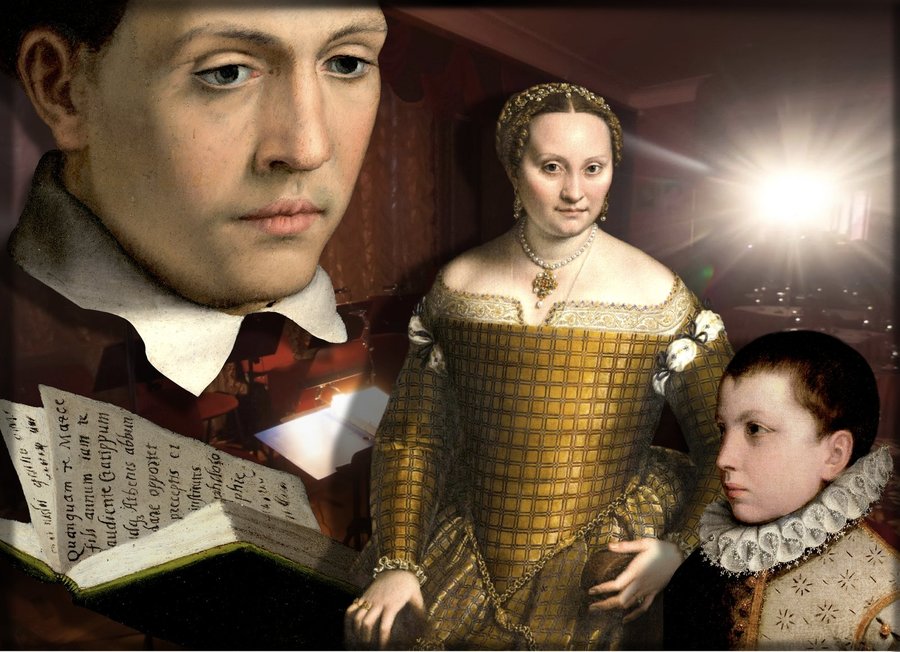
Sofonisba Anguissola
If Lavinia Fontana was the first female professional and Giovanna Garzoni the queen of detail, Sofonisba Anguissola is the absolute pioneer — the woman who paved the way for all the others, even earning the esteem of Michelangelo, and became the most successful female artist of the Renaissance.
She lived for over ninety years, an extraordinary age for the sixteenth century. After working in Spain, she settled in Sicily and Genoa; such was her authority that, when she was elderly and nearly blind, she received a visit from the young artist Anthony van Dyck, who admitted he had learned more from her than from any other master.
Lavinia Fontana
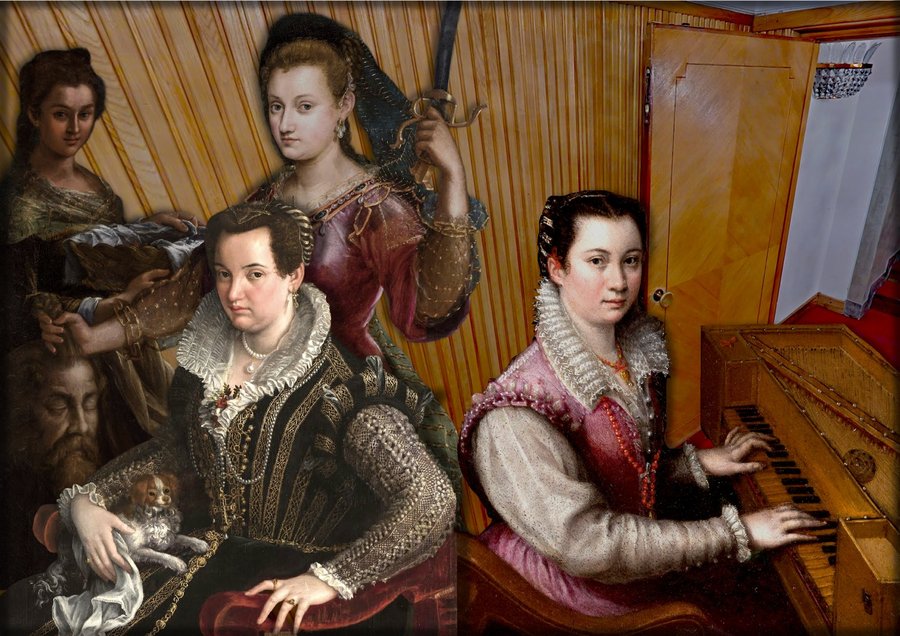
Lavinia Fontana was an extraordinary figure of Mannerism, who shattered the glass ceilings of the sixteenth century with a paintbrush and remarkable initiative. She is considered the first woman to pursue a career as a professional painter on equal footing with her male peers, running her own workshop and earning substantial sums.
Her fame was such that Pope Clement VIII summoned her to Rome, where she became one of the most sought-after artists at the papal court, earning the title of ‘Painter to the Papal Court’.
Fede Galizia
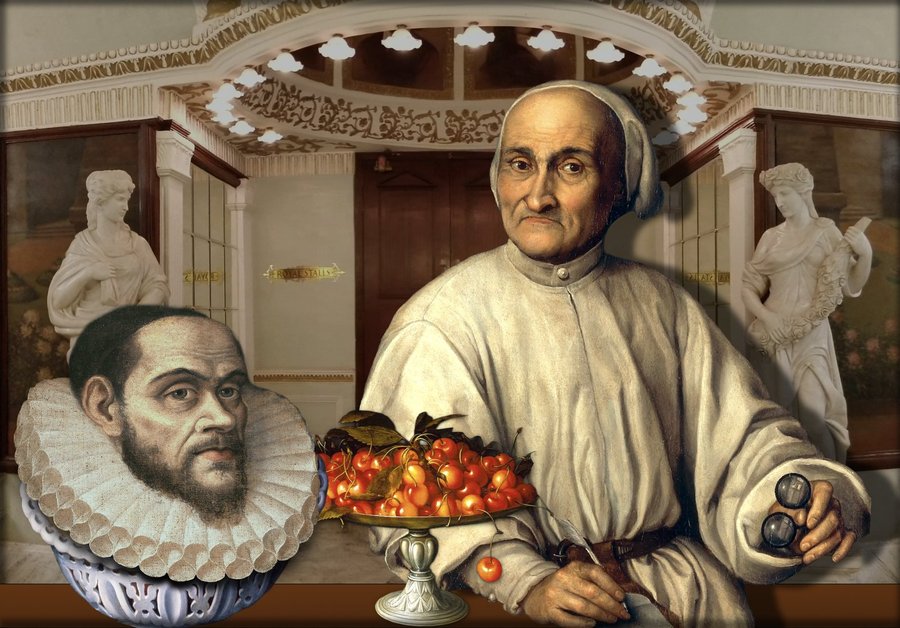
Fede Galizia is a fascinating and key figure, often described as the ‘pioneer of silence’ for having revolutionized art through the painstaking observation of reality, becoming one of the first female artists to paint still lifes in Europe.
A genre that at the time was considered ‘minor’ precisely because it was accessible to women, who were barred from painting the male nude. Her technique was so refined that it influenced the entire development of modern still life.
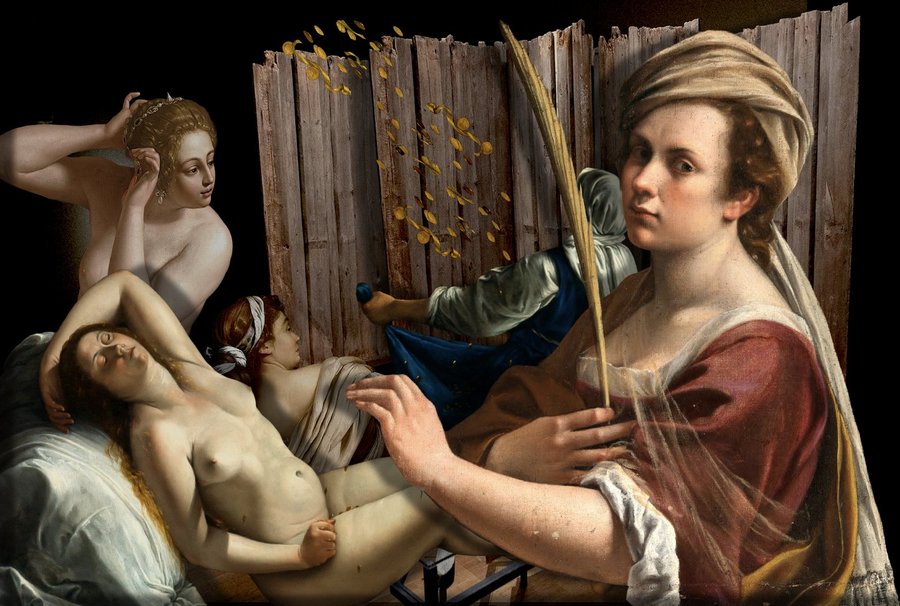
Artemisia Gentileschi
A woman who not only painted with a technical mastery equal — and often superior — to that of her contemporaries, but who also managed to transform pain and injustice into unprecedented visual power. She did not merely paint figures; she painted her own resilience.
When the world demanded that she be a silent muse, Artemisia wielded the paintbrush like a sword, delivering strokes against the hypocrisy of an era that sought to silence her. “Artemisia didn't just become part of art history: she forced art history to look her in the face, compelling time to acknowledge that genius is not an exclusively male gender.” (Gianni Biffi)
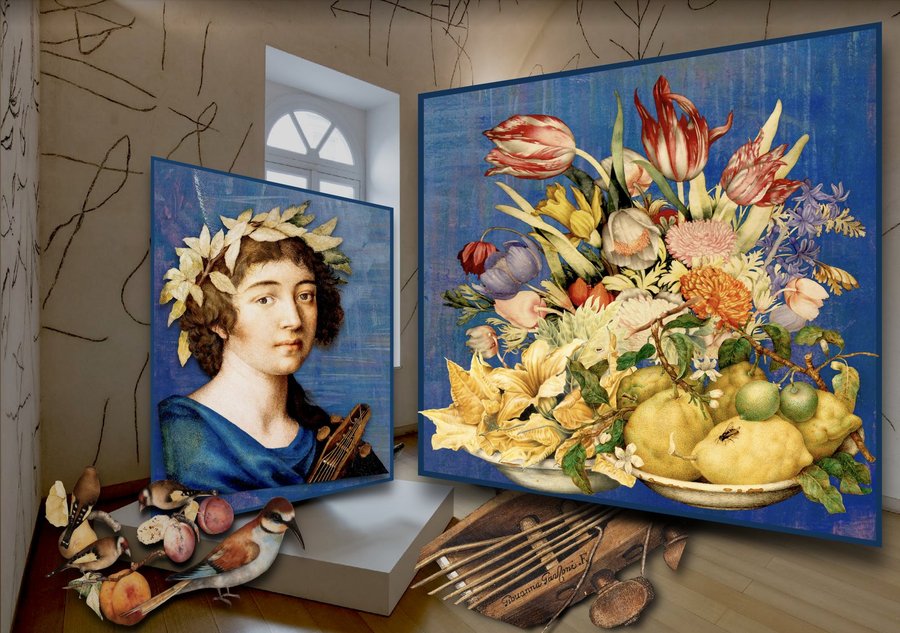
Giovanna Garzoni
Giovanna Garzoni was the queen of refinement and microscopic detail. She is one of the most fascinating figures of the seventeenth century, renowned for turning still life into a genre of absolute luxury. The artist traveled throughout Italy and abroad, absorbing diverse influences and gaining recognition at Europe’s most prestigious courts.
She never married, devoting her entire life to painting. She managed to amass a fortune that allowed her to live independently; in her will, she bequeathed her assets to the Accademia San Luca in Rome.
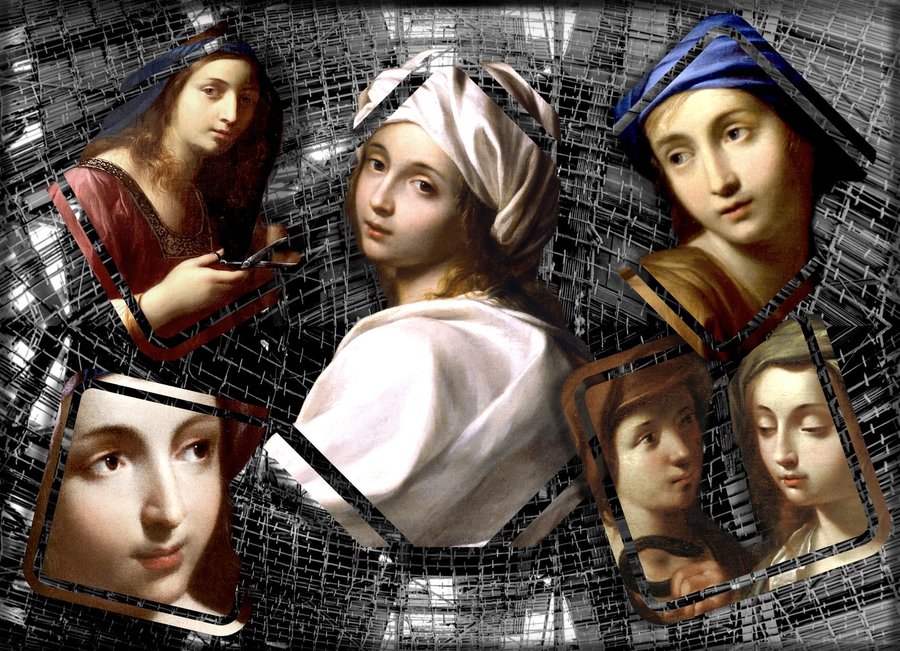
Ginevra Cantofoli
Ginevra Cantofoli was an artist whose identity was long concealed behind the names of her male peers. A prominent figure of the Bolognese school alongside Elisabetta Sirani, Ginevra fell victim to centuries of misattribution, with her finest works often mistaken for pieces by Guido Reni.
Restoring Ginevra Cantofoli's legacy means giving a name back to beauty that was considered anonymous for far too long — simply to avoid admitting the creative autonomy of a female painter.
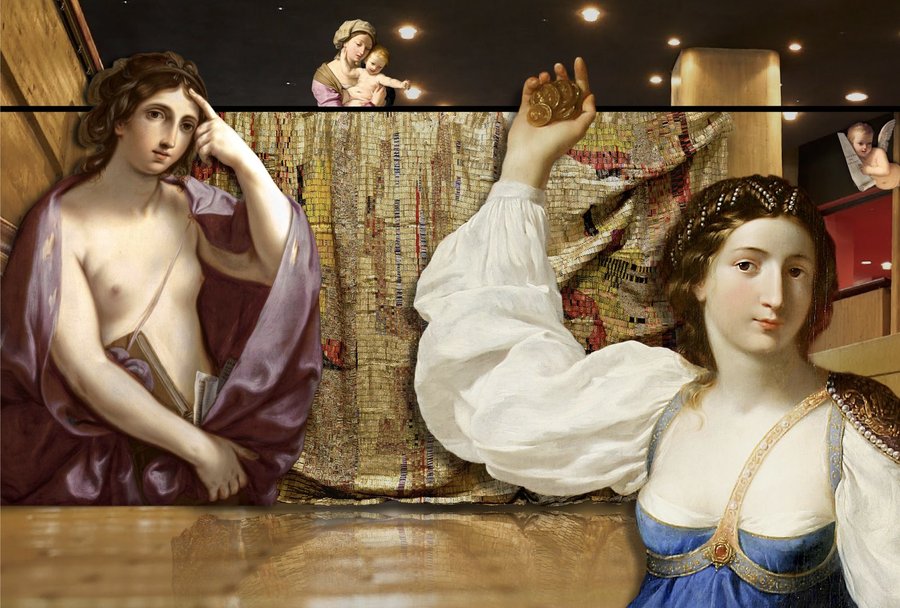
Elisabetta Sirani
Elisabetta Sirani is an extraordinary and tragic figure: a prodigy of seventeenth-century Bologna who died at just 27 years old, after creating more than 200 works and founding the first art school for women in Europe.
Sirani was famous for painting in public to refute detractors who claimed her works were actually created by her father or male collaborators. Her execution speed was so extraordinary that nobles from all across Europe queued up to watch her work live — a true pioneer of artistic and female emancipation.
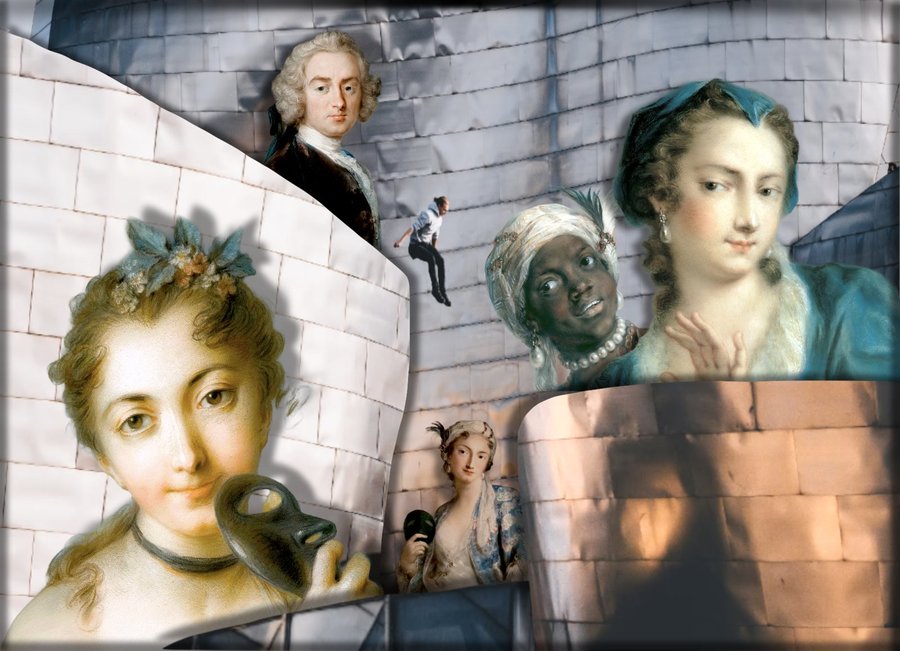
Rosalba Carriera
Rosalba Carriera was an artist sought after by courts across Europe and highly celebrated as a portraitist. As her eyesight failed, she had a presentiment that was bound to come true: ‘If I stop painting,’ she must have thought, ‘I will go mad.’
She would eventually lose her sight almost completely and, according to many sources, spent the final years of her life in solitude. In her will, she left substantial financial resources to four women who aspired to become artists — gifting them independence, the same virtue that had inspired her entire life.
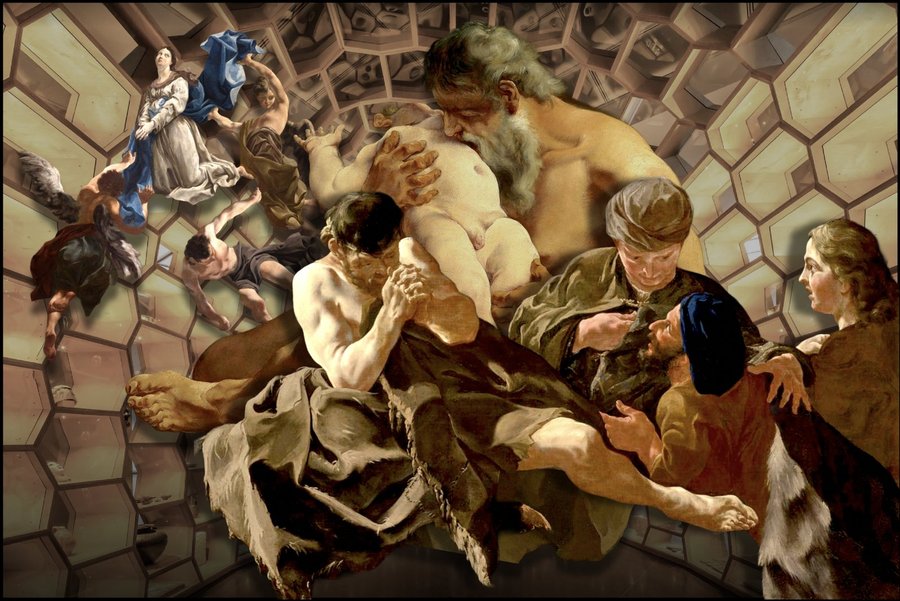
Giulia Lama
The Venetian painter had to fight every single day against a male-dominated world, succeeding in asserting herself through sheer, extraordinary talent. Free-spirited, obstinate, cultured, and immensely gifted, Giulia Lama blazed a trail in the art world with her canvases, drawings, and poetry, quickly becoming a famous and esteemed artist.
Unpopular among her male contemporaries, Giulia lived an isolated and disparaged life: not only was she never enrolled in the guild of painters in Venice, but she was also deemed unattractive, a detail pitilessly recorded in historical sources.
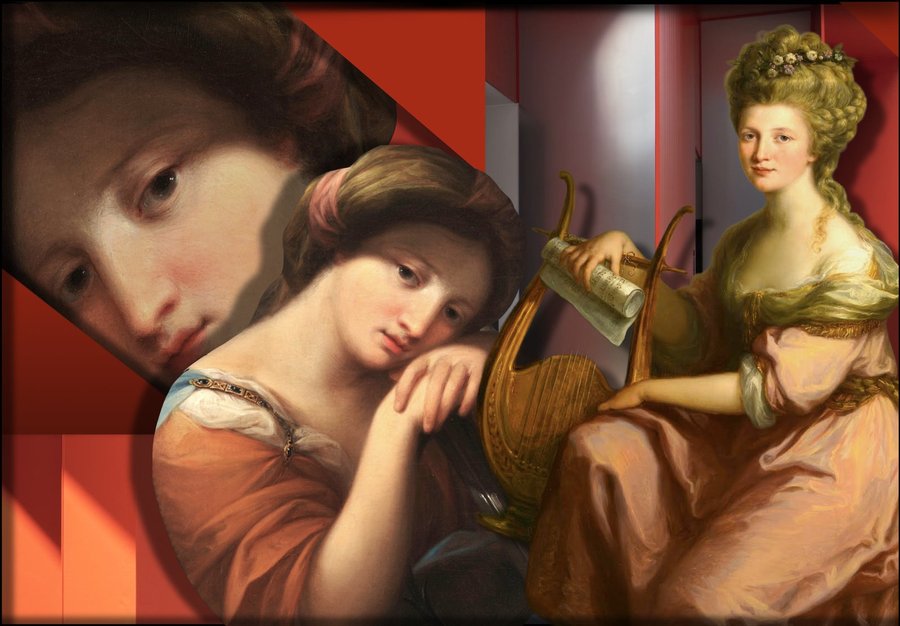
Angelika Kauffmann
Angelica Kauffmann was born in Switzerland but trained in Italy. It was in Rome, however, that she decided to settle and open her own studio, quickly becoming a highly successful portraitist, specializing in portraits and mythological paintings where antiquity and myth served as a lens through which to portray feelings and emotions, always marked by balance and elegance.
Goethe, so captivated by the painter that he nearly fell in love with her, wrote of her: “Looking at pictures with her is most enjoyable; her eye is so educated and her knowledge so vast.”
Out of the Shadows is part of Blu Artworks' wider body of work — 577 original SIAE-registered collages in total. Explore the Out of the Shadows fa parte del lavoro più ampio di Blu Artworks — 577 collage originali registrati SIAE in totale. Esplora la Full GalleryGalleria Completa.