Cursed PaintersPittori Maledetti
Six Lives Between Genius and TragedySei Vite tra Genio e Tragedia
27 collages in this catalogcollage in questo catalogo
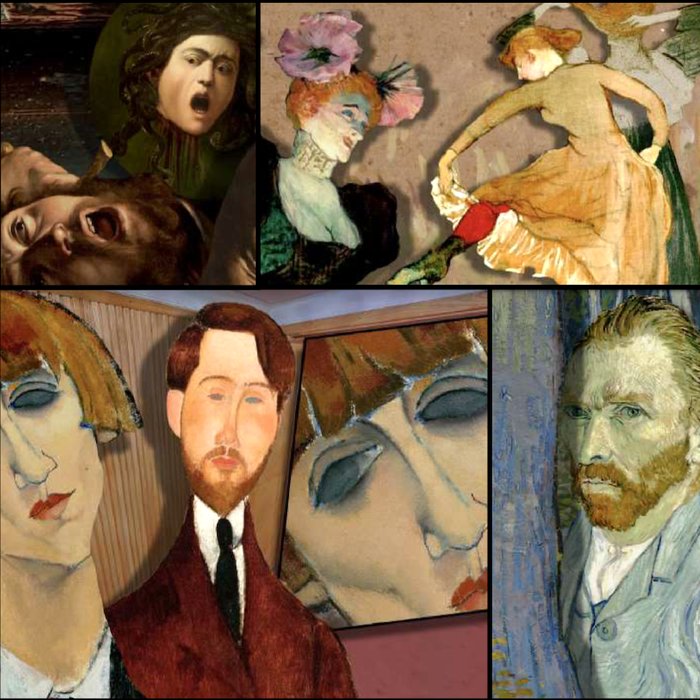
Six artists whose lives were marked by misunderstanding, excess, poverty, and illness — often ending in premature or tragic death. We wanted to remember them with a series of collages inspired by and dedicated to them: Vincent van Gogh, Amedeo Modigliani, Caravaggio, Henri de Toulouse-Lautrec, Edvard Munch, and Egon Schiele. Each piece below is available as a high-resolution, 300dpi, royalty-free download for €39, ready for print at any size.Sei artisti le cui vite sono state segnate da incomprensioni, sregolatezze, povertà, malattie e spesso finite con una morte prematura o tragica. Li abbiamo voluti ricordare con una serie di collage a loro ispirati e dedicati: Vincent van Gogh, Amedeo Modigliani, Caravaggio, Henri de Toulouse-Lautrec, Edvard Munch ed Egon Schiele. Ogni opera qui sotto è disponibile come download ad alta risoluzione, 300dpi, royalty-free per €39, pronta per la stampa in qualsiasi formato.
Download Catalog PDF →Scarica il Catalogo PDF → View All Collections →Vedi Tutte le Collezioni →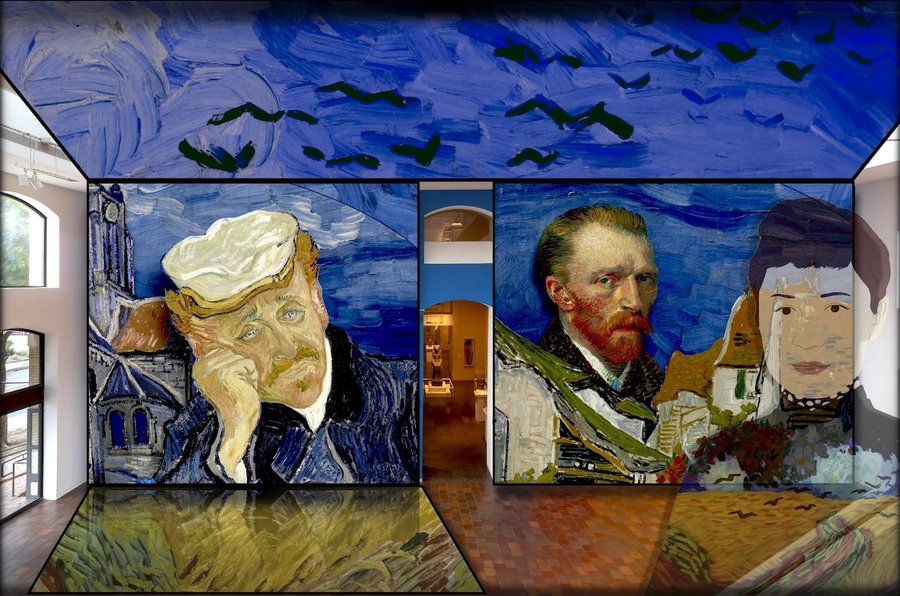
Van Gogh never seen
Vincent van Gogh (1853–1890) is perhaps the most emblematic example of the lonely, misunderstood artist. His life was marked by poverty, mental health struggles — famously the ear-severing incident — and an almost total lack of appreciation for his art during his lifetime; today he is one of the most celebrated painters in history.
Vincent van Gogh (1853–1890) è forse l’esempio più emblematico dell’artista solitario e incompreso. La sua vita fu segnata da povertà, problemi di salute mentale — celebre l’episodio dell’orecchio tagliato — e da un’incomprensione quasi totale della sua arte mentre era in vita; oggi è tra i pittori più celebrati della storia.
Arid Land
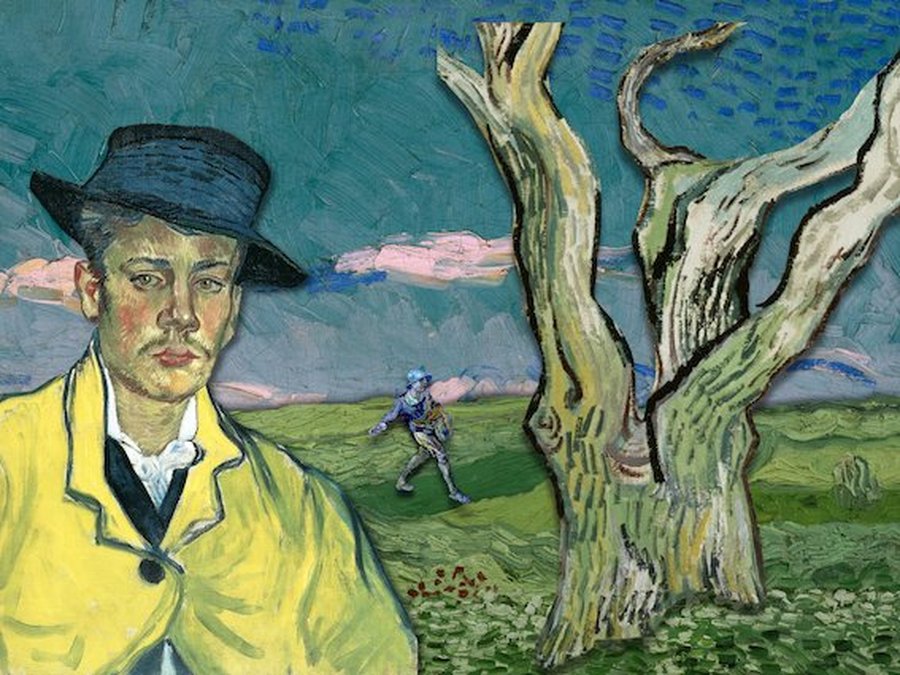
Vincent van Gogh’s life was marked by poverty, mental health struggles — famously the ear-severing incident — and an almost complete lack of appreciation for his art during his lifetime. He died by suicide.
La vita di Vincent van Gogh fu caratterizzata da povertà, problemi di salute mentale (famoso l’episodio dell’orecchio tagliato) e da un’incomprensione quasi totale della sua arte mentre era in vita. Morì suicida.
Misunderstanding
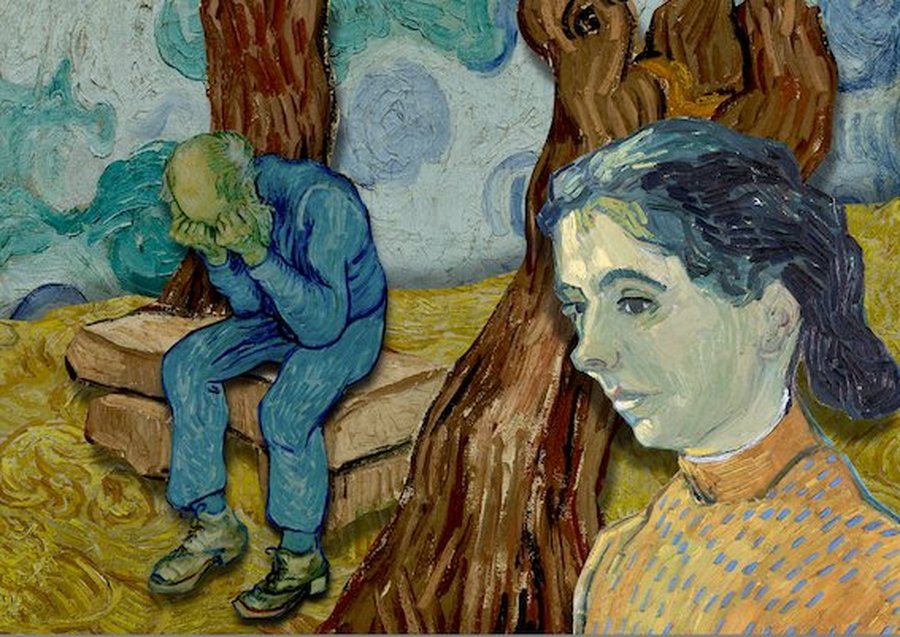
Most of what we know about Van Gogh’s thoughts and artistic theories comes from the hundreds of letters he and his brother Theo exchanged between 1872 and 1890 — more than six hundred from Vincent to Theo, and forty from Theo to Vincent.
La maggior parte di ciò che sappiamo sul pensiero di Van Gogh e sulle sue teorie sull’arte è scritto nelle centinaia di lettere che lui e il fratello Théo si scambiarono tra il 1872 e il 1890: più di seicento da Vincent a Théo, e quaranta da Théo a Vincent.
Only Child
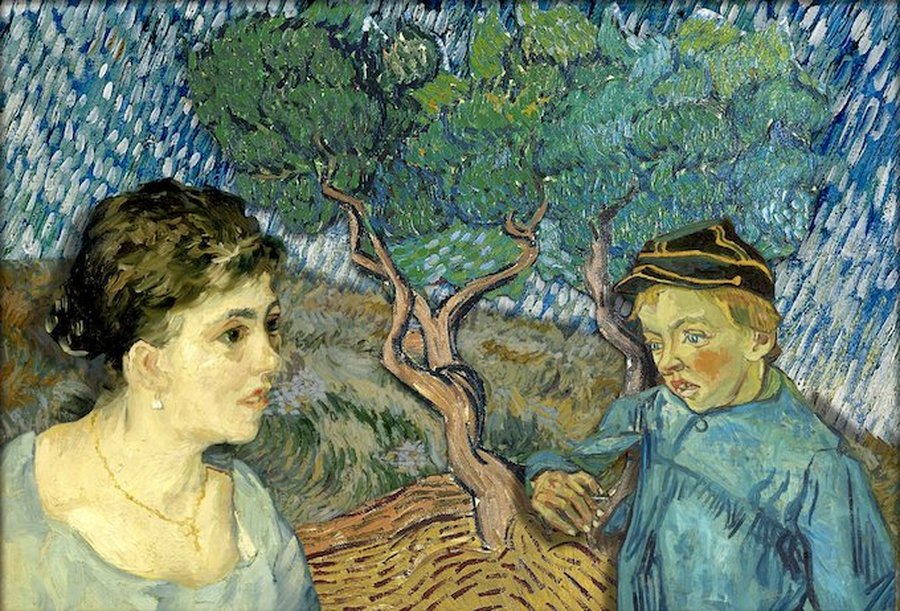
As a man and as a painter, Vincent felt like a failure: “I feel how inferior I am to so many Belgian painters gifted with enormous talent; as for me, I am doomed to failure.” He felt inadequate, and even when his brother reached the milestone of starting a family, Vincent felt all the more alone.
Come uomo e come pittore, Vincent si sentiva un fallito: «sento quanto io sia inferiore a tanti pittori belgi dotati di enorme talento; per quanto mi riguarda, io sono votato all’insuccesso». Si sentiva un peso, e quando persino il fratello raggiunse il traguardo di farsi una famiglia si sentì ancora più solo.
Without Family
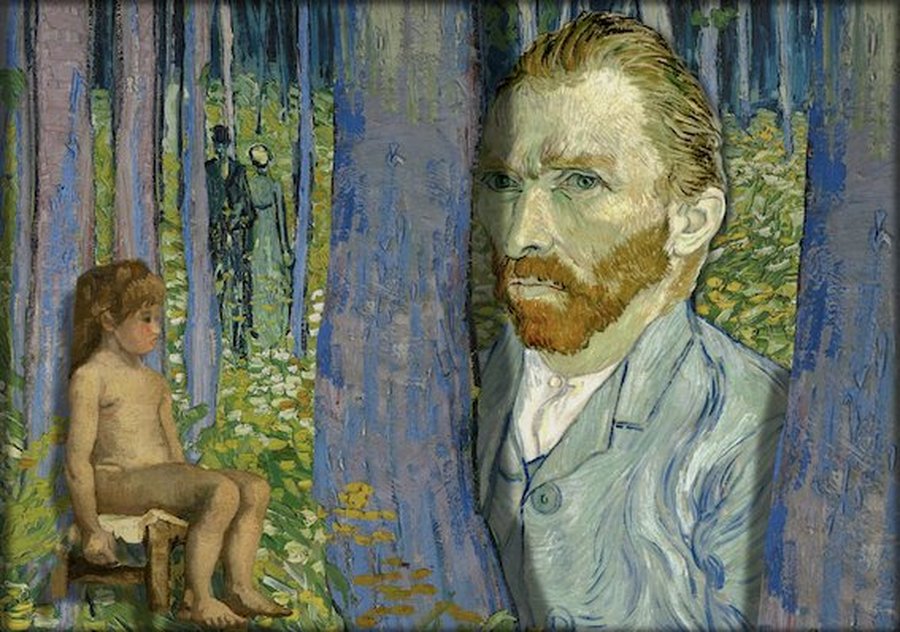
The Dutch artist, author of nearly 900 paintings and over 1,000 drawings, died by suicide in 1890 after years of suffering and frequent mental illness. He died in Auvers-sur-Oise, the French village famous for hosting so many artists, at the age of 37; he is buried beside his brother Theo, who had supported him financially and emotionally for most of his life.
L’artista olandese, autore di quasi 900 dipinti e oltre 1000 disegni, dopo anni di sofferenza e frequenti disturbi mentali si suicidò nel 1890 ad Auvers-sur-Oise, il borgo francese celebre per aver ospitato tanti artisti, all’età di 37 anni; è sepolto accanto al fratello Théo, che lo sostenne finanziariamente ed emotivamente per gran parte della sua vita.
Modigliani’s Patron
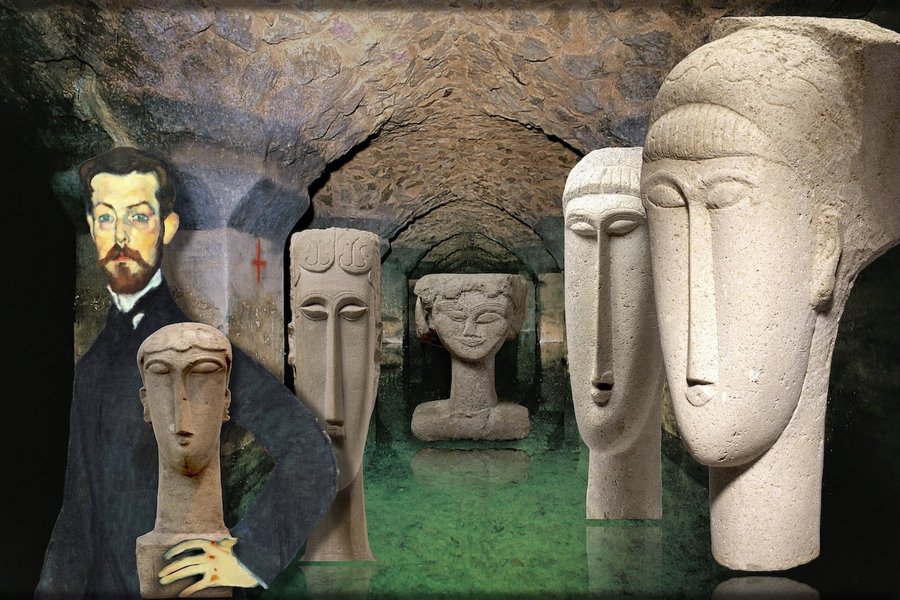
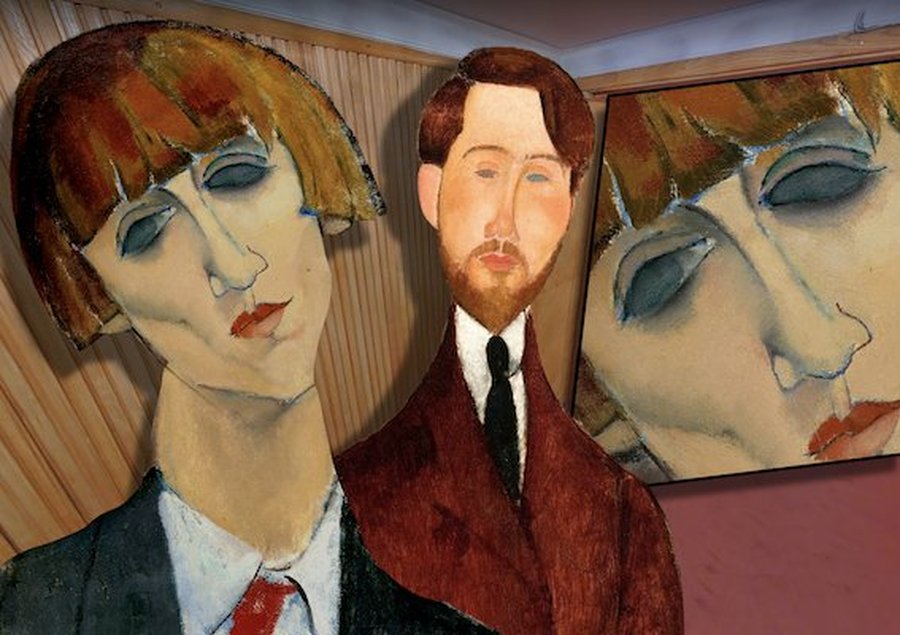
Amedeo Modigliani (1884–1920) found one of his few devoted supporters in the Polish poet and art dealer Léopold Zborowski, who championed his work, funded his materials, and organized his ill-fated first solo exhibition — a rare thread of loyalty running through a brief, intense life marked by poverty, alcoholism, drugs, and tuberculosis.
Amedeo Modigliani (1884–1920) trovò in Léopold Zborowski — poeta e mercante d’arte polacco — uno dei pochi sostenitori fedeli della sua vita: gli fornì materiali, lo sostenne economicamente e organizzò la sua sfortunata prima mostra personale, un raro filo di lealtà in un’esistenza breve e intensa, segnata da povertà, alcolismo, droghe e tubercolosi.
Frames
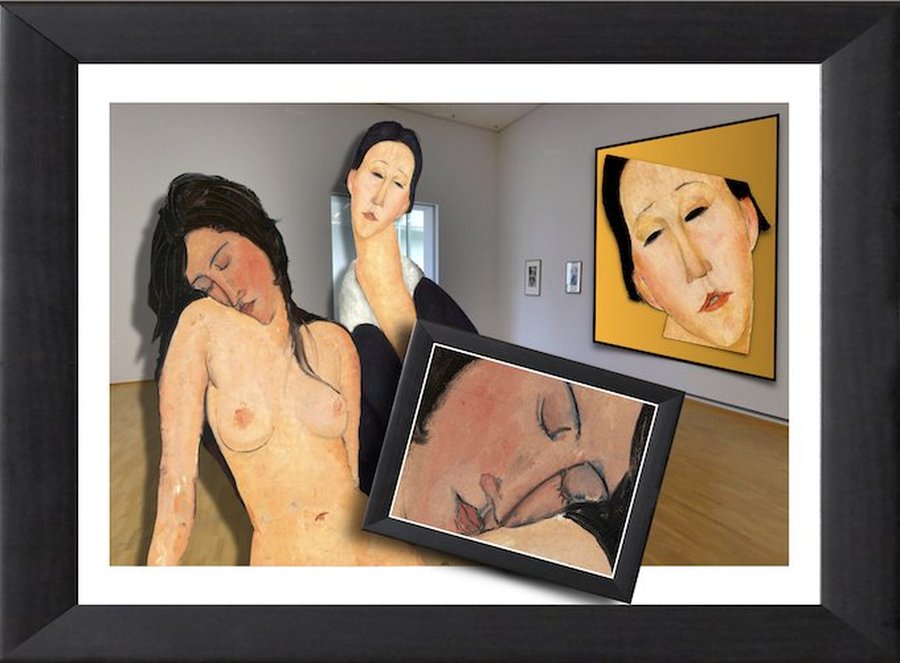
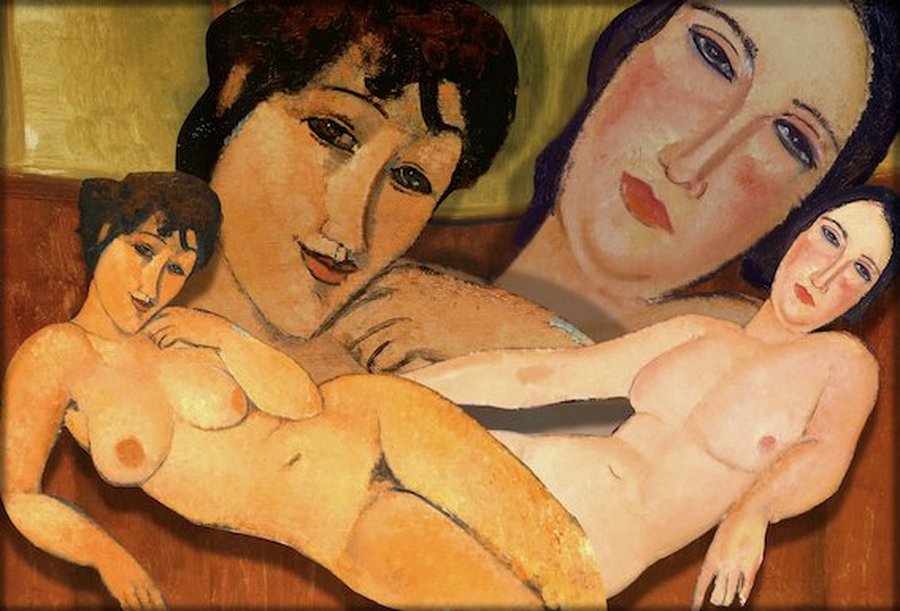
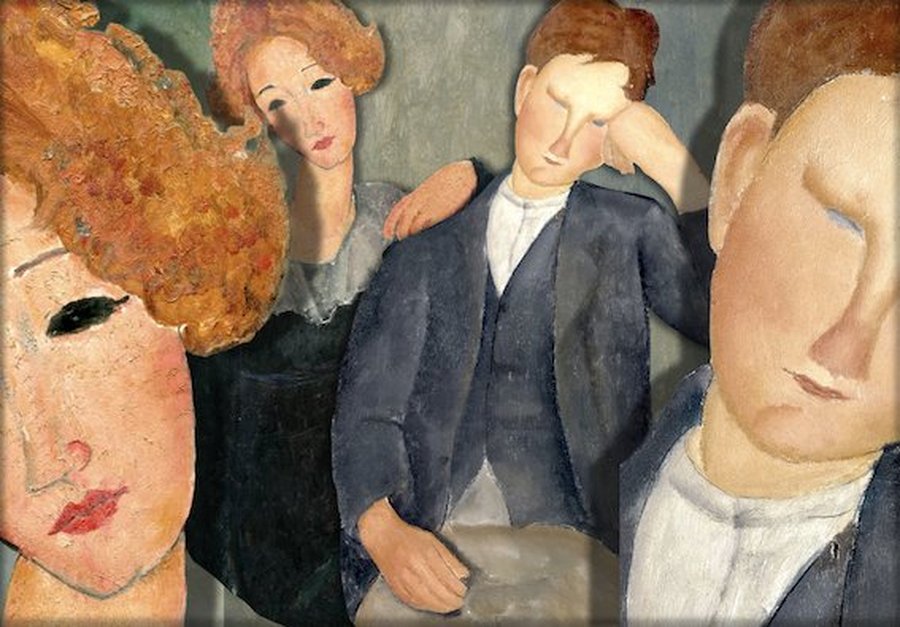
Amedeo Modigliani (1884–1920) lived a brief, intense life marked by poverty, alcoholism, drugs, and tuberculosis — an extraordinary Italian genius who gave life to unforgettable portraits and mysterious sculptures. His unique, minimalist, modern style revolutionized painting and sculpture; his works became the symbol of a life poised between art and suffering, beauty and tragedy.
Amedeo Modigliani (1884–1920) — vita breve e intensa, segnata da povertà, alcolismo, droghe e tubercolosi. Un genio italiano straordinario che ha dato vita a ritratti indimenticabili e sculture misteriose. Il suo stile unico, essenziale e moderno ha rivoluzionato la pittura e la scultura; le sue opere sono diventate simbolo di un’esistenza troppo breve, tra arte e sofferenza, bellezza e tragedia.
Seductive Nudes
Modigliani produced a remarkable number of paintings yet gained no wealth from them. At his first solo exhibition in Paris in 1918, at the Galerie Weill, his paintings were judged indecent — resulting in an order to close the show.
Modigliani produsse una notevole quantità di dipinti, dai quali tuttavia non ricavò alcuna ricchezza. Alla sua prima mostra personale a Parigi nel 1918, presso la Galerie Weill, i suoi quadri furono giudicati indecenti, e l’esposizione venne di conseguenza chiusa.
Love Sold Out
Hospitalized with tubercular meningitis, Modigliani died at dawn on January 24, 1920, at just 35 years old, leaving behind his grieving, pregnant fiancée Jeanne Hébuterne. A grand funeral was held, attended by the entire artistic communities of Montmartre and Montparnasse. The day after his death, Jeanne — who had been taken to her parents’ home — threw herself from a fifth-floor window.
Ricoverato per meningite tubercolare, Modigliani morì all’alba del 24 gennaio 1920, a soli 35 anni, lasciando nella disperazione la fidanzata incinta Jeanne Hébuterne. Venne organizzato un grande funerale, a cui parteciparono tutti i membri delle comunità artistiche di Montmartre e Montparnasse. Il giorno dopo la morte di Amedeo, Jeanne, portata nella casa dei suoi genitori, si gettò da una finestra al quinto piano.
No Words
Modigliani was buried in the Père Lachaise cemetery on January 26. Jeanne Hébuterne was interred the following day in the Bagneux cemetery near Paris — but only in 1930 did her family, bitter about having had her buried secretly to avoid further “scandal,” allow her remains to be placed beside those of her beloved Amedeo, whose works began to be appreciated only after his death.
Modigliani venne sepolto nel cimitero di Père-Lachaise il 26 gennaio. Jeanne Hébuterne venne tumulata il giorno dopo nel cimitero di Bagneux, vicino Parigi — ma solo nel 1930 la sua famiglia, amareggiata per averla fatta seppellire furtivamente per evitare ulteriori “scandali”, concesse che le sue spoglie fossero poste accanto a quelle del suo Amedeo, le cui opere furono apprezzate solo dopo la morte.
Caravaggio’s
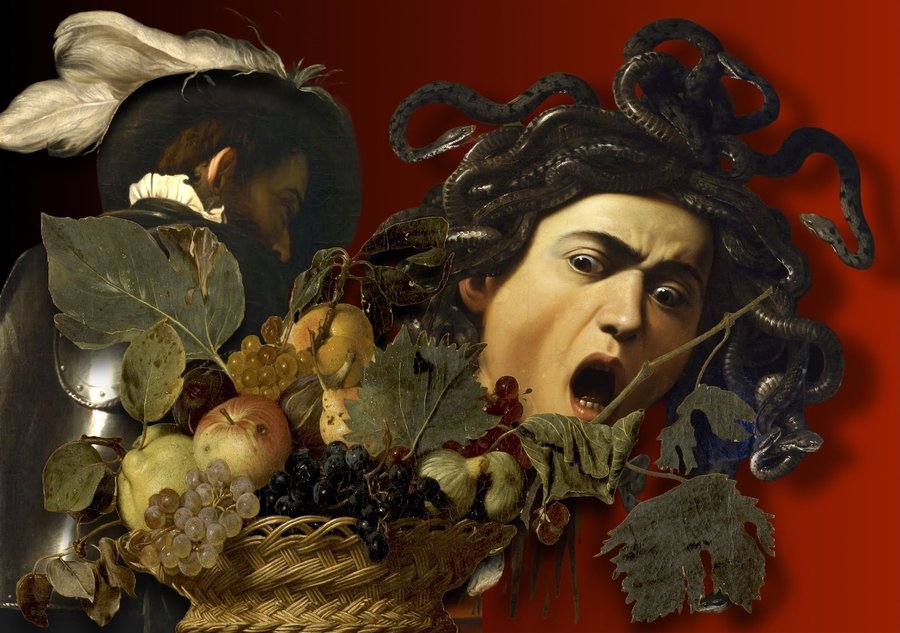
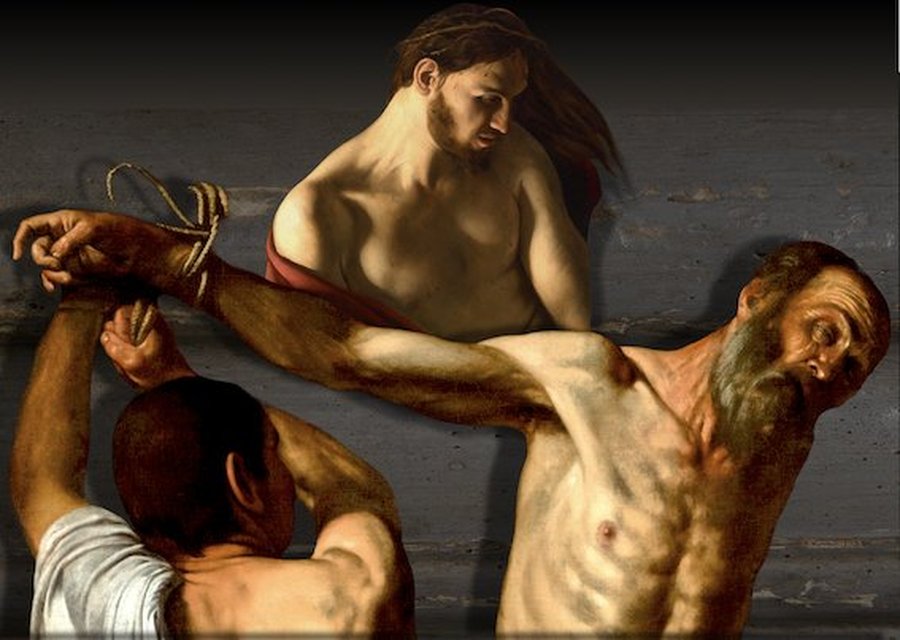
Michelangelo Merisi, known as Caravaggio (1571–1610), was a brilliant and revolutionary artist, yet a man whose turbulent life was marked by brawls, murder, trials, and escapes. He died on the beach at Porto Ercole under mysterious circumstances on July 18, 1610, just shy of his 39th birthday — only days before a pardon allowing his return to Rome would have reached him.
Michelangelo Merisi, detto Caravaggio (1571–1610), fu un artista geniale e rivoluzionario, ma anche un uomo dalla vita turbolenta, segnata da risse, omicidi, processi e fughe. Morì sulla spiaggia di Porto Ercole in circostanze misteriose il 18 luglio 1610, non ancora trentanovenne — pochi giorni prima che arrivasse la grazia che gli avrebbe permesso di tornare a Roma.
Christian Piety
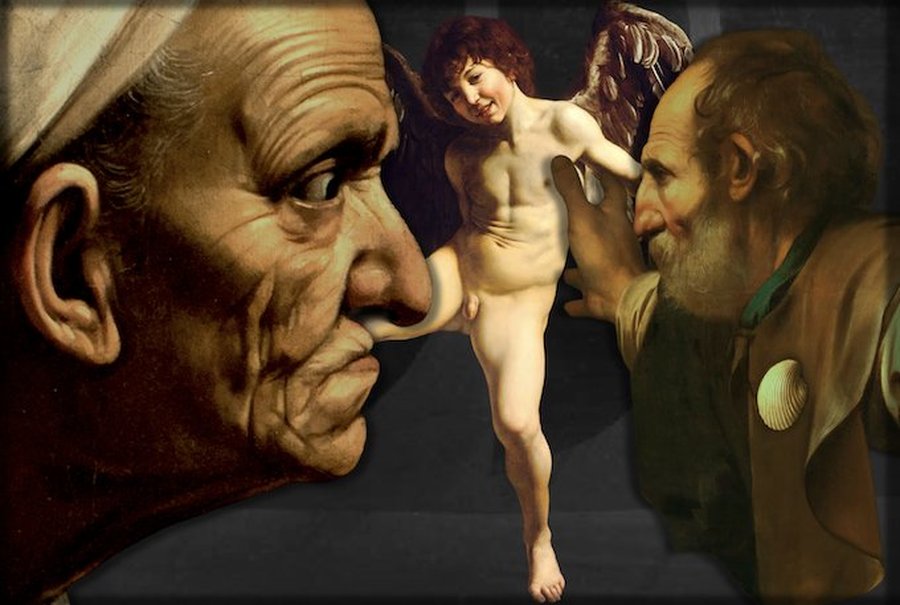
Caravaggio was a brilliant, revolutionary artist and a man whose turbulent life was marked by brawls, murder, trials, convictions, and escapes. He died on the beach at Porto Ercole under mysterious circumstances on July 18, 1610, not yet 39 — only days before a pardon permitting his return to Rome would have reached him.
Michelangelo Merisi da Caravaggio — artista geniale e rivoluzionario, ma anche uomo dalla vita turbolenta, segnata da risse, omicidi e fughe. Morì sulla spiaggia di Porto Ercole in circostanze misteriose il 18 luglio 1610; il pittore non aveva ancora 39 anni, pochi giorni dopo sarebbe arrivata la grazia con il permesso di ritornare a Roma.
Scandalous Painting
Trained in Milan and active for most of his career in Rome, Caravaggio spent the last four years of his life on the run from Roman justice, moving between Naples, Malta, and Sicily.
Formatosi a Milano e attivo per gran parte della sua vita artistica a Roma, durante gli ultimi quattro anni della sua vita visse, fuggendo dalla giustizia romana, tra Napoli, l’isola di Malta e la Sicilia.
Beheading
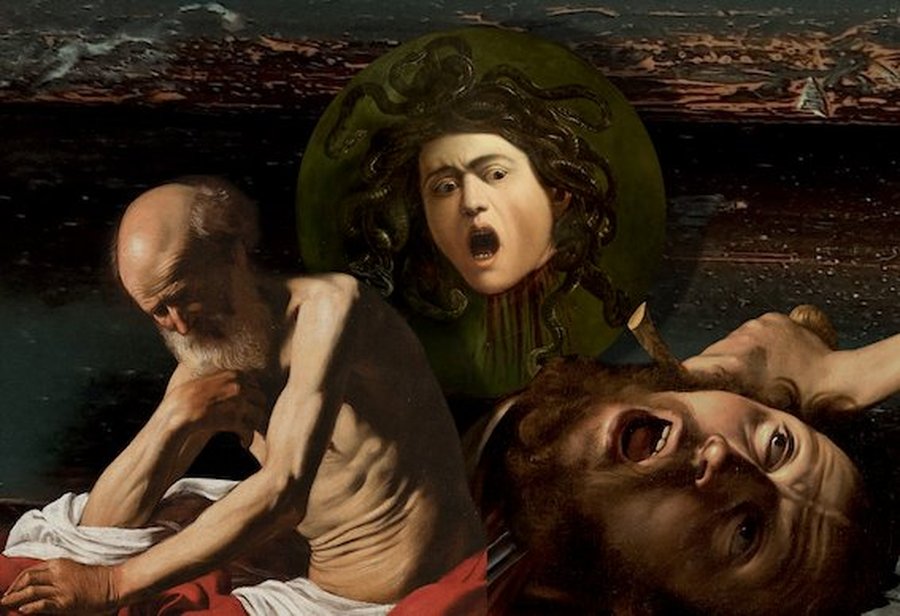
After his death, Caravaggio inspired the painting movement known as Caravaggism, exerting a profound influence on 17th-century Baroque art. He was then unjustly forgotten until his critical rediscovery in the 20th century — today he is considered one of the most celebrated figures in the history of Western art.
Dopo la morte fu ispiratore della corrente pittorica del “caravaggismo”, avendo esercitato una forte influenza sulla pittura barocca del XVII secolo, ma venne poi ingiustamente dimenticato fino alla riscoperta critica nel Novecento; è oggi considerato uno dei più celebri rappresentanti dell’arte occidentale di tutti i tempi.
Toulouse-Lautrec Tribute
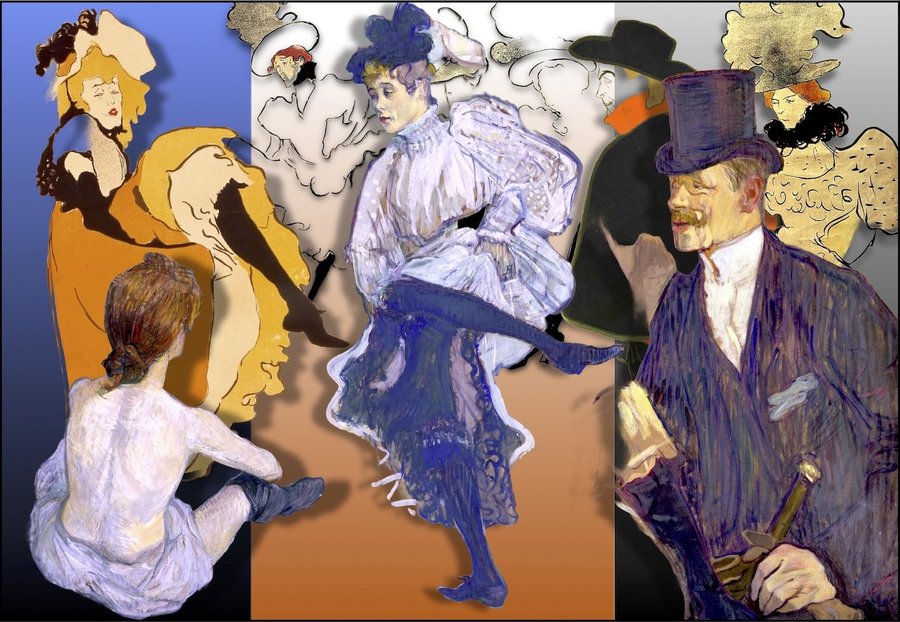
Henri de Toulouse-Lautrec (1864–1901) lived a life marked by severe health issues stemming from a genetic disorder that caused dwarfism and bone fragility. Despite these challenges, he fully embraced a bohemian lifestyle in Paris’s Montmartre district, chronicling its dancers, singers, and nightlife in some of the era’s most vivid posters and paintings.
Henri de Toulouse-Lautrec (1864–1901) visse una vita segnata da gravi problemi di salute legati a un’anomalia genetica che gli causò nanismo e fragilità ossea. Nonostante queste difficoltà, abbracciò pienamente una vita da bohémien nel quartiere parigino di Montmartre, raccontandone ballerine, cantanti e vita notturna in alcuni dei manifesti e dipinti più vividi dell’epoca.
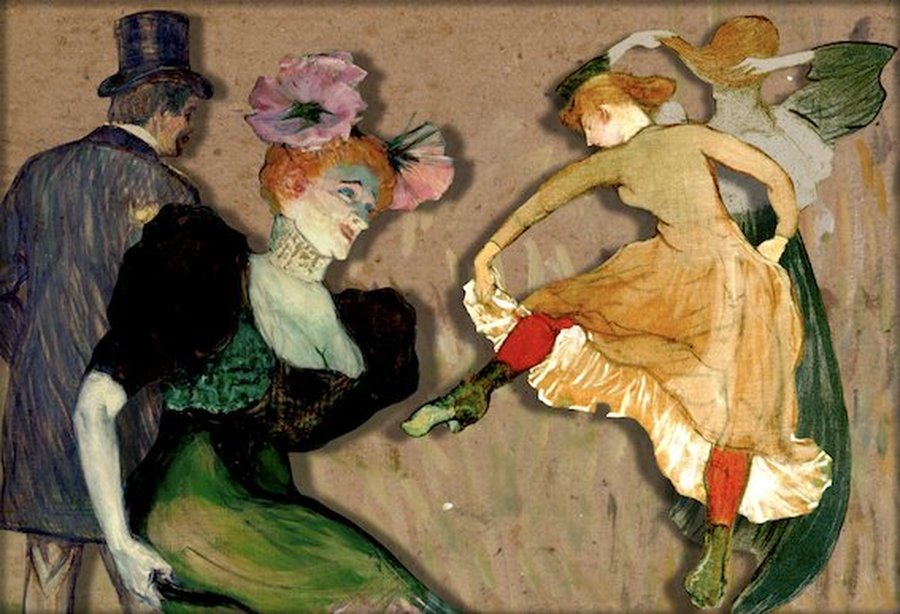
Liberating Dance
Henri de Toulouse-Lautrec’s life was marked by severe health issues stemming from a genetic disorder that caused dwarfism and bone fragility. Despite these challenges, he fully embraced a bohemian lifestyle in Montmartre, while alcoholism and his declining health eventually led to his physical and mental breakdown, culminating in his death at a psychiatric facility at just 36 years old.
La vita di Henri de Toulouse-Lautrec fu segnata da problemi di salute legati a un’anomalia genetica che gli causò nanismo e fragilità ossea. Visse una vita da bohémien nei locali di Montmartre, mentre l’alcolismo e le sue condizioni di salute precarie lo portarono alla rovina fisica e spirituale, culminando in una morte prematura in un ospedale psichiatrico a soli 36 anni.
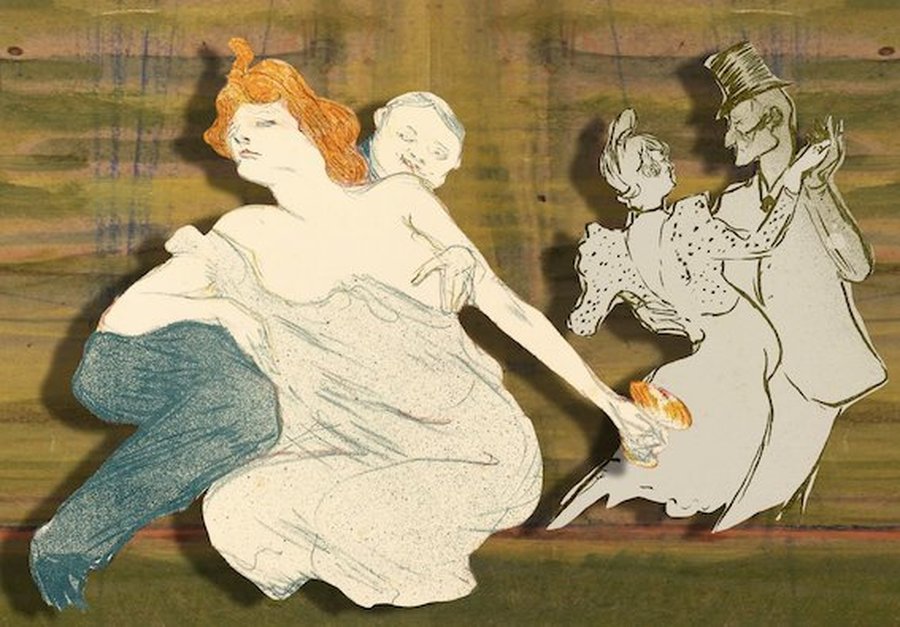
Desire to Live
Even after his death, the French press continued to fuel the narrative of a bohemian dwarf — grotesque, depraved, miserable. Today we know that Toulouse-Lautrec was none of these things: resisting all artistic trends, he felt an affinity for free spirits, sought neither masters nor disciples, and it would take the wave of modernity brought by the 20th century to truly understand his art.
Anche dopo la sua morte, i giornali francesi continuarono ad alimentare la narrazione dello gnomo bohémien, laido e depravato. Oggi sappiamo che Toulouse-Lautrec non fu nulla di tutto ciò: sfuggente a ogni moda, ebbe simpatia per gli spiriti liberi, non ebbe maestri né volle allievi, e per comprendere davvero la sua arte sarebbe servita la ventata di modernità del Novecento.
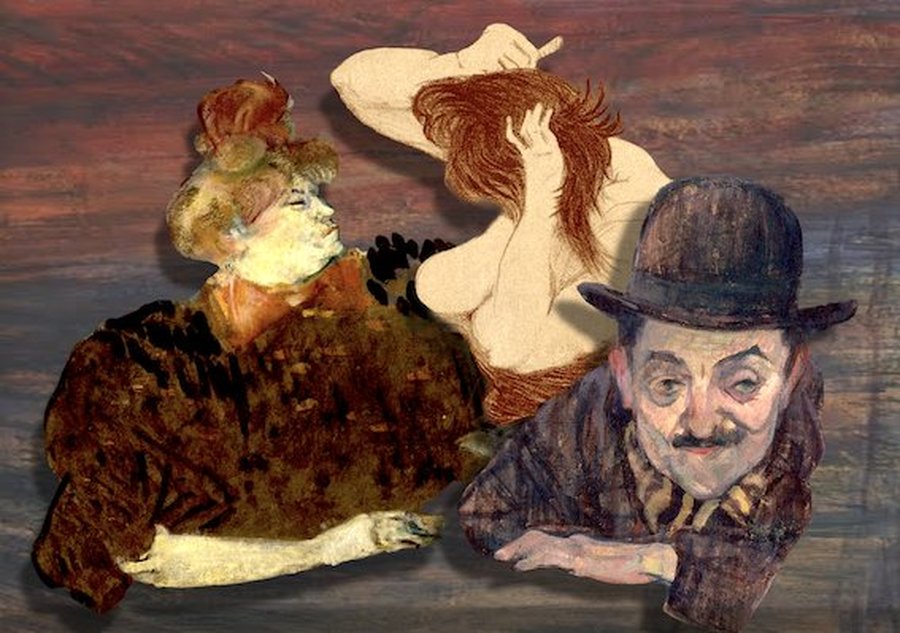
Marital Crisis
Toulouse-Lautrec showed that art could be expressed just as powerfully through everyday objects — from posters to invitation cards. His artistic legacy lives on today, a testament to his extraordinary strength and his ability to find and express beauty even under the most adverse circumstances.
Toulouse-Lautrec ha dimostrato come l’arte si possa esprimere anche disegnando e dipingendo gli oggetti più comuni, dai manifesti ai biglietti di invito. La sua eredità artistica vive ancora oggi, testimonianza della sua straordinaria forza e capacità di trovare ed esprimere bellezza anche nelle circostanze più avverse.
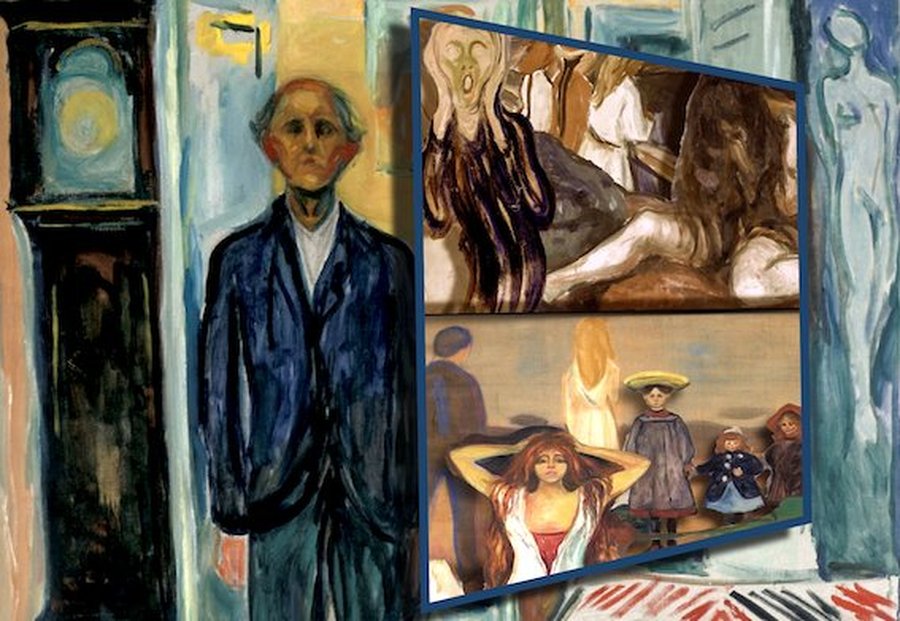
Self-Portrait
Edvard Munch (1863–1944) returned obsessively to self-portraiture throughout his life, from anxious early studies to the haunting Self-Portrait Between the Clock and the Bed painted in his final years — a body of work as unflinching about his own mortality as it was about the mental anguish that shadowed his family.
Edvard Munch (1863–1944) tornò più volte, nel corso della vita, all’autoritratto: dagli inquieti studi giovanili fino allo struggente Autoritratto tra l’orologio e il letto, dipinto negli ultimi anni — un corpo di opere impietoso tanto verso la propria mortalità quanto verso il disagio mentale che segnò la sua famiglia.
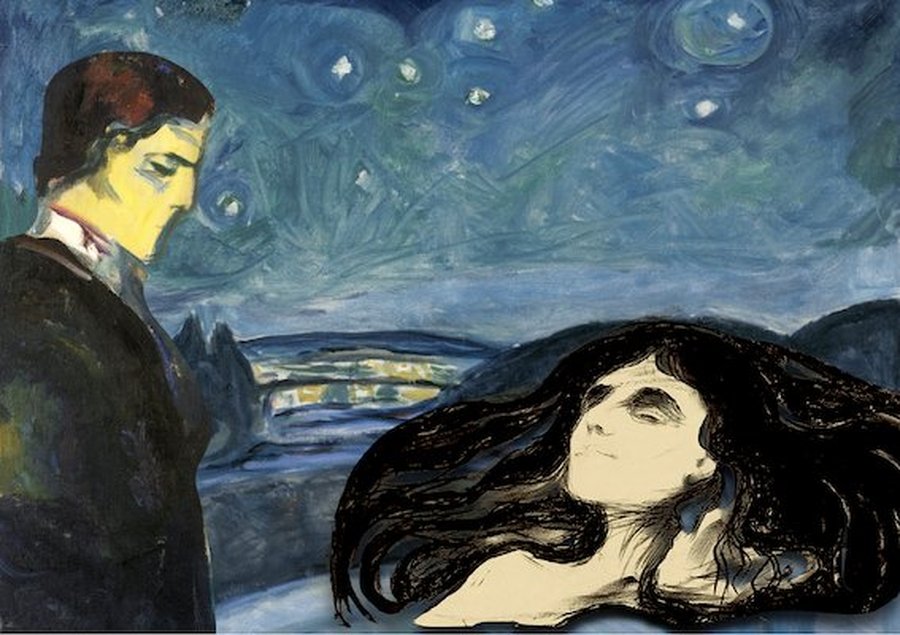
Farewell
Munch’s childhood was overshadowed by illness, bereavement, and the constant fear of inheriting a mental condition that ran in his family. The Scream, his most famous work, became the defining image of that troubled inner life — and an enduring icon of the human condition.
L’infanzia di Munch fu offuscata dalla malattia, dal lutto e dal timore costante di ereditare una condizione mentale ricorrente in famiglia. L’Urlo, la sua opera più nota, divenne l’immagine simbolo di quella vita interiore tormentata — e un’icona duratura della condizione umana.
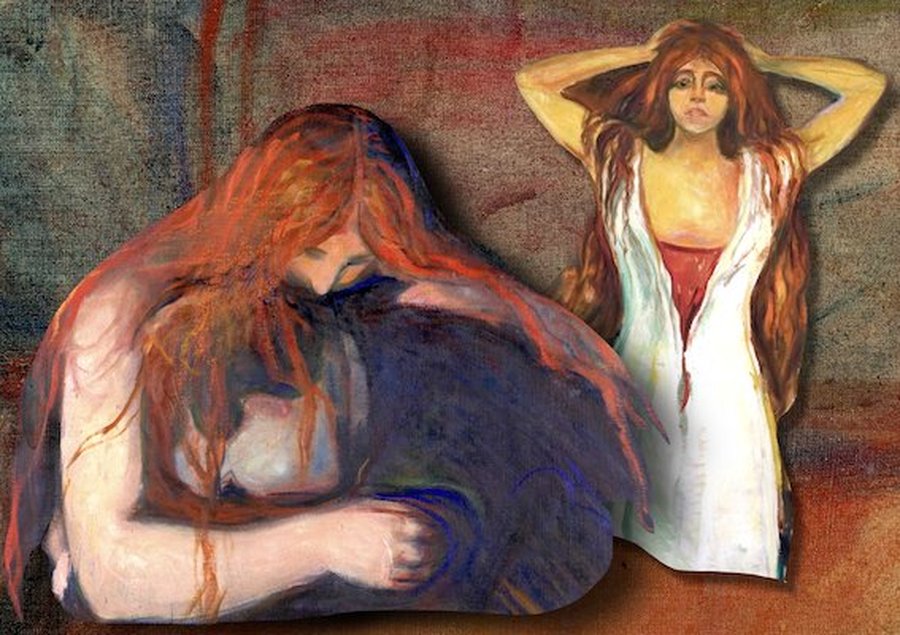
Remorse
Munch’s greatest masterpieces are the product of a tormented, painful life marked by family loss, failure, alcoholism, neurosis, and solitude — a constant sequence of highs and lows that prevented him from ever achieving the stability his economic and social standing might otherwise have secured.
I più grandi capolavori di Munch sono il risultato di una vita tormentata e dolorosa, segnata da perdite familiari, insuccessi, alcolismo, nevrosi e solitudine — un susseguirsi di alti e bassi che non permise mai all’artista di raggiungere la stabilità che la sua condizione economica e sociale avrebbe potuto assicurargli.
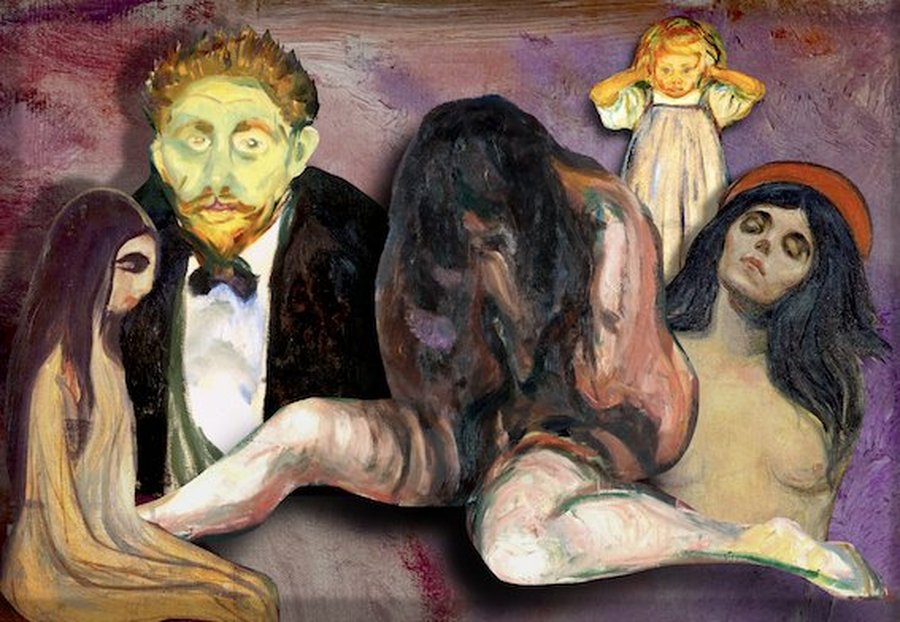
Repentance
Munch’s final years were defined by his efforts to win recognition from a homeland that had long ignored him: he took on public commissions and bequeathed the vast majority of his work to the city of Oslo. Shortly after finalizing this agreement, Edvard Munch died of bronchopneumonia in 1944.
Gli ultimi anni della vita di Munch furono segnati dal tentativo di farsi apprezzare dalla madrepatria che lo aveva sempre ignorato: si impegnò nella realizzazione di commissioni pubbliche e lasciò in eredità alla città di Oslo la maggior parte delle sue opere. Poco dopo aver raggiunto l’accordo, Edvard Munch morì di broncopolmonite nel 1944.
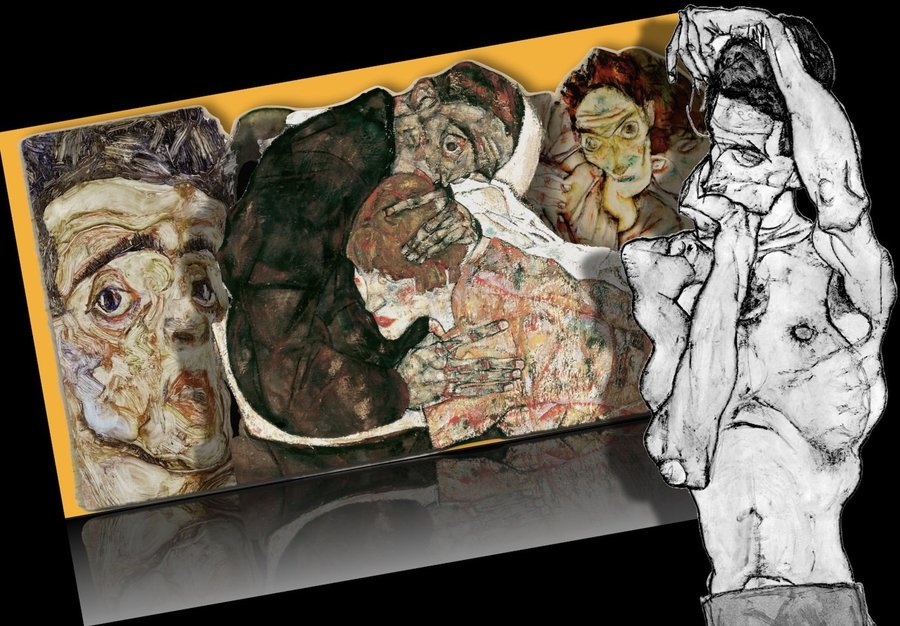
Schiele never seen
Egon Schiele (1890–1918) was an Austrian painter and printmaker, protégé of the already-established Gustav Klimt, and one of the leading figurative artists of the early 20th century — a definitive figure of early Viennese Expressionism whose life was cut brutally short at just 28.
Egon Schiele (1890–1918) fu pittore e incisore austriaco, allievo prediletto del già affermato Gustav Klimt e uno dei maggiori artisti figurativi del primo Novecento — esponente assoluto del primo espressionismo viennese, la cui vita si interruppe bruscamente a soli 28 anni.
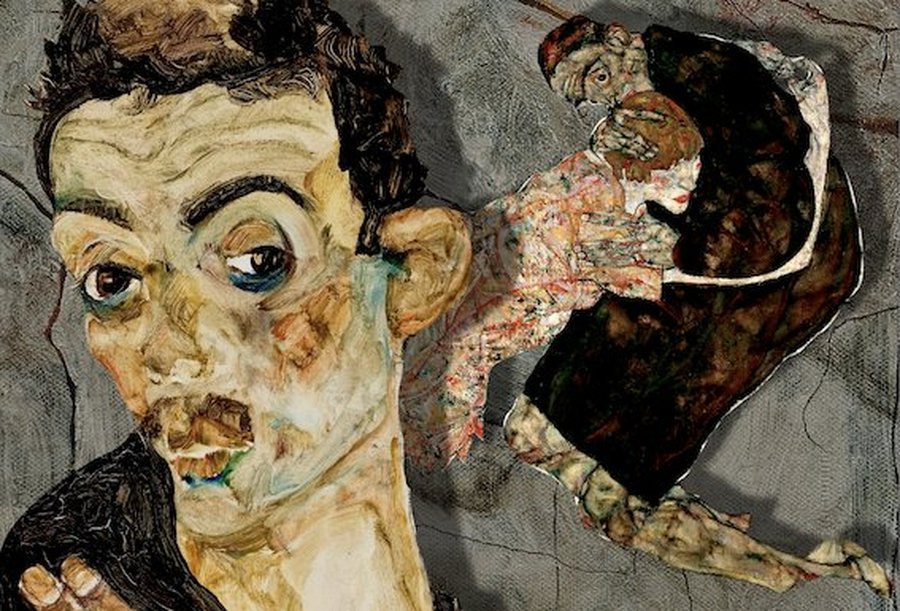
Past and Present
Egon Schiele was an Austrian painter and printmaker. A protégé of the already established Gustav Klimt, Schiele was one of the leading figurative artists of the early 20th century, as well as a definitive figure of early Viennese Expressionism.
Egon Schiele fu un pittore e incisore austriaco. Pupillo del già affermato Gustav Klimt, Schiele fu uno dei maggiori artisti figurativi del primo Novecento, nonché esponente assoluto del primo espressionismo viennese.
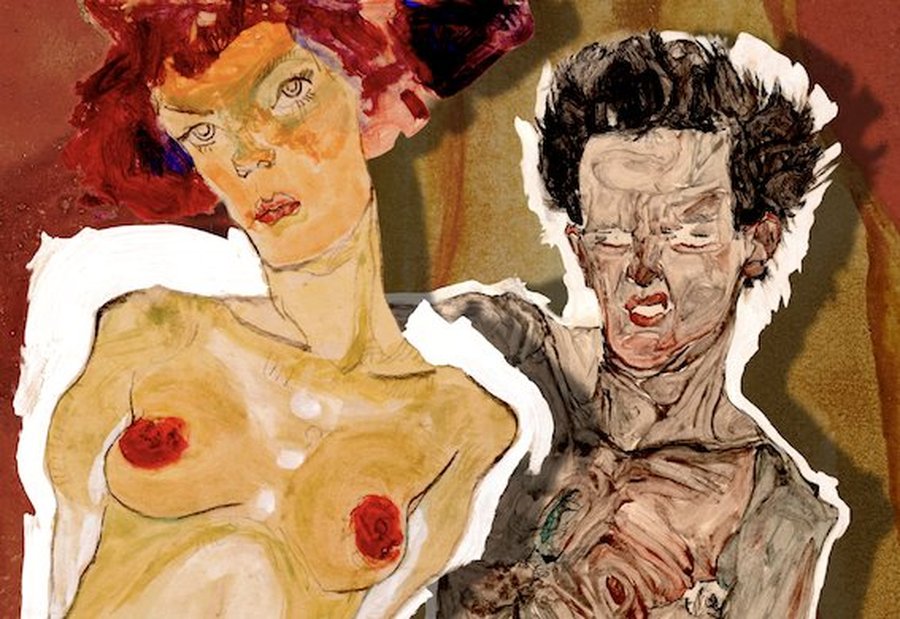
Impotence Feel
Schiele drew attention for his strictly realistic and at times controversial works. His art focused on the complexities of the human soul, frequently confronting themes of sex and death, almost always rendered through tormented human figures.
Il pittore si fece notare per i suoi lavori rigorosamente realistici e talvolta controversi. L’arte di Schiele si concentrava sulle complessità dell’anima umana e spesso su temi come il sesso o la morte, sempre rappresentate da tormentate figure umane.
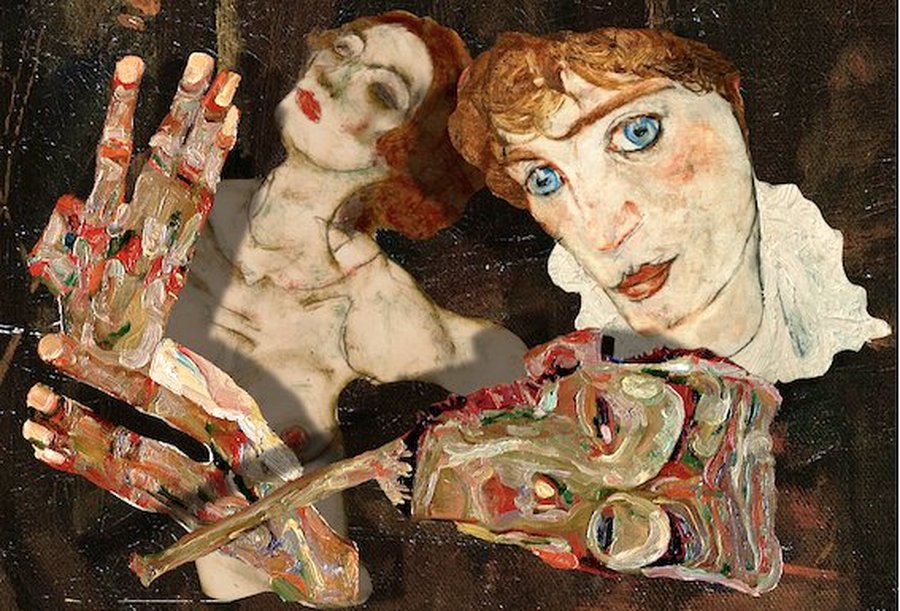
Bigamist
Schiele’s talent emerged early in a brief, troubled life that even saw him briefly imprisoned on charges of immorality. His works — often self-portraits and nudes — are consistently defined by raw expressiveness and a striking sense of existential angst.
Il suo talento fu precoce, ma la sua vita fu breve e travagliata. Venne persino imprigionato per un periodo con l’accusa di immoralità. Le sue opere, spesso autoritratti e nudi, sono sempre caratterizzate da una cruda espressività e un senso di disagio esistenziale.
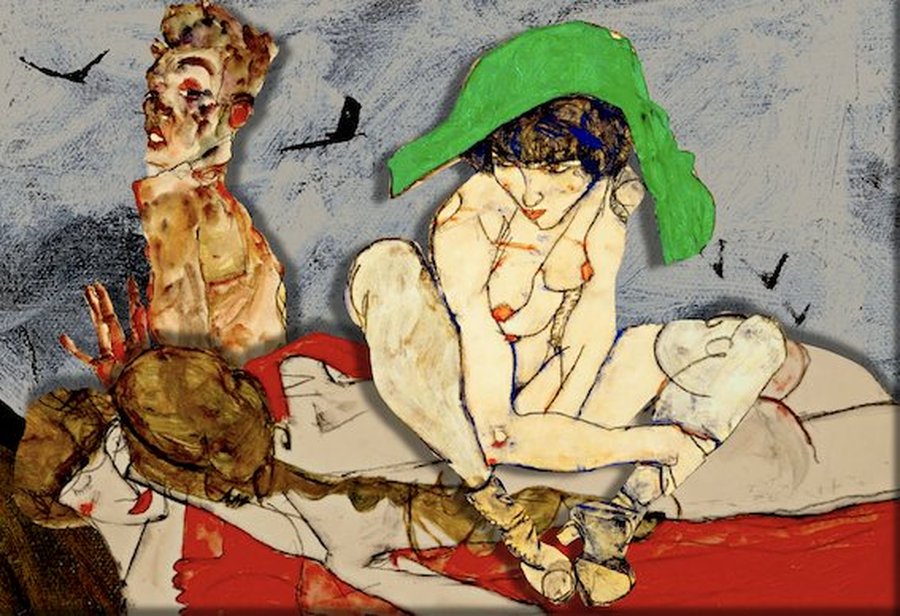
The Swingers
The label “cursed painter” is often a posthumous one, emphasizing the bond between artistic genius and a tragic, unconventional life — like Schiele’s. In 1918, as the Spanish Flu reached Vienna, it claimed the life of his six-months-pregnant wife Edith, and of Egon Schiele himself just three days later.
La definizione di “pittore maledetto” è spesso un’etichetta postuma, che enfatizza il legame tra genio artistico e una vita fuori dagli schemi o tragica — come quella di Schiele. Nel 1918, con lo scoppio dell’influenza spagnola che colpì anche Vienna, la malattia si portò via la moglie Edith, incinta di sei mesi, e lo stesso Egon Schiele appena tre giorni dopo.
Cursed Painters is part of Blu Artworks’ wider body of work — 577 original SIAE-registered collages in total. Explore the Pittori Maledetti fa parte del lavoro più ampio di Blu Artworks — 577 collage originali registrati SIAE in totale. Esplora la Full GalleryGalleria Completa.