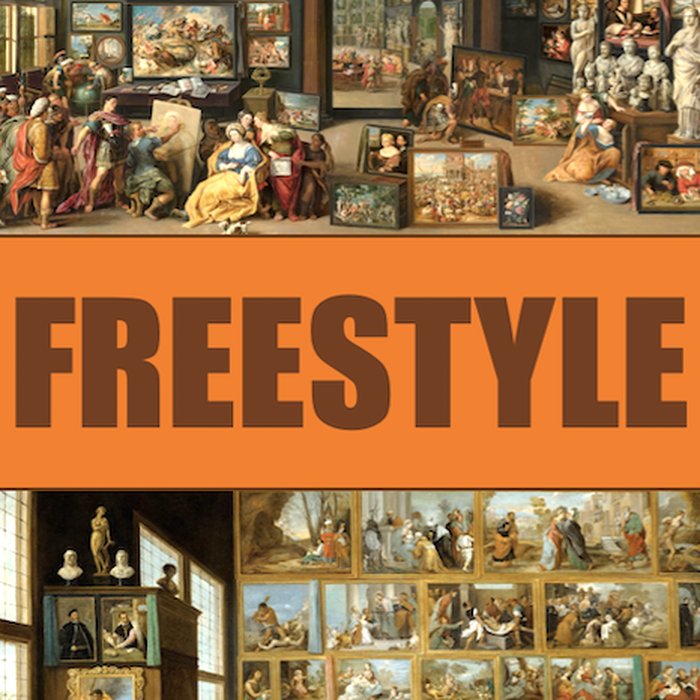
Free Style
Eighteen Collages With No Single Century to Call Home
18 collages in this catalogcollage in questo catalogo
Every other Blu Artworks catalog picks a lane — a period, a theme, an artist, a mood. Free Style is the exception: eighteen collages that range without apology from Sienese Gothic altarpieces to Art Deco portraiture, from Flemish gallery paintings to Italian Futurism, from a quiet Renaissance colonnade sold under a name that promises motorcycles to an abstract kaleidoscope sold under the name of a painter famous for faces. It is, in other words, exactly what it says on the cover — art history treated as raw material rather than a fixed itinerary. Each piece is available as a high-resolution, 300dpi, royalty-free download for €39, ready for print at any size.
Download Catalog PDF →Scarica il Catalogo PDF → View All Collections →Vedi Tutte le Collezioni →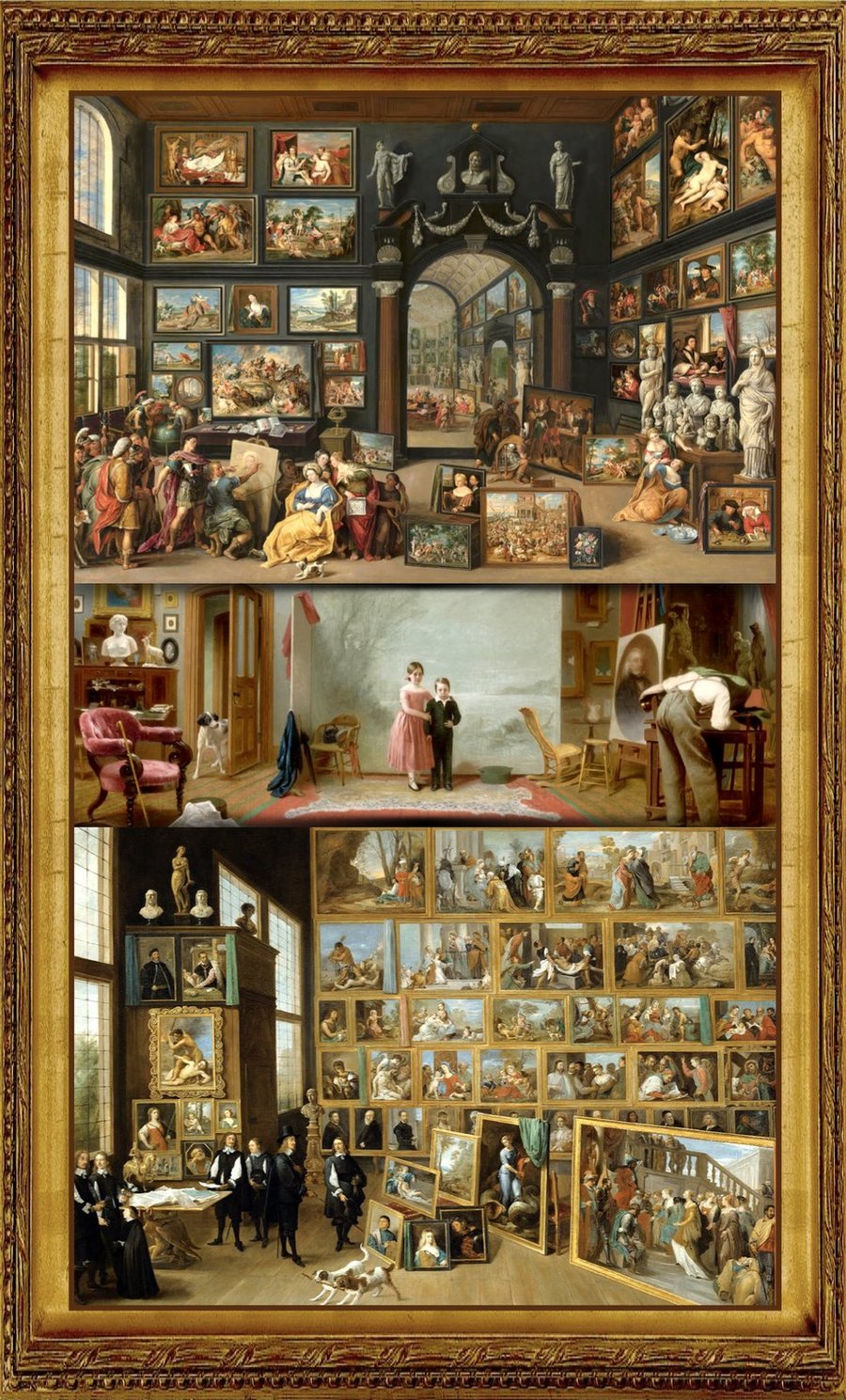
3 Studios
This collage borrows its central conceit from one of the 17th century’s most self-referential genres: the Antwerp ‘gallery painting,’ pioneered by Willem van Haecht and carried on by generations of Flemish painters including the Francken family and David Teniers the Younger. These paintings-of-paintings crowded a single room, floor to ceiling, with miniature copies of masterworks owned by real collectors — part inventory, part status display, part meditation on what a painting even is.
Three such rooms, layered into one frame, turn the conceit up a notch: a studio built entirely from other studios, quoting the quoting.
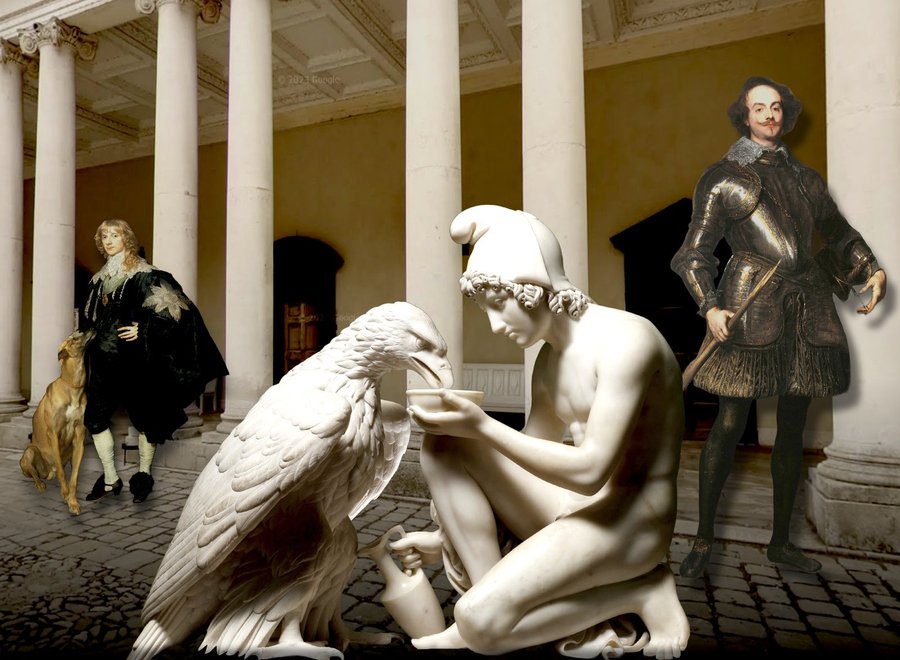
Animali Mitici
A kneeling figure, a bird too large and too knowing to be entirely of this world, and a hooded onlooker who could be statue or spectator — the ambiguity is the point. Blu Artworks’ recurring fascination with myth runs through pieces like this one: creatures borrowed from bestiaries and classical fable, staged in settings pulled from real streets and squares, so the fantastic and the everyday share the same cobblestones.
No single source painting anchors this composition; it belongs instead to the older tradition of the mythical-animal encounter, from medieval bestiaries to Renaissance garden statuary, where humans and marvelous beasts are always caught mid-conversation.
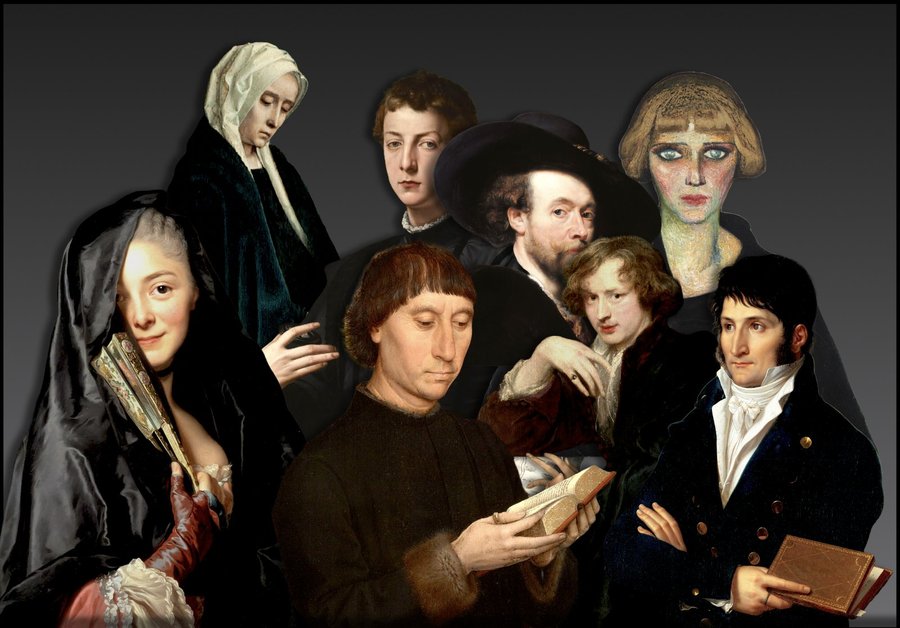
Black Is Black
Somber black clothing, starched white collars, and the close-cropped intimacy of a family or guild gathered for a single portrait — this collage draws its palette and its composure from the Dutch Golden Age group portrait, the tradition that gave the 17th century Frans Hals’ regents and Rembrandt’s guildsmen. Black was never really the absence of color in these paintings; it was a declaration of Calvinist restraint and civic seriousness, worn by merchants who could easily have afforded more ostentatious dress.
Title notwithstanding, there’s nothing flat about this black — it’s a color doing a great deal of social work.
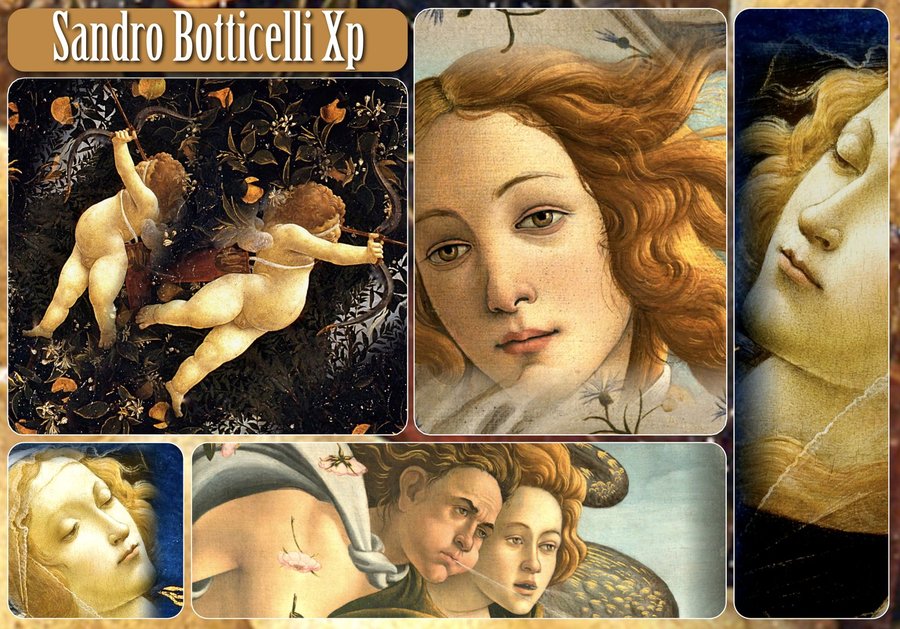
Botticelli Xp
A direct homage, its subject announced inside the collage itself: Sandro Botticelli, the Florentine painter whose Birth of Venus and Primavera (both c. 1480s, both painted for the Medici) gave the Renaissance its most enduringly reproduced faces. The tilted head, the loose auburn hair, and the particular sorrowful sweetness of expression that recurs across his output — likely modeled, art historians have long argued, on one idealized type rather than a single sitter — are the elements this piece isolates and repeats.
Fragment by fragment, the collage multiplies an icon the way a print run multiplies an image, until repetition itself becomes the subject.
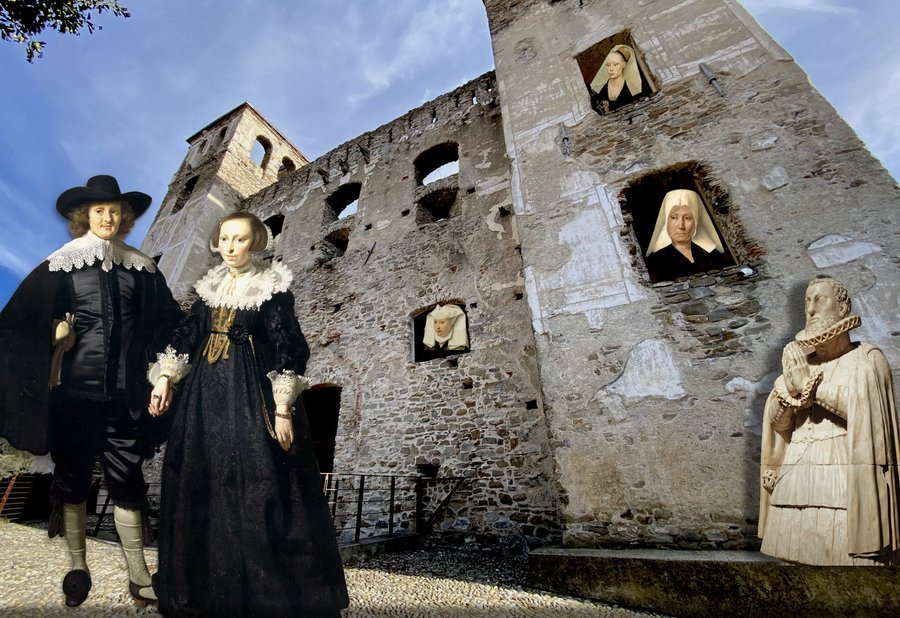
Castellani
The word means, simply, ‘of the castle,’ and this collage takes it at face value: crenellated walls, an arched gate, and two robed figures dwarfed by stonework built for defense rather than welcome. Fortified towns like this one dotted the Italian peninsula through the medieval and early Renaissance centuries, their walls a physical record of how precarious daily life could be before centralized states made them obsolete.
No single fortress or painter anchors the image — it’s an assembly of the genre’s recurring elements, the way any castle in an old Italian hill town resembles every other.
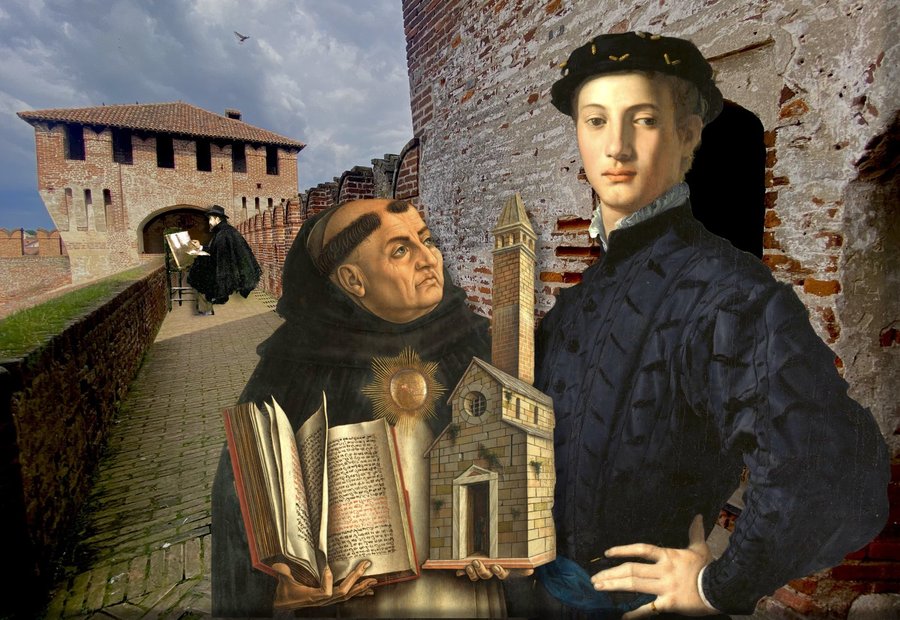
Catechesi
Catechesis names one of the oldest forms of teaching there is — instruction passed directly from one person to another, question and answer, without an intermediary. This collage pictures that intimacy literally: two faces pressed close, one resting against the other, framed by a grid of small black-and-white photographs that read like an archive of the lesson being handed down.
Whatever exact history compiled here, the composition insists that real teaching is rarely delivered from a lectern — it happens at this distance, between two people, more felt than announced.
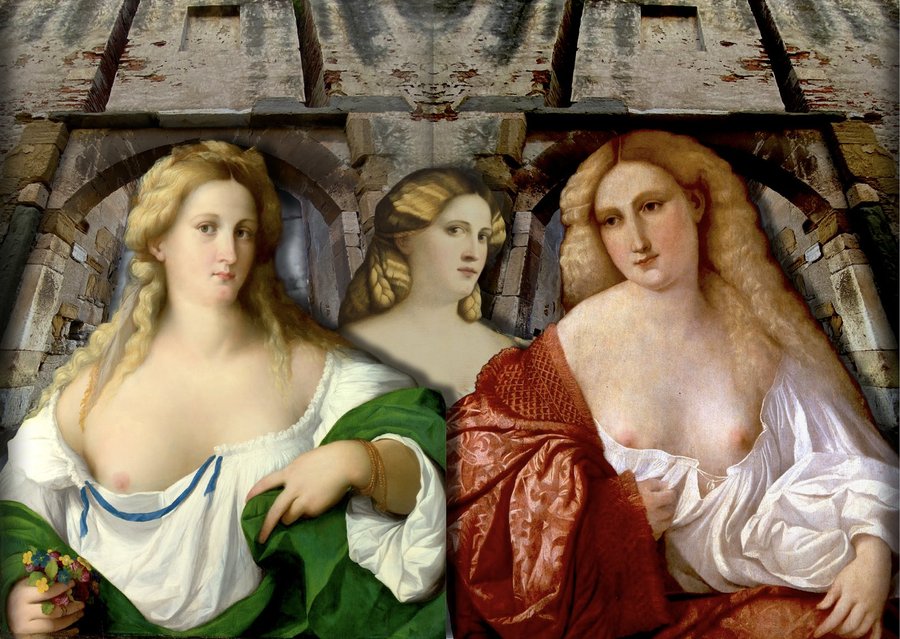
Cortigiane Italiane
The three-quarter gaze, the loosened bodice, the auburn hair styled with studied carelessness — this collage draws on the Venetian courtesan portrait, a genre Titian and Palma il Vecchio effectively popularized in the early 16th century, when Venice’s most celebrated courtesans sat for painters much as patrician wives did, blurring a line the rest of Europe policed far more strictly.
These were the city’s most visible independent women: educated, often wealthy, memorialized in paint with the same sensuous technique reserved elsewhere for goddesses. Three such portraits, gathered into one frame, read as a single composite of Venice at its most confidently unbothered.
Dame di Compagnia
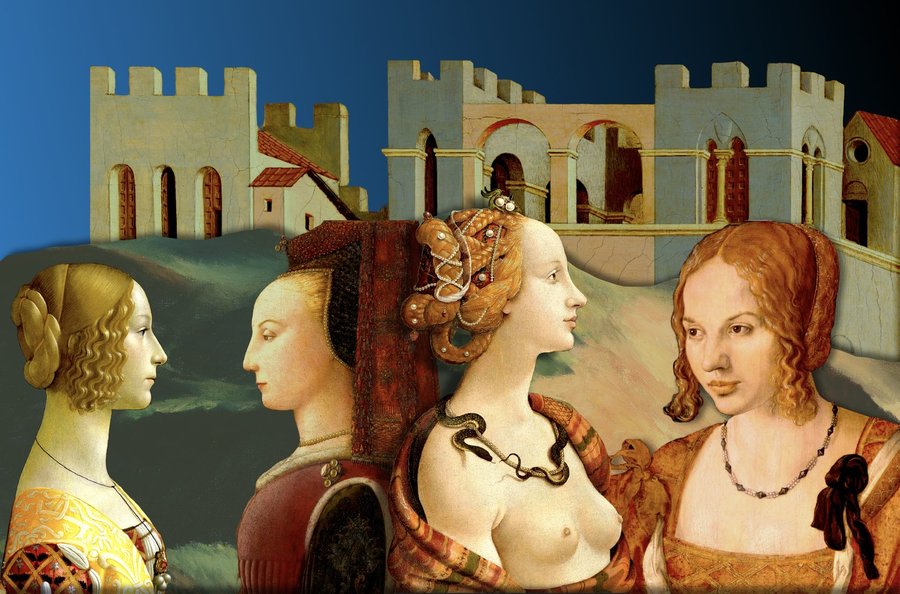
Three women in strict profile, the pose Florentine painters reserved for portraits meant to record status rather than likeness — jewelry, hairstyle, and dress doing as much of the talking as the face. Domenico Ghirlandaio’s Tornabuoni Chapel frescoes, painted in the 1480s for one of Florence’s wealthiest families, popularized exactly this kind of processional female portraiture: real women, sometimes named, inserted into religious narrative as living proof of a family’s standing.
A ‘lady-in-waiting’ in this world was rarely just an attendant — she was a public credential, dressed and painted accordingly.
De Lempicka never seen
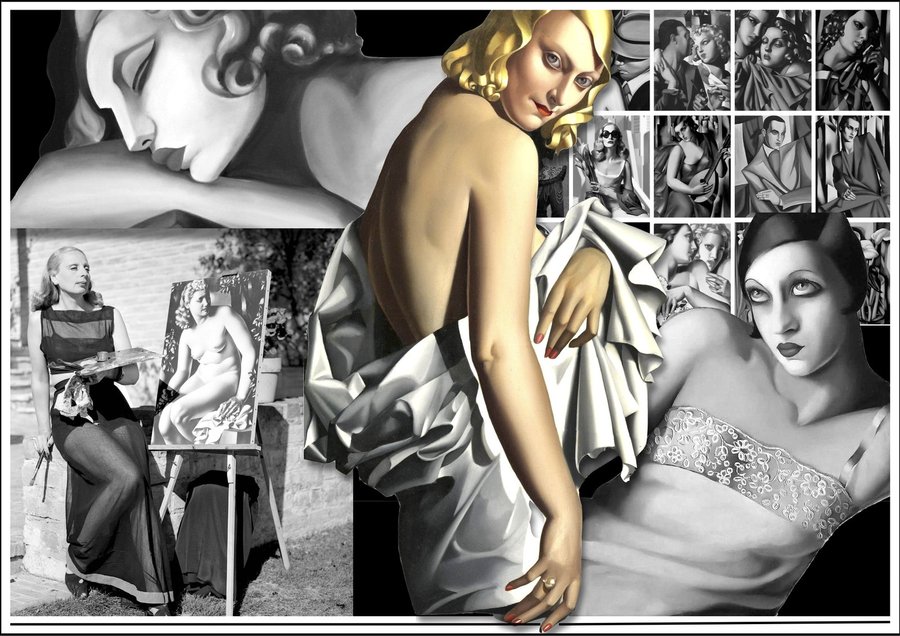
Tamara de Lempicka spent the 1920s and ’30s perfecting a style built for exactly this kind of reproduction: hard-edged Art Deco glamour, glossy satin rendered in sculptural folds, and women painted with the cool, appraising confidence of the era’s new independence. Polish-born, trained in Paris, and famous for painting the era’s aristocrats and her own social circle with equal unsentimental precision, Lempicka became one of Art Deco’s defining names.
Her work has been so heavily licensed and reproduced since its 1980s revival that ‘never seen’ is almost a dare — a reminder that behind the now-ubiquitous poster image sat a genuinely rigorous, geometrically disciplined painter.
Eclissi
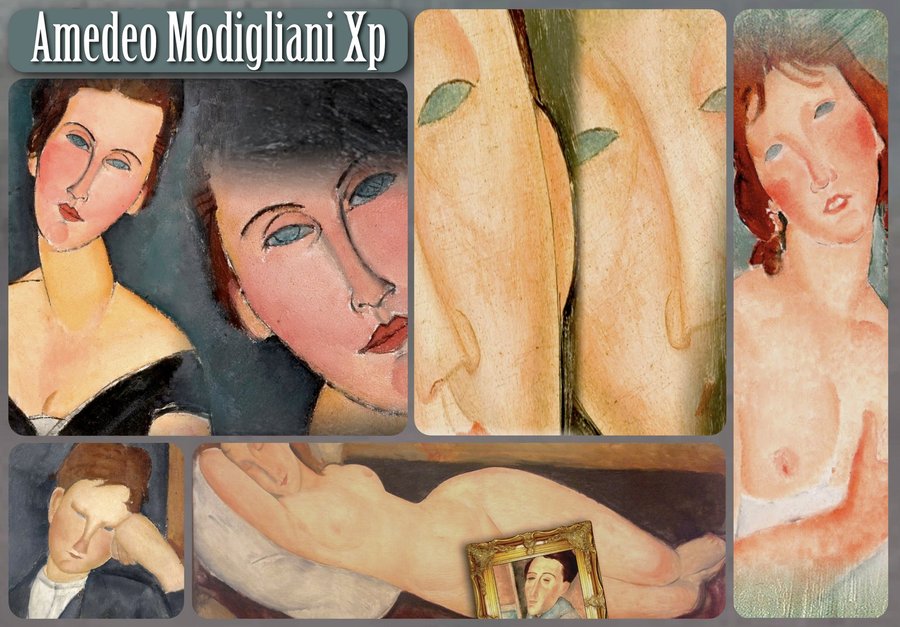
Sold as ‘Eclissi,’ this collage is built, fragment by fragment, from Amedeo Modigliani’s unmistakable visual language — the elongated necks, the almond eyes rendered as blank or barely-there, the warm ochre skin tones he perfected in Paris between roughly 1915 and his death in 1920. Modigliani painted almost exclusively portraits and nudes, refusing the era’s avant-garde detours into full abstraction in favor of a single, endlessly refined formula for the human face.
An eclipse, fittingly, is what happens when one recognizable shape passes directly in front of another — much like Modigliani’s own style eclipsing every sitter who passed through his studio.
Klimt Xp
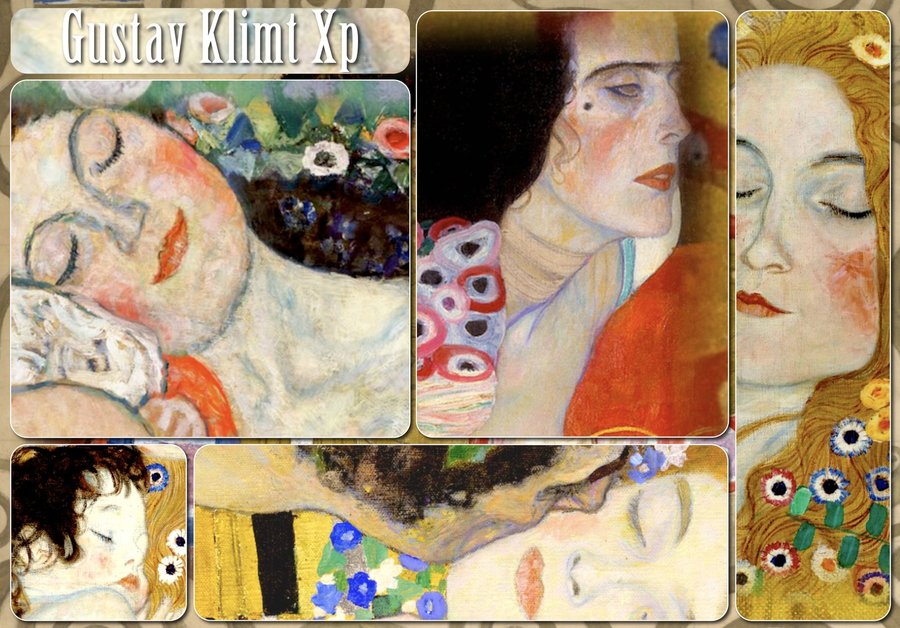
Gustav Klimt’s The Kiss (1907–08), the gold-leafed centerpiece of his so-called ‘Golden Phase,’ supplies the raw material here: Byzantine-mosaic patterning, a flattened gold ground, and faces rendered with tender realism against decoration that dissolves into pure ornament. Klimt led the Vienna Secession’s break from the Academy in 1897, and by the time of The Kiss he had fused Byzantine mosaic technique — studied firsthand on a trip to Ravenna — Japanese decorative flatness, and a very Viennese eroticism into something no one had painted quite that way before.
This piece isolates the fragments — face, gold, pattern — and lets them recombine into something newly ornamental.
Lussuriosi
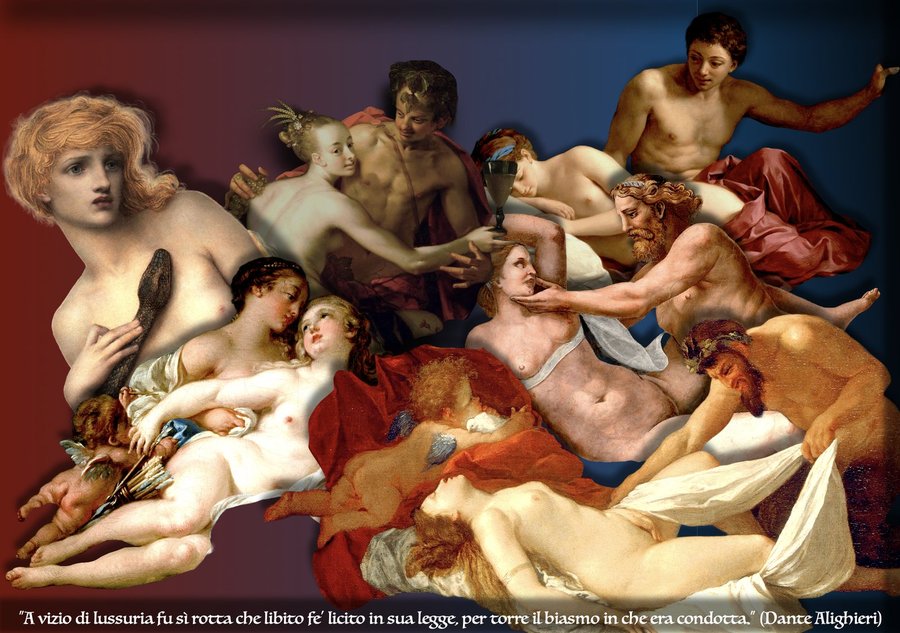
Lust — lussuria — has a long visual history as one of the seven deadly sins, traditionally pictured through excess: too many bodies, too much appetite, animals standing in for a desire left unchecked. This collage assembles its own version of that excess: a house raised improbably on stilts above a menagerie of big cats and hounds, cranes caught mid-flight, and reclining nude figures who seem entirely unbothered by the wildlife at their feet.
Where medieval and Renaissance moralists painted lust as a warning, this piece plays it as pure, sun-drenched abundance — desire staged without the sermon.
Modigliani 2
Despite its title, this second Modigliani-referencing piece in the Free Style catalog takes the opposite approach from ‘Eclissi’: rather than the painter’s recognizable figures, it dissolves into pure abstraction — a mirrored, kaleidoscopic pattern in cool blues warmed by fragments of coral and gold.
It’s a reminder of how differently the same reference point can be handled twice: one collage quotes Modigliani’s face directly, this one borrows only a loosely felt sense of the human form, breaking it down until representation gives way to rhythm and repetition.
Motociclisti Futuristi
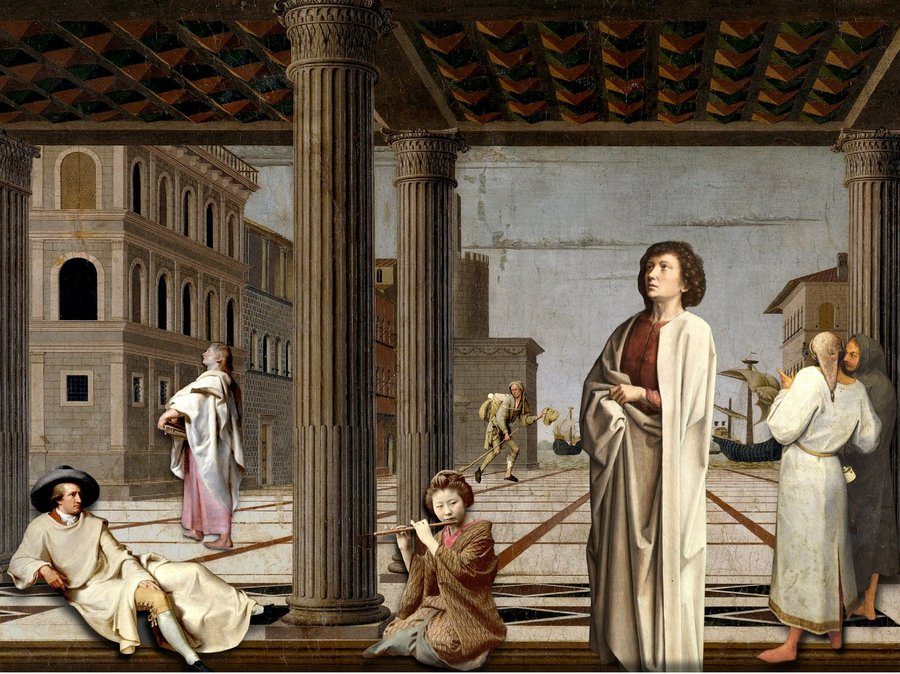
The title promises speed and machinery, but the image underneath tells a quieter story: a deep, carefully constructed architectural perspective — arcades, receding columns, robed figures caught in stillness — closer in spirit to the rigorous quattrocento perspective studies of painters like Piero della Francesca than to Futurism’s cult of velocity.
It’s a pointed mismatch that suits the Free Style catalog’s spirit: Italian Futurism, launched by Marinetti’s 1909 manifesto, defined itself explicitly against this kind of static, contemplative classicism. Paired under one title, the two become a small argument about what ‘motion’ in painting can mean — sometimes it’s a speeding wheel, sometimes it’s the eye moving down a very long colonnade.
Paradiso Terrestre
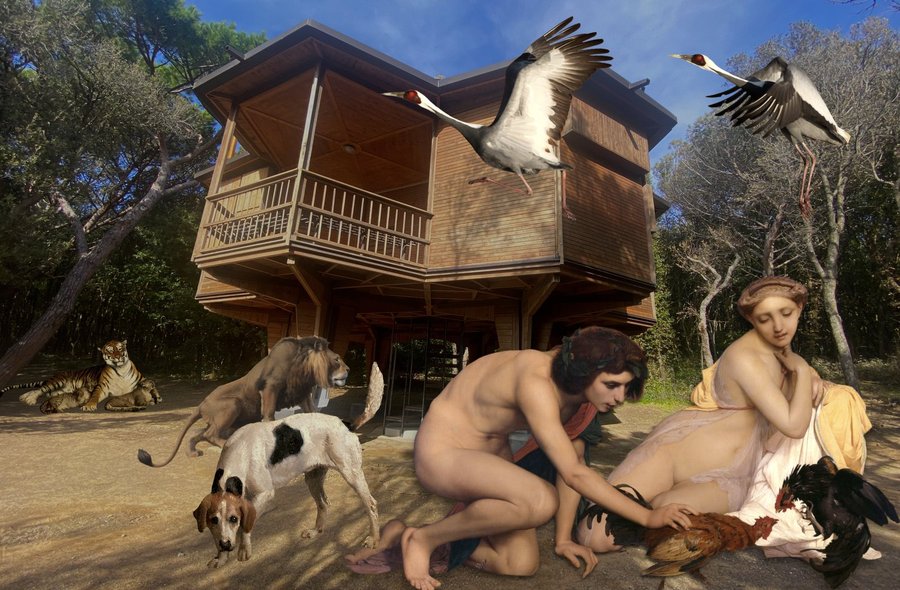
An earthly paradise imagined here as a working menagerie rather than an empty garden: a raised wooden pavilion, big cats lounging alongside hunting dogs, cranes in flight, and nude figures completely at ease among creatures that would ordinarily threaten them. The idea of paradise as a place where natural enmities dissolve — predator beside prey, human beside beast — runs from the biblical Peaceable Kingdom through centuries of garden-of-Eden imagery in Northern European painting.
This version trades Eden’s bare ground for a built structure, suggesting paradise isn’t wilderness so much as wilderness made comfortable.
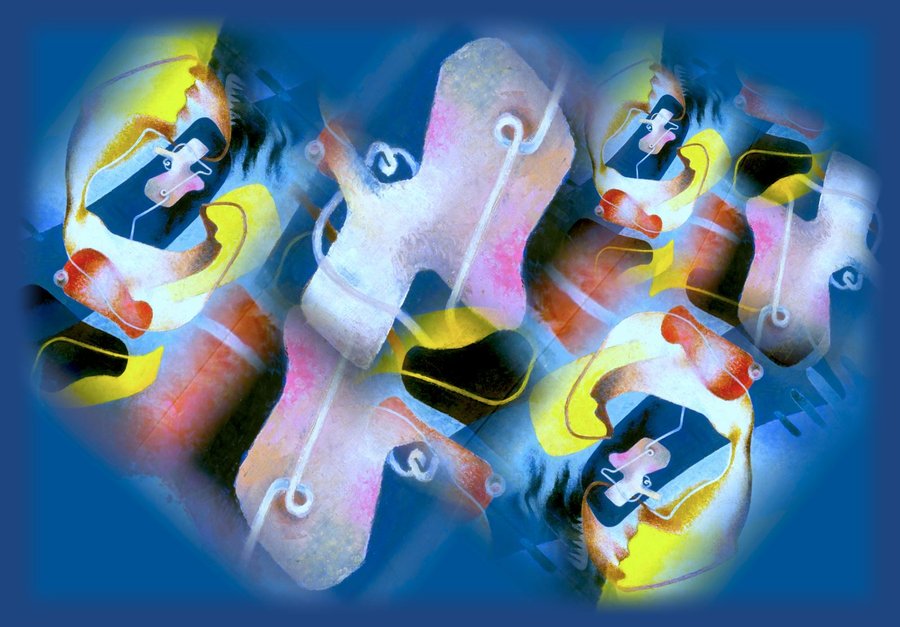
Prampolini Innovator
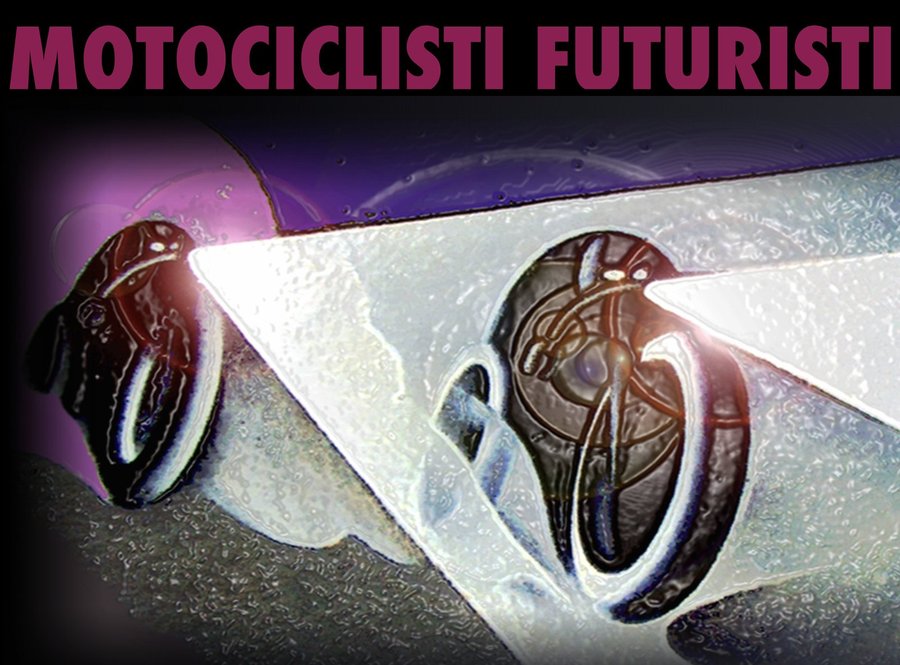
Enrico Prampolini (1894–1956) was one of Italian Futurism’s most restless figures — a painter, sculptor, and stage designer who moved through nearly every phase of the movement, from its founding manifestos to the 1930s aeropittura fascinated with flight and speed. This collage channels that same obsession with velocity and machinery directly: chrome, motion-blur, and the gleaming curve of a motorcycle wheel rendered as pure kinetic energy.
Where Futurism’s founders wrote manifestos about speed, painters like Prampolini spent careers actually figuring out how to paint it.
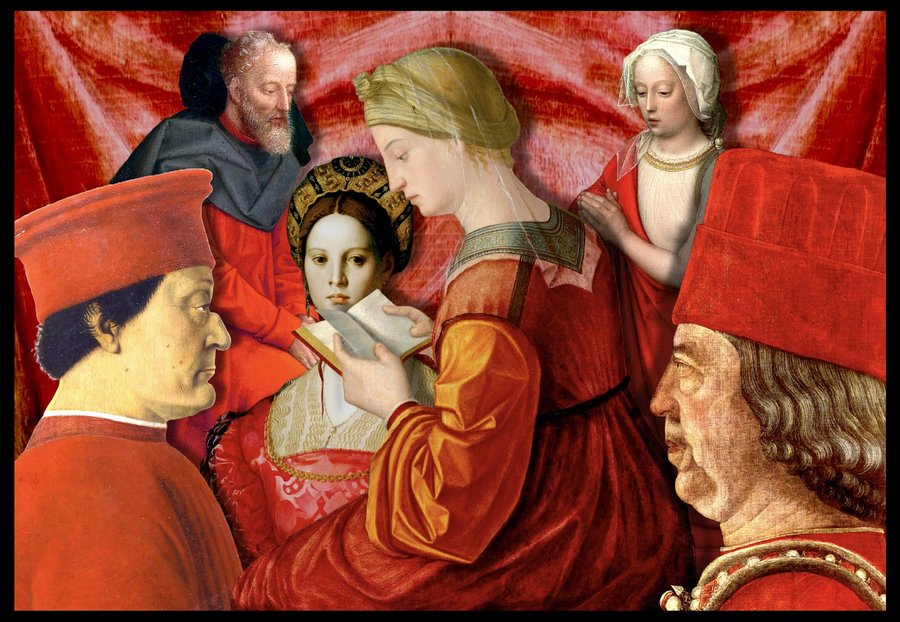
Red on Red
Every figure here wears some shade of red — cardinal’s scarlet, brocade crimson, the deep vermilion of a backdrop curtain — building a near-monochrome study out of a color the Renaissance associated with power, blood, and the Church in roughly equal measure. Red pigments were also among the period’s most expensive and unstable, meaning a painter’s willingness to use this much of it was itself a display of a patron’s wealth.
Layered together, the red-robed figures lose some of their individual identity and gain something else instead: a single, saturated register that reads as mood before it reads as narrative.
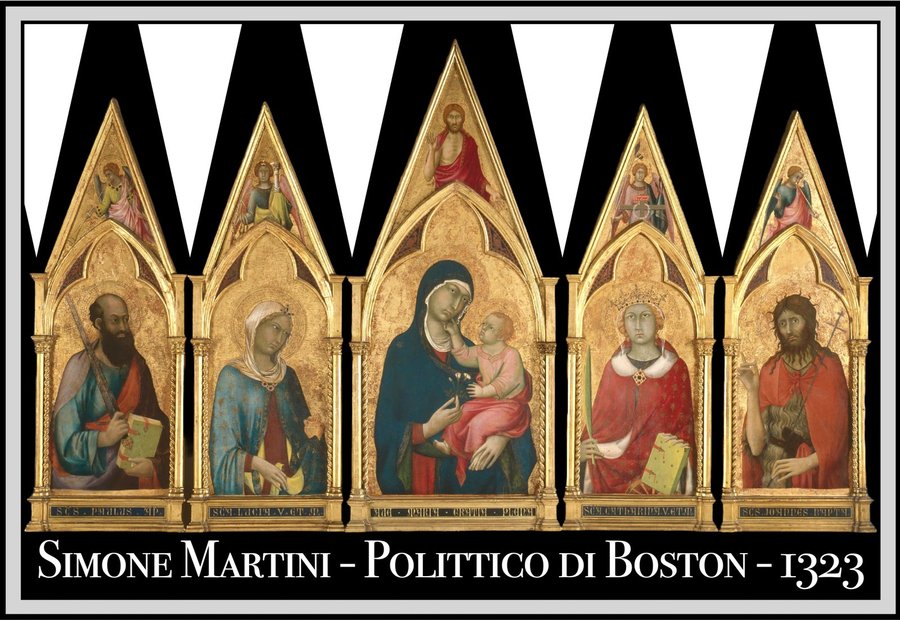
Simone Martini
Simone Martini (c. 1284–1344) was, alongside Duccio, the defining painter of the Sienese school’s Gothic elegance — an International Gothic style built on gold grounds, sinuous line, and a courtly grace that Florence’s more sculptural painters never quite matched. This collage centers on a polyptych, the multi-panel altarpiece format he and his workshop produced repeatedly for churches across Tuscany and, later, Avignon, where he spent his final years at the papal court.
The black-and-gold pointed arches, the isolated saints each granted their own architectural niche — it’s a format built for devotion, repurposed here as pure pattern.
Free Style is part of Blu Artworks' wider body of work — 577 original SIAE-registered collages in total. Explore the Free Style fa parte del lavoro più ampio di Blu Artworks — 577 collage originali registrati SIAE in totale. Esplora la Full GalleryGalleria Completa.