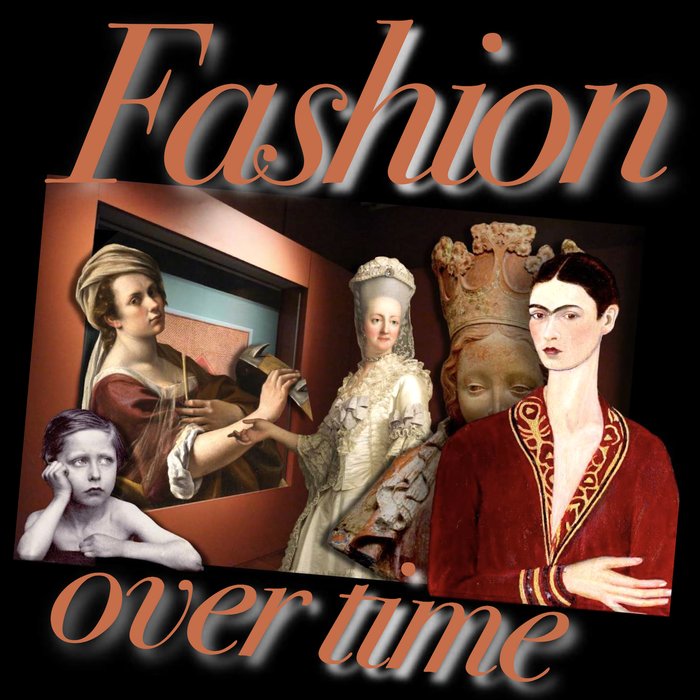
Fashion over Time
Fashion portraits across five centuries of artRitratti di moda lungo cinque secoli d’arte
19 collages in this catalogcollage in questo catalogo
Fashion portraits over time: the evolution of taste and the permanence of beauty in fashion and art, gathered from Renaissance nobility to the Belle Époque and beyond. This catalog regroups real portraits — by names ranging from Botticelli, Raphael and Michelangelo to Gainsborough, Boldini, Sargent and Sorolla — into new imagined scenes built around colour, hats, hairstyles and jewelry across the centuries. Each piece below is available as a high-resolution, 300dpi, royalty-free download for €39, ready for print at any size.Ritratti di moda lungo il corso del tempo: l’evoluzione del gusto e il permanere della bellezza nella moda e nell’arte, dalla nobiltà rinascimentale alla Belle Époque e oltre. Questo catalogo riunisce ritratti reali — di nomi che vanno da Botticelli, Raffaello e Michelangelo a Gainsborough, Boldini, Sargent e Sorolla — in nuove scene immaginate costruite attorno a colori, cappelli, acconciature e gioielli attraverso i secoli. Ogni opera qui sotto è disponibile in download ad alta risoluzione, 300dpi, royalty-free, a €39, pronta per la stampa in qualsiasi formato.
Download Catalog PDF →Scarica il Catalogo PDF → View All Collections →Vedi Tutte le Collezioni →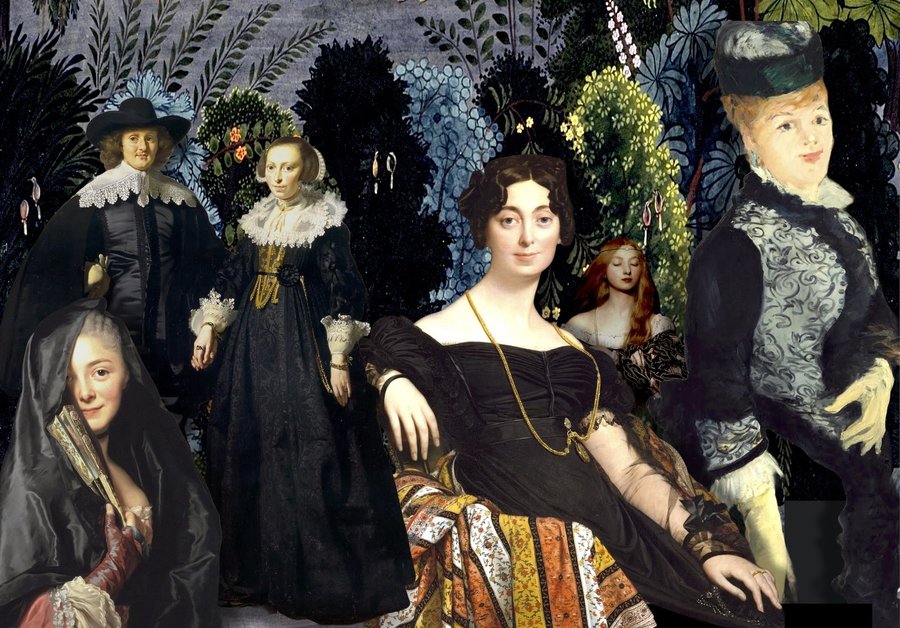
Black Outfits
Black clothing has always been synonymous with elegance. The woman at bottom left, fan in hand, is the celebrated “Lady with the Veil” — a 1768 portrait by Swedish painter Alexander Roslin, partially concealed behind black silk, dressed underneath in white lace and pink silk for a special occasion. The fan itself was once central to a lady’s toilette, an accessory refined women knew how to wield — sometimes even to send coded signals. The sitter was no stranger to art herself: she was Roslin’s wife, the French painter Marie-Suzanne Giroust.
L’abbigliamento nero è da sempre sinonimo di eleganza. La donna in basso a sinistra, ventaglio in mano, è la celebre “Dama col velo” — un ritratto del 1768 del pittore svedese Alexander Roslin, parzialmente celata dietro un velo di seta nera, vestita sotto in pizzo bianco e seta rosa per un’occasione speciale. Il ventaglio era un tempo centrale nella toilette femminile, un accessorio che le dame più raffinate sapevano maneggiare — talvolta persino per trasmettere segnali in codice. La modella non era estranea all’arte: era la moglie di Roslin, la pittrice francese Marie-Suzanne Giroust.
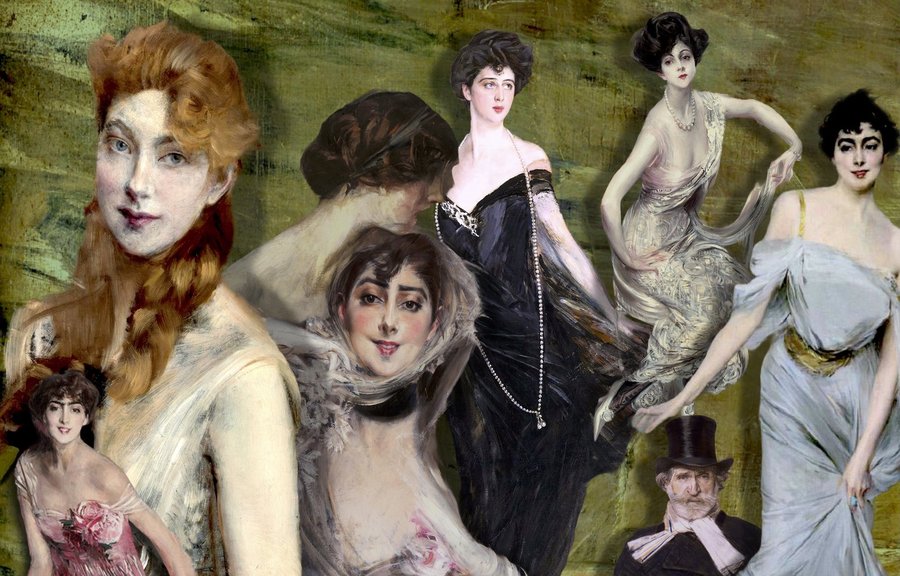
Boldini never seen
Giovanni Boldini was one of the leading Italian painters of the late 19th century, among those closest to Impressionism, celebrated across Florence, London and Paris — where he eventually settled — for portraits, mostly of women, painted with dynamism and psychological depth. At the centre of our collage, in an elegant low-cut black gown, is Franca Florio, one of the legendary figures of the Belle Époque. Baroness Franca had married Ignazio Florio, one of Italy’s wealthiest entrepreneurs; Boldini painted her in 1901, capturing her with lips slightly parted and a magnetic, distant gaze. Ignazio, finding the pose too sensual, sent the portrait back to Paris to be softened — the version now at the centre of our collage. Today the original hangs in the Museo della Moda e del Costume at Palazzo Pitti, Florence.
Giovanni Boldini fu uno dei principali pittori italiani di fine Ottocento, tra i più vicini all’Impressionismo, celebre a Firenze come a Londra e a Parigi — dove si stabilì definitivamente — per i suoi ritratti, soprattutto femminili, dipinti con dinamismo e profondità psicologica. Al centro del nostro collage, in un elegante abito nero scollato, è ritratta Franca Florio, una delle protagoniste leggendarie della Belle Époque. La baronessa Franca aveva sposato Ignazio Florio, uno dei più ricchi imprenditori italiani dell’epoca; Boldini la ritrasse nel 1901, con le labbra appena dischiuse e uno sguardo magnetico e distante. Ignazio, trovando la posa troppo sensuale, rispedì il ritratto a Parigi perché fosse ammorbidito — la versione oggi al centro del nostro collage. L’originale è conservato al Museo della Moda e del Costume di Palazzo Pitti, a Firenze.
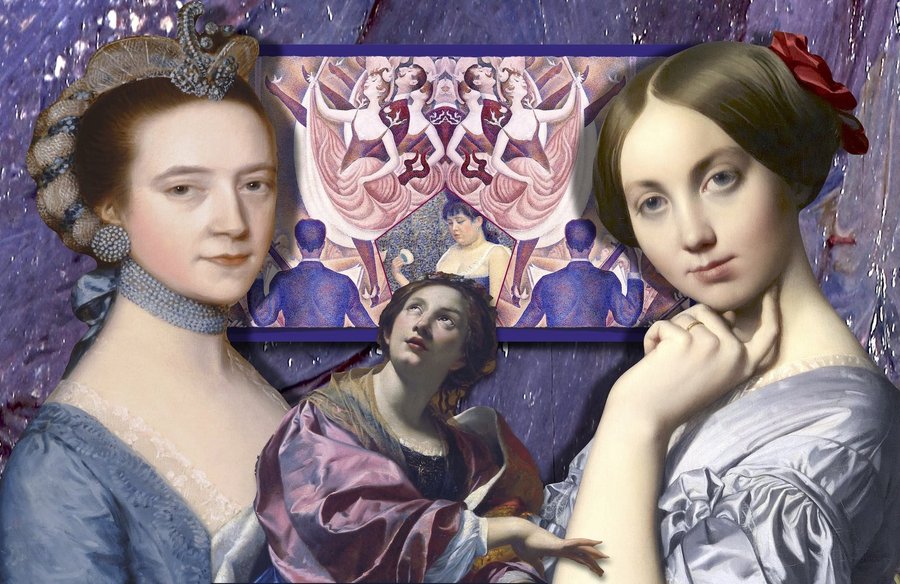
Dominant Purple
Purple, born of the union between red and blue, has always carried a dual nature — impulsiveness and calm, luxury and mystery — and has been prized since the Victorian era as the colour of nobility and imagination. In the collage, the three women dressed in purple, from left to right, are Lady Mostyn, painted by Englishman Thomas Gainsborough in 1759; an anonymous young woman depicted as Saint Cecilia in 1626 by the Frenchman Simon Vouet; and the Comtesse d’Haussonville, painted by Auguste Ingres in 1845.
Il viola, nato dall’unione di rosso e blu, ha sempre avuto una natura duplice — impulsività e calma, lusso e mistero — ed è stato apprezzato fin dall’epoca vittoriana come colore della nobiltà e della fantasia. Nel collage, le tre donne vestite di viola, da sinistra a destra, sono Lady Mostyn, ritratta dall’inglese Thomas Gainsborough nel 1759; una giovane anonima ritratta come Santa Cecilia nel 1626 dal francese Simon Vouet; e la Contessa d’Haussonville, dipinta da Auguste Ingres nel 1845.
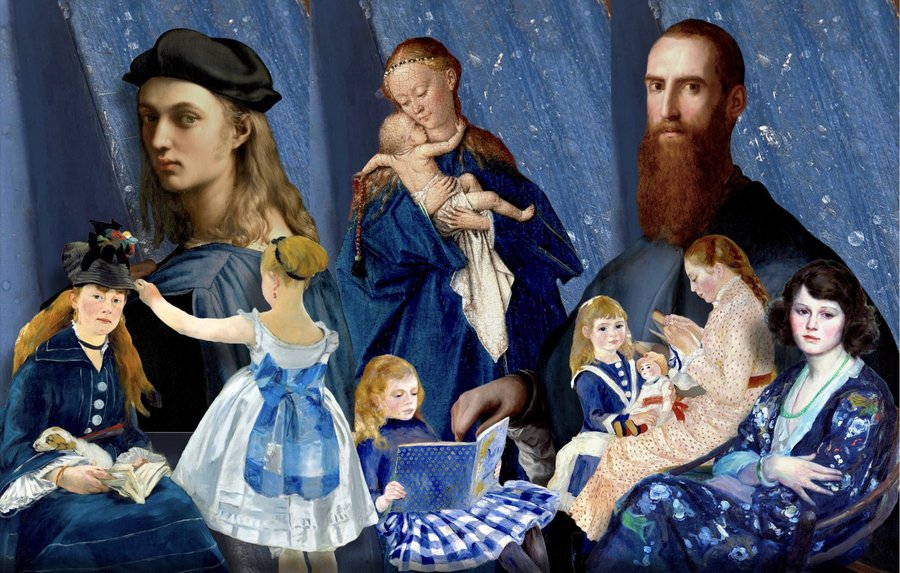
Dressed in Blue
Blue has always fascinated humanity, appearing in nature as sky and sea — symbols of infinity, depth, the unknown and the divine. Historically a costly, precious pigment reserved for the highest social classes, blue was the colour Michelangelo used to paint the skies of the Sistine Chapel and Giotto the starry vault of the Scrovegni Chapel in Padua. Our collage gathers portraits in blue from left to right and top to bottom: a young man in a hat by Raphael (1515); the Madonna and Child by Flemish painter Jan van Eyck (1439); a bearded man by Pontormo (1543); a woman with a book and a girl turned away, painted by Édouard Manet (1873); a mother in a light dress with her two daughters by Auguste Renoir (1884); and a final woman in blue, portrayed by American painter Guy Rose in 1910.
Il blu ha sempre affascinato l’umanità, poiché appare in natura come cielo e mare — simboli di infinito, profondità, ignoto e divino. Storicamente un pigmento prezioso e costoso, riservato alle classi sociali più elevate, il blu è il colore che Michelangelo usò per dipingere i cieli della Cappella Sistina e Giotto la volta stellata della Cappella degli Scrovegni a Padova. Il nostro collage raccoglie ritratti in blu, da sinistra a destra e dall’alto in basso: un giovane con cappello di Raffaello (1515); la Madonna con il Bambino del pittore fiammingo Jan van Eyck (1439); un uomo con la barba di Pontormo (1543); una donna con un libro e una ragazza di spalle, dipinte da Édouard Manet (1873); una madre in abito chiaro con le due figlie di Auguste Renoir (1884); e un’ultima donna in blu, ritratta dal pittore americano Guy Rose nel 1910.
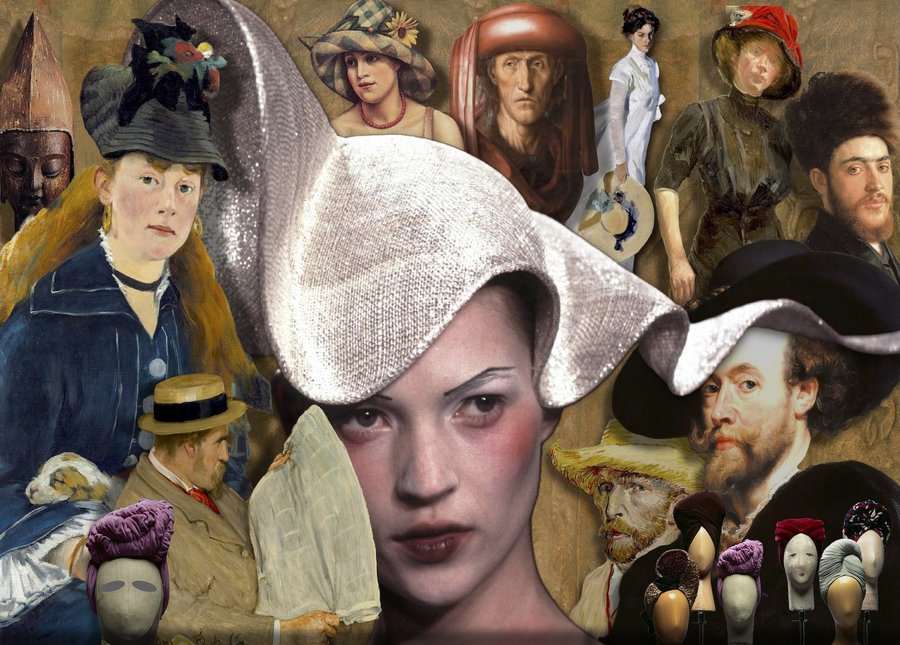
Fashion Hats
Used since antiquity, the hat has always been prized for its versatility — shelter from sun, frost or rain, a marker of social status from medieval crowns to ancient Egyptian headdresses, or simply an accessory of pure vanity. Made of straw, wool, felt or fur, paper, leather or bamboo, hats have taken on endless variations across an equally ancient history, covering the heads of emperors and beggars alike. Numerous 15th-century portraits show young men posing in a red cap, evidently a beloved colour of the age — even artists themselves, eager to socialise with wealthy patrons and mindful of their own standing, often wore a bright red hat for their self-portraits.
Utilizzato fin dall’antichità, il cappello è sempre stato apprezzato per la sua versatilità — riparo dal sole, dal gelo o dalla pioggia, simbolo di status sociale come le corone medievali o gli antichi copricapi egizi, o semplice accessorio di pura vanità. Di paglia, lana, feltro o pelliccia, carta, pelle o bambù, i copricapi hanno assunto infinite varianti in una storia quasi antica quanto il mondo, coprendo la testa di imperatori come di mendicanti. Numerosi ritratti del Quattrocento mostrano giovani in posa con un berretto rosso, colore evidentemente amato in quell’epoca — persino gli artisti, desiderosi di frequentare committenti facoltosi e attenti alla propria immagine, indossavano spesso un cappello rosso acceso nei loro autoritratti.
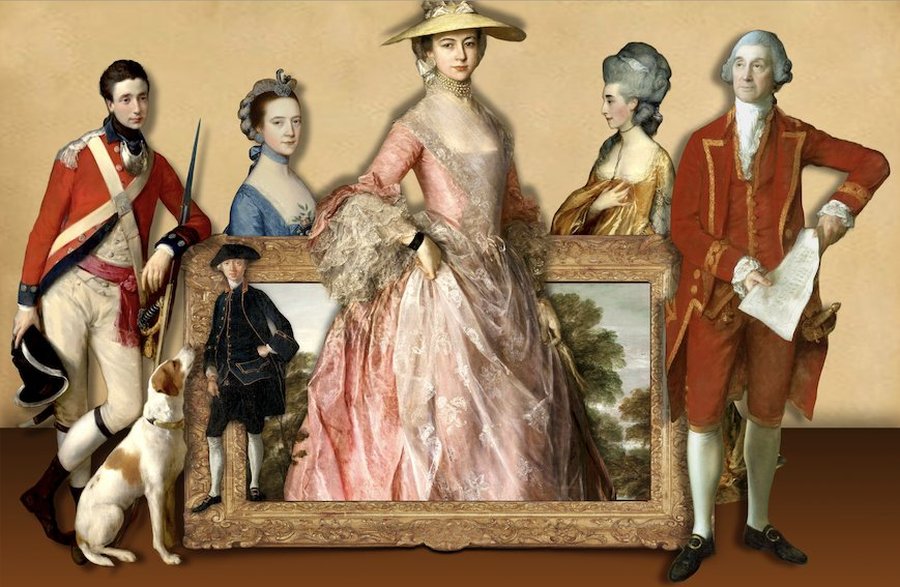
Gainsborough never seen
Thomas Gainsborough (1727–1788) was an English painter, active chiefly as a portraitist and landscape artist. At the centre of our collage stands Countess Mary Howe, in one of Gainsborough’s most striking and iconic female portraits, dated 1764 — proud stance, hand on hip, looking directly out of the canvas as if interrupted mid-step. Gainsborough believed that contemporary dress helped capture a sitter’s true likeness, and here the countess wears the most fashionable gown of the 1760s: a pink silk taffeta “robe à l’Anglaise”, finished with a sheer lace-edged fichu, an embroidered silk-gauze apron, cascading ruffled “engageantes” at the sleeves, and a broad-brimmed straw “Leghorn” hat imported from Livorno.
Thomas Gainsborough (1727–1788) fu un pittore inglese, attivo principalmente come ritrattista e paesaggista. Al centro del nostro collage è raffigurata la contessa Mary Howe, in uno dei ritratti femminili più sorprendenti e iconici di Gainsborough, datato 1764 — atteggiamento fiero, mano sul fianco, sguardo che esce direttamente dalla tela come se fosse stata interrotta a metà passo. Gainsborough credeva che l’abito contemporaneo aiutasse a catturare la vera somiglianza della modella, e qui la contessa indossa l’abito più alla moda degli anni 1760: una “Robe à l’Anglaise” in taffetà di seta rosa, completata da un fichu trasparente bordato di pizzo, un grembiule ricamato in garza di seta, maniche con cascate di pizzo arricciato (“engageantes”) e un ampio cappello di paglia “Livorno”, importato dalla città toscana.
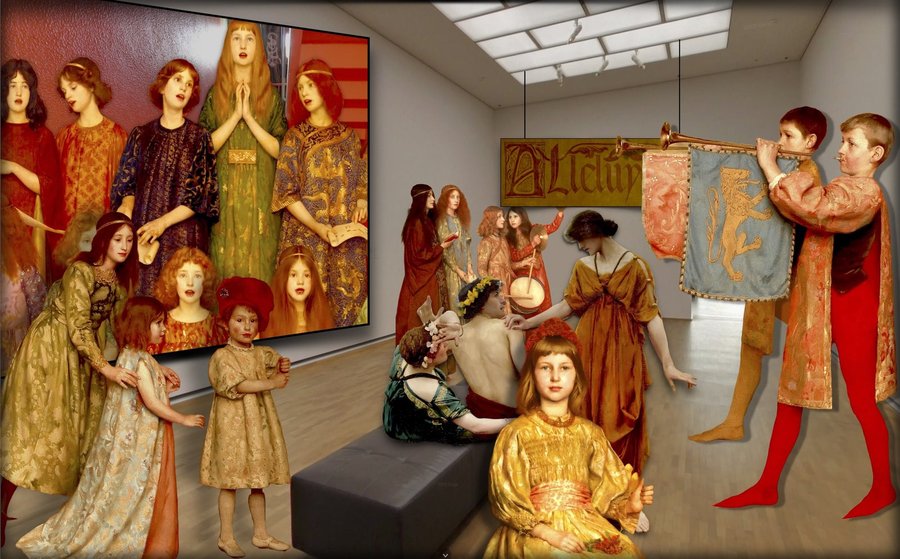
Gotch never seen
Thomas Cooper Gotch (1854–1931), the English painter behind several details in our collage, found considerable success with his portraits, but became especially popular for his depictions of children in medieval-style dress and timeless settings, often using his own daughter Phyllis as a model. Childhood clothing has its own long history: elaborately dressed in the Renaissance to mirror parental wealth, made softer and more functional during the Enlightenment with fabrics like cotton, then transformed by the Industrial Revolution, which put affordable clothing within reach of far more families. The 20th century brought overalls and sportswear designed for free movement and play, and today’s approach balances practicality with individual expression, mindful of sustainability and the ethics of production.
Thomas Cooper Gotch (1854–1931), il pittore inglese da cui sono tratti alcuni dettagli del nostro collage, ottenne un notevole successo con i suoi ritratti, ma divenne particolarmente popolare per le sue raffigurazioni di bambini in abiti in stile medievale, in ambientazioni senza tempo, spesso usando come modella la propria figlia Phyllis. L’abbigliamento infantile ha una storia lunga a sé: elaborato nel Rinascimento per riflettere la ricchezza dei genitori, reso più morbido e funzionale durante l’Illuminismo grazie a tessuti come il cotone, poi trasformato dalla Rivoluzione Industriale, che rese l’abbigliamento accessibile a un pubblico più ampio. Il XX secolo portò salopette e capi sportivi pensati per il gioco e il movimento libero, e l’approccio di oggi bilancia praticità ed espressione individuale, con crescente attenzione alla sostenibilità e all’etica della produzione.
Hairstyle
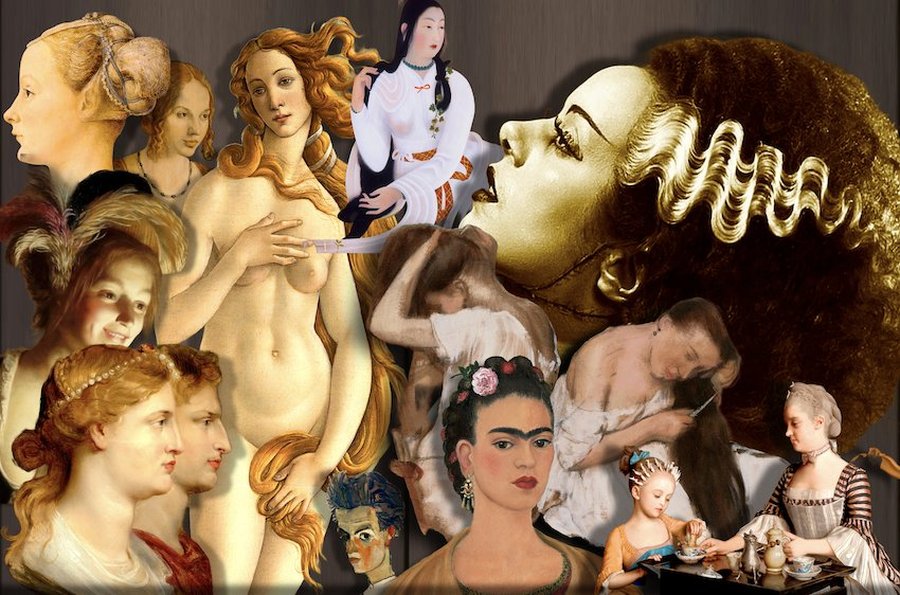
Art history offers many ways of shaping women’s hairstyles into portraiture. Our collage gathers a few, from top to bottom and left to right: the profile of the “Young Woman” looking left, a Florentine noblewoman painted by Pollaiolo in 1470; beside her, partly hidden, another young woman — this time Venetian — portrayed by German artist Albrecht Dürer in 1505; at the centre, the famous nude Venus of 1484 by Florentine painter Sandro Botticelli, considered by many the most beautiful female portrait of all time; and to Venus’s right, another celebrated beauty from Japanese history, Princess Konohanasakuya, painted by Insh&omacron; D&omacron;moto in 1929.
La storia dell’arte offre molti modi di dare forma alle acconciature femminili nella ritrattistica. Il nostro collage ne raccoglie alcuni, dall’alto in basso e da sinistra a destra: il profilo della “Giovane Donna” che guarda a sinistra, un’aristocratica fiorentina dipinta dal Pollaiolo nel 1470; accanto a lei, un po’ nascosta, un’altra giovane donna — questa volta veneziana — ritratta dall’artista tedesco Albrecht Dürer nel 1505; al centro, la celebre Venere nuda del 1484, dipinta dal fiorentino Sandro Botticelli, considerata da molti il più bel ritratto femminile di tutti i tempi; e a destra di Venere, un’altra bellezza celebrata dalla storia giapponese, la principessa Konohanasakuya, dipinta da Insh&omacron; D&omacron;moto nel 1929.
Lawrence never seen
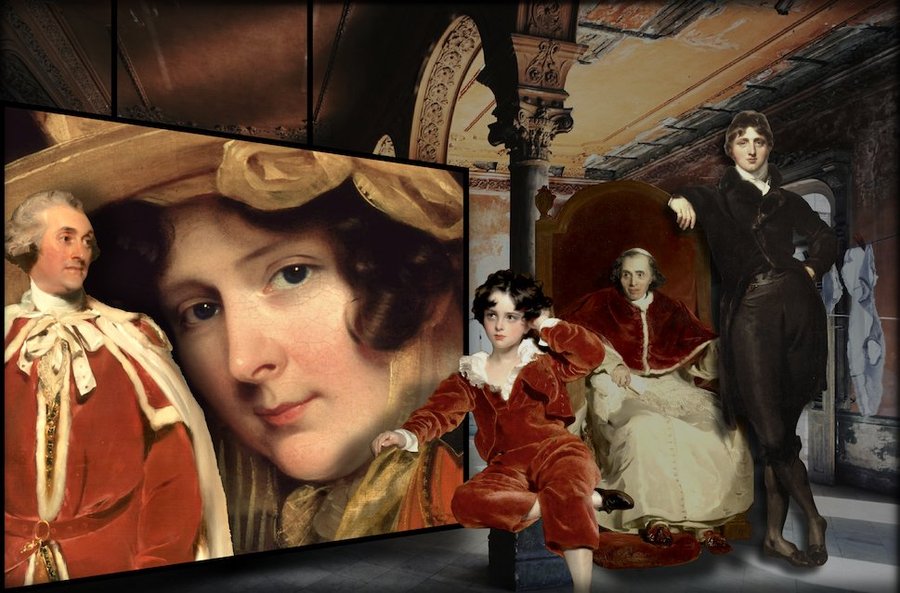
Sir Thomas Lawrence (1769–1830) dominated the art of portraiture in England for four decades, accepting commissions for the future George IV from 1814 and, in 1818, undertaking an important royal commission to paint the European leaders gathered at Aachen following Napoleon’s defeat. Lawrence later travelled to Rome, where he painted Pope Pius VII — seen enthroned in our collage — a canvas now kept at Windsor alongside many of his other portraits. At the centre, “The Red Boy” is regarded as one of Lawrence’s masterpieces and, as a mark of its enduring popularity, became the first painting reproduced on a British postage stamp, in 1967. To the left, the Duke of Portland looks on, dressed in a soft, strokeable velvet suit iconic in the history of art.
Sir Thomas Lawrence (1769–1830) dominò l’arte del ritratto in Inghilterra per quarant’anni, accettando commissioni per il futuro Giorgio IV a partire dal 1814 e, nel 1818, un’importante commissione reale per ritrarre i leader europei riuniti ad Aquisgrana dopo la disfatta di Napoleone. Lawrence si recò poi a Roma, dove dipinse Papa Pio VII — che vediamo seduto sul trono nel nostro collage — un dipinto oggi conservato a Windsor insieme a molti suoi altri ritratti. Al centro, “The Red Boy” è considerato uno dei capolavori di Lawrence e, segno della sua duratura popolarità, divenne nel 1967 il primo dipinto riprodotto su un francobollo britannico. A sinistra, il Duca di Portland osserva la scena, vestito in un abito di velluto morbido e iconico nella storia dell’arte.
Lotto Tribute
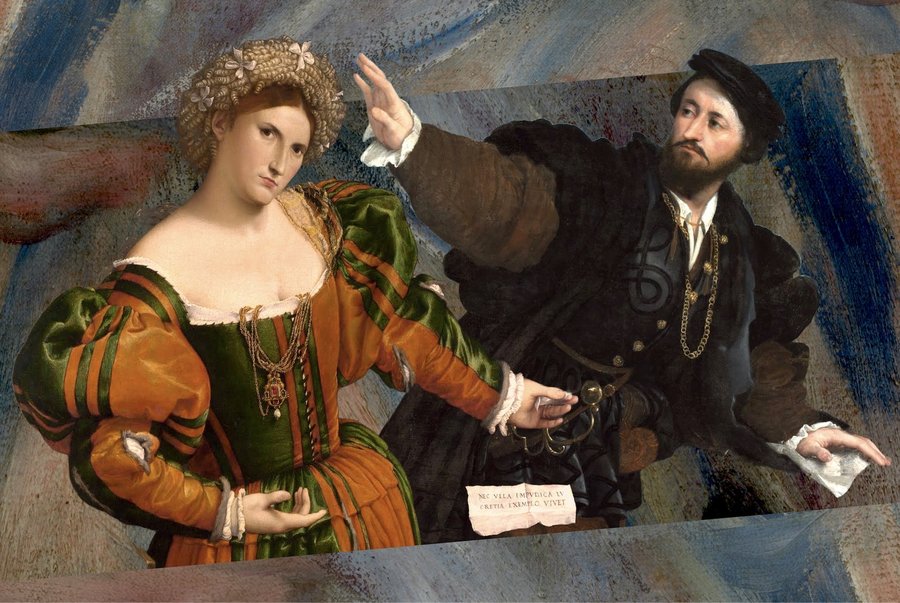
Lorenzo Lotto (1480–1557), a restless and itinerant Venetian painter, found no place in his own city because of a style too innovative, original and anti-classical for the taste dictated elsewhere by Titian in the Veneto, and by Raphael and Michelangelo in central Italy. He was thus repeatedly forced to seek work in smaller provincial centres, where competition was lighter and his voice could speak more freely. Our tribute also highlights an Italian excellence: the art of luxury textiles, in which gold or silver thread was worked across velvet and raised with a hook to create a texture shimmering with metal — an artisan economy whose exclusive fabrics were exported across Europe.
Lorenzo Lotto (1480–1557), pittore veneziano inquieto e girovago, non trovò spazio nella sua città natale a causa di uno stile troppo innovativo, originale e anticonformista per i gusti dettati altrove da Tiziano nel Veneto, e da Raffaello e Michelangelo nell’Italia centrale. Fu quindi più volte costretto a cercare lavoro nei centri periferici, dove la concorrenza era minore e la sua voce poteva esprimersi più liberamente. Il nostro omaggio celebra anche un’eccellenza italiana: l’arte dei tessuti di lusso, in cui un filo d’oro o d’argento veniva lavorato sulla superficie del velluto e rialzato con un gancio per creare una trama scintillante di metallo — un’economia artigiana le cui stoffe esclusive venivano esportate in tutta Europa.
Macke never seen
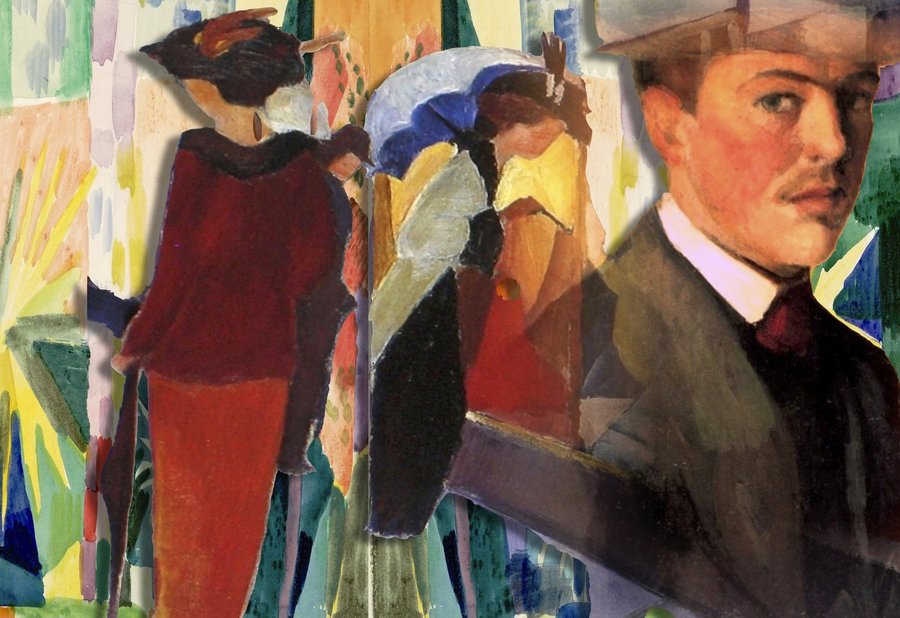
Despite his untimely death in the First World War in 1914, at just 27, August Macke’s impact on modern art remained significant — his mastery of colour and his exploration of new forms of expression influencing generations of artists who followed. Alongside the Der Blaue Reiter movement, Macke experimented with abstraction, though much of his work stayed figurative. He appears on the right of our collage in his 1909 self-portrait; his fascination with shop windows inspired a series of paintings, described by one critic as “a sort of threshold of desire” linked to the viewer’s own tastes and moods — distracting, entertaining, and quietly arousing curiosity.
Nonostante la sua morte prematura durante la Prima Guerra Mondiale nel 1914, a soli 27 anni, l’impatto di August Macke sull’arte moderna rimase significativo — la sua padronanza del colore e la sua esplorazione di nuove forme espressive influenzarono le generazioni successive di artisti. Insieme al movimento Der Blaue Reiter, Macke sperimentò l’astrazione, sebbene gran parte della sua opera restasse figurativa. Compare a destra nel nostro collage nel suo autoritratto del 1909; la sua fascinazione per le vetrine dei negozi ispirò una serie di dipinti, descritti da un critico come “una sorta di soglia del desiderio” legata ai gusti e agli stati d’animo di chi guarda — capace di distrarre, divertire e suscitare curiosità.
Mengs never seen
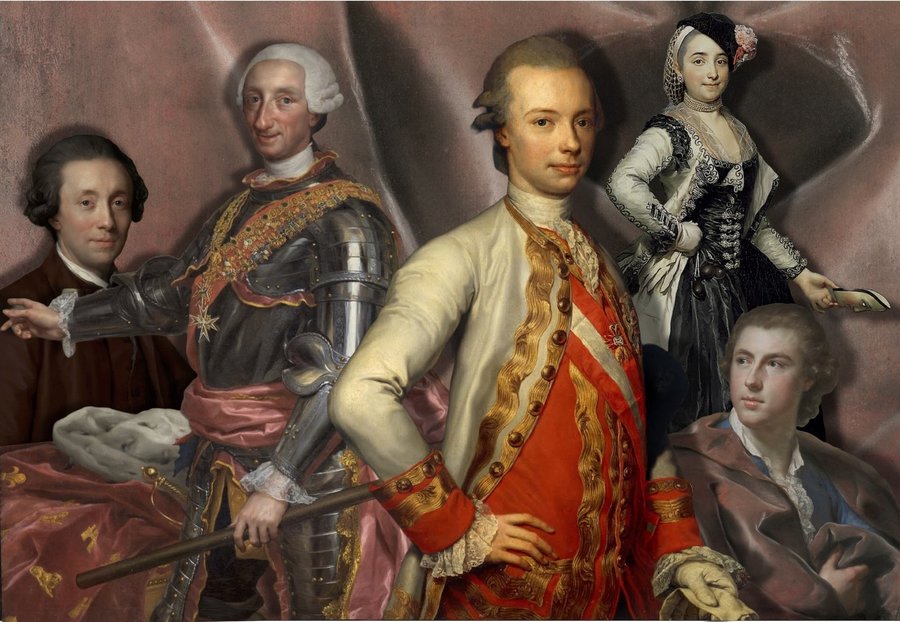
Like many 18th-century artists, German painter Anton Raphael Mengs (1728–1779) developed his masterful technique by studying works of antiquity, the Renaissance and the Baroque, beginning to study art seriously at just twelve, on a trip to Rome with his father. He returned there in 1746, converted to Catholicism, married a young Roman woman, and spent the rest of his life in Italy painting altarpieces, frescoes and portraits of young English aristocrats on the Grand Tour, to whom he also acted as a dealer in art and antiquities.
Come molti artisti del Settecento, il pittore tedesco Anton Raphael Mengs (1728–1779) sviluppò le sue magistrali capacità pittoriche studiando opere dell’antichità, del Rinascimento e del Barocco, iniziando a studiare seriamente l’arte a soli dodici anni, durante un viaggio a Roma con il padre. Vi tornò nel 1746, si convertì al cattolicesimo, sposò una giovane donna romana e trascorse il resto della sua vita in Italia dipingendo pale d’altare, affreschi e ritratti di giovani aristocratici inglesi in Grand Tour, ai quali si propose anche come mercante d’arte e di antichità.
Renaissance Men
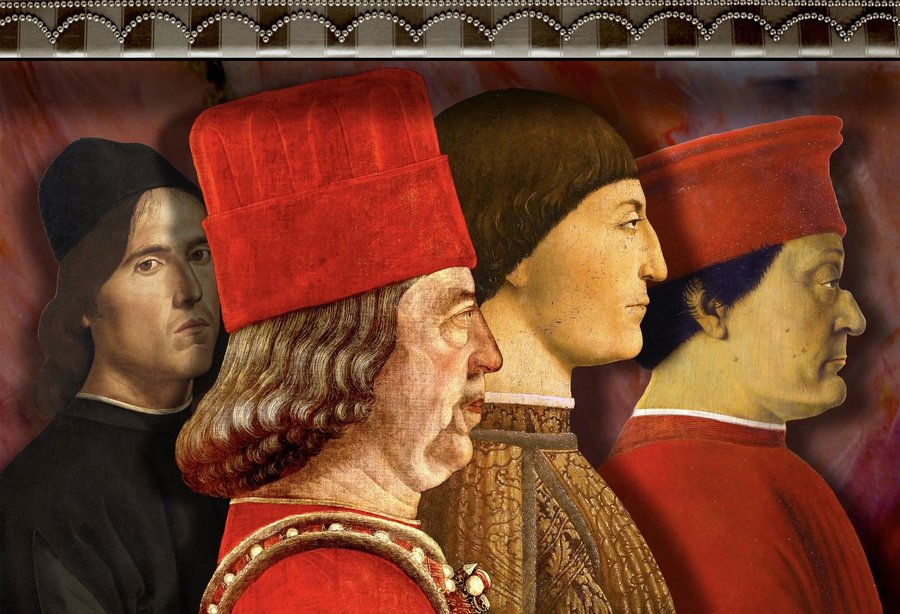
The Renaissance man was a personality suited to a world in turmoil: vigorous yet unstable, prone to excess in anger, tears or violence, yet driven by insatiable curiosity, boundless intellectual appetite, and an incredible capacity for work — sometimes preferring luxury to good taste, capable of both unheard-of crimes and heroic sacrifice. Artist or patron, he admired beauty above all: fine houses, elaborate furnishings and rich clothing, gardens, and the music woven into his daily life. From the left, our collage gathers four famous Italians: the painter Lorenzo di Credi, portrayed by Pietro Vannucci (known as Il Perugino); Borso d’Este, Marquis of Ferrara, painted by Baldassarre da Reggio; and Sigismondo Malatesta, Lord of Rimini, captured by Piero della Francesca, who also painted the final portrait, Federico da Montefeltro, Duke of Urbino. Renaissance menswear, spanning roughly the 14th to 17th centuries, introduced precious fabrics like brocade, velvet and fur; colour carried social meaning, with deep red reserved for nobles while commoners were barred from scarlet or green, and dark grey favoured for its resistance to stains. Shoes had flat, broad toes with low uppers and ankle ties, made of leather, velvet or silk and often decorated with embroidery and gems; by the late 16th century, men had also begun wearing earrings.
L’uomo rinascimentale aveva una personalità adatta a un mondo in subbuglio: vigoroso ma instabile, pronto a lasciarsi sopraffare da rabbia, lacrime o violenza fino all’eccesso, ma animato da una curiosità insaziabile, un appetito intellettuale illimitato e un’incredibile capacità di lavoro — talvolta preferendo il lusso al buon gusto, capace sia di crimini inauditi che di sacrifici eroici. Artista o mecenate, ammirava soprattutto la bellezza: case eleganti, mobili elaborati e abiti ricchi, giardini e la musica che faceva parte della sua vita quotidiana. Da sinistra, il nostro collage raccoglie quattro italiani celebri: il pittore Lorenzo di Credi, ritratto da Pietro Vannucci detto il Perugino; Borso d’Este, marchese di Ferrara, ritratto da Baldassarre da Reggio; e Sigismondo Malatesta, signore di Rimini, ritratto da Piero della Francesca, autore anche dell’ultimo ritratto, Federico da Montefeltro, duca di Urbino. L’abbigliamento maschile rinascimentale, tra il XIV e il XVII secolo circa, introdusse tessuti preziosi come broccato, velluto e pellicce; il colore aveva un significato sociale importante, con il rosso cupo riservato ai nobili mentre il popolo non poteva indossare scarlatto o verde, e il grigio scuro apprezzato per la sua resistenza alle macchie. Le scarpe avevano punta piatta e larga, tomaie basse e lacci alle caviglie, realizzate in pelle, velluto o seta e spesso decorate con ricami e pietre preziose; sul finire del XVI secolo, anche gli uomini iniziarono a indossare orecchini.
Renaissance Women
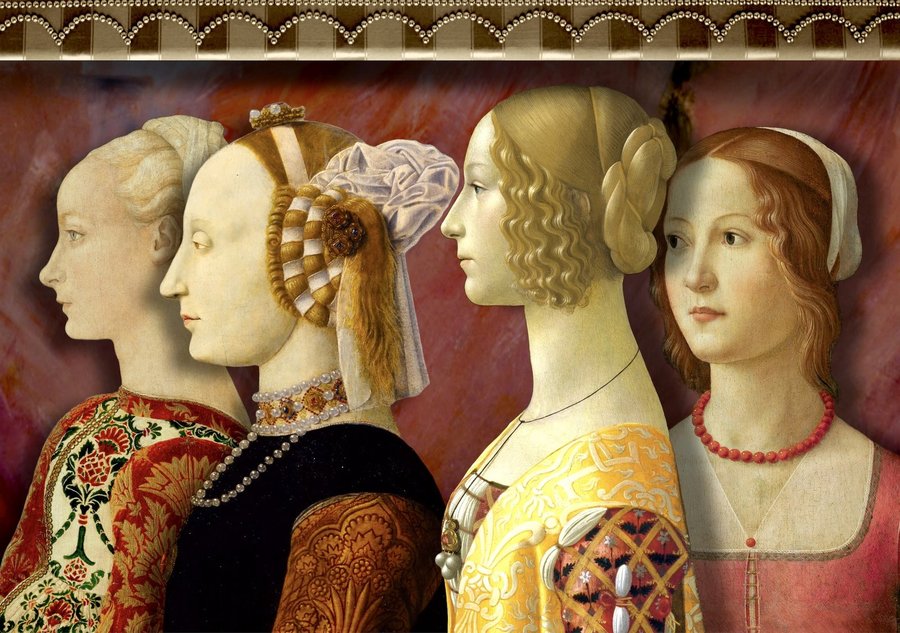
The Renaissance brought progress for women of the middle and upper classes, though for the vast majority life remained hard, with few paths to advancement in a patriarchal society. Female artists fared somewhat better, able to earn a living through their work, and by the 16th century began — slowly — to gain wider acceptance. Courtesans, too, could achieve a measure of independence, though often dismissed unfairly as high-class prostitutes; in truth many were highly educated women who kept company with artists, intellectuals and scientists. From the left, our collage gathers four famous Italian women: the “Berlin Dame”, painted by Piero del Pollaiolo; Battista Sforza, Duchess of Urbino, portrayed by Piero della Francesca; Giovanna Tornabuoni, a Florentine noblewoman, painted by Domenico Ghirlandaio, who also painted the final portrait, Ginevra Cavalcanti, wife of Lorenzo de’ Medici. Women’s fashion of the period reached unprecedented refinement: dresses of silk damask and velvet trimmed with gold or silver thread, lace and jewels; bodices tightened with stiff stays to slim the waist; full, bell-shaped skirts supported by padded petticoats; deep, square necklines to show off neck and bust; and sleeves ranging from fitted to puffed.
Il Rinascimento portò progressi per le donne della classe media e alta, sebbene per la stragrande maggioranza la vita restasse difficile, con poche possibilità di miglioramento in una società patriarcale. Le artiste ebbero prospettive migliori, potendo guadagnarsi da vivere con il proprio lavoro, e nel XVI secolo iniziarono — lentamente — a essere più accettate. Anche le cortigiane potevano conquistare una certa indipendenza, sebbene spesso ingiustamente descritte come prostitute di alta classe; in realtà molte erano donne altamente istruite, che frequentavano artisti, intellettuali e scienziati. Da sinistra, il nostro collage raccoglie quattro celebri donne italiane: la “Dama di Berlino”, ritratta da Piero del Pollaiolo; Battista Sforza, duchessa di Urbino, ritratta da Piero della Francesca; Giovanna Tornabuoni, nobildonna fiorentina, ritratta da Domenico Ghirlandaio, autore anche dell’ultimo ritratto, Ginevra Cavalcanti, moglie di Lorenzo de’ Medici. La moda femminile dell’epoca raggiunse una raffinatezza senza precedenti: abiti in damasco di seta e velluto decorati con fili d’oro o d’argento, pizzi e gioielli; corpetti stretti da rigidi busti per assottigliare la vita; gonne ampie e a campana sostenute da sottogonne imbottite; scollature profonde e squadrate per valorizzare collo e décolleté; e maniche che variavano da aderenti a sbuffanti.
Rococo Style
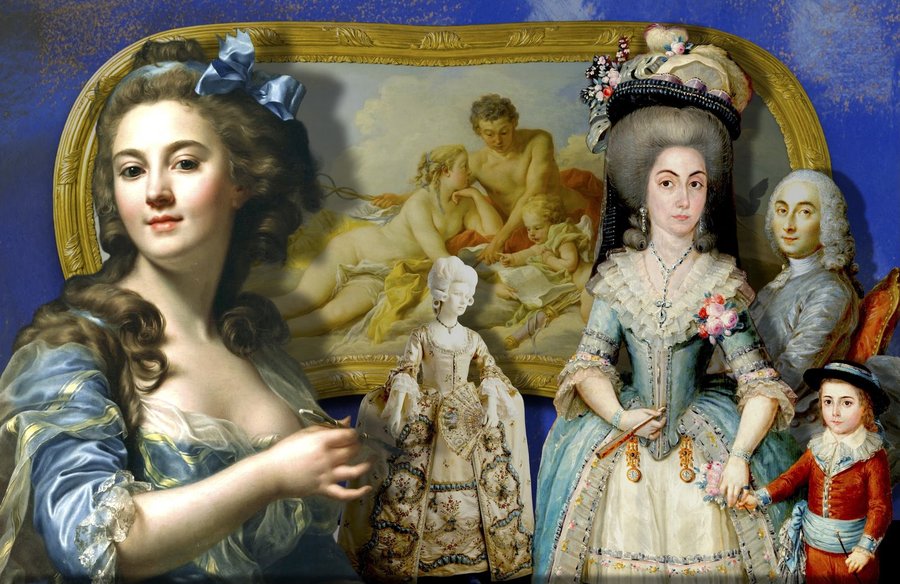
Rococo cannot be reduced to a simple artistic movement — it marks a whole historical period, beginning in 1715 with the death of Louis XIV, the Sun King, and stretching to the Revolution of 1789. Fashion followed suit: garments grew simpler and less ostentatious, yet a new idea of elegance took hold, built on subtle detail, pastel tones and exotic touches. In the foreground of our collage, at the left, is the self-portrait of French artist Marie-Gabrielle Capet, painted in 1783 at just 22, wearing a boldly low-cut blue satin gown fashionable in her time. The era’s women’s fashion is embodied by Louis XV’s most famous mistress, Madame de Pompadour — spotted, so the story goes, driving her own open carriage in blue velvet — who rose from bourgeois charm to marquise, becoming the most influential arbiter of taste and etiquette at the French court, and eventually one of the king’s trusted political advisers.
Il Rococò non può essere ridotto a un semplice movimento artistico — segna un’intera epoca storica, che inizia nel 1715 con la morte di Luigi XIV, il Re Sole, e si estende fino alla Rivoluzione del 1789. Anche la moda ne seguì le sorti: gli abiti si semplificarono e divennero meno appariscenti, ma si affermò una nuova idea di eleganza, fondata su dettagli sottili, tinte pastello e tocchi esotici. In primo piano nel nostro collage, a sinistra, è l’autoritratto dell’artista francese Marie-Gabrielle Capet, dipinto nel 1783 a soli 22 anni, con un abito di raso blu audacemente scollato, di moda ai suoi tempi. La moda femminile dell’epoca è incarnata dalla più celebre amante di Luigi XV, Madame de Pompadour — avvistata, secondo il racconto, mentre guidava da sola una carrozza scoperta vestita di velluto azzurro — che da affascinante borghese divenne marchesa, arbitro di gusto ed etichetta a corte, e infine consigliera politica di fiducia del re.
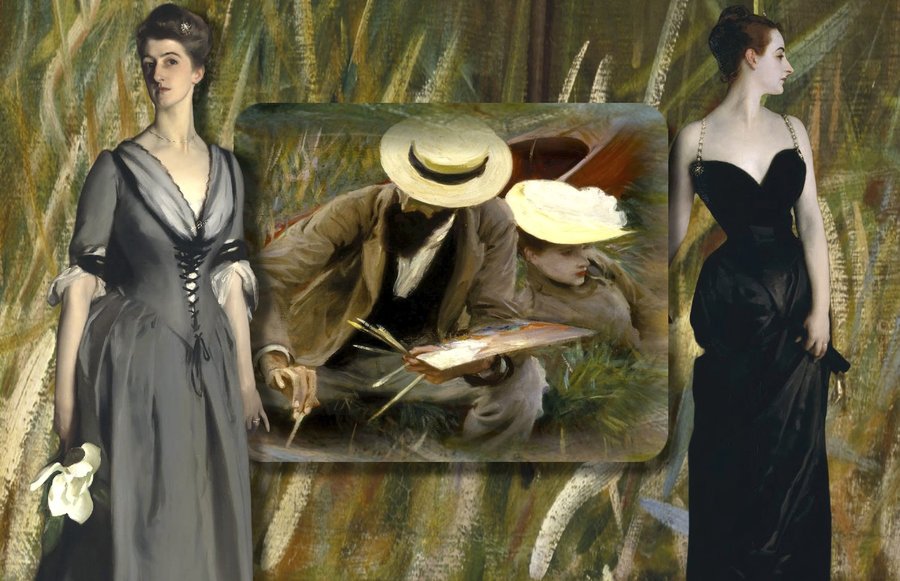
Singer Sargent Tribute
John Singer Sargent (1856–1925) was the painter of fashion, style and taste — art fused with couture. His technique brought out the luxury of the gowns worn by 19th-century American high society, and most of these refined portraits now hang in the Museum of Fine Arts in Boston and Tate Britain in London. Sargent did not merely paint his sitters; he chose their outfits himself, working fabrics and accessories for dramatic pictorial effect — part painter, part stylist, turning clothing into a narrative element of his art. At the centre of our collage he appears in self-portrait; to the right is his famous, controversial 1884 portrait of “Madame X” — in truth Virginie Amélie Avegno Gautreau, a young Parisienne known for her beauty and free-spirited reputation — standing in a low-cut black gown with jewelled straps, her hair swept into a chignon with a gold crescent ornament. When the portrait debuted at the 1884 Paris Salon, its explicit sensuality caused a scandal; the strap, originally shown slipping from her shoulder, was judged too provocative, and Sargent was forced to repaint it into place.
John Singer Sargent (1856–1925) fu il pittore della moda, dello stile e del gusto — arte fusa con la couture. La sua tecnica esaltava il lusso degli abiti indossati dall’alta società americana del XIX secolo, e la maggior parte di questi raffinati ritratti è oggi esposta al Museum of Fine Arts di Boston e alla Tate Britain di Londra. Sargent non si limitava a ritrarre i suoi soggetti; scelse personalmente gli abiti che avrebbero indossato, lavorando su tessuti e accessori per ottenere effetti pittorici drammatici — pittore e al tempo stesso stilista, capace di trasformare gli abiti in elementi narrativi della sua arte. Al centro del nostro collage compare in un autoritratto; a destra il suo celebre e controverso ritratto del 1884, “Madame X” — in realtà Virginie Amélie Avegno Gautreau, giovane parigina nota per la sua bellezza e il suo comportamento libertino — ritratta in un abito nero scollato con sottili spalline gioiello, i capelli raccolti in uno chignon decorato da un ornamento dorato a forma di mezzaluna. Quando il ritratto debuttò al Salon di Parigi del 1884, la sua sensualità esplicita suscitò scandalo; la spallina, originariamente scivolata dalla spalla, fu giudicata troppo provocante, e Sargent fu costretto a ridipingerla al suo posto.
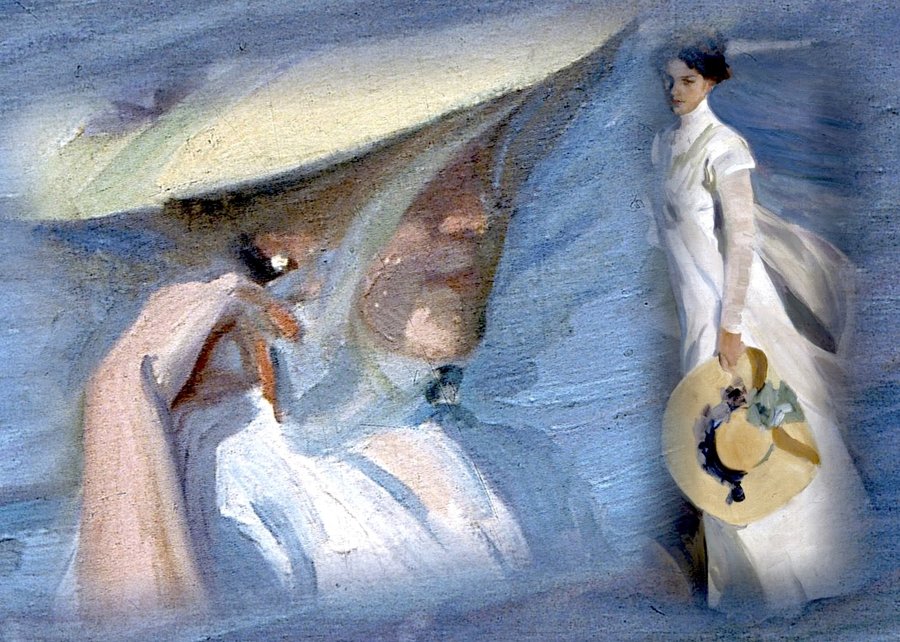
Sorolla Tribute
Joaquín Sorolla (1863–1923) was the master of light. A delicate white cambric dress sways in the sea breeze as its wearer brushes aside the tulle veil of her wide straw hat — one of the iconic images that made Sorolla the most universal painter of Valencia, his work becoming part of the city’s very aesthetic identity. Among the leading figures of modern Iberian painting between the 19th and 20th centuries, he played a decisive role in its renewal, opening it to the spirit of the Belle Époque; in London in 1908, he was hailed as “the greatest living painter in the world.”
Joaquín Sorolla (1863–1923) fu il pittore della luce. Un delicato abito bianco in fine batista svolazza dolcemente nella brezza marina, mentre chi lo indossa scosta il velo di tulle del proprio ampio cappello di paglia — una delle immagini iconiche che fecero di Sorolla il pittore più universale di Valencia, la cui opera divenne parte dell’identità estetica stessa della città. Tra i massimi rappresentanti della pittura iberica moderna tra XIX e XX secolo, contribuì in modo decisivo al suo rinnovamento, aprendola al clima della Belle Époque; a Londra, nel 1908, fu acclamato come “il più grande pittore vivente al mondo”.
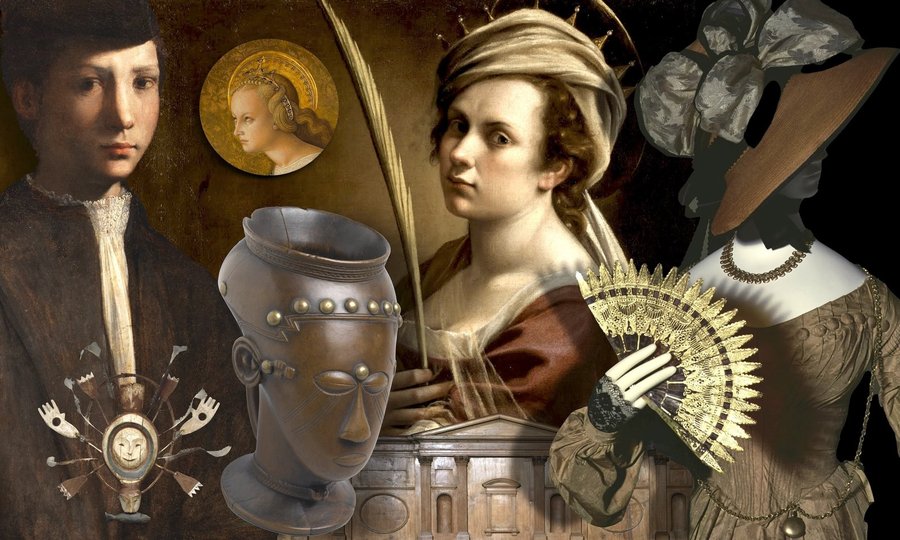
Talismans of Luck
Jewelry has been tied to femininity across the centuries: in ancient Greece and Etruscan civilisation, women wore elaborate pieces as a mark of status and beauty — earrings, in particular, were prized among Etruscan women around the 6th century BCE. In Roman times, though jewelry was worn by both sexes, women favoured earrings, necklaces and bracelets, while rings, brooches and gold crowns among patricians signalled wealth and power, governed by an unwritten code of what could be worn by whom. In the Middle Ages jewelry remained a mark of status but grew more restrained, particularly among the devout; the Renaissance brought pendants back into fashion, paired with deep necklines, while the Victorian era kept jewelry central to feminine elegance. From the 20th century on, its use only broadened, as female icons popularized specific pieces and helped shape ever more varied ideals of femininity.
I gioielli sono stati legati alla femminilità nel corso dei secoli: nell’antica Grecia e nella civiltà etrusca, le donne indossavano gioielli elaborati come segno di status e bellezza — gli orecchini, in particolare, erano molto apprezzati tra le donne etrusche intorno al VI secolo a.C. In epoca romana, sebbene i gioielli fossero indossati da entrambi i sessi, le donne preferivano orecchini, collane e bracciali, mentre anelli, spille e corone d’oro tra i patrizi indicavano ricchezza e potere, secondo un codice non scritto su cosa potesse indossare chi. Nel Medioevo i gioielli restarono un segno di status ma divennero più contenuti, specie tra i più devoti; il Rinascimento riportò in voga i pendenti, abbinati a scollature profonde, mentre l’epoca vittoriana mantenne i gioielli al centro dell’eleganza femminile. Dal XX secolo in poi, il loro uso si diffuse ulteriormente, con icone femminili che ne resero popolari modelli specifici, contribuendo a plasmare ideali di femminilità sempre più vari.
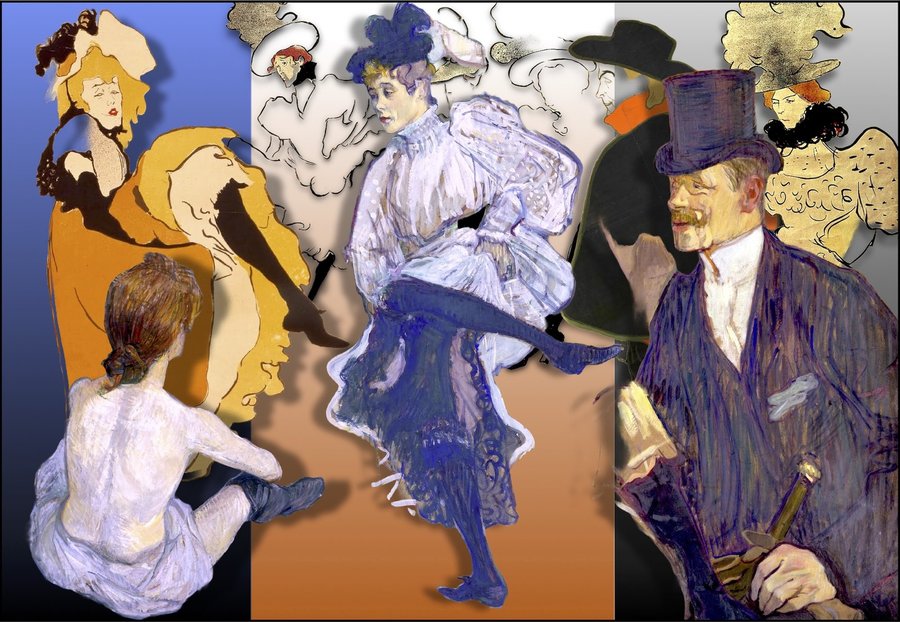
Toulouse-Lautrec Tribute
When newspapers reported the death of Henri de Toulouse-Lautrec, their words dripped with contempt and pity — a strange, deformed artist, dead in an asylum, victim of his own madness. That relentless narrative overlooked the true essence of his art. The Frenchman (1864–1901) was in fact a master graphic artist, draftsman and highly prolific painter of the late 19th century, particularly renowned for the posters and advertisements he created for shows at the famous Moulin Rouge nightclub. His works captured the most eccentric scenes of Parisian nightlife, and today they express the radical social and economic shifts of that nostalgic, mythologised era known as the Belle Époque.
Quando i giornali riportarono la notizia della morte di Henri de Toulouse-Lautrec, le parole trasudavano disprezzo e pietà — un artista strano e deforme, morto miseramente in un manicomio, vittima della propria follia. Quella narrazione implacabile trascurava l’essenza vera della sua arte. Il francese (1864–1901) fu in realtà un grande grafico, disegnatore e pittore molto prolifico di fine Ottocento, noto in particolare per i manifesti e le pubblicità realizzati per gli spettacoli del celebre nightclub Moulin Rouge. Le sue opere raffiguravano le scene più eccentriche della vita notturna parigina e oggi esprimono i radicali cambiamenti sociali ed economici di quel periodo rimpianto e mitizzato noto come Belle Époque.
Fashion over Time is part of Blu Artworks’ wider body of work — 577 original SIAE-registered collages in total. Explore the Fashion over Time fa parte del lavoro più ampio di Blu Artworks — 577 collage originali registrati SIAE in totale. Esplora la Full GalleryGalleria Completa.