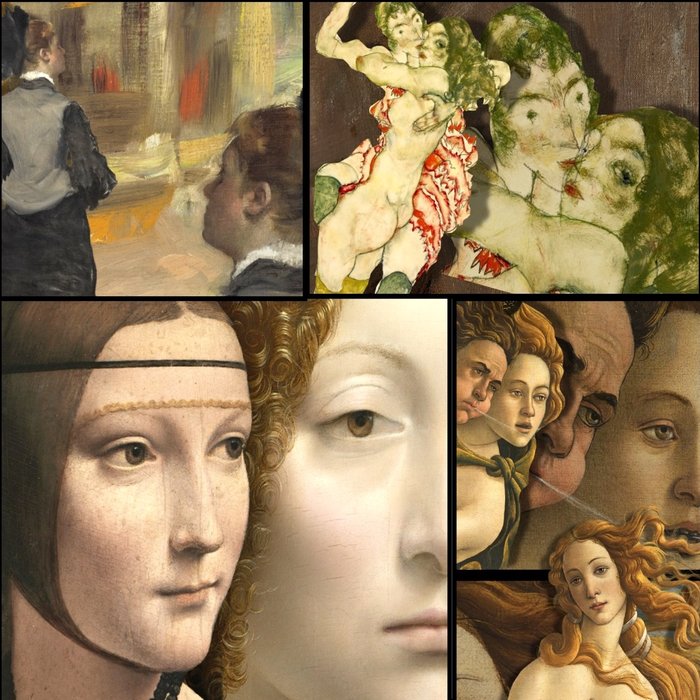
Art CloseUp
50 details, 25 great masters50 dettagli, 25 grandi maestri
25 collages in this catalogcollage in questo catalogo
We have magnified select details from 50 works of art history, created by 25 great masters. High-resolution images and an entirely new composition offer a fresh emotional perspective on the classic iconography of timeless masterpieces. Each piece below is available as a high-resolution, 300dpi, royalty-free download for €39, ready for print at any size.Abbiamo ingrandito alcuni dettagli di 50 opere della Storia dell'Arte, realizzati da 25 grandi maestri. Immagini ad alta risoluzione e un'inedita composizione offrono una nuova prospettiva emozionale all'iconografia classica di capolavori senza tempo. Ogni opera qui sotto è disponibile in download ad alta risoluzione, 300dpi, royalty-free, a €39, pronta per la stampa in qualsiasi formato.
Download Catalog PDF →Scarica il Catalogo PDF → View All Collections →Vedi Tutte le Collezioni →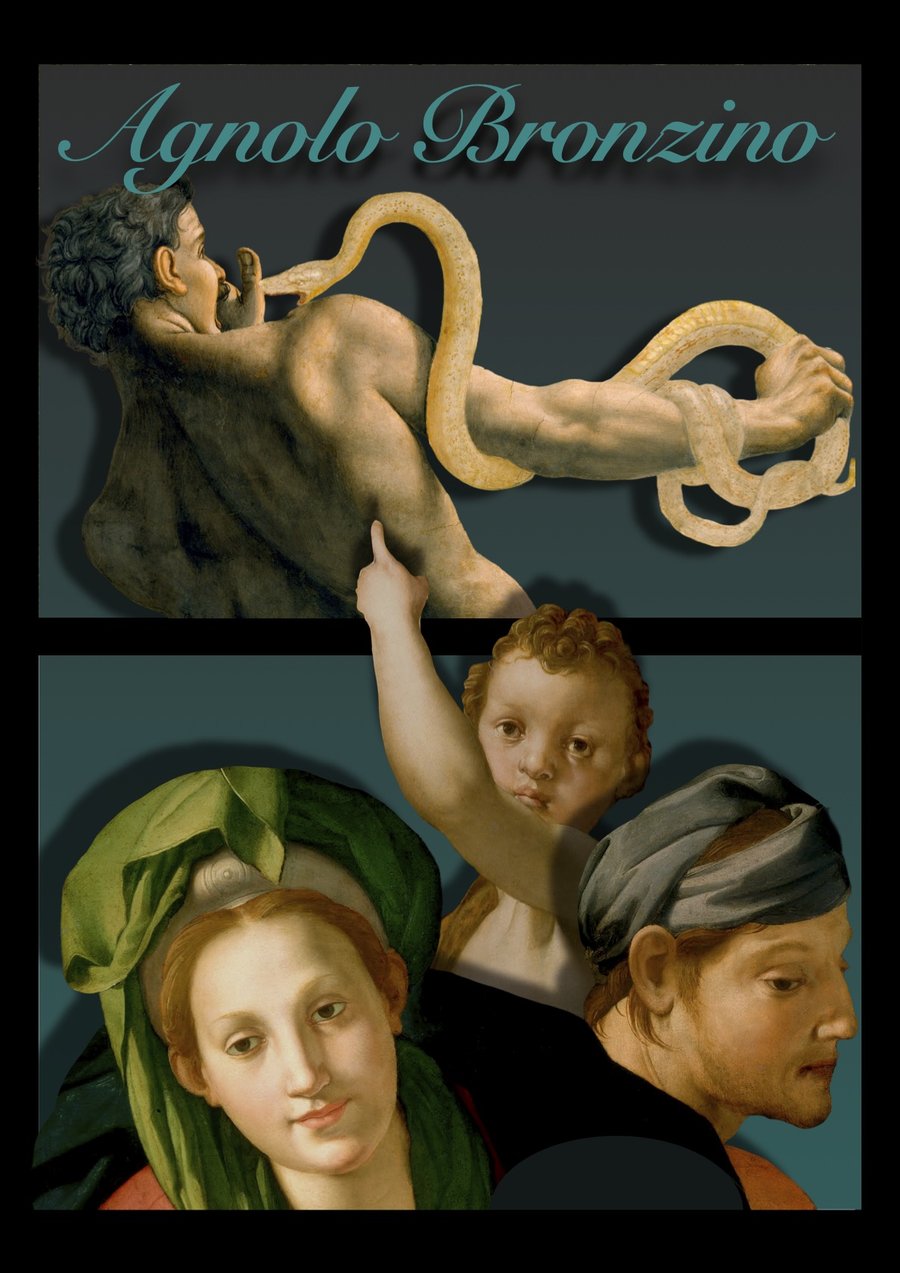
Agnolo Bronzino
Agnolo di Cosimo, known as Agnolo Bronzino, was a Florentine painter (1503–1572). Active at the court of Cosimo I de' Medici from the late 1530s onward, he was among the most refined and admired painters of early Mannerism, celebrated as one of the sharpest portraitists of late-Renaissance Florence. If a painting can ever be pure aesthetics — intellectual refinement, painting turned into a jewel-like precious object — Bronzino is simply unmatched.
The upper half of our collage shows a detail from a 1545 work depicting the Israelites punished with venomous serpent bites for their unfaithfulness, a textbook example of Italian Mannerist painting, all complex poses and exaggerated musculature. If we had to sum up his contribution to art history in one phrase, it might be ‘the master of detached elegance.’
Agnolo di Cosimo, conosciuto come Agnolo Bronzino, fu un pittore fiorentino (1503–1572). Attivo dalla fine degli anni '30 alla corte di Cosimo I de' Medici, fu tra i più raffinati e mirabili pittori del primo Manierismo, noto soprattutto come uno dei più abili ritrattisti della Firenze del tardo Rinascimento. Se in un quadro cerchiamo l'estetica pura, la raffinatezza intellettuale e la capacità di trasformare la pittura in un oggetto prezioso simile a un gioiello, Bronzino è semplicemente insuperabile.
Nella parte superiore del nostro collage vediamo il dettaglio di un'opera del 1545: la scena mostra gli Israeliti puniti per la loro infedeltà con i morsi di serpenti velenosi, un chiaro esempio della pittura manierista italiana, caratterizzata da pose complesse e muscolature accentuate. Dovendo riassumere il suo contributo alla storia dell'arte, potremmo definire Bronzino come ‘il maestro della distaccata eleganza’.
Antoon van Dyck
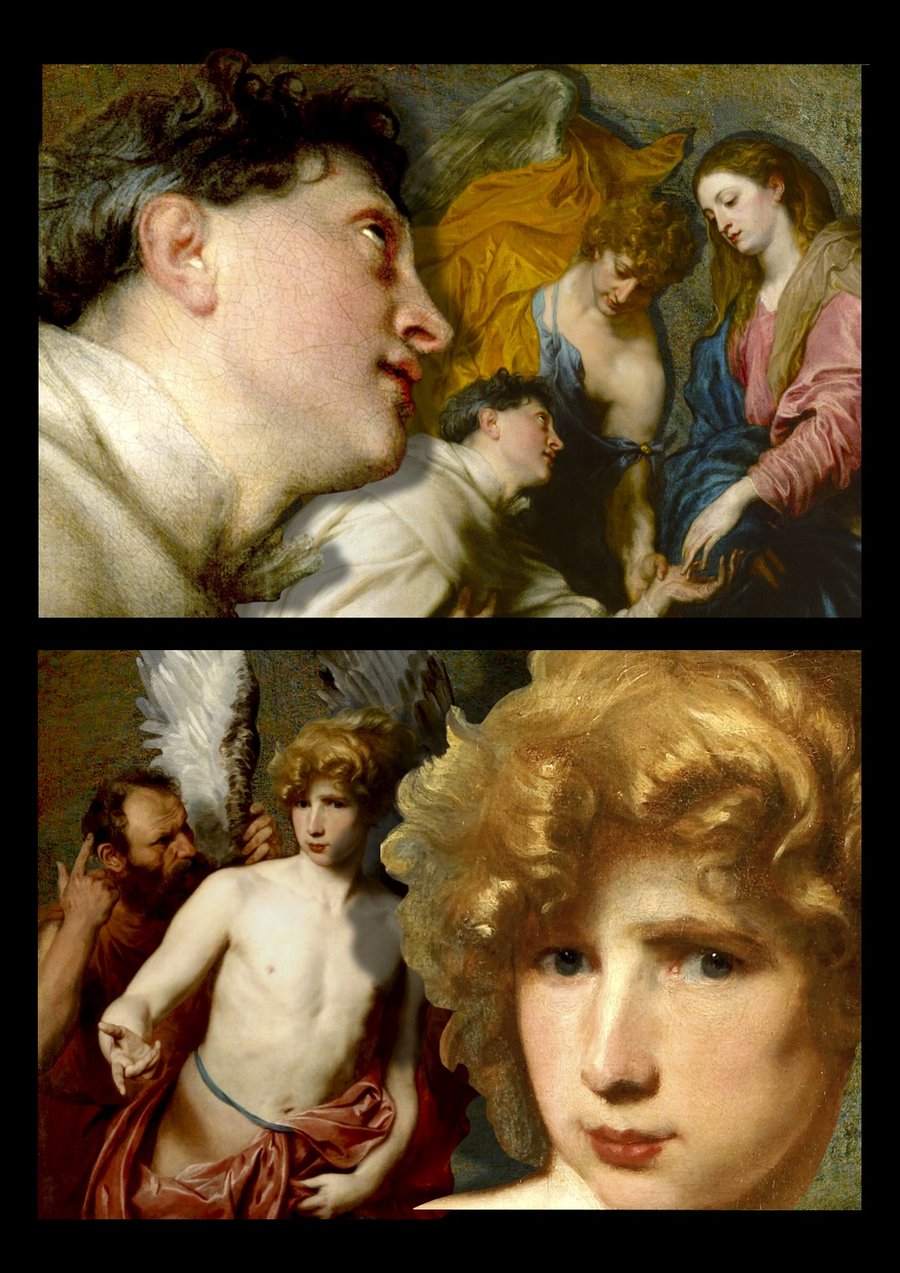
Antoon van Dyck was a celebrated Flemish painter born in Antwerp (1599–1641). Principally a portraitist, he became the first court painter in England after a long stay in Italy, where he studied the great masters to refine his own art and win new commissions.
The top of the collage shows a 1630 portrait of the monk Hermann Joseph kneeling, while the Madonna appears distant, superior and cool: a benevolent angel has taken his hand and is gently guiding it toward the Virgin's fingers. Below, a painting from five years earlier shows Daedalus and Icarus about to attempt their flight, as the famous myth tells it — in the foreground, young Icarus's expression betrays all his anxiety over whether the feat will succeed.
Antoon van Dyck fu un celebre pittore fiammingo nativo di Anversa (1599–1641). Principalmente ritrattista, divenne il primo pittore di corte in Inghilterra dopo un lungo soggiorno in Italia, dove studiò i grandi maestri per perfezionare la propria arte e trovare nuove committenze.
Nella parte superiore del collage vediamo il ritratto, datato 1630, del monaco Ermanno Giuseppe inginocchiato, mentre la Madonna appare distante, superiore e fredda: l'angelo, con fare benevolo, gli ha preso la mano e la sta guidando delicatamente verso le dita della Vergine. Sotto, un dipinto di cinque anni prima, con Dedalo e Icaro in procinto di tentare il volo, come narrato dal celebre mito: in primo piano, l'espressione del giovane Icaro trasmette tutta la sua ansia per la riuscita dell'impresa.
Auguste Rodin
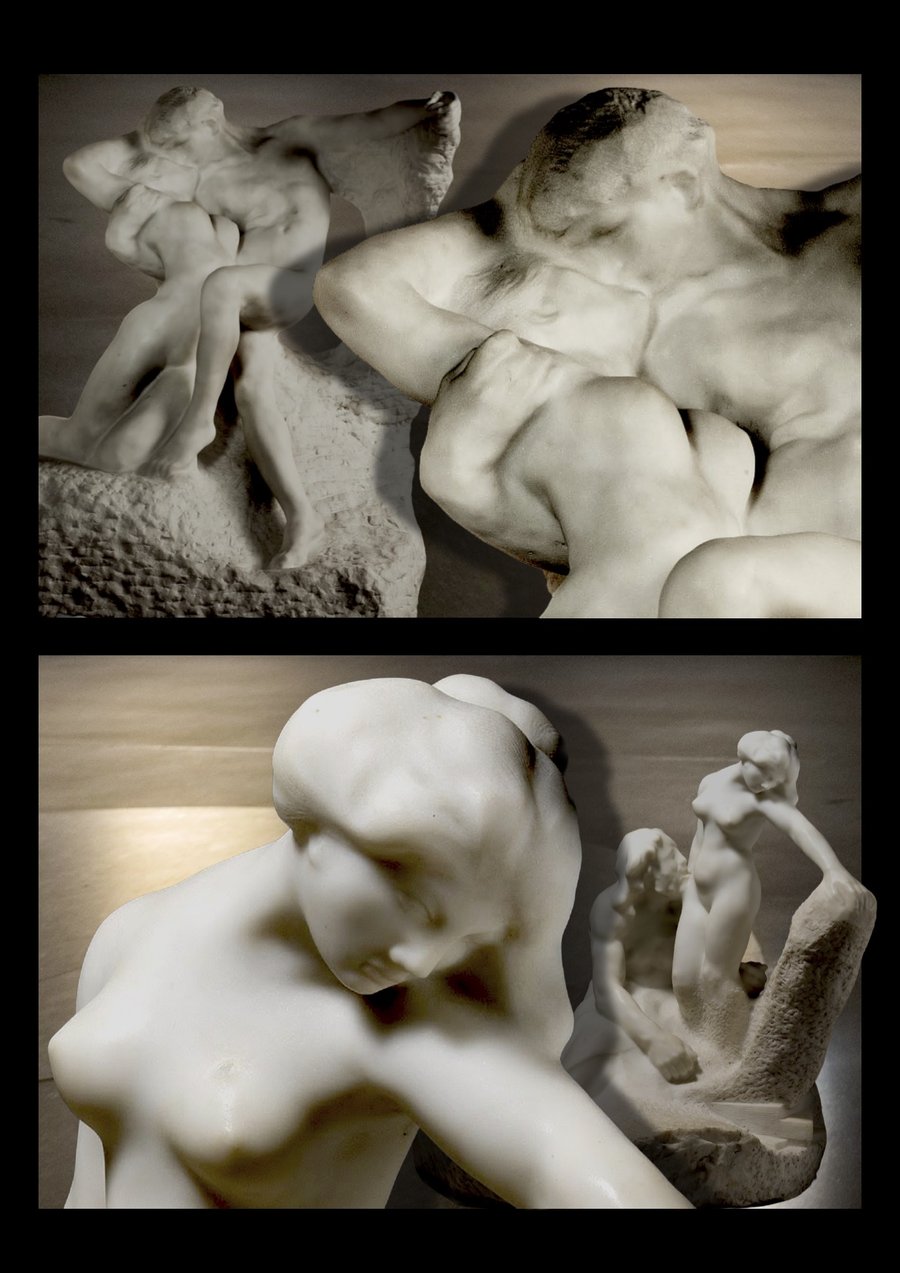
Auguste Rodin (1840–1917) was the most influential French master of modern sculpture. His great originality lay in modeling the human figure with realism, foregrounding character and physicality over idealized perfection. Well aware of the controversy his work stirred, he refused to change his style.
‘The Eternal Springtime,’ the 1901 piece shown at the top, is an early example of his personal style: smooth, harmonious forms slowly detaching themselves from the raw marble block to become two entwined lovers. Woman was always Rodin's muse, source and destiny of everything, as in ‘Pygmalion and Galatea,’ seen in detail at the bottom of the collage. Many of his sculptures carry a passionate, almost obsessive charge: at the 1900 Paris World's Fair he built a private pavilion just to exhibit his own work, and that is where his fame truly began.
Auguste Rodin (1840–1917) fu il più influente maestro francese della scultura moderna. La sua grande originalità: modellare le figure umane con realismo, esaltandone il carattere e la fisicità. Pur consapevole delle polemiche suscitate dai suoi lavori, non volle mai cambiare stile.
‘L'Eterna Primavera’, l'opera del 1901 che presentiamo in alto, è un primo esempio del suo stile personale: forme levigate e armoniose che si distaccano lentamente dal blocco di marmo grezzo, assumendo le figure di due amanti. Nell'ispirazione di Rodin c'era sempre la donna — musa, fonte e destino di ogni cosa — come in ‘Pigmalione e Galatea’, in dettaglio nella parte inferiore del collage. Molte delle sue sculture sono cariche di un desiderio appassionato: all'Esposizione Universale di Parigi del 1900 allestì un padiglione privato per esporre le proprie opere, e da lì ebbe inizio il suo successo.
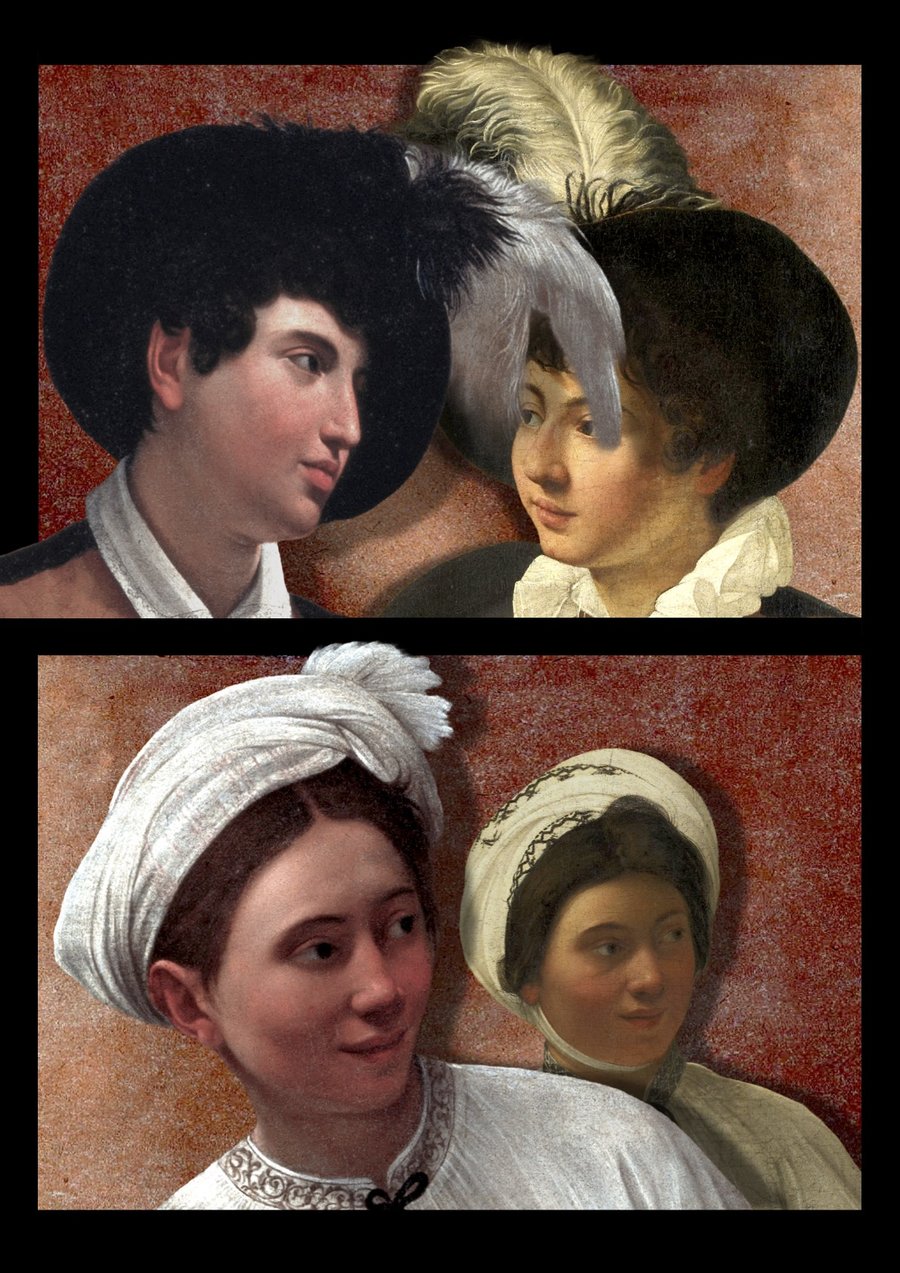
Caravaggio
Michelangelo Merisi (1571–1610), universally known as Caravaggio, is today considered one of the most celebrated figures in the entire history of Western art. Restless by nature, he faced grave trouble in his short life — responsible for a killing and sentenced to death, he spent the rest of his days on the run.
The close-ups of the two young figures here come from a work painted in 1595, which the artist replicated the following year with only minor variations: the painting shows a young gypsy woman who, while pretending to read a naive young soldier's palm, deftly slips the ring off his finger. Of the two versions, the first is held at the Capitoline Museums in Rome, the second at the Louvre in Paris. The painting is renowned for its realism and its innovative use of light, the defining trait of Caravaggio's Baroque style.
Michelangelo Merisi (1571–1610), universalmente noto come Caravaggio, è oggi considerato uno dei più celebri rappresentanti dell'arte occidentale di tutti i tempi. Di animo irrequieto, nella sua breve vita affrontò gravi vicissitudini: responsabile di un omicidio e condannato a morte, dovette fuggire per il resto dei suoi giorni.
I primi piani dei due giovani sono tratti da un'opera del 1595, che l'artista replicò l'anno successivo variando pochi dettagli: il quadro raffigura una giovane zingara che, mentre finge di leggere la mano a un ingenuo giovane soldato, gli sfila abilmente l'anello dal dito. Delle due versioni, la prima è conservata ai Musei Capitolini di Roma, la seconda si trova al Louvre di Parigi. Il dipinto è noto per il suo realismo e per l'uso innovativo della luce, tratto distintivo dello stile barocco di Caravaggio.
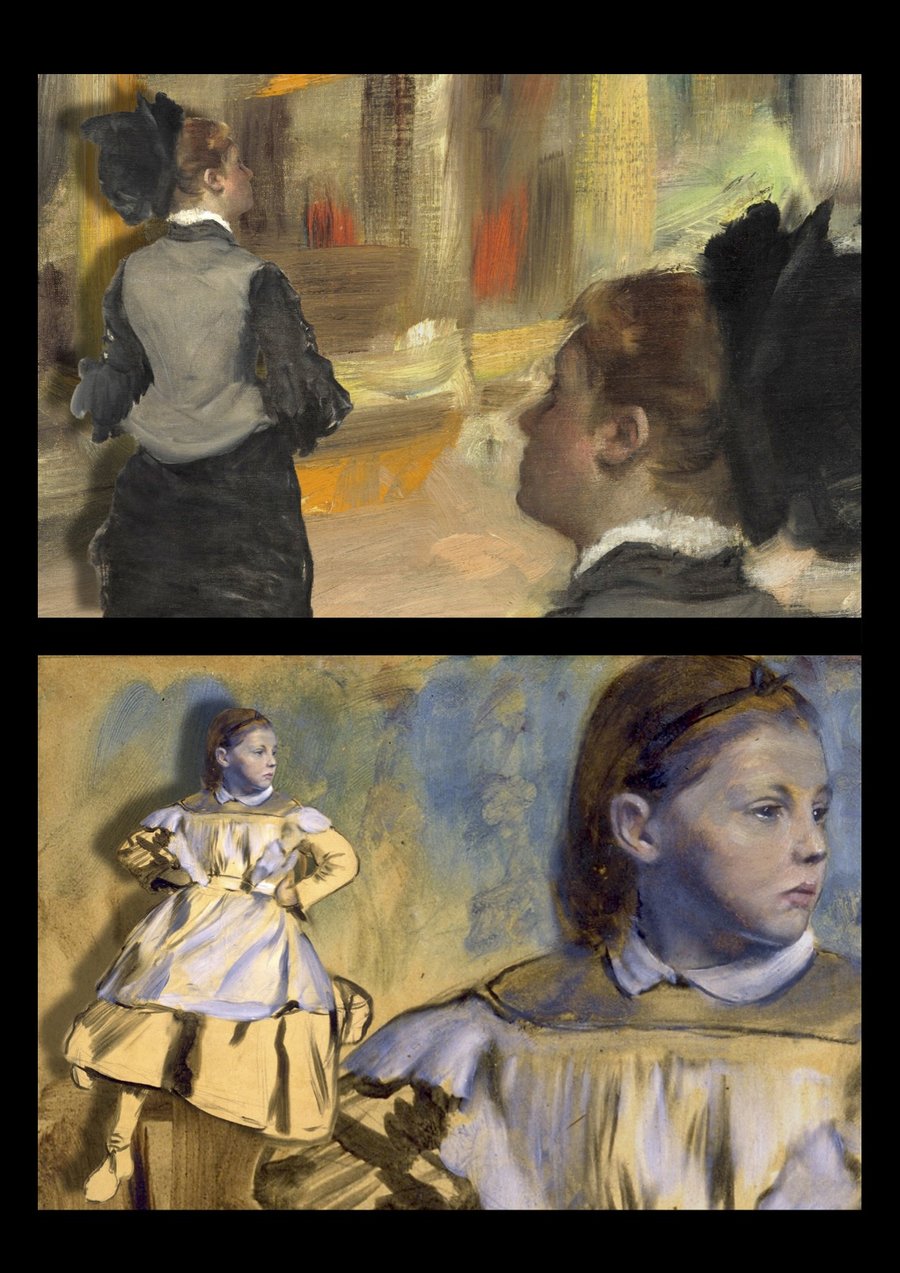
Edgar Degas
Edgar Degas (1834–1917) was one of the most celebrated French painters and sculptors, associated with the Impressionist movement even though his style often stands apart from that of his peers. He is famous for his vivid depictions of Parisian life — ballet dancers, horse races, and intimate portraits alike.
At the 1886 Impressionist exhibition, Degas showed ten pastels depicting a series of nude women absorbed in private, everyday activities: with these works his artistic path — which began with the study of the great nudes of the past — comes full circle. By then a mature painter, he seems to strip his nudes of the classical aura of his earlier work without ever slipping into vulgarity, portraying the ordinary routines every person of the era would have gone through.
Edgar Degas (1834–1917) fu uno dei più celebri pittori e scultori francesi, associato al movimento impressionista, sebbene il suo stile si distingua spesso da quello degli altri esponenti del gruppo. Famoso per le sue vivide rappresentazioni della vita parigina — dalle ballerine di balletto alle corse dei cavalli, fino ai ritratti più intimi.
All'esposizione impressionista del 1886, Degas espose dieci pastelli raffiguranti una serie di donne nude intente in attività private: con queste opere si chiude il percorso artistico dell'artista, iniziato con lo studio dei grandi nudi del passato. Il pittore, ormai maturo, sembra spogliare i suoi nudi dell'aura classica delle opere giovanili senza mai cadere nella volgarità, rappresentando scene quotidiane a cui ogni persona dell'epoca era solita sottoporsi.
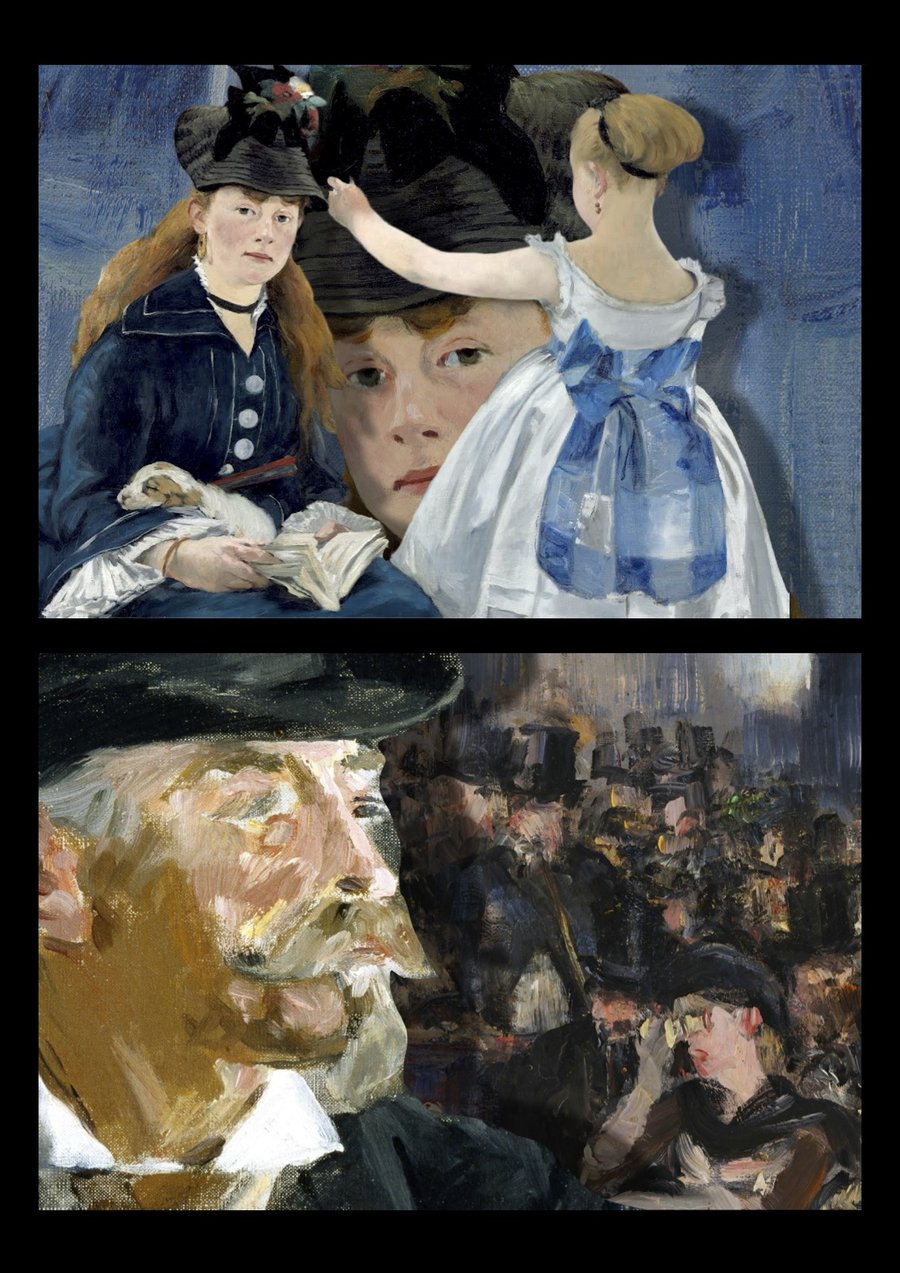
Édouard Manet
Édouard Manet (1832–1883), one of the first 19th-century French artists to paint real, contemporary life, is today regarded as the leading figure of pre-Impressionist painting, a pivotal transitional voice beyond Realism. Born into an upper-bourgeois family with strong political ties, he gave up a comfortable future to devote himself entirely to painting.
The painting at the top is ‘The Railway’ (1873), set at Paris's famous Gare Saint-Lazare: the young mother, waiting for a train with her daughter beside her, is elegantly dressed, a puppy, an open book and a fan resting in her lap. Manet was the very embodiment of the ‘painter of modern life,’ a phrase coined by the critic and poet Charles Baudelaire. Between 1878 and 1879 he painted a series of scenes set at the Cabaret de Reichshoffen on the Boulevard Rochechouart (the painting below), where women on society's margins mixed freely with elegant gentlemen.
Édouard Manet (1832–1883), uno dei primi artisti francesi dell'Ottocento a dipingere la vita reale, è oggi considerato il maggiore interprete della pittura pre-impressionista, protagonista della transizione oltre il realismo. Nato in una famiglia dell'alta borghesia con forti legami politici, rinunciò a un futuro agiato per dedicarsi solo alla pittura.
Il quadro nella parte superiore è ‘La Ferrovia’ del 1873, ambientato nella famosa Gare Saint-Lazare di Parigi: la giovane madre, in attesa del treno con la figlia accanto, appare elegantemente vestita, con in grembo un cucciolo, un libro aperto e un ventaglio. Manet fu l'incarnazione del ‘pittore della vita moderna’, espressione coniata dal critico e poeta Charles Baudelaire. Tra il 1878 e il 1879 dipinse una serie di scene ambientate nel Cabaret de Reichshoffen sul Boulevard Rochechouart (nel quadro sotto), dove donne ai margini della società si mescolavano liberamente con eleganti gentiluomini.
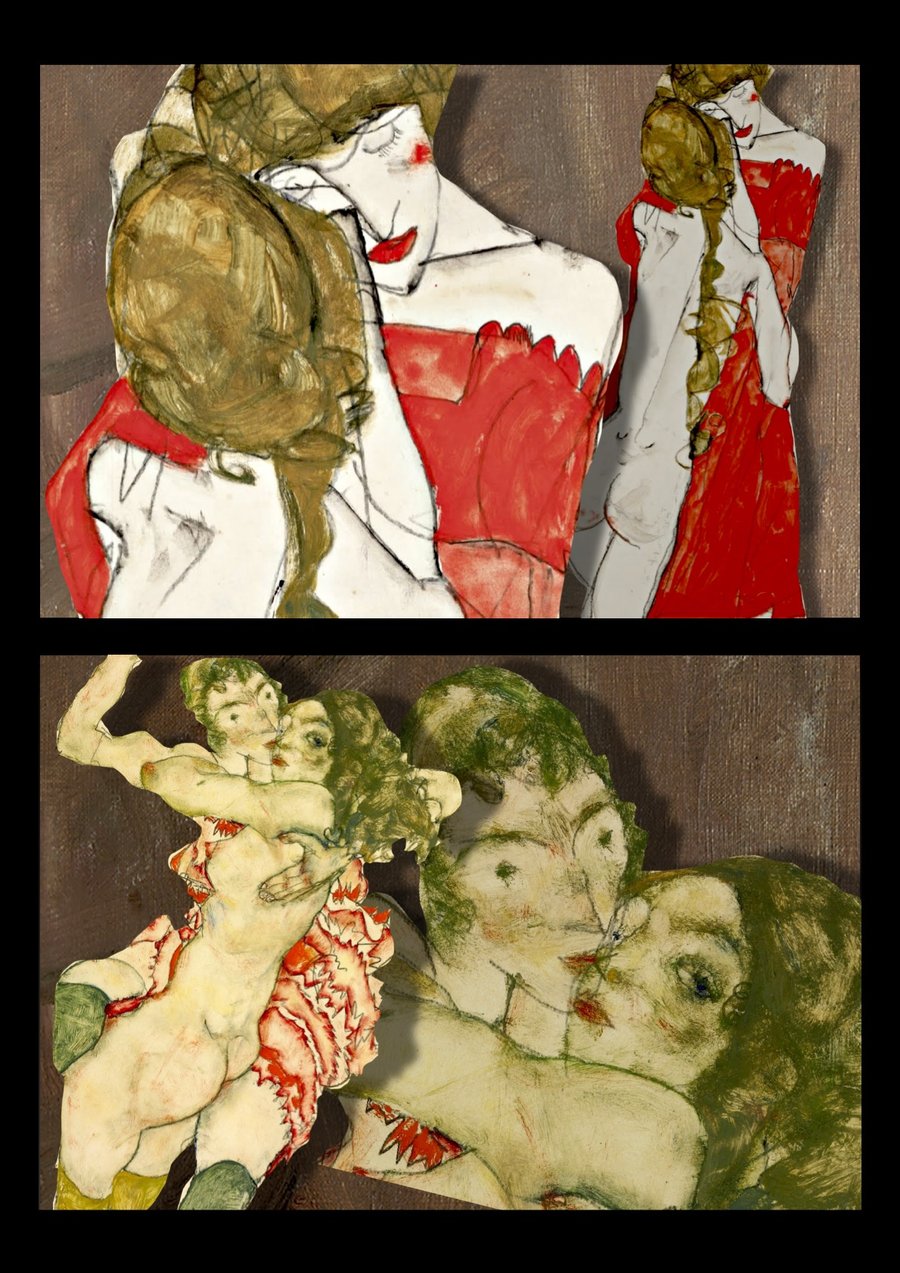
Egon Schiele
According to Rudolf Leopold, Egon Schiele (1890–1918) was an absolute master: ‘you would have to go back to Rembrandt and Dürer to find lines drawn with the same confidence and intensity.’ A pupil of Gustav Klimt, Schiele was one of the leading artists of the early 20th century and a key figure of early Viennese Expressionism.
This moving composition of a mother and daughter, made in 1913, has an unmatched capacity to retrace the Austrian artist's creative process stroke by stroke. His work is known for its expressive intensity, psychological introspection and the way it communicates inner unease — his many portraits have always stirred controversy for the rawness of their forms. His subjects are often men and women posing nude, a symbol of his complicated relationship with the female body: contorted bodies, figures left deliberately incomplete, portraits and self-portraits considered scandalous in his own time.
Secondo le parole di Rudolf Leopold, Egon Schiele (1890–1918) fu un maestro assoluto: ‘bisognerebbe risalire alla storia dell'arte fino a Rembrandt e Dürer per trovare linee tracciate con la stessa sicurezza e intensità’. Allievo di Gustav Klimt, Schiele fu uno dei maggiori artisti del primo Novecento ed esponente di spicco del primo espressionismo viennese.
Questa toccante composizione, raffigurante una madre e una figlia e realizzata nel 1913, possiede una capacità insuperabile di ricostruire tratto per tratto il processo creativo dell'artista austriaco. Il suo lavoro è noto per l'intensità espressiva, l'introspezione psicologica e la comunicazione del disagio interiore: i suoi numerosi ritratti hanno da sempre suscitato polemiche per la crudezza delle forme. I soggetti sono spesso uomini e donne che posano nudi, simbolo del suo rapporto complesso col corpo femminile — corpi contorti, figure incompiute, ritratti e autoritratti considerati scandalosi ai suoi tempi.
Frida Kahlo
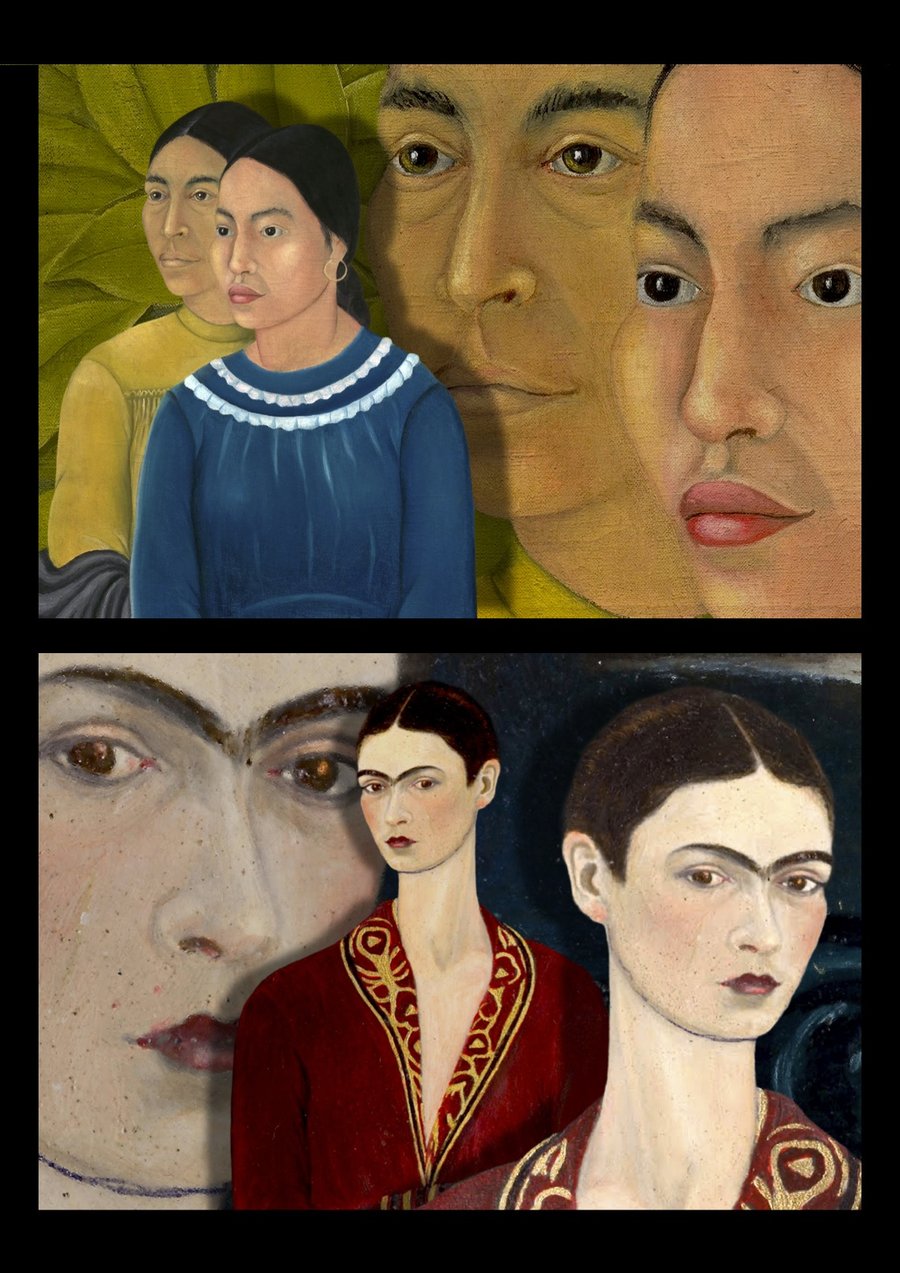
Frida Kahlo (1907–1954) is one of the most important artists in Mexican art history. Those who knew her described a passionate, independent and rebellious woman: as a teenager she loved dressing as a ‘soldadera,’ the women who fought in the Mexican Revolution; she joined the Communist Party and had numerous lovers, both men and women.
One July evening in 1929, at her house in Coyoacán, Frida Kahlo sold the double portrait shown at the top — of Salvadora and Herminia — for 300 pesos to Jackson Cole Phillips, an American engineer living in New York: it was the very first painting she ever sold. The self-portrait in the red velvet dress, below, dates instead to 1926: influenced by Modigliani's style, it's the artist's first professional work, painted for her boyfriend at the time, Alejandro Gómez Arias. Her canvases were admired by her partner Diego Rivera, the Surrealist poet André Breton, and artists such as Pablo Picasso, Joan Miró and Wassily Kandinsky.
Frida Kahlo (1907–1954) è una delle artiste più importanti dell'arte messicana. Chi la conobbe la descrisse come una donna molto passionale, indipendente e ribelle: da adolescente amava vestirsi come le ‘soldaderas’, le donne che combatterono nella rivoluzione messicana; si iscrisse al partito comunista ed ebbe numerosi amanti, sia uomini che donne.
Una sera di luglio del 1929, nella sua casa di Coyoacán, Frida Kahlo vendé il ritratto delle due donne raffigurato in alto — Salvadora ed Herminia — per 300 pesos a Jackson Cole Phillips, un ingegnere americano residente a New York: fu il primo quadro che vendé in assoluto. L'autoritratto con l'abito di velluto rosso, sotto, risale invece al 1926: influenzato dallo stile di Modigliani, è la prima opera professionale dell'artista, dipinta per il fidanzato dell'epoca, Alejandro Gómez Arias. Le sue tele furono molto apprezzate dal compagno Diego Rivera, dal poeta surrealista André Breton e da artisti come Pablo Picasso, Joan Miró e Vasilij Kandinskij.
Gian Lorenzo Bernini
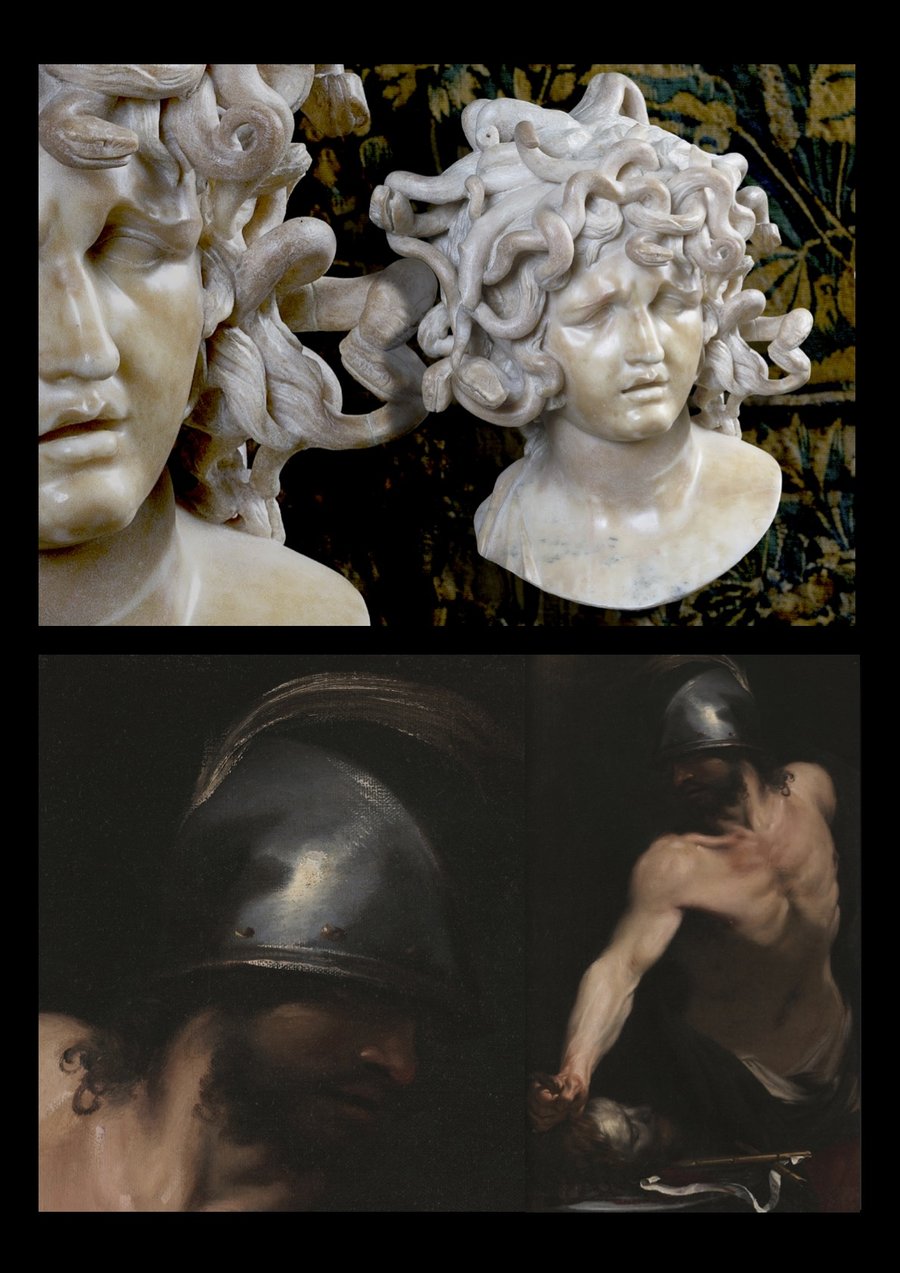
Gian Lorenzo Bernini (1598–1680) was an architect, sculptor and also a painter, as shown by ‘The Executioner with the Head of the Baptist’ at the bottom of the collage. A versatile artist, Bernini is considered the greatest figure in Baroque figurative sculpture: his work was enormously successful and dominated the European scene for more than a century after his death.
According to myth, Medusa had the power to turn to stone anyone who looked directly at her. Bernini's bust captures Medusa mid-transformation, following Ovid's version of the story: punished by Athena for profaning her temple, she is turned into this horrifying monster with snakes for hair, shown here realizing, with horror and anguish, that her own monstrous mutation is underway. Bernini conceived his Medusa as a refined Baroque metaphor for sculpture itself and for the sculptor's power to ‘petrify’ whoever becomes the subject of his art.
Gian Lorenzo Bernini (1598–1680) fu architetto, scultore e anche pittore, come dimostra ‘Il carnefice con la testa del Battista’ nella parte inferiore del collage. Artista poliedrico, Bernini è considerato il massimo protagonista della scultura figurativa barocca: la sua opera ebbe un successo enorme e dominò la scena europea per oltre un secolo dopo la sua morte.
Secondo il mito, Medusa aveva il potere di trasformare in pietra chiunque la guardasse direttamente. Quella di Bernini è il ritratto di Medusa nel momento della sua metamorfosi, secondo la versione di Ovidio: punita da Atena per aver profanato il suo tempio, viene trasformata in questo mostro orribile, con serpenti al posto dei capelli, e la vediamo qui rappresentata proprio mentre realizza, con orrore e angoscia, la propria mutazione. Bernini intendeva la sua Medusa come una raffinata metafora barocca della scultura e della virtù dello scultore, capace di ‘pietrificare’ chi ne è l'oggetto.
Giorgio Vasari
A versatile and prolific artist, the Tuscan Giorgio Vasari (1511–1574) is best known as the first art historian of the modern era. He can rightly be considered a leading figure of the late Renaissance and one of the most influential intellectuals of his time — the very man who coined the term ‘Renaissance.’
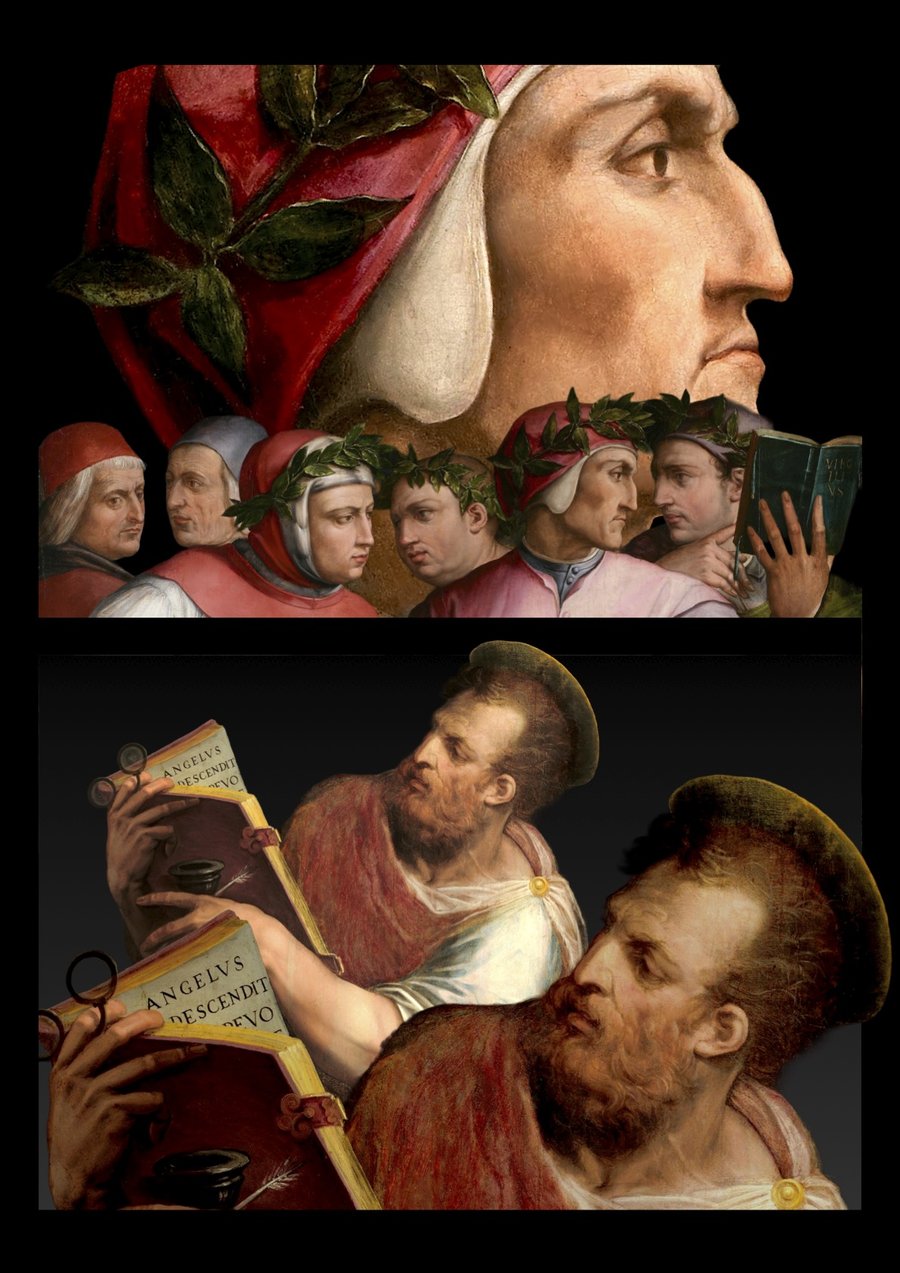
The famous profile of Dante Alighieri comes from ‘Six Tuscan Poets,’ which Vasari painted in 1544: the poets depicted are, from left to right, Cino da Pistoia, Guittone d'Arezzo, Francesco Petrarca, Giovanni Boccaccio, Dante Alighieri, and Guido Cavalcanti; the painting is now held at the Minneapolis Institute of Art. Below, we see St. Mark writing his Gospel, from a 1570 panel Vasari painted alongside portraits of the other Evangelists, commissioned by Pope Pius V: the St. Mark and St. Luke panels are now on display at the National Gallery in Washington, D.C.
Artista poliedrico e molto prolifico, il toscano Giorgio Vasari (1511–1574) è noto soprattutto per essere stato il primo storico dell'arte dell'età moderna. Può essere considerato a pieno titolo un protagonista del tardo Rinascimento e uno degli intellettuali più influenti del suo tempo — il padre stesso del termine ‘Rinascimento’.
Il celebre profilo di Dante Alighieri è tratto dal dipinto ‘Sei poeti toscani’ che Vasari realizzò nel 1544: i poeti raffigurati sono, da sinistra, Cino da Pistoia, Guittone d'Arezzo, Francesco Petrarca, Giovanni Boccaccio, Dante Alighieri e Guido Cavalcanti; l'opera è oggi conservata al Minneapolis Institute of Art. Sotto, possiamo ammirare San Marco intento a scrivere il proprio Vangelo, nel ritratto che Vasari dipinse nel 1570 su tavole raffiguranti gli altri evangelisti, commissionate da Papa Pio V: le tavole di San Marco e San Luca sono oggi esposte alla National Gallery di Washington.
Guido Reni
The Bolognese Guido Reni (1575–1642) is one of the greatest figures of 17th-century Italian art, called ‘the divine Guido’ by his contemporaries. The son of the musician Daniele, he abandoned his musical studies for painting, dividing his career between Bologna, Rome and Naples and producing works of major importance for art history.
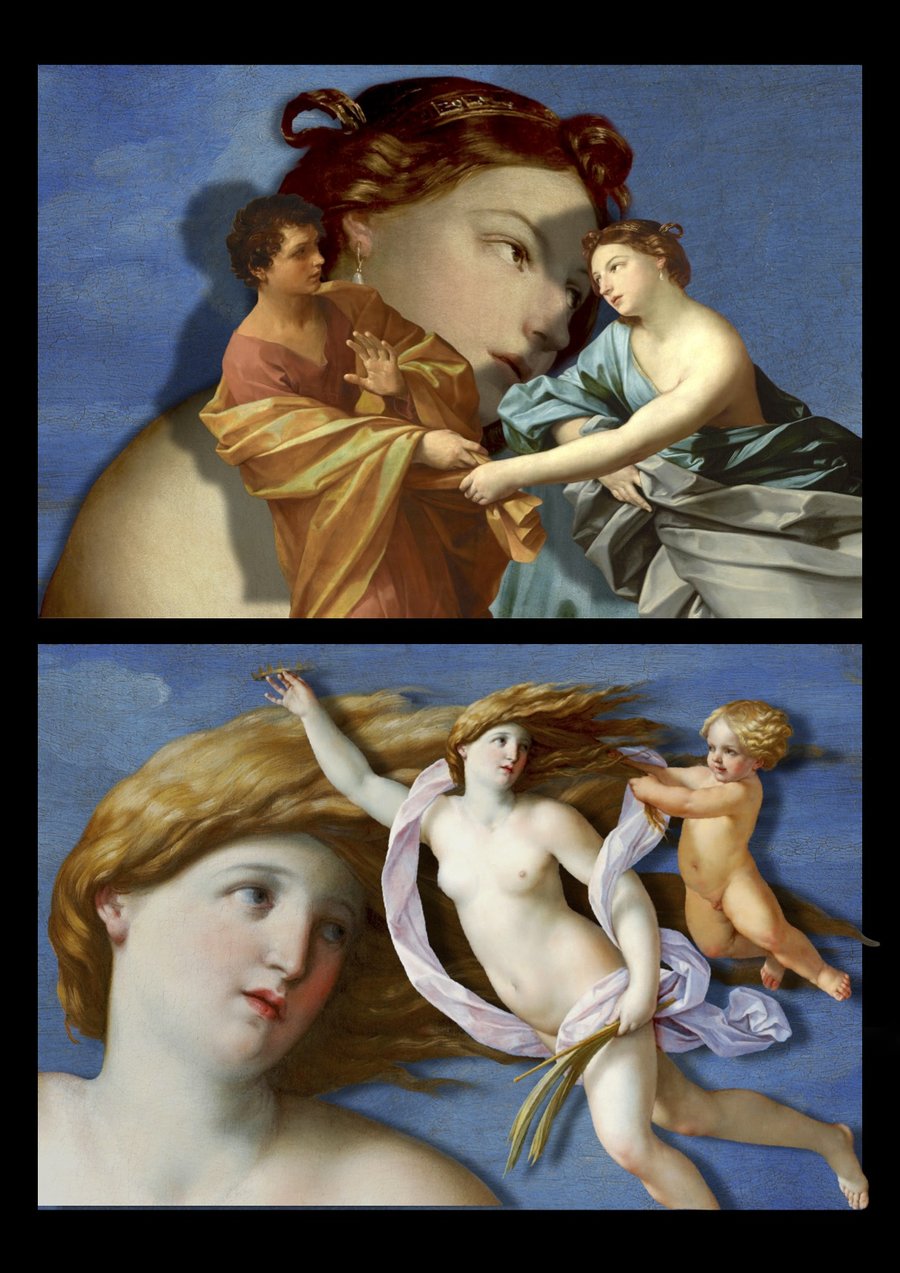
At the top, painted in 1630, is a biblical episode: Potiphar's wife became infatuated with the young Joseph and repeatedly, unsuccessfully, tried to seduce him. In the detail she grabs Joseph's garment, begging him to lie with her; Joseph flees, leaving a torn piece of his cloak in her hands, and the humiliated woman falsely accuses him of assault. He is thrown into prison, where his skill at interpreting the dreams of fellow inmates will eventually carry him all the way to Pharaoh's court. Below, in the 1637 painting, we see a portrait of Fortune, the sometimes-blindfolded goddess embodying life's unpredictable turns.
Il bolognese Guido Reni (1575–1642) è uno dei massimi esponenti dell'arte italiana del Seicento, chiamato dai contemporanei ‘il divino Guido’. Figlio del musicista Daniele, abbandonò gli studi musicali per dedicarsi alla pittura, alternando soggiorni a Bologna, Roma e Napoli e realizzando opere di grande importanza per la storia dell'arte.
In alto dipinse, nel 1630, un episodio biblico: la moglie di Putifarre si invaghì del giovane Giuseppe e tentò più volte, senza successo, di sedurlo. Nel dettaglio la donna afferra la veste di Giuseppe, supplicandolo di giacere con lei; Giuseppe fugge lasciandole in mano un lembo del mantello lacerato, e la donna umiliata lo accusa ingiustamente di stupro. L'uomo viene gettato in prigione, dove la sua capacità di interpretare i sogni degli altri detenuti lo porterà infine alla corte del faraone. Sotto, nel dipinto del 1637, vediamo il ritratto della Fortuna, la dea talvolta bendata, incarnazione della sorte imprevedibile.
Gustav Klimt
The Austrian Gustav Klimt (1862–1918) is, without doubt, celebrated as a visionary artist, driven by a deep desire to translate his emotional and spiritual states into every work he conceived. His style is famous for its sinuous lines, geometric forms, potent symbolism, and lavish use of gold leaf.
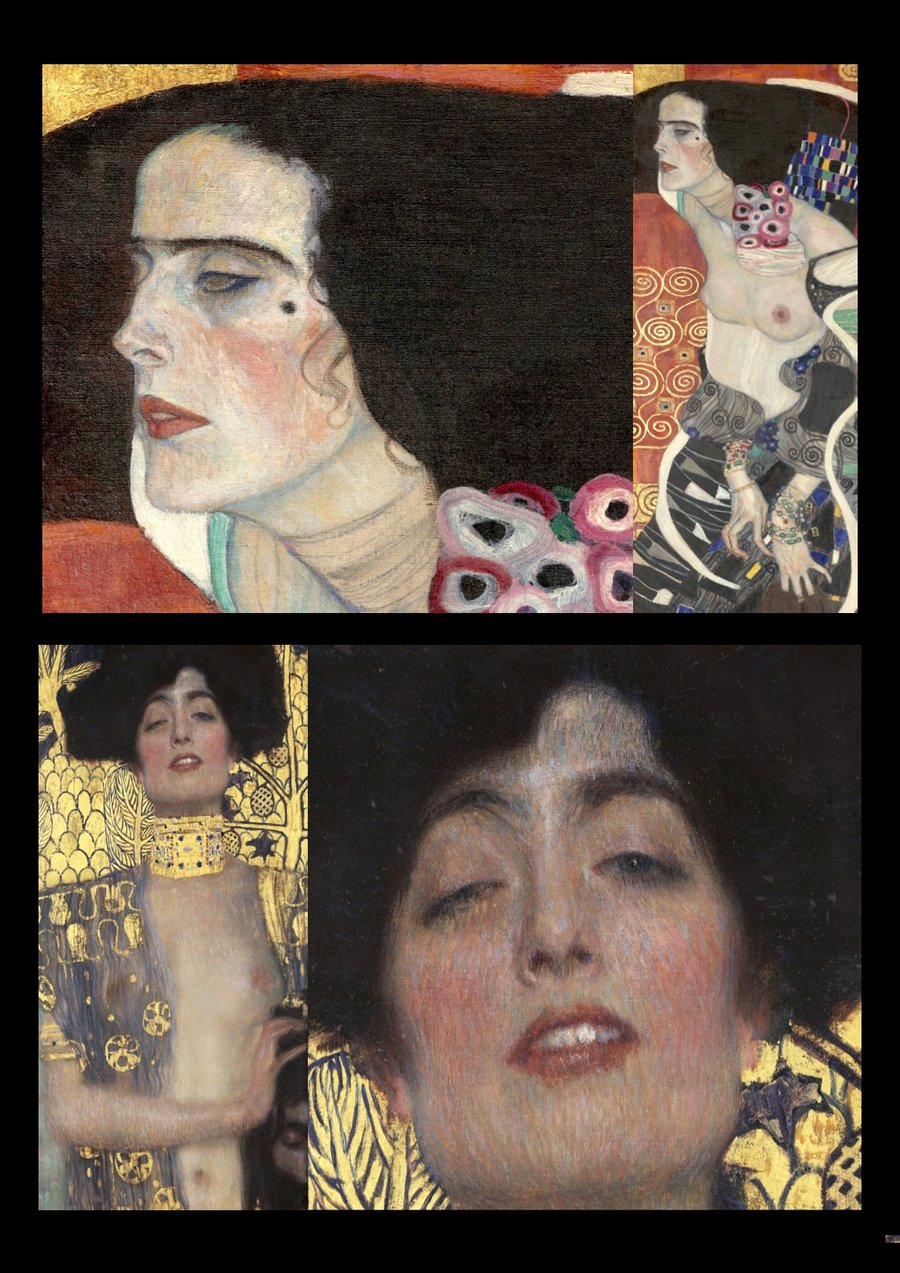
Judith is a biblical heroine, a young and wealthy widow known for saving the besieged city of Bethulia from the Assyrians: she seduced the general Holofernes and beheaded him in his sleep, becoming a symbol of feminine strength, cunning, and liberation. The theme of Judith, one of the most enduring in Western art, was tackled by the Viennese artist in two versions: the first in 1901 (below), the second in 1909 (above). Both paintings marked a revolutionary turn, rendering the biblical myth through a sensual, distant, almost absent 20th-century woman — one that Sigmund Freud would go on to describe in his famous 1917 essay ‘The Taboo of Virginity.’
L'austriaco Gustav Klimt (1862–1918) è senza dubbio un artista celebrato come visionario, per il suo profondo desiderio di tradurre stati emotivi e spirituali in ciascuna delle opere concepite. Il suo stile è celebre per le linee sinuose, le forme geometriche, il forte simbolismo e l'uso sontuoso della foglia d'oro.
Giuditta è un'eroina biblica, giovane e ricca vedova, nota per aver salvato la città di Betulia assediata dagli Assiri: sedusse il generale Oloferne e lo decapitò nel sonno, diventando simbolo di forza, astuzia e liberazione femminile. Il tema di Giuditta, tra i più persistenti della produzione artistica occidentale, fu affrontato dall'artista viennese in due versioni: la prima nel 1901 (sotto), la seconda nel 1909 (sopra). I due dipinti segnarono una svolta rivoluzionaria, restituendo il mito biblico attraverso una donna del Novecento sensuale, distante, quasi assente — che Sigmund Freud avrebbe descritto nel celebre saggio ‘Il tabù della verginità’ del 1917.
Gustave Courbet
Best known as the most significant French exponent of Realism, Gustave Courbet (1819–1877) painted figurative compositions, landscapes, seascapes and female portraits, and also engaged with social issues, taking to heart the harsh living conditions of peasants and the urban poor.
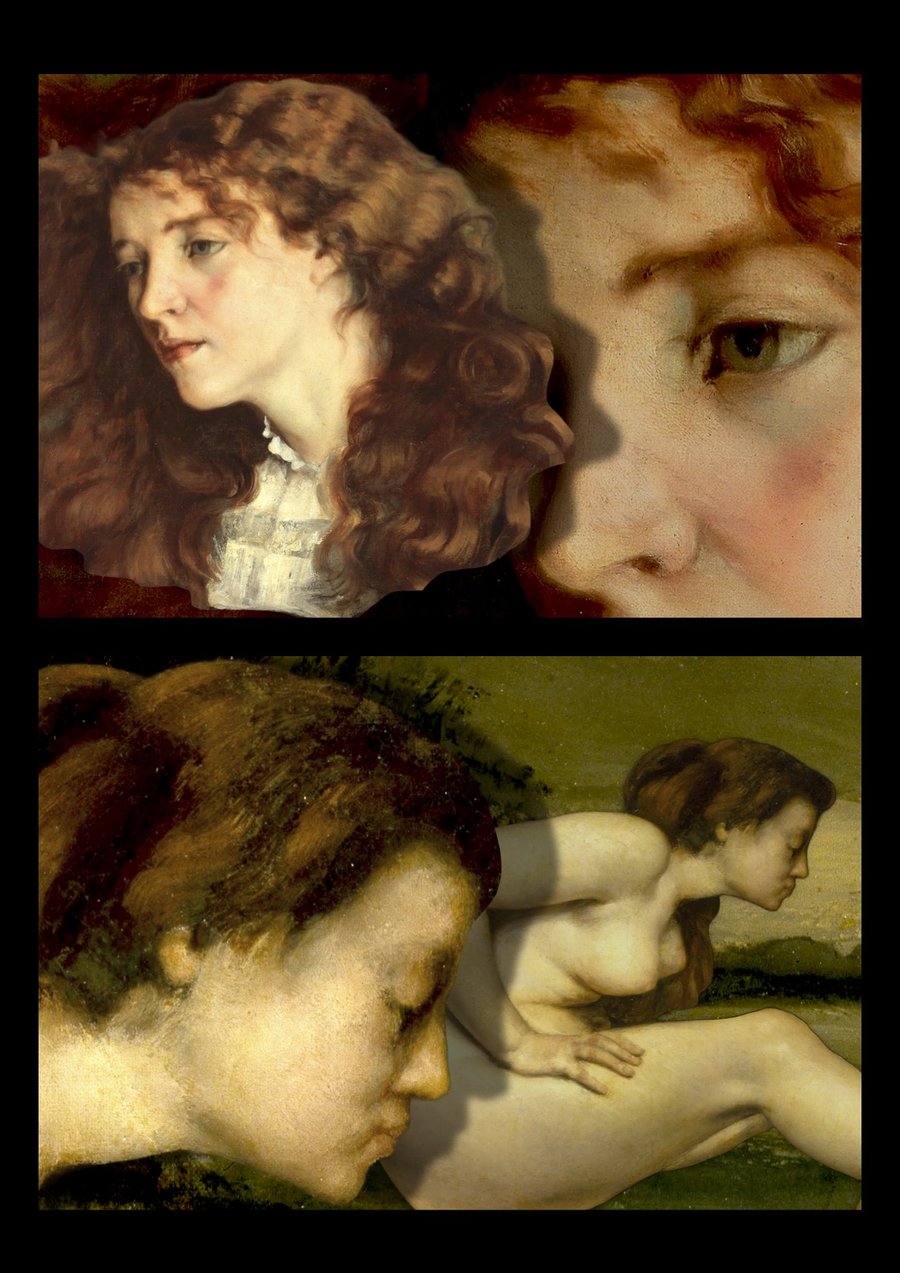
‘Jo, the Beautiful Irish Girl,’ with her Titian-red hair, is considered one of Courbet's most captivating portraits: the model was Joanna Hiffernan, known as Jo, whom the artist met in 1865 at Trouville, then Normandy's fashionable new seaside resort. Courbet painted four versions, keeping one for himself, and late in life wrote to a friend: ‘I still have Jo's portrait, and I will never sell it!’ The nude below is of Léontine Renaude, the painter's mistress at the time of the 1862 portrait: the painting marks a shift in Courbet's approach to the female nude — a softer figure, a lighter brushstroke, smoother skin — meant to keep the work from being judged indecent.
Conosciuto soprattutto come il più significativo esponente francese del movimento realista, Gustave Courbet (1819–1877) fu pittore di composizioni figurative, paesaggi, marine e ritratti femminili; si occupò anche di questioni sociali, a cuore le difficili condizioni di vita dei contadini e dei cittadini più poveri.
‘Jo, la bella ragazza irlandese’, dai capelli di un rosso tizianesco, è considerato uno dei ritratti più affascinanti di Courbet: la modella era Joanna Hiffernan, detta Jo, che l'artista conobbe nel 1865 a Trouville, la nuova località balneare alla moda in Normandia. Courbet ne dipinse quattro versioni, tenendone una per sé, e in tarda età scrisse a un amico: ‘Ho ancora il ritratto di Jo, che non venderò mai!’. Il nudo sottostante è invece quello di Léontine Renaude, all'epoca del ritratto (1862) amante del pittore: il dipinto segna un'evoluzione nell'approccio di Courbet al nudo femminile — figura ammorbidita, pennellata più leggera, pelle più liscia — per non correre il rischio che l'opera venisse giudicata indecente.
Henri de Toulouse-Lautrec
Henri de Toulouse-Lautrec (1864–1901) stood just 142 centimeters tall, the result of two childhood accidents that broke both his legs and a rare bone disease he never fully recovered from: he had to walk with a cane and was often mocked for it. Despite this, the French painter is considered one of the most significant artists of the late 19th century.
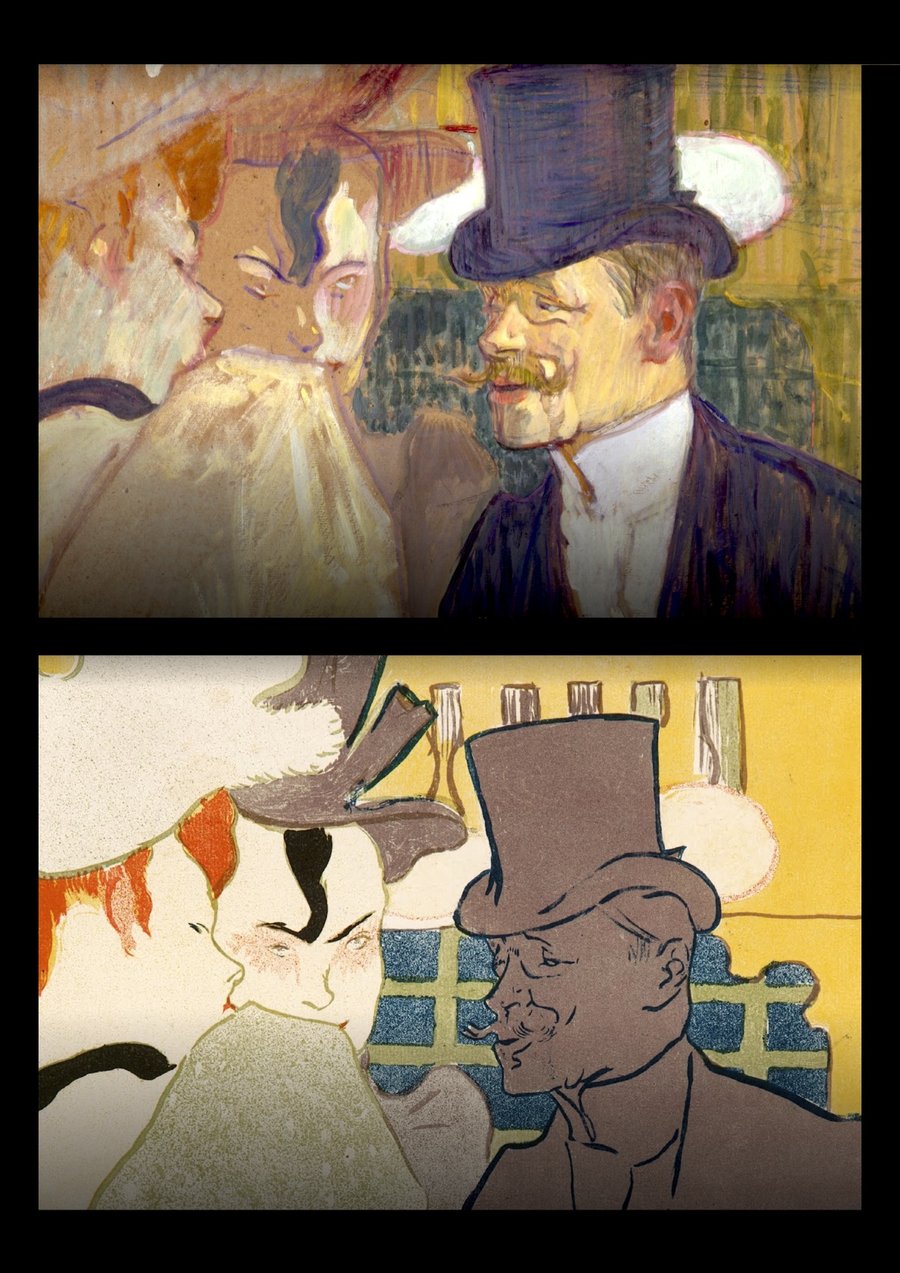
When the Moulin Rouge opened its doors in 1889, Toulouse-Lautrec was asked to design the posters for its launch, and the venue would go on to become the icon of the Belle Époque: he was given a permanent seat, and the club displayed his paintings, where he found many of the subjects for his most famous works. His professional career lasted only 19 years, yet in that brief span he produced 737 paintings, 275 watercolors, 363 prints and posters, and 5,084 drawings. His art was shaped by the new fashion for artistic prints, which is why he often made several versions of the same work — one painted, one in poster form — exactly as our collage shows.
Henri de Toulouse-Lautrec (1864–1901) era alto appena 142 centimetri, a causa di due incidenti infantili in cui si rupp le gambe e di una rara malattia ossea da cui non guarì mai del tutto: dovette camminare con un bastone e fu spesso deriso. Ciò nonostante, il pittore francese è considerato tra gli artisti più significativi dell'arte di fine Ottocento.
Quando il Moulin Rouge aprì i battenti nel 1889, a Toulouse-Lautrec fu chiesto di disegnare i manifesti per il lancio pubblicitario del locale, che sarebbe diventato l'icona della Belle Époque: al pittore fu riservato un posto fisso e il locale espose i suoi dipinti, dove trovò molti dei soggetti per le opere più famose. La sua carriera professionale durò solo 19 anni, eppure in questo breve lasso di tempo realizzò 737 dipinti su tela, 275 acquerelli, 363 tra stampe e manifesti e 5.084 disegni. La sua arte fu influenzata dalla nuova moda delle stampe artistiche, per questo realizzava spesso diverse versioni della stessa opera — una dipinta e una in formato poster — come esemplificato dal nostro collage.
Jacopo Palma il Vecchio
The Bergamo-born painter Jacopo Palma il Vecchio was born in Serina in 1480. He worked in the Venice of the 1510s, a city alive with the art of Giovanni Bellini, Giorgione and Titian: it was here that he built his career, portraying mostly high-born patrons of the lagoon, until his death in 1528.
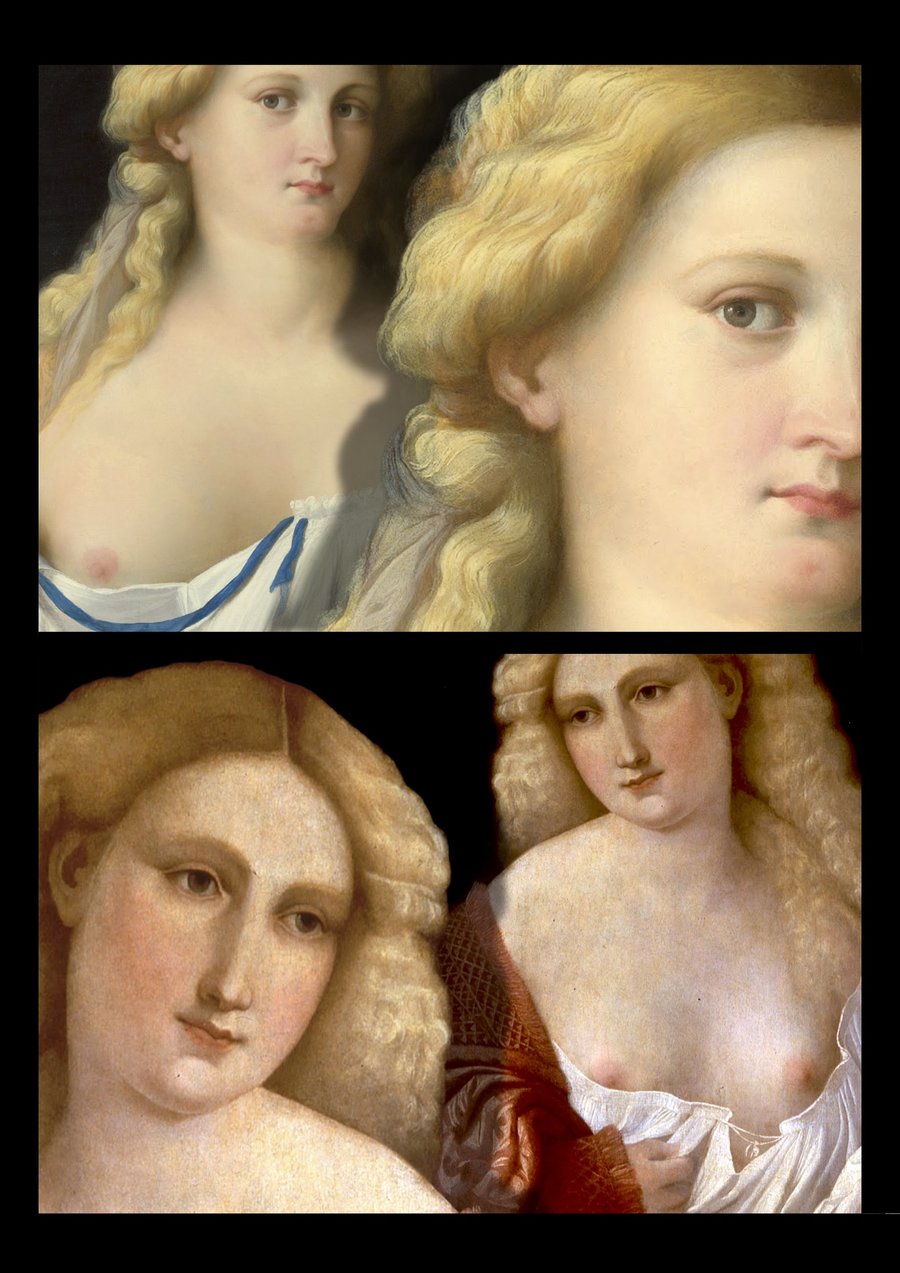
We present two examples of female portraiture in which the qualities that made Palma one of the most sought-after masters of his time are already visible. ‘The two young women seem caught off guard in an intimate moment, their sinuous bodies shown candidly, without any modesty; the painter exalts their beauty through the sculptural quality of their bodies, their skin glossy and pearl-like’ (Alessia Codazzi). Both embody the era's prototype of feminine beauty: a luminous, clear complexion, soft forms, and the details of their clothing artlessly slipping from their shoulders.
Il pittore bergamasco Jacopo Palma il Vecchio nacque a Serina nel 1480. Lavorò nella Venezia del secondo decennio del Cinquecento, popolata dall'arte dei maestri Giovanni Bellini, Giorgione e Tiziano: fu qui che sviluppò la propria carriera, ritraendo principalmente altolocati committenti della laguna, fino alla morte nel 1528.
Presentiamo due esempi di ritratti femminili nei quali si notano già le caratteristiche che contribuirono a rendere Palma uno dei maestri più richiesti. ‘Le due giovani donne appaiono intimidite dall'essere state colte in un momento confidenziale, dove i loro corpi sinuosi vengono mostrati candidamente, senza alcuna pudicizia; il pittore ne esalta la bellezza con la plasticità dei corpi dall'incarnato lucido e madreperlaceo’ (Alessia Codazzi). Entrambe rappresentano il prototipo della bellezza femminile del tempo: il viso luminoso e chiaro, le forme morbide, i dettagli delle vesti lasciate scivolare ingenuamente dalle spalle.
Jacques-Louis David
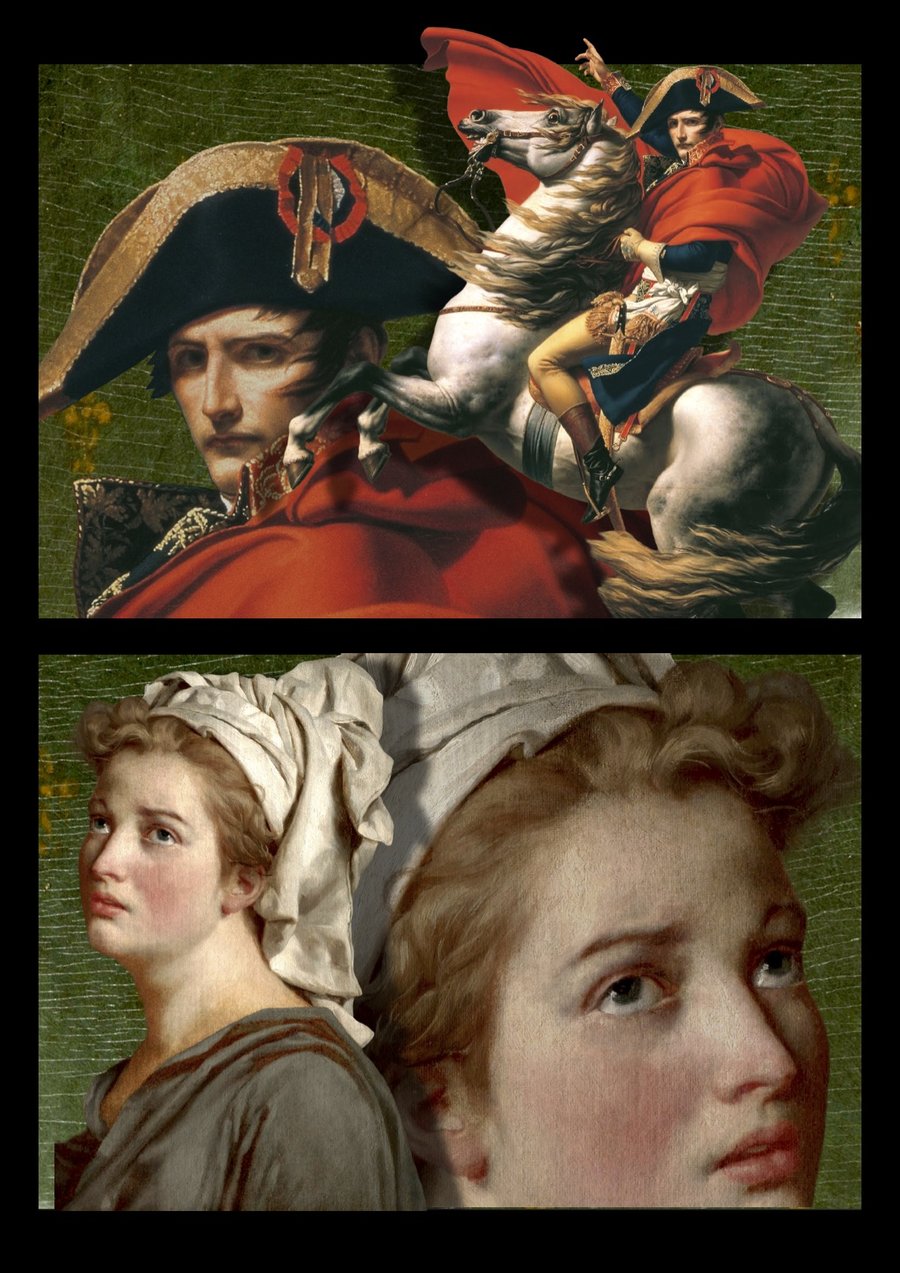
Jacques-Louis David (1748–1825) was a French painter and one of the most important figures of Neoclassicism. During his travels in Italy, rediscovering the beauty of antiquity, he developed a more elegant and solemn style of painting, writing in 1808: ‘I understood that I had to break away from everything I had previously believed to be beautiful and true.’
David held a deep admiration for Napoleon Bonaparte, going so far as to become his official painter, depicting his exploits in a way that made the emperor appear almost godlike. After Bonaparte's fall and the restoration of the monarchy in France, David — worried about his revolutionary and Bonapartist past — decided to secure his works and take refuge, first in Switzerland and then in Brussels, where he lived in official exile from 1816 onward. ‘Young Woman with a Turban,’ by contrast, is a pre-revolutionary work dated 1780, in which the artist seems focused on the relationship between morality and beauty.
Jacques-Louis David (1748–1825) fu un pittore francese, tra i più importanti esponenti del Neoclassicismo. Durante il suo viaggio in Italia, riscoprendo la bellezza dell'antichità, sviluppò una pittura più elegante e solenne, scrivendo nel 1808: ‘compresi che dovevo separarmi da tutto ciò che in precedenza avevo creduto essere il bello e il vero’.
David nutriva una profonda ammirazione per Napoleone Bonaparte, tanto da mettersi al suo servizio come pittore ufficiale, ritraendone le gesta in modo che l'imperatore risaltasse quasi come un dio. Dopo la caduta di Bonaparte, con la restaurazione della monarchia in Francia, David — preoccupato per il suo passato rivoluzionario e bonapartista — decise di mettere al sicuro le proprie opere rifugiandosi prima in Svizzera e poi a Bruxelles, dove visse ufficialmente in esilio dal 1816. La ‘Giovane donna con turbante’ è invece un'opera pre-rivoluzionaria, datata 1780, in cui l'artista sembra concentrarsi sul rapporto tra moralità e bellezza.
Jean-Auguste-Dominique Ingres
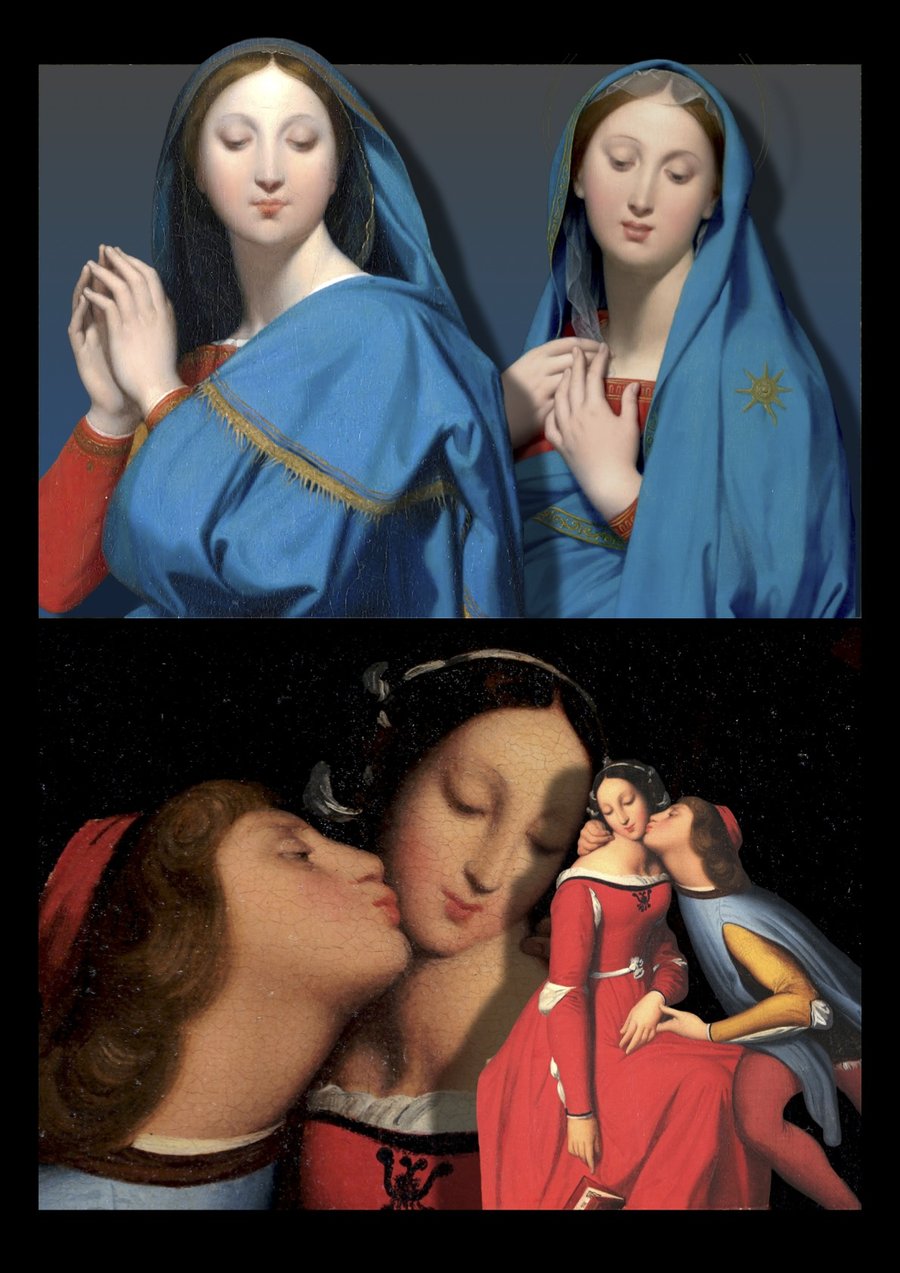
Jean-Auguste-Dominique Ingres (1780–1867), among the greatest figures of 19th-century French painting, was deeply admired by pioneers of modern art such as Degas, Matisse and Picasso. ‘The artist does not follow fashion, does not copy nature, does not imitate the masters, but composes in an ideal language all his own, inspired by antiquity’ (Francesca Greco).
Starting in the 1840s, Ingres received commissions to paint several images of the Madonna in a style recalling Raphael: he gave them a more sensual quality, softening the purity of her features and parting her lips slightly — works that, not being intended for public display, were most likely commissioned by private collectors. Years earlier, on Dante-inspired themes, he had produced several versions of the tragic love story of Paolo and Francesca: tender, romantic images, with the fatal kiss given pride of place, showcasing all the distinctive quality of Ingres's palette.
Jean-Auguste-Dominique Ingres (1780–1867), tra i massimi esponenti della pittura francese dell'Ottocento, fu amatissimo da pionieri della modernità come Degas, Matisse e Picasso. ‘L'artista non segue le mode, non copia la natura, non imita i maestri, ma compone in un linguaggio ideale tutto suo, ispirato all'antico’ (Francesca Greco).
Ingres ricevette l'incarico di dipingere diverse immagini della Madonna a partire dagli anni Quaranta dell'Ottocento, in uno stile che rimandava a Raffaello: ne dipinge così ritratti più sensuali, ritoccando la purezza dei lineamenti e socchiudendo le labbra — opere che, non essendo destinate all'esposizione pubblica, furono probabilmente commissionate da collezionisti privati. Anni prima aveva prodotto, su temi danteschi, alcune versioni della tragica storia d'amore tra Paolo e Francesca: immagini tenere e romantiche, con l'enfasi sul bacio fatale, che esprimono tutta la qualità distintiva della tavolozza di Ingres.
Leonardo da Vinci
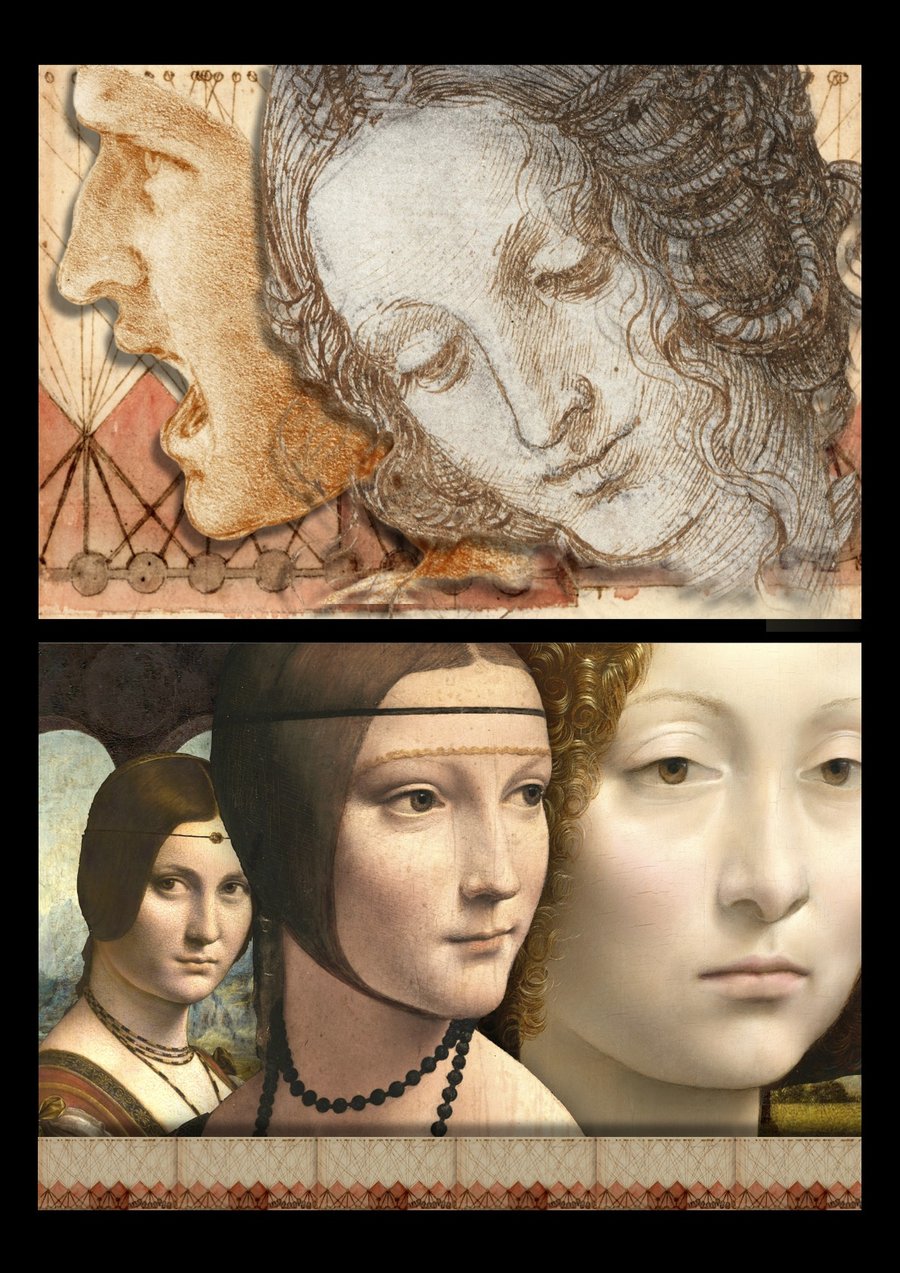
April 1452: in a small village in the Tuscan countryside, the illegitimate son of a notary and a peasant woman is born. No one imagines he will become one of history's greatest figures: Leonardo. Leonardo da Vinci's female portraits are more than mere likenesses — they are psychological studies that changed the course of art history forever.
Leonardo did not simply paint a face: he sought to paint ‘the movements of the soul,’ introducing two fundamental techniques that make his faces feel almost alive. Sfumato: by eliminating hard outlines, he let his figures emerge naturally from shadow, visible especially at the corners of the eyes and mouth, where ambiguity creates the illusion of a shifting expression. Contrapposto: his women are often shown in torsion, chest turned one way and head the other, a twist that gives the figure dynamism and spatial depth. For Leonardo, outer beauty was a reflection of inner complexity — unlike his contemporaries, who sought symmetrical perfection, he sought vitality.
Aprile 1452: in un piccolo villaggio della campagna toscana nasce il figlio illegittimo di un notaio e di una contadina. Nessuno immagina che diventerà uno dei più grandi personaggi della storia: Leonardo. I ritratti femminili di Leonardo da Vinci sono più di semplici rappresentazioni: sono studi psicologici che hanno cambiato per sempre la storia dell'arte.
Leonardo non si limitava a dipingere un volto: cercava di dipingere ‘i moti dell'animo’, introducendo due tecniche fondamentali che rendono i suoi volti quasi vivi. Lo sfumato: eliminando i contorni netti, faceva sì che le figure emergessero dall'ombra in modo naturale, evidente negli angoli degli occhi e della bocca. Il contrapposto: le sue donne sono spesso ritratte in torsione, con il busto rivolto da una parte e la testa dall'altra, un movimento che conferisce dinamismo e profondità spaziale alla figura. Per Leonardo, la bellezza esteriore era il riflesso della complessità interiore: a differenza dei contemporanei, che cercavano la perfezione simmetrica, lui cercava la vitalità.
Paul Gauguin
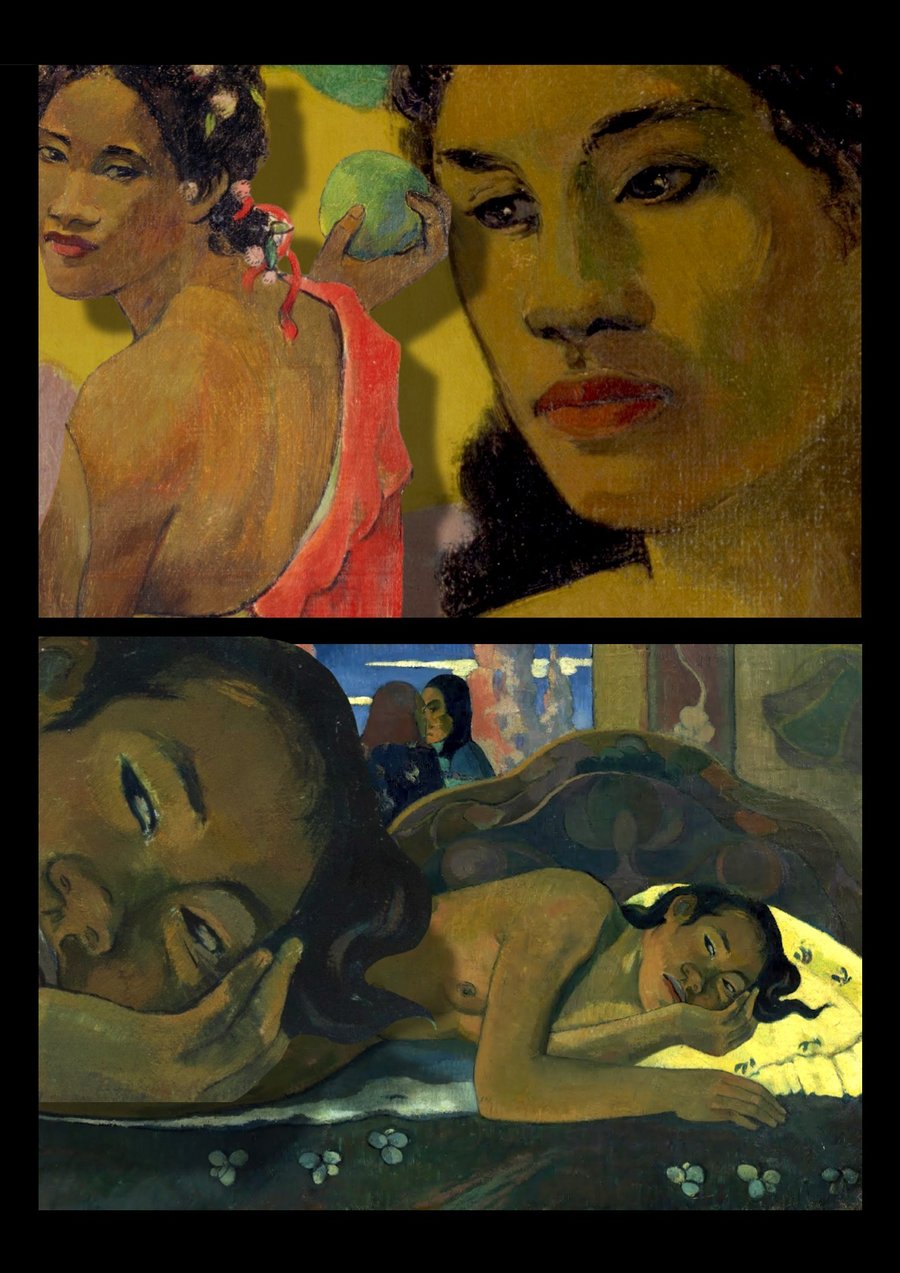
Paul Gauguin (1848–1903) is the French painter who transformed Post-Impressionist art with exotic landscapes, symbols and female figures. He spent his childhood in Peru, his grandmother's home country; back in France for his studies, mediocre results convinced him to sign on as a sailor, completing a circumnavigation of the globe in just two years.
In 1871, back in Paris, he began painting with enthusiasm, coming into contact in 1879 with the Impressionist circle, which he frequented until 1886. On his many trips to Polynesia, far from his large family, the artist seemed to be searching for a lost, happy world: his canvases filled with exotic trees, flowers and fruit, beaches, and female figures, often nude. Several of the adolescent girls he took as ‘wives’ during this period reflect an attitude now rightly judged as racist and exploitative — the most troubling and unavoidable part of both his art and his life.
Paul Gauguin (1848–1903) è il pittore francese che trasformò l'arte post-impressionista con paesaggi esotici, simboli e figure femminili. Trascorse l'infanzia in Perù, paese d'origine della nonna; tornato in Francia per gli studi, i risultati mediocri lo convinsero a imbarcarsi come marinaio, completando il giro del mondo in appena due anni.
Nel 1871, di nuovo a Parigi, iniziò a dipingere con entusiasmo, entrando in contatto nel 1879 con il gruppo impressionista, che frequentò fino al 1886. Nei suoi numerosi viaggi in Polinesia, lontano dalla numerosa famiglia, l'artista sembrò cercare un mondo felice e perduto: le sue tele si popolarono di alberi, fiori e frutti esotici, di spiagge e di figure femminili spesso nude. Sono diverse le adolescenti che prese come ‘mogli’ — una mentalità, la sua, oggi giudicata giustamente razzista e sfruttatrice, che resta l'aspetto più inquietante della sua parabola artistica e umana.
Paul Sérusier
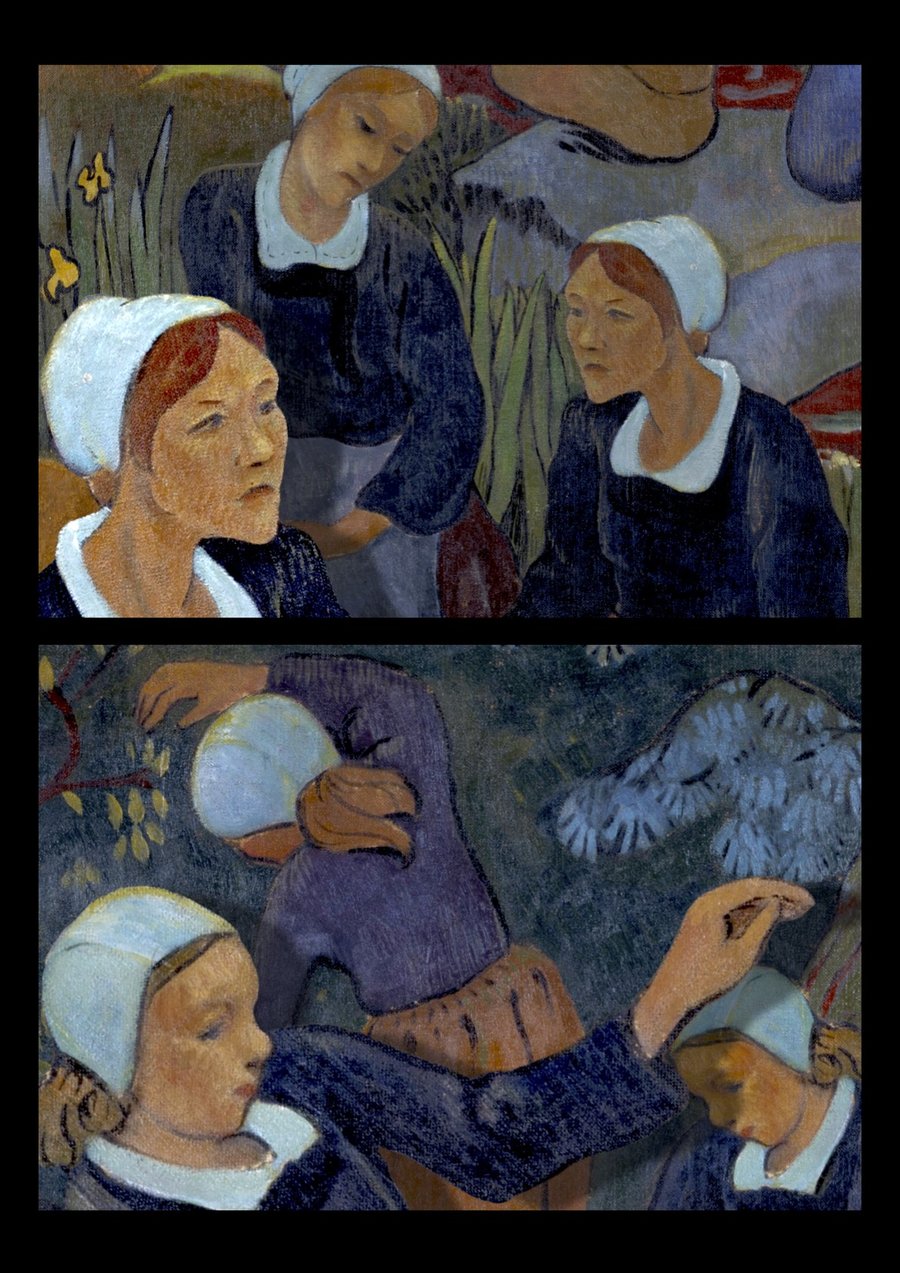
Paul Sérusier (1864–1927) is a central figure of French Post-Impressionist art, best known as the theoretical soul of the Nabis group (a Hebrew word meaning ‘prophets’). The turning point came in 1888 in Brittany, when Sérusier met Paul Gauguin, who urged him to paint not what he saw but what he felt, through the use of pure color.
In 1921 he published ‘The ABC of Painting,’ a treatise attempting to codify the laws of color and composition. From 1908 he taught at the Académie Ranson, shaping a new generation of artists. He died in 1927 in Morlaix; his role remains essential — without Sérusier and his small Breton landscape, the decorative symbolism of the Nabis would never have been born. Maurice Denis, a fellow member of the group, wrote a line that sums up the lesson learned from Sérusier: ‘Remember that a painting, before being a battle horse, a nude woman, or some other anecdote, is essentially a flat surface covered with colors arranged in a certain order.’
Paul Sérusier (1864–1927) è una figura centrale dell'arte francese post-impressionista, noto soprattutto per essere stato l'anima teorica del gruppo dei Nabis (termine ebraico che significa ‘profeti’). La svolta avviene nel 1888 in Bretagna: Sérusier incontra Paul Gauguin, che lo sprona a dipingere non ciò che vede, ma ciò che sente, attraverso l'uso del colore puro.
Nel 1921 pubblica ‘L'ABC della pittura’, un trattato in cui cerca di codificare le leggi del colore e della composizione. Dal 1908 insegna all'Académie Ranson, contribuendo alla formazione di nuove generazioni di artisti. Muore nel 1927 a Morlaix; la sua figura resta fondamentale — senza Sérusier e il suo piccolo paesaggio bretone, il simbolismo decorativo dei Nabis non sarebbe nato. Maurice Denis, compagno di gruppo, scrisse una frase che riassume la lezione appresa da Sérusier: ‘Ricordate che un quadro, prima di essere un cavallo da battaglia, una donna nuda o qualsiasi altro oggetto, è una superficie piana coperta di colori assemblati in un certo ordine’.
Pierre-Auguste Renoir
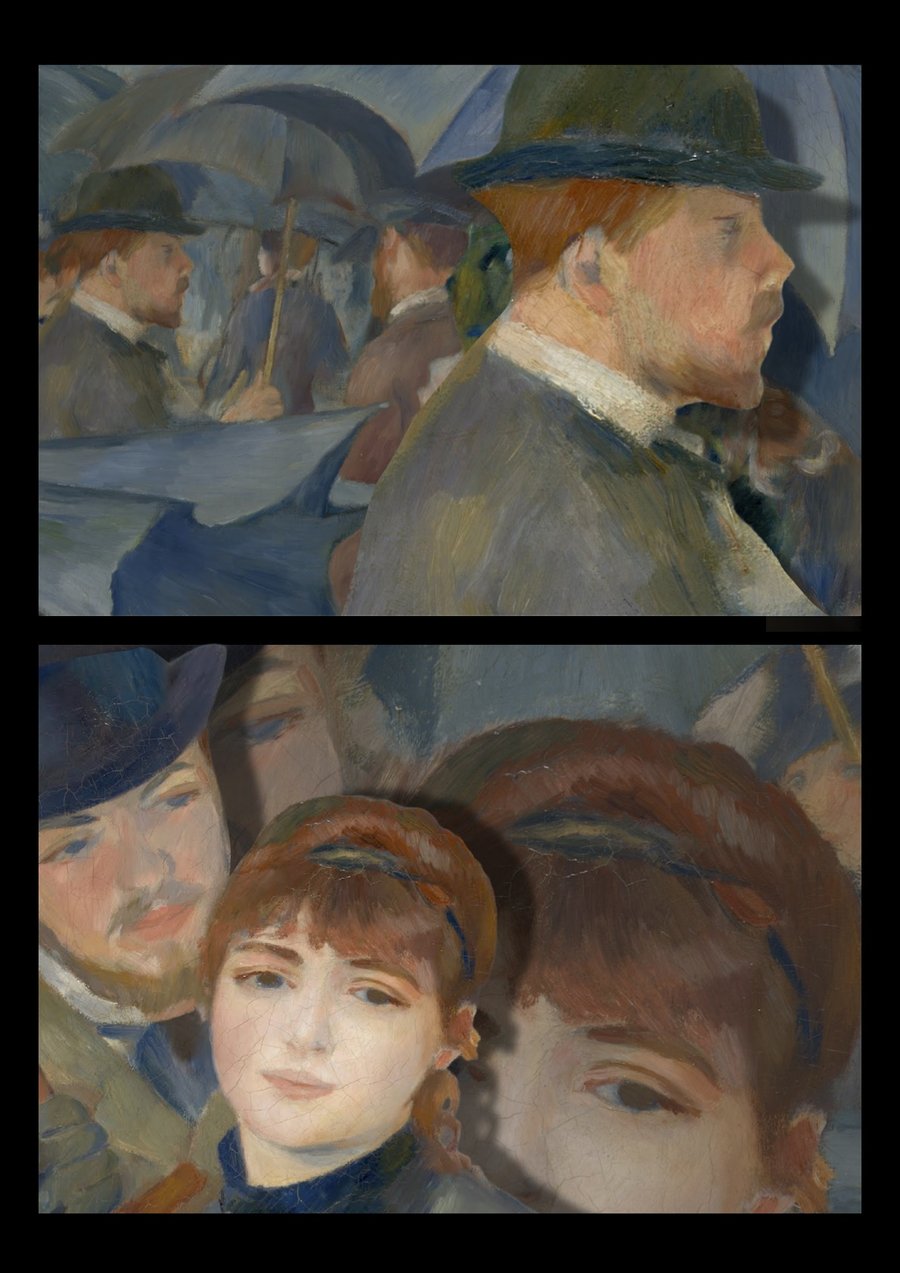
Pierre-Auguste Renoir (1841–1919) is considered one of the most committed and spontaneous French artists of the Impressionist movement. A prodigiously prolific painter, with roughly five thousand paintings and countless drawings to his name, he liked to say: ‘painting is a workman's trade, like carpentry or ironwork, and it follows the very same rules.’
Amid harsh criticism but also well-earned praise, Renoir began making a name for himself among art dealers and collectors: it was above all his graceful portraits that drew admiration. One great supporter was the publisher Charpentier who, captivated by his work, introduced him into his wife's literary salon, frequented by the city's leading intellectuals. Of all the Impressionists, Renoir had the lightest, most joyful brushstroke; he himself said: ‘I like paintings that make me want to walk right into them.’
Pierre-Auguste Renoir (1841–1919) è considerato uno degli artisti francesi più convinti e spontanei del movimento impressionista. Pittore prodigiosamente prolifico, con circa cinquemila quadri e infiniti disegni all'attivo, amava dire: ‘la pittura è un mestiere da operaio, come il falegname o la lavorazione del ferro, e sottostà alle medesime regole’.
Tra aspre critiche ma anche meritate lodi, Renoir iniziò a farsi un nome tra mercanti d'arte e collezionisti: furono soprattutto i suoi leggiadri ritratti a destare ammirazione. Un suo grande sostenitore fu l'editore Charpentier che, affascinato dalle sue opere, lo introdusse nel salotto letterario della moglie, frequentato dai maggiori intellettuali della città. Tra tutti gli esponenti dell'Impressionismo, Renoir fu quello dalla pennellata più gioiosa e lieve; egli stesso affermava: ‘Mi piacciono quei quadri che mi fanno venire voglia di entrarci dentro’.
Raffaello Sanzio
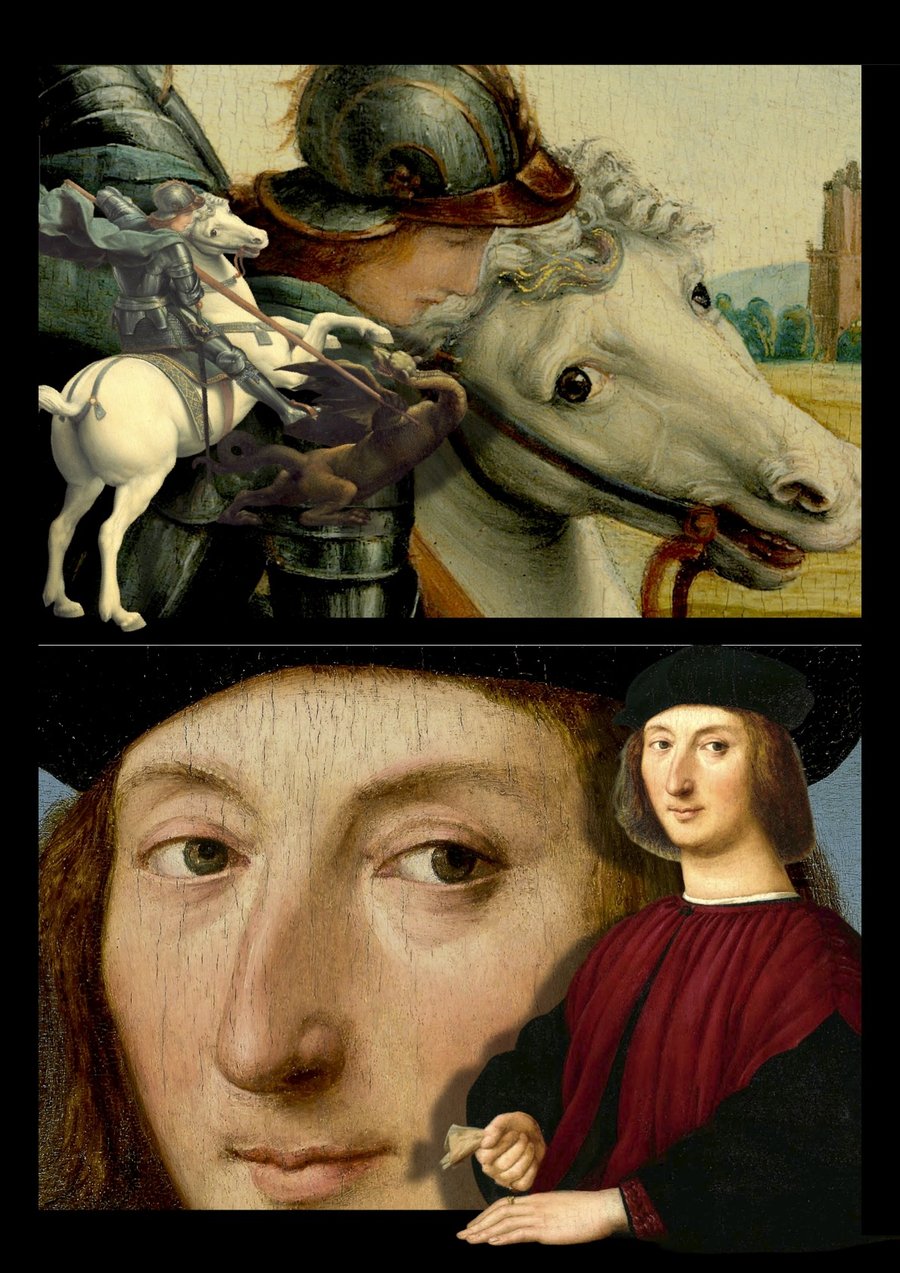
Raphael Sanzio (1483–1520) was born in Urbino, a duchy in central Italy renowned for its elegant Renaissance refinement, and moved to Florence toward the end of 1504. ‘St. George and the Dragon’ (1506) is his take on the theme, painted in Florence as part of a series of miniature panels made to celebrate the court of Urbino.
A curious detail of the painting is the blue garter the saint wears on his leg, inscribed ‘HONI,’ the start of the phrase ‘Honi soit qui mal y pense’ (Shame on whoever thinks ill of it), the motto of the chivalric Order of the Garter, whose patron saint is George. From 1510 comes the portrait of an unknown man (at the bottom of the collage), a lesser-known but finely made Raphael work: the refined yet understated clothing, the direct gaze and the proud bearing capture the new Renaissance emphasis on individualism. The man's three-quarter pose, echoing Leonardo's teaching, would go on to influence generations of painters.
Raffaello Sanzio (1483–1520) nacque a Urbino, un ducato dell'Italia centrale noto per la sua elegante raffinatezza rinascimentale, e si trasferì a Firenze verso la fine del 1504. ‘San Giorgio e il drago’ (1506) è la versione del tema realizzata dall'artista per una serie di tavole in miniatura dipinte a Firenze per celebrare la corte di Urbino.
Una curiosità del dipinto è la giarrettiera azzurra che il santo porta sulla gamba, con la scritta ‘HONI’, inizio della frase ‘Honi soit qui mal y pense’ (Vergogna a chi ne pensa male), motto dell'Ordine cavalleresco della Giarrettiera, di cui San Giorgio è il patrono. Del 1510 è invece il ritratto di un uomo rimasto sconosciuto (in basso nel collage), un dipinto meno noto di Raffaello ma di gran fattura: gli abiti raffinati ma sobri, lo sguardo diretto e il portamento fiero caratterizzano la nuova enfasi rinascimentale sull'individualismo. La posa di tre quarti dell'uomo, che richiama l'insegnamento di Leonardo, avrebbe fatto scuola.
Sandro Botticelli
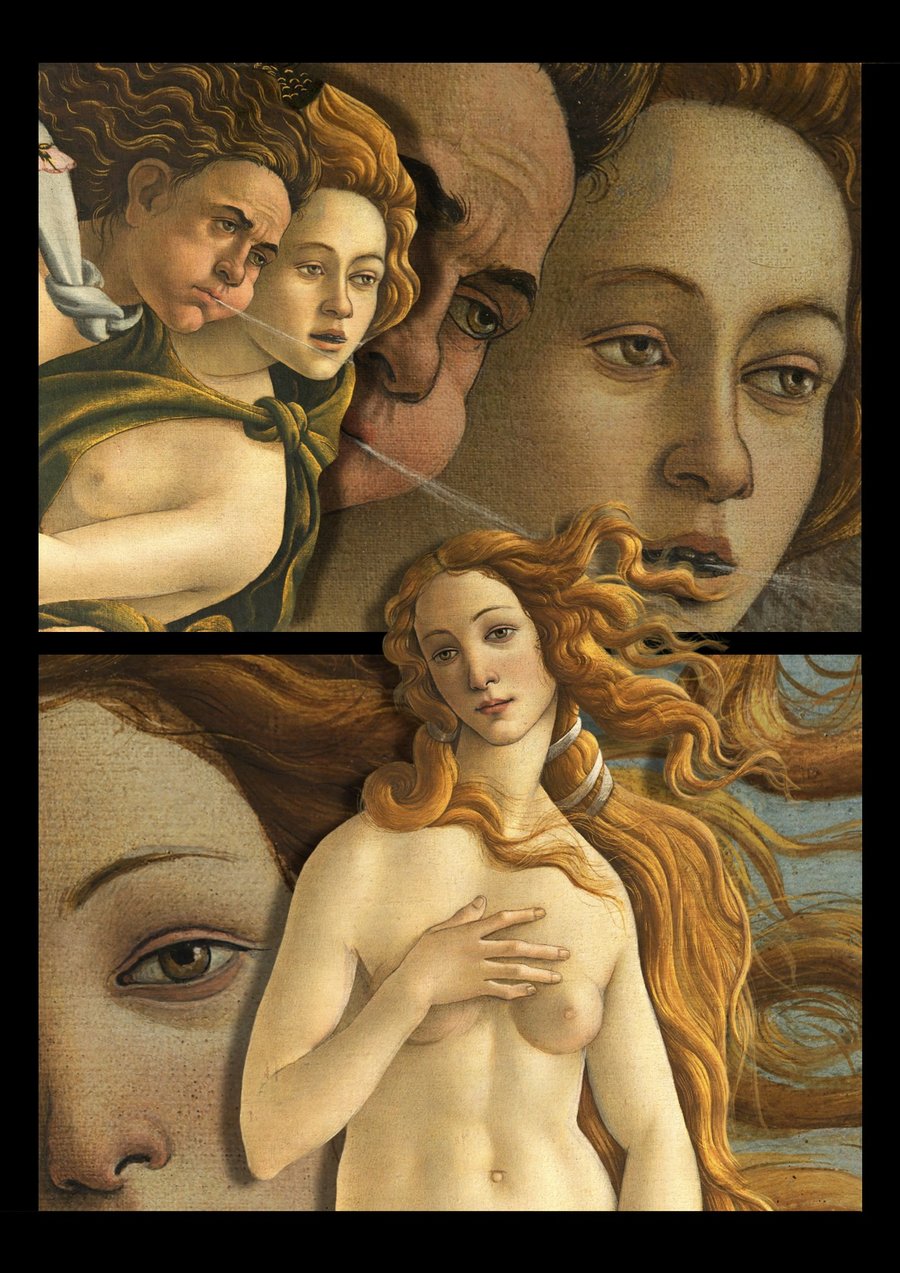
Sandro Botticelli (1445–1510) is one of the most important painters of all time, a symbol of the Renaissance itself: the Florentine who created some of the most famous works of art in the world. His style stands apart from that of his peers — figures that seem weightless and shadowless, with a decorative elegance far removed from the realism of his contemporaries.
Botticelli never married, and in fact showed a strong aversion to the very idea of marriage, a prospect that reportedly gave him nightmares. He is said to have suffered from unrequited love for Simonetta Vespucci, a married noblewoman who, according to popular belief, was the model for ‘The Birth of Venus,’ the subject of the collage. This work was probably painted around 1484 for Lorenzo de' Medici's villa. Giorgio Vasari saw it in the mid-1500s alongside Botticelli's other famous work, ‘Primavera,’ and described it precisely as ‘the Birth of Venus.’
Sandro Botticelli (1445–1510) è uno dei più importanti pittori di tutti i tempi, uno dei simboli del Rinascimento: il fiorentino che ha creato alcune delle opere d'arte più famose al mondo. Il suo stile è unico rispetto a quello dei colleghi — figure apparentemente prive di peso e di ombre, con un'eleganza decorativa lontana dal realismo dei suoi coetanei.
Botticelli non si sposò mai, anzi manifestò una forte avversione verso l'idea stessa del matrimonio, una prospettiva che gli procurava incubi. Si narra abbia sofferto per un amore non corrisposto nei confronti di Simonetta Vespucci, nobildonna sposata che, secondo la credenza popolare, fu proprio la modella della ‘Nascita di Venere’, soggetto del collage. Quest'opera fu probabilmente dipinta intorno al 1484 per la villa di Lorenzo de' Medici. Giorgio Vasari la vide a metà del Cinquecento insieme all'altra celebre ‘Primavera’ dello stesso Botticelli, e la descrisse proprio come ‘la Nascita di Venere’.
Utagawa Kuniyoshi
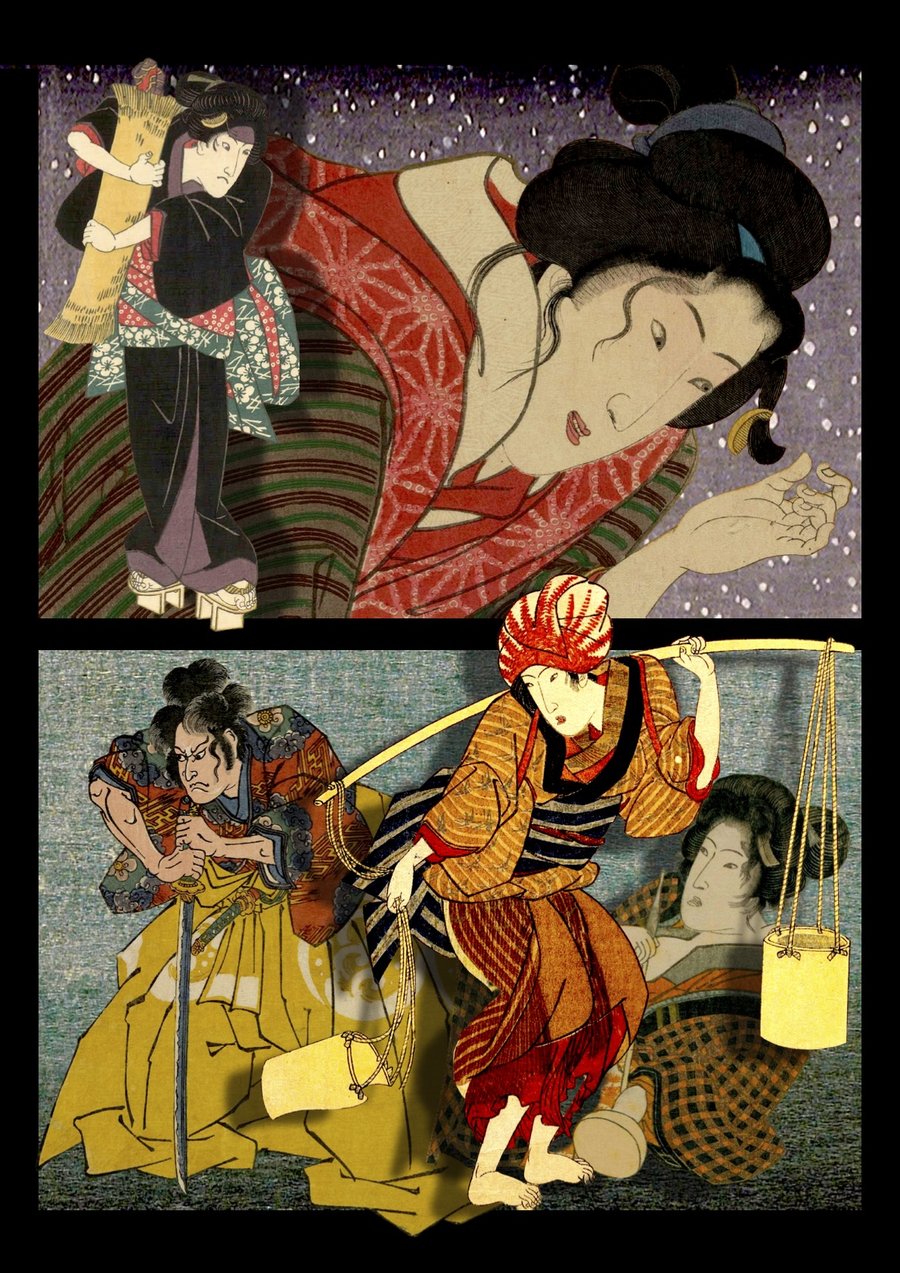
Utagawa Kuniyoshi (1797–1861) was one of the great masters of ukiyo-e (‘pictures of the floating world’) in 19th-century Japan. Alongside Hiroshige and Kunisada, he dominated the art scene of the late Edo period, a time marked by Japan's opening to the West and its transition toward modernization.
Unlike the static elegance of other masters, Kuniyoshi's works are full of movement and muscular tension: he was among the first to bring elements of Western perspective and chiaroscuro into Japanese prints. Despite censorship, he often found clever, symbolic ways to criticize the authorities through visual metaphor. Many of his tattoo designs for the Suikoden samurai remain reference models today for irezumi, traditional Japanese tattooing, and his taste for the grotesque has made him regarded as one of the aesthetic forerunners of modern manga and anime.
Utagawa Kuniyoshi (1797–1861) fu uno dei grandi maestri dell'arte ukiyo-e (le ‘immagini del mondo fluttuante’) nel Giappone dell'Ottocento. Insieme a Hiroshige e Kunisada, dominò la scena artistica del tardo periodo Edo, caratterizzato dall'apertura del Giappone all'Occidente e dalla transizione verso la modernizzazione del paese.
A differenza dell'eleganza statica di altri maestri, le opere di Kuniyoshi sono piene di movimento e tensione muscolare: fu tra i primi a integrare elementi della prospettiva occidentale e del chiaroscuro nelle stampe giapponesi. Nonostante la censura, trovava spesso modi ingegnosi e simbolici per criticare le autorità. Molti dei suoi disegni di tatuaggi per i samurai del Suikoden restano ancora oggi modelli di riferimento per l'irezumi, il tatuaggio tradizionale giapponese, ed è considerato uno dei precursori estetici dei moderni manga e anime.
Vincent van Gogh
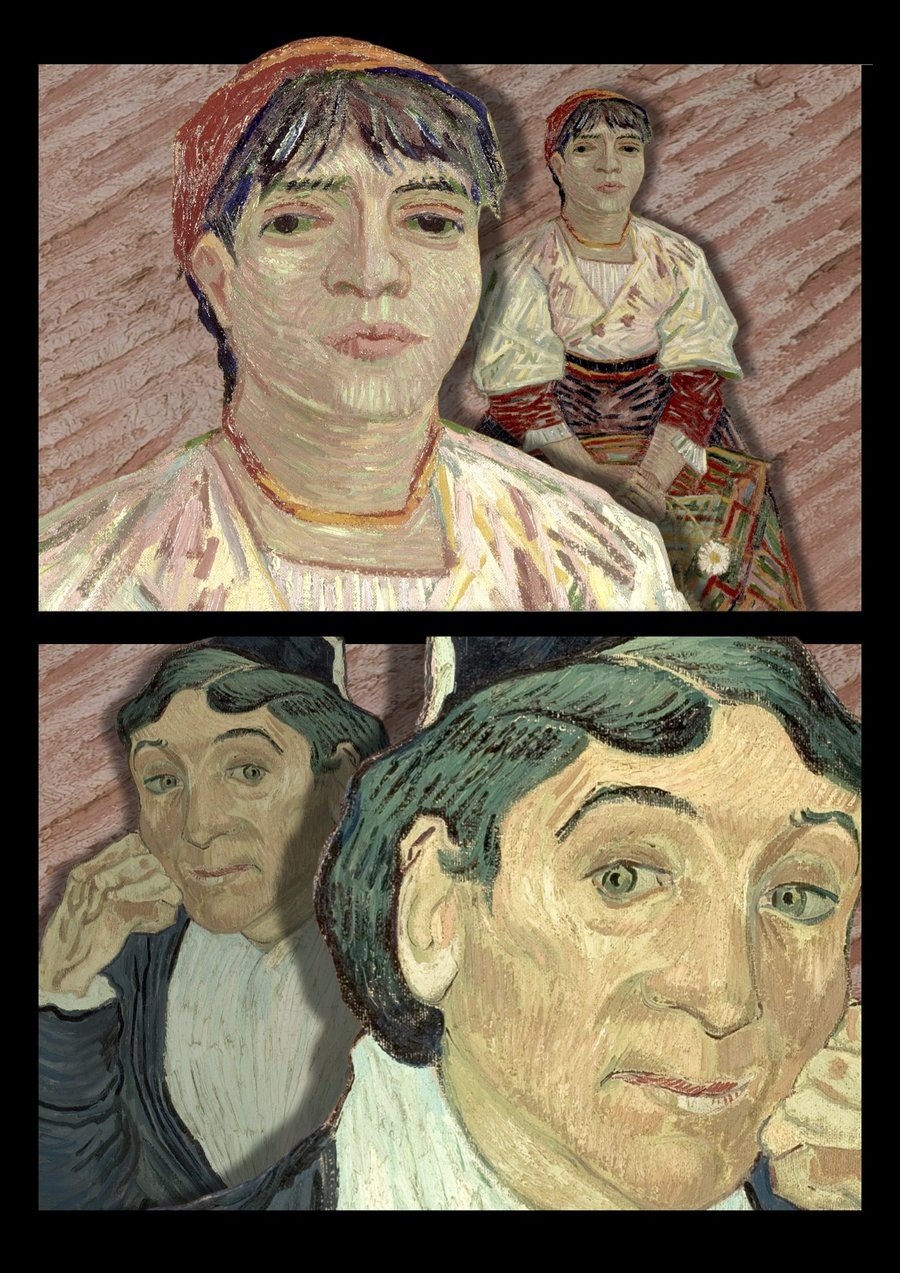
With over 850 paintings and nearly 1,300 works on paper, Vincent van Gogh (1853–1890) — painter, draughtsman and printmaker active through the 1880s — is the greatest modern Dutch artist, the best known of the Post-Impressionists, and perhaps the most reproduced painter on any surface: alongside Pablo Picasso and our own Leonardo, he ranks among the most recognized painters in the world.
From the Dutch master's vast output, we've chosen two female portraits. The first, at the top, is ‘The Italian Woman,’ dated 1887: it depicts Agostina Segatori, a former model for Corot, Gérôme and Manet, with whom Van Gogh appears to have had a brief romance during his stay in Paris. Below, ‘L'Arlésienne (Madame Ginoux)’: in January 1890, Van Gogh met the Ginoux family in Arles, owners of the local café. Madame Ginoux was in poor mental health, and two days later Van Gogh himself suffered another nervous breakdown; during his convalescence he painted a series of portraits of her, drawing on a drawing of the same subject by his friend Gauguin, who was also in Arles at the time.
Con oltre 850 dipinti e quasi 1.300 opere su carta, Vincent van Gogh (1853–1890) — pittore, disegnatore e incisore attivo negli anni Ottanta dell'Ottocento — è il più grande artista olandese moderno, il più noto tra i post-impressionisti e forse il più riprodotto su qualsiasi supporto: insieme a Pablo Picasso e al nostro Leonardo, è tra i pittori più conosciuti al mondo.
Nella sterminata produzione del maestro olandese abbiamo scelto due ritratti femminili. Il primo, in alto, è la ‘Donna italiana’ datata 1887: si tratta di Agostina Segatori, ex modella di Corot, Gérôme e Manet, con la quale Van Gogh sembra aver avuto una breve relazione durante il suo soggiorno a Parigi. In basso, ‘L'Arlésienne (Madame Ginoux)’: nel gennaio 1890 Van Gogh conobbe ad Arles la famiglia Ginoux, proprietaria del caffè locale. Madame Ginoux non era in buone condizioni di salute mentale, e due giorni dopo anche Van Gogh ebbe un altro esaurimento nervoso; durante la convalescenza dipinse una serie di ritratti di lei, ispirandosi all'omonimo disegno dell'amico Gauguin, anch'egli ad Arles in quel periodo.
Art CloseUp is part of Blu Artworks' wider body of work — 577 original SIAE-registered collages in total. Explore the Art CloseUp fa parte del lavoro più ampio di Blu Artworks — 577 collage originali registrati SIAE in totale. Esplora la Full GalleryGalleria Completa.